Showing posts with label Canyon Tree frog. Show all posts

Tuesday, February 11, 2020

Turning Over A New Leaf

Western Screech-Owl near my work site
I am healing.  I am getting stronger, but it's slow. You'd think I was out every day looking for birds, but I am not.  I have three really important goals right now.  Walk more.  Lose this stubborn belly fat.  And drop the weight. 

A pack of Javelina or Collared Peccary cross a pumpkin patch to get to a river
On the financial level.  Save money.  Stay at home.  Make this year about birding Pima County well. It's a huge county, but I know where to go.  There are just a few people who know Pima a little better.  But I've made notes over the years for a year like this one.  And it has paid off so far locating certain difficult bird species. 


This brillaint Lillian's Eastern Meadowlark is a favorite of mine
I had habitat picked out.  Just never had the time to do the slow investigation that was needed.  But I'm glad I made the notes as it has made my job so far a breeze.  Some birders get angry that I hide my reports about certain rare birds.  That's ok. I learned my lesson a long time ago.  I told someone and they told others.  And then the bird was never seen again. I'm a quick learner. If you are a true birder, you know and understand a bird's habitat requirements. And with that knowledge, you can find the bird you are looking for. I need birders to know that the bird's safety comes first. So far, I've been excited by the owl discoveries.  From Long-eared Owls to Barn Owls to Burrowing Owls, the trickiest in my county, to the easier Western Screech-Owl and nesting Great Horned Owls.

The Round-tailed Ground Squirrel peaks up from a hole to make sure it's safe to search for food
This slow methodical approach has really allowed me to absorb all the habitats more.  Take my time.  Explore new mapped out spaces for certain species. Granted the beginning of the year is always the easiest. 


Work has taken up much of my time allowing me to bird once or twice a week. 


It has been a wonderful time connecting with birders.  Just sitting on a bench and helping a visitor ID a new bird or a difficult sparrow.  There is nothing new anymore here in Arizona except for the personal connections I make with birders and their love for birds.  It makes me smile.  The more I do this; the more I realize I'm beginning to fill in vacant roles that were once filled by birders who are no longer with us. In a way, it's a very sobering thought.

The subtle beauty of a Lincoln's Sparrow
I have changed as a teacher this year as well.  I am more relaxed than I have ever been with my students.  We talk and I teach.  When I'm done with my lesson, a student shares with me a bird they've seen.  They show me a picture and I ask them about the bird and if they know what kind of bird it is, etc etc.  

A Common Raven comes in for a sip of water
 I speak to a new friend on the phone.  An opportunity arises for my students.  I am excited.  So we begin to brainstorm.  I begin to write down a strategy to see if we can maybe make this student trek to our national park happen. What if it was an overnight 2 day event?  And what if we could give them the hands on experience necessary to excite their minds for a future of protecting our beautiful and sacred Sonoran desert?  I am very grateful for the conversation and also for the opportunity to get to know another kindred spirit.

A Pied-billed Grebe hunts for larvae in the murky water
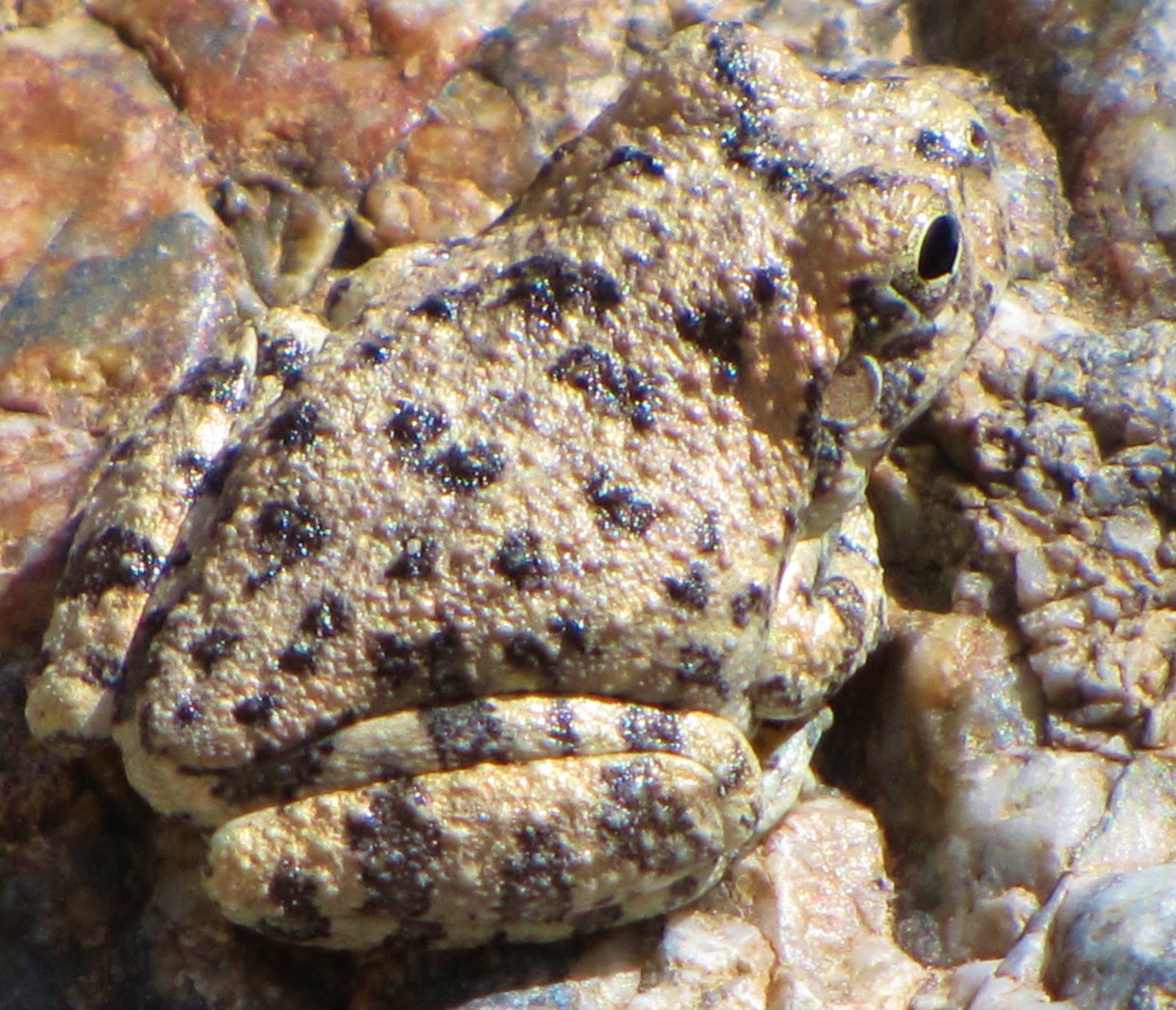
 At home, I find a Canyon Tree Frog in my garden!  I watch my new friend sit every day on one of my Mexican pots as it bathes in the sun.  The nights get cold and I wonder if the frog will make it.  In the morning as I put oranges out for my Verdins, I check to make sure the frog is okay.  And there the frog is.  And I smile. 


A wonderful and shocking surprise in my garden, the Canyon Tree Frog, sits on top of my Mexican pots.  Where did it come from?  I never touch that part of my garden.  Has it lived in the soil of that pot for a long time?
 In the quiet of my office, I research and plan for my July trip to the Darien Gap in Panama.  I purchase a ticket for the entire month.  The first half will be grueling as we hunt for the Harpy Eagle.  The second half will be my vacation. I'll sit in my rocker on the veranda overlooking the gardens and coffee plantations in Boquete wearing my sweatpants sipping on something warm. I will meet up again with Ivan in Gamboa.  And I sense I'll finally get to meet some "friends" from Facebook for the first time in person. 

A Botta's Pocket Gopher comes up to grab a bite of grass
Each year is a new chapter in our life.  We can let it pass us by or we can make each day an event. After being stuck at home to heal for several months, it's good to feel stronger.  And it's good to get out again and be a part of the community.  The pause in my life was a good thing. 


There are goals to be achieved for sure during this important year of 2020. We'll meet up with Nancy and her sister for a wonderful hummingbird hunt in March. We'll explore new birding hotspot, the Canoa Ranch and do a Hawk Watch in March with Tucson Audubon. We'll also visit the garden at El Presidio as I add several new native plants to our property. Then our friend Dr. Steve from Wales comes in April to chase Arizona lifers.  Our Tucson Audubon Big Day will be some time in April/May as we, the Wrenegades, try to find as many bird species as we can in one day. And there are so many more things that will happen.  But for now, I'm birding at my own pace.  I'm sleeping in during the mornings as much as I can.  I'm still a birder but a much more relaxed one now. Until next time.....

Tuesday, June 6, 2017

Shadowhunters

Babs enjoys a nice scope view of the Rose-throated Becards with a kind birder.
 I have been wanting to write a little bit about birding Arizona during our intensely hot summer months. Specifically, the month of June. When guests come to visit, I have very little energy to go with them during a whole day and find birds.  Our temps average around 104-115 degrees during the month of June.  And while those temps are dangerous, there are things you can do to avoid dying on the trails. 

Varied Buntings breed in Arizona during the summer months
 It is NO secret that Arizona birding is one of the best places in the world to go and find unique and beautiful species of bird.  But the same can be said of our herpes, bugs and mammals.  Our summer months offer excellent opportunities to find rare and unique southwestern flora and fauna.   


With that being said, I often lack the energy to wake up and explore.  Why?  Well, sunrise here begins around 4:30 AM.  And the birds begin their song at that time.  So what can a birder do to make their visit to Southern Arizona more comfortable?


Bring a friend/s.  They help motivate.  For myself, I groan at the 4:30 AM wake up call but I am always excited about the incredible discoveries we made afterwards in the field.  Also, if there is an injury on one of our rugged trails, you'll have someone who can get help.  I cannot tell you how many times people will get heatstroke or nearly pass out after their first day out.  They overextend their birding excitement and wear out quickly.  This brings me to......

Canyon Tree Frog
 Water.  You MUST bring water with you at all times.  If your car breaks down, have water with you.  Put a water pack on your back and drink drink drink!  You'll prevent the severe headaches at night by staying hydrated.  And speaking of evening.....

Coue's Whitetail Deer
 It's one of the best times to go birding for rare and exciting nightjars, mammals, owls and more!  Again bring a buddy because there are many wild elements here in the desert.....like snakes.  Snakes love to hunt at night.  So do most of our critters.  

Lophocampa mixta, Tiger Moth.  Thanks Margarethe for the ID
As mentioned before, go early in the morning.  Best time to bird is anywhere from 4:30 AM until 10 or 11 AM.  Stay in the shade as often as you can.  Go to higher elevations or shady canyons to make your birding experience much more enjoyable. 


American Snout
Try to stay in a local area and bird so that you don't waste that valuable birding time in the car. For example, you could stay in Sierra Vista and then bird the many canyons and riparian hotspots around the city. As the day gets hotter, the bird activity dies down. Most birders at this point take a nap or get lunch. 


BUT if you are in your car, you can also bird.  How?  Well check this out.  Birding from your vehicle is a real thing.  My Wisconsin peeps often bird during the cold winter months from their warm vehicles.  It's no different here.  Places like Saguaro National Park(East Rincon Unit) offer a 9 mile loop where you can drive and park at your leisure for birds and critters.  For lunch, you can stop at the Javelina Picnic area under the shaded ramadas.  Birds, like the Canyon Towhee, Gilded Flicker or Black-throated Sparrows, will casually hang out and watch you relax and chow down.  


Western Screech Owl
So what is my technique?  Well I love the cold temps of our winter months here so I really utilize my time wisely outdoors.  When summer comes, I call up friends to go out for some early morning  birding.  If I don't, I sleep in and waste away inside my house. 

Blue Grosbeak
I tend to go later in the afternoon, around 5 or 6 PM when the intensity of the sun is less.  Temps are still hot but a breeze usually starts up and makes it a bit tolerable. 


Scaled Quail
 I also tend to hit the higher elevations and canyons for shade. And in the desert, I park and scan from my car.  

Gambel's Quail
 This past week was a fun one.  I went one evening to Madera Canyon and watched birds at the feeders.  There were a lot of great birds but the one everyone was thrilled to see at the feeders was the Varied Bunting.  They can be tricky to capture on camera because of the lighting conditions. Their colors are so wild that the camera often has issues sorting them out. 


Gila Woodpecker
And this past and current week should be titled the week of the "BLUE GROSBEAK".  They were most numerous around the San Pedro Riparian area.  We could not get over the dozens of blue dots flying around the feeders. 


Blue Grosbeak
We also stopped at Ramsey Canyon on an overcast day and did a survey in the humid, yet wonderful, shade of that canyon.  

Giant Mesquite Bug
An early morning trek with Babs lead us to a happy observation.  Rose-throated Becards are breeding in AZ again.  We suspect they were there last year but no one saw them. An old nest hangs nearby their current one suggesting that they were most likely present last year. While that trail has been there for some time, it wasn't as fixed up as it is now. While we were on the trail, there were some workers cleaning up the area for better access. It has been a good year for this species in AZ after not having many reports of them over the past several years.  

Nesting Rose-throated Becards-finally!

June is also the best month to escape the heat and take a holiday/vacation.  Many Arizonans head to San Diego or Rocky Point, Mexico during this time to enjoy the ocean and cool temps. If I take a vacation in June, I always make sure I'm home for July because the monsoon show is spectacular. Below I have several reports from our treks around Southern Arizona this past week.  Until next time...... 

For the Rose-throated Becards, click here.

For the Flame-colored Tanager and Ramsey Canyon, click here.  

For the Rufous-capped Warblers in Florida Canyon, click here.  This is the trail you need to explore early and with a friend.  It can be moderate to difficult due to the trail above the dam area.  The trail is steep with loose rock in some areas.  A walking stick is advised as is a water pack.  So why go?  It's one of the birdiest. Just be careful around the dam area.  

For the easy Varied Bunting add at the Santa Rita Lodge, click here

For the Blue Grosbeak excitement, click here

Saturday, May 19, 2012

Early Morning Revelations

On a hike in the remote Redington Pass, a couple friends, their kids and dog went on a trek to discover....whatever. Water was involved and it was a win win for everyone....including the dog:) 
So while walking along the canyon walls, we noticed yet one more Great Horned Owl flying around the canyon.  It stopped on this rock to look down upon us.
And then there were the isolated pools of water full of the endemic Gila Chubs only found in and around our Tucson area. 
We also set up an interview with Kermit the Frog's cousin, Rene La Rana.  His mother and father came from Mexico and became citizens here in this canyon.  He gave us permission to film his family of the fast Tree Canyon Frogs.
We hummed and sang as we walked along the rocky river bed....stopping here and there to throw a stick in the water for the dog to go after.  The kids would pick things up and say, "LOOK WHAT I FOUND!"  Adults snapped pictures of those things:)
But I should have seen the signs like the one below.  I believe these were filmed in Gladiator during the death scene, but we didn't care.....because life was good....a bit hot in the early morning.....but good.
A yellow warbler could be heard in this Eden.  And so we all chased after this yellow jewel in the lush Cottonwood Canopy.  But things would quickly change once we ventured near the tree.......
Quite by accident, one of the gang almost stepped on the rattlesnake.  It perfectly blended into the surroundings.  I nearly crapped myself and felt the heebie jeebies crawl up and down my spine....but I thought this guy was pretty cool.  So much for the yellow warbler......next time!
Everyone began to think about their mortality at this point and started to ask one another, "How many more of these have we passed by and not even known about?"  We all knew the answer and hastily hiked back to the car on top of the canyon.  The dog was attached to a leash and the kids had shock collars on to keep them from poking, prodding, or handling "the snake".  You see the boy wished to prod it because that's what little boys do.  But being that this snake is poisonous and the anti venom costs around 2 thousand dollars, everyone decided to step back and slowly walk away.
It was amazing how much life can be found in several of our remote areas.  During our hot summer months, remember that many many lizards...includings snakes.....will be out sunning or in the shade.  Keep your eyes out for them at all times.  They will leave you alone most of the time.  However, if frightened, they will coil and rattle....then strike.  So watch where you put your hands while climbing up onto rocks etc. Our desert is an amazing place.  Most Tucsonans don't realize what's around them, but we did......and it was awesome.  Redington Pass is a remote place at the end of Tanque Verde Road.  Off road vehicles, hunters, hikers(nude or clothed), and water lovers head to this secret little gem which is hidden from most Tucsonans.  It can be dangerous and never go during monsoon season because the creek can turn suddenly into a raging river.  Many go to see the waterfalls and swim in the river.
More tomorrow....

Sunday, March 27, 2011

Canyon Tree Frog


Taking a break from the plant series, I took a hike at the wonderful Redington Pass several weeks ago with my visiting family. One never knows what they'll find on their adventures and the hike proved just as interesting.  Here, with the camera, I got some great close up shots on a fantastic little frog in our canyons. This week's close up is on the beautiful and less travelled Redington Pass.

You'll find these little guys along the creeks that run through our Tucson area.  Be careful where you step and look carefully as they blend in with their surroundings.
This is a small treefrog with highly variable pattern and color. It grows to 2½ inches (56 mm) with a ground color of cream to brown and irregular bars, blotches, and spots of olive to brown. Its color matches its substrate extremely well. Large adhesive toe pads are present on all 4 feet. Adult males have dusky (darkened) or yellow throats, whereas females have white to cream colored throats (which match the underside).

This species is largely restricted to riparian areas in rocky canyons. It is typically found along streams among medium to large boulders from desert to desert grassland and into oak-pine forests. The canyon treefrog can operate at cooler temperatures than many frogs; it avoids cold surface temperatures by retreating underground

The canyon treefrog eats insects of various kinds. It breeds in July and August during summer rains as well as in spring. The abrupt, explosive call of males attracts females to breeding sites; males then mount females and spawning may begin. Eggs are laid in a large mass that floats on the surface of the water.

Source for information: The Desert Museum