Tuesday, October 3, 2017

Las Aventuras: Arizona Sparrows

A beautiful Baird's Sparrow taken in the pristine San Rafael Grasslands near Patagonia
Continuing with Arizona birds, I thought I'd focus on sparrows today.  And only sparrows(because there are a lot of them!) This is a group of birds that will challenge beginners.  While some are easy to ID AND find, there are others that are quite the opposite:) I won't be including towhees or longspurs or those Lark Buntings:)  This is one of my favorite groups of birds and this past week was an exciting one for birders in Southern Arizona.  But more on that later.....


Today we'll look at the common and rare sparrows found in Arizona during both our summer and winter months.  Let's start with the Baird's Sparrow.  This is a secretive wintering sparrow found in the grasslands of Southern Arizona.  While it is common within its habitat range, it's a difficult bird to view due to its mousy nature in the grasses.  I spent a weekend with a group of sparrow researchers to learn about this particular species.  It was fun and very rewarding to aide in their research. Birders sometimes have difficulty separating this sparrow from the Grasshopper sparrow.

a plain Savannah Sparrow near Sonoita, AZ
In fact, a lot of people groan at sparrow ID.  But over the years, I have really come to love this group of birds and their habitat.  Another wintering sparrow in Arizona is the Savannah Sparrow.  There are many subspecies of this bird and often birders are confused at first by the majority of Savannah Sparrows found here.  Their lores aren't as yellow(or no yellow!) as their subspecies counterparts.  Look at the photo above to get a better idea. 

Grasshopper Sparrow at the Cienagas Grasslands
Also found in the same wintering grassland habitat as the Savannah and Baird's Sparrows are the Grasshopper Sparrows.  They can be secretive as well during the winter months. But during the summer months, they are much easier to spy on their breeding grounds. Arizona is home to Grasshopper Sparrows all year round.  We have a specific subspecies(Ammodramus savannarum ammolegus) that lives here.  It's a bit darker than its subspecies counterparts. However, in winter, two subspecies can be found together in the grasslands making it a fun study session.

Rufous-winged Sparrow at St. Gertrudis Lane near Tubac, AZ
Sparrow ID can be challenging, but this is what makes birding a lot of fun! Understanding a sparrow by their call, movement, and knowing their habitat can help make ID'ing the bird easier. 


Rufous-winged Sparrow near Amado, AZ

Thought to be extinct many decades ago, the Rufous-winged Sparrow is a sparrow found in only a small habitat range in the Sonoran deserts of southern Arizona and the northern state of Sonora. Today, these sparrows are doing very well as their numbers appear to be growing again.  Recognizing habitat was a major factor for saving these sparrows, a plan was put into place to keep cattle grazing out of certain areas. In 1936, the species began to recover and today they can be found once again in good numbers around washes, grasslands, mesquite forests, etc. This is a sparrow that birders specifically look for here in Arizona as it cannot be found in other states around the country.  It is what we call an endemic to Arizona.

Chipping Sparrow along the DeAnza trail
Chipping Sparrows are common and widespread across the country.  Here in Arizona, Chipping Sparrows can be found all year round at the right elevation.  During the winter months, MANY Chipping Sparrows can be found around the state wherever there is water, grass and some trees:) They seem to enjoy the forest's edge. 

Black-chinned Sparrow near Mt. Ord
Black-chinned Sparrows are beautiful.  This is an easy one to ID but finding them can be difficult.  For example, trying to find one in Pima county is tricky.  They are found in a very specific habitat and elevation around places like Mt. Lemmon and Florida Canyon.  These sparrows become an easier spot up in the Phoenix area around places like Mt. Ord. When ebirding, be careful not to confuse the similarly named Black-THROATED Sparrow with Black-chinned Sparrow.  I've done that more than once:)

Lark Sparrow at Lakeside Park, Tucson, AZ
Lark Sparrows are another easy and widespread sparrow for Arizona.  During the winter months they are found in many of our hotspots in large groups.  What's cool about this bird is that it makes a buzzing fan noise that sounds like an insect. 


Rufous-crowned Sparrow at the Patagonia Rest Stop
One of the largest sparrows is the Rufous-crowned Sparrow.  It's also very common and widespread in the right areas all year round.  Sometimes from a distance, I think I am looking at a Canyon Towhee until I get closer. 


The next sparrow is a rare wintering Clay-colored Sparrow.  Now, they aren't common, but they're also not uncommon.  The bird will always be flagged on ebird.  If you have a camera, make sure you can get a pic of the cheek patch to help distinguish this bird from the similar looking Brewer's Sparrows.  It's a very subtle difference but an important one if you want to add it to your Arizona list. To make the ID even harder, the bird usually doesn't make its buzzy call like it does during the summer months.  Brewer's Sparrows at the beginning of their winter migration have fresh new plumage that can look bright like that of the Clay-colored Sparrow.  So cheek patch and divided crown are important field marks for this sparrow. 

A rare Clay-colored Sparrow at Bartlett Lake Marina, Maricopa County.  Often seen during the months of September and October passing through the area to their wintering grounds.  And sometimes one of them stays for the winter. 
The next sparrow loves desert hillsides.  It's also on most birders MUST SEE list for Arizona.  It's rather common in its habitat range BUT the habitat is tricky and usually requires a full day drive to the border.  I have taken many birders to find this species and I have to admit that it's fun but the rocky terrain is much to be desired. Common in a place called the California Gulch during the summer, ABA listers hope to see this bird in its breeding habitat on the hillsides. Now, this species does hang around all year in smaller numbers along the watering holes BUT they are trickier to find.  So for the summer trek, bring a good vehicle and lots of water!


Five-striped Sparrow in the California Gulch
Another favorite of mine is the Lincoln's Sparrow.  This sparrow has a finely streaked breast with a bit of yellow coloring around the malars to help with the ID.  It's common in Arizona all year round.  These sparrows winter in Southern Arizona around riparian areas and can be found up in places like Greer during the summer months.

Lincoln's Sparrow in Greer, AZ
These next birds are FUN!  But they can be tricky.  They are also present all year round but during the winter months, they are mousy and difficult to find. Many do migrate south, but a couple stay here. During a wet monsoon season, they are very vocal and active EVERYWHERE in the grasslands. 

Botteri's Sparrow at Empire Ranch in Pima County
The most common sparrows in the grasslands during the summer are the Botteri's, Cassin's and Grasshopper sparrows.  It's also the best time to get great observations of them. Study their calls and behaviors and you'll have NO problems.

Grasshopper Sparrow at Empire Ranch
A plain sparrow, the Brewer's Sparrow, is common and widespread along washes and farm areas.  During the winter months, they are often seen on fences near sorghum fields or dry washes with grass. 

Brewer's Sparrow on the Santa Cruz Flats
The striking and gorgeous Black-throated Sparrow is a common sparrow to the Sonoran Desert.  It's a bird that people want to see. The Black-throated Sparrow is an easy sparrow to ID and considered by many as one of the elegant ones:) It lives here year round. 

Black-throated Sparrow in Portal, AZ
A rare sparrow, the Golden-crowned Sparrow, might be found every great once and awhile mixed in a group of White-crowned Sparrows.  They aren't that common in Arizona and are indeed rare.  Even more rare than the Clay-colored Sparrows. To find them, find flocks of White-crowned Sparrows and carefully go through each and every bird. Who knows?  Maybe you'll find one. 


Golden-crowned Sparrows are rare in Arizona but with a lot of effort, a birder COULD find one. This was taken in Portland, OR
So let's head back to similar looking sparrows found in the same habitat at the same time.  If you haven't had much experience between a Botteri's or Cassin's Sparrow, they can be confusing.  It took me awhile to understand both these birds.

A Rootbeer delight!  The Botteri's Sparrow
So here's the skinny.  The Botteri's Sparrow(above) is a warm chocolaty color with a dash of lemon on the edge of their wings.  It has a ball drop call but it takes awhile to get to the ball drop:) Also, it's bill is quite large when compared to the Cassin's Sparrow.

A beautiful Cassin's Sparrow at the Cienagas Grasslands
The Cassin's Sparrow is PLAIN.  Sometimes there is a debate. Who's plainer, the Brewer's Sparrow or the Cassin's Sparrow?  And that's always an interesting conversation.  Or not:)  I find them all fascinating.  Why?  Well for one, the male Cassin's Sparrow LARKS during the monsoon season to attract a female.  See video below. 


It's flight is also unique as the wing beats are shallow and fast.  I might even say Bobolink like.


Sometimes there are sparrows that are seen everywhere and all the time.  Take for example the wintering White-crowned Sparrow.  I watched one take a bird bath at work during my lunch break.  Currently in birder discussions, this sparrow may be split into 2 species, both of which we have here.  Pay attention to the lores, Dark-lored(Mountain) and Gambel's(white). The bird below is the Gambel's White-crowned Sparrow. 

White-crowned Sparrow taking a dirt bath
With sparrows, it's all about the details.  Brewer's vs Clay-colored, juvenile White-crowned Sparrow vs juvenile Golden-crowned Sparrow, Bell's vs Sagebrush, etc.  Sparrows are tricky!  Here is the dark-lored White-crowned Sparrow below.  Can you tell the difference between the Gambel's and Dark-lored?


a dark-lored White-crowned Sparrow Will it be split?
But one sparrow that is easy to ID with its necklace is the Harris's Sparrow.  This is a rare sparrow for Arizona and it is generally seen during the winter months hanging out with.....White-crowned Sparrows:)  Or at least, it likes the same kind of habitat.  

A juvenile Harris's Sparrow at the Bosque Del Apache visitor's center
Now how about a super tricky sparrow species?  The Sage Sparrow complex.  Several years ago this species was finally split into two recognized species.  The most common of the two is the Sagebrush Sparrow found in sparse sagebrush habitat.  To be quite honest, the landscape and habitat for these two birds are not my favorite, but I did what I had to do.  

A Sagebrush Sparrow near Casa Grande, AZ
After the split happened, I attended an AZFO(Arizona Field Ornithology) meeting to learn more about these two species because I had NO idea how to ID the very similar looking Bell's Sparrow from the Sagebrush Sparrow.  It was a good conference and I quickly learned that the Bell's Sparrow has darker throat stripes(malars).  In fact, the malars are darker than their gray heads.  Furthermore, the Bell's Sparrow likes vegetation/sagebrush that is closer together.  Studies were done in both the "Thrasher Spot" near Buckeye and Robbin's Butte. They found more Bell's Sparrows in Robbin's Butte due to the close vegetation groupings.  The Thrasher spot had fewer Bell's Sparrows due to the sagebrush being spread further apart.The Sagebrush Sparrow arrives first and is the last to leave. The Bell's Sparrows generally arrive mid-November and leave early February. So the window for viewing this bird is quite narrow.  Either way, the habitat, especially at the Thrasher spot, looks like something out of a Mad Max movie. 

Bell's Sparrows at Robbin's Butte
I smile every time I hear out-of-state birders talk about our Song Sparrow.  Like the Savannah and Grasshopper Sparrows, our Song Sparrow is different.  It's more rusty red and it's a pretty common sparrow here in Southern Arizona all year.  Now in winter, we can get the other darker subspecies, but if you spot a rusty colored sparrow that looks like a Song Sparrow, you're viewing the Southwestern version of this bird. 

Song Sparrow at Sweetwater Wetlands, Tucson, AZ
Now let's get into some more strange sparrows.  Swamp Sparrows can and do winter here in Arizona.  They are NOT reliable and can be VERY tricky to spot.  But somehow every year, I manage to see or hear one or two in southern Arizona.  Take for example, the Swamp Sparrow below.  While looking for other birds, this little one popped out of the reeds along Patagonia Lake for a nice observation!

Swamp Sparrow at Patagonia Lake State Park
Another sparrow that is always a treat to see (but never location reliable) is the random White-throated Sparrow.  This photo was first taken during my first year of birding. During the winter months, I was birding at Sweetwater with my friend Kathie.  I remember complaining to her about how boring the sparrows were and then I saw this one.  And she got excited.  Little did I know that I found a rare bird!  It was exciting.  First year birder me has grown so much.  Today if I met my former self, I would have slapped my face and screamed, "What's wrong with you?!!! Sparrows are cool!" The reason I said what I said? I couldn't ID them and didn't think I ever could.   

My first White-throated Sparrow at Sweetwater Wetlands
Which bring me to my first sparrow I ever found alone in the wild, the Vesper Sparrow.  Again this is a common wintering bird in the grasslands.  Its nice pink legs, complete eye ring and overall streaky appearance makes this sparrow a relatively easy one to ID.  I reached out for help and called on a friend, master birder Scott Olmstead, who helped me figure out the bird on my own by asking me the right questions.  I'm not going to lie. This bird, which is now a snap to ID, wasn't always so easy:)

Vesper's Sparrow in the grasslands near Sonoita, AZ
The Fox Sparrow is another rare wintering sparrow that ALSO may be split down the road.  Like the White-throated or Swamp Sparrows, I never expect to see one.  And then I do.  They are often found shuffling around in leaf litter like a towhee near grasses and low branches near riparian areas or watering holes. 

My only good photo of a Fox Sparrow from Santa Cruz Island, CA
Now let's talk about the mega bird of the week!  Last week was an epic one. I love sparrows so much and this is one I wasn't expecting to ever see in Arizona, but then I did.  I had to make BIG choices.  I was at work when the report of a LeConte's Sparrow came into the birding newsroom. 


Nothing gets the heart tickin' than a good ol' fashioned sparrow chase.  I paced my classroom like a caged animal.  The problem?  I didn't have my camera!  The sparrow would be a life bird and if accepted by the state record committee, it would be the 3rd time that this sparrow has been seen in Arizona.  So it was a very good bird.  My work was close to the site.  There was no time to go home and get my camera because by the time I would have returned, it would have been dark. 


This sparrow wasn't going to wait around.  There was no tomorrow. It was a lifer, state and county bird.  When a bird meets those three conditions, it's a must go NOW with or without the camera. I rigged my IPhone and binos together to get the shot below. 

IPHONE shot of a RARE LeConte's Sparrow at Dove Mountain Golf Course
It was an exciting moment.  It took us around an hour to locate the sparrow but when the sprinklers went on around the golf course something clicked inside my head.  Sparrows like to bathe in water.  And sure enough, many sparrows were coming out to bathe.  I spotted another birder on the greens who waved over to me.  We met up and soon spotted the LeConte's Sparrow.  It didn't take long before the rest of the birders showed up behind us.  And there we all witnessed a Christmas miracle happen just a few feet away from us.  The sparrow moved closer feeding just a foot away.  No one moved.  No one said a word.  Then a sprinkler went on and spooked the bird off the greens and forced the now wet birders to retreat:)


Nelson's Sparrow along the coast of Maine/this would be RARE for Arizona
Other sparrows that have been reported over time have been a Nelson's Sparrow.  This is one cool bird and it would be a MEGA for this state.  When it makes its call, the sparrow sounds like it's dropping coins in a bucket!  

A Field Sparrow in Dodgeville, WI  But for one to show up in Arizona??!!!  That would be RARE!
Field Sparrows have been reported. That would be a cool one to chase. Again, it would be a MEGA.

American Tree Sparrow at Woodland Dunes in Two Rivers, WI  This is a very rare bird for Arizona in that it should never come this far south.  But one did!
An Arizona birder that most of us know here had an American Tree Sparrow stop by his feeders.  Yeah, that's another epic sparrow. 


If you don't understand sparrows or love them, then look at the amazing places they'll take you. How breathtaking is the scenery behind these people putting up their sparrow nets?  Any day, I get to work with sparrows is a good day


During our winter sparrow count, I met birders from New Mexico for the first time.  Above Dr. Janet Ruth releases that Savannah Sparrow.  And below a young Jason, learns how to band under the leadership of Janet.  Today, he's an expert bird bander!  


If I worked with birds in a job setting, I think that I'd focus my studies on sparrows. In fact, I probably would do a thesis or graduate paper on them. Sparrow research helps us understand how "healthy" a grassland is.  Their numbers, or lack of, help us determine if a grassland region is in good or poor health. This research speaks volumes about the importance of native grasses for these birds. The more sparrow/bird diversity found in a grassland; the healthier the ecosystem. 


All sparrows today mentioned in this post are ABA countable.  And let's not forget the invasive old world sparrow.....the House Sparrow. Sure people call it a "trash bird" here in the US, but we forget that their numbers have critically declined in Europe where they once thrived in great numbers.  Just something to think about.  Never take a bird for granted because tomorrow, they could be gone forever. 


Until next time.....

Tuesday, September 26, 2017

Las Aventuras: Arizona Quail and Grouse

Gambel's Quail-male; he is territorial and watching out for his partner and little ones
In Part 3 from my blog series on Arizona birds, we'll examine the chicken like birds that hang out in the state. This is a popular group of birds that visitors and locals alike hope to spy on their walks.  We'll once again examine what's countable and where we can find them.  This group of birds is unique in that humans have played a role in some of the species living here in the state. Let's get started with the native and local species first.  The Gambel's Quail. 


The female Gambel's Quail carefully takes the little ones to safety while the male keeps an eye out for Cooper's Hawks
Gambel's Quail are one of the most easily seen quail in the state. They are found in local parks, around the deserts and foothills of the Arizona landscape.  Most often they are vocal and seen in larger coveys.  But don't get too cozy.  The rest of the quail species can be tricky!


This male Scaled Quail is looking for love from within his territory
Over the years, I have gotten to know the Scaled Quail better.  This quail can be difficult to find during certain times of years.  And while locals who live in their habitat range say that they are backyard birds and easy to spot, this isn't always the case. They are common and widespread in Southeastern Arizona in the grassland range around places like Cochise Lake in Willcox or along the San Pedro Riparian area of Sierra Vista.  And even then, they can be shy.  

These two birds feed safely under the vegetation out of hawk sight
As a birder, I'd give this quail a rating of 3 on the 1-5 difficulty range(5 being most difficult).  People have been known to dip on this quail. When the males are calling, it's easy.  Quail and Grouse CAN be easy to spot during their breeding season ANYWHERE.  But the thing is, birders don't always have the luxury of visiting during their most vocal and visual time period.  So let's go onto EXTREMELY difficult. 


the male Montezuma Quail sits completely still on a rock watching me watching him; there we scream inside of our heads with excitement over our discovery!  YES!  But we barely breath while looking at the bird:)
Montezuma Quail.  Birders say that you never should look for them.  Instead, they'll find you when the time is right. But what if you don't have a lot of time to spare?! This bird is a FIVE on the difficulty scale.  It is a common bird.  But don't take the word "common" to mean that they're easy to spot.  This quail is super intelligent and is quick to disappear at the slightest sound.  And if they can't escape, they will remain completely still until you almost step on them.....and then as you are about to step on them, they BLAST off giving you a near heart attack.  And if you feel stupid for not having better eyes, DON'T.  This happens to so many birders of all skills.   


The good thing is that these birds are often times vocal and have an eerie martian call. Most of the time they are heard nearby but never seen.  Over the years, I have played games with these birds as they have played games with me.  Like the Flammulated Owl(in a later post), it sometimes takes a team to triangulate their positions.  The good part is that they will freeze hoping you won't see them.  If you get great views of this bird, consider yourself blessed by the bird gods. 

The female tries to hide from me.  My team mate signals with his hand that the female is exposed! It took two of us to triangulate her position before she gave up and flew off. 
So for now, I'd like to address the OTHER 2 quails that have been reported in Arizona.  The first 3 are native species and common in their habitat range. The California Quail below was introduced on a hunting ranch many years ago up in the White Mountains. The habitat in that area is unique and not very large.  But it was enough to sustain a population of countable California Quail over the years.  These birds are native from California and up along the Pacific Coast.  They can be found in Utah and Idaho.  They were also introduced in Chile and other countries around the world.  But in Arizona, there is only one spot you can go to see them and count them on your ABA list.  Most of the time, they are heard only birds because the vegetation is thick around the Wenima area where they live.  Arizona birders will chase these birds to come back with only a recording of their calls as a reward for their hard work. Difficulty level is a 4 or 5 due to the location. 


The California Quail, as seen in Pacific Northwest, feed in a large covey

The OTHER quail is known as the Elegant Quail. It's a beauty and a common bird for Mexico.  Many years ago, one was recorded in the town of Douglas.  Many believe it was an exotic bird released from a cage.  And yet the possibility is that this one bird strayed quite a ways outside of its northern most range and got mixed up with a covey of Gambel's Quail.  Quail don't migrate or fly long distances outside of their ranges so for one to show up in Arizona is suspicious.  Either way, one was recorded in this state. 


The Gould's Wild Turkey of the Santa Rita Lodge in Madera Canyon put on a show for us.  This tom is looking for a lady!
Now let's move onto grouse and turkeys.  A nemesis bird for me over the years has been the Dusky Grouse.  It's the ONLY grouse found in Arizona and it's normally seen in the northern parts of the state around places like the North Rim of the Grand Canyon, the San Francisco Peaks near Flagstaff and near Greer in the White Mountains. 


Wild Turkeys were once almost hunted to extinction in North America.  Today, thanks to conservation efforts, their numbers are healthy and growing.  In Arizona, there are two subspecies of Wild Turkey, the Merriam's(common to most states) and the Gould's(common for Southern Arizona, New Mexico and Northern Mexico).  If you're a bird nerd like me, you'd want to see the differences between the subspecies. Most people wouldn't care because a turkey is a turkey. But to find this Merriam's subspecies, we went to the North Rim of the Grand Canyon. To find the Gould's Wild Turkey of Southern Arizona, you'll need to head to the foothills on up into the forests of the sky islands. Further south towards the border, they can be found along riparian corridors. 

Ring-necked Pheasant
Now.  Let's go through the rest of the "game" birds.  Ring-necked Pheasants were introduced to the US decades ago for hunting purposes.  Eventually, several states saw them "naturalize" and become permanent residents around the US.  Today, they continue to release these birds for hunting purposes. In Arizona, the ONLY countable population is found around farm fields bordering California, Mexico and the Colorado River near Yuma, AZ.  If they are found anywhere else in the state, they are not ABA countable. 

Chukar on Antelope Island near Salt Lake City, Utah
Chukars.  Another introduced bird to the US.  Again, several populations naturalized in states like Oregon, Utah and Idaho.  Here in Arizona, the only countable Chukar would be the one found near the Arizona/Utah border. Chukars have been found in other places around the state but are considered survivors from hunters releasing them into the wild for target practice. 


a wild Indian Peafowl at a park in Orange County, CA


Indian Peafowl are not countable.  In California, they are breeding.  But in Arizona, they are considered escapees. 


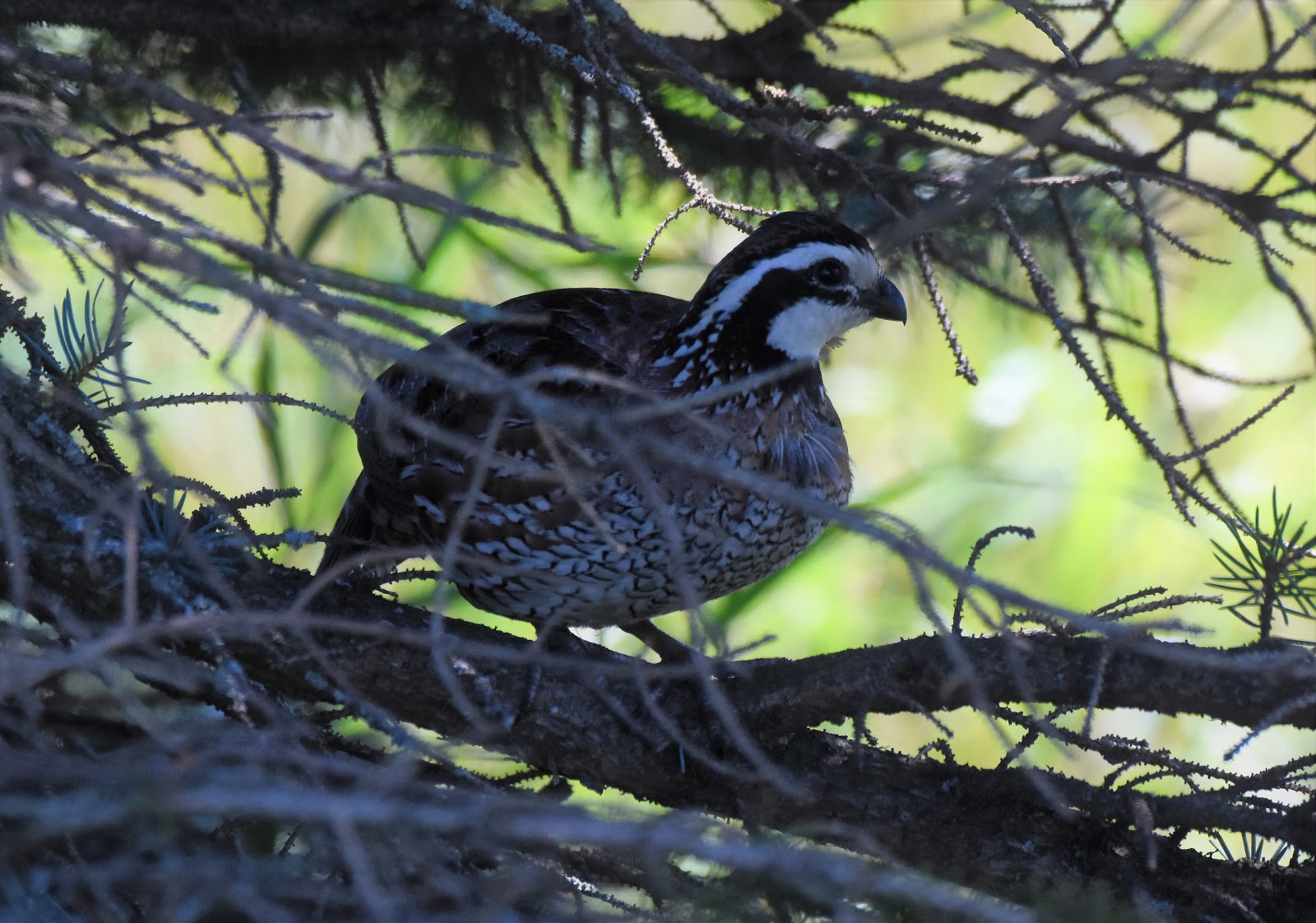
a Northern Bobwhite in Wisconsin
Finally.  There are two great mentions here.  We cannot forget these Arizona birds.  And it's important to note their status.  The Northern Bobwhite was once commonly found in the southern grasslands of Arizona.  Some even say that there are still small populations that continue along the US/Mexican border.  They are a unique subspecies of Northern Bobwhite that are often called Masked Bobwhite.  


Similar to the Masked Bobwhite, this is another subspecies of Northern Bobwhite in Chiapas, Mexico
This subspecies of bobwhite was wiped out from the area due to cattle grazing.  Today as the Federal Government restores the grasslands of the Buenos Aires Wildlife Refuge, it faces the huge task of reintroducing this species back onto their former grasslands. They have a facility that contains 98% of the world's population of Masked Bobwhite. The Phoenix and San Diego Zoos are also involved now to protect these birds from another possible avian flu epidemic.  It has been a decades struggle and their reintroduction has hit many bumps which include disease and domestication. Today, workers are trying something new and perhaps, Arizona will one day have a wild and special population of Northern Bobwhite living freely in the grasslands along the border. 


Greater Sage-Grouse in the Pacific Northwest
And finally, it is important to note that Arizona was once home to a small population of Greater Sage-Grouse in the very northern regions of the state along the Utah border. I remember asking myself this question years ago.  Why couldn't there be Greater Sage-Grouse here?  Over time, I discovered from study and conversations that their ranges across the US and Canada have seen drastic changes over the decades as housing and farming developments destroyed a lot of their habitat.....and leks.  In a recent report, their populations have risen sharply which gives me hope for their future.  Will they ever return back to Arizona?  Is there a lek we don't know about along the border?  These are questions that only time will answer.  


Photo not mine.  This is from Tucson Daily Photo
I love the chicken birds. In Arizona, you can reliably count on 5 species of grouse, quail and turkey.  The question is. Can you find them all? I still need to find that darn Dusky Grouse!  My next series will be on Grebes and Loons.  Until next time.....