Showing posts with label Chukar. Show all posts

Tuesday, September 26, 2017

Las Aventuras: Arizona Quail and Grouse

Gambel's Quail-male; he is territorial and watching out for his partner and little ones
In Part 3 from my blog series on Arizona birds, we'll examine the chicken like birds that hang out in the state. This is a popular group of birds that visitors and locals alike hope to spy on their walks.  We'll once again examine what's countable and where we can find them.  This group of birds is unique in that humans have played a role in some of the species living here in the state. Let's get started with the native and local species first.  The Gambel's Quail. 


The female Gambel's Quail carefully takes the little ones to safety while the male keeps an eye out for Cooper's Hawks
Gambel's Quail are one of the most easily seen quail in the state. They are found in local parks, around the deserts and foothills of the Arizona landscape.  Most often they are vocal and seen in larger coveys.  But don't get too cozy.  The rest of the quail species can be tricky!


This male Scaled Quail is looking for love from within his territory
Over the years, I have gotten to know the Scaled Quail better.  This quail can be difficult to find during certain times of years.  And while locals who live in their habitat range say that they are backyard birds and easy to spot, this isn't always the case. They are common and widespread in Southeastern Arizona in the grassland range around places like Cochise Lake in Willcox or along the San Pedro Riparian area of Sierra Vista.  And even then, they can be shy.  

These two birds feed safely under the vegetation out of hawk sight
As a birder, I'd give this quail a rating of 3 on the 1-5 difficulty range(5 being most difficult).  People have been known to dip on this quail. When the males are calling, it's easy.  Quail and Grouse CAN be easy to spot during their breeding season ANYWHERE.  But the thing is, birders don't always have the luxury of visiting during their most vocal and visual time period.  So let's go onto EXTREMELY difficult. 


the male Montezuma Quail sits completely still on a rock watching me watching him; there we scream inside of our heads with excitement over our discovery!  YES!  But we barely breath while looking at the bird:)
Montezuma Quail.  Birders say that you never should look for them.  Instead, they'll find you when the time is right. But what if you don't have a lot of time to spare?! This bird is a FIVE on the difficulty scale.  It is a common bird.  But don't take the word "common" to mean that they're easy to spot.  This quail is super intelligent and is quick to disappear at the slightest sound.  And if they can't escape, they will remain completely still until you almost step on them.....and then as you are about to step on them, they BLAST off giving you a near heart attack.  And if you feel stupid for not having better eyes, DON'T.  This happens to so many birders of all skills.   


The good thing is that these birds are often times vocal and have an eerie martian call. Most of the time they are heard nearby but never seen.  Over the years, I have played games with these birds as they have played games with me.  Like the Flammulated Owl(in a later post), it sometimes takes a team to triangulate their positions.  The good part is that they will freeze hoping you won't see them.  If you get great views of this bird, consider yourself blessed by the bird gods. 

The female tries to hide from me.  My team mate signals with his hand that the female is exposed! It took two of us to triangulate her position before she gave up and flew off. 
So for now, I'd like to address the OTHER 2 quails that have been reported in Arizona.  The first 3 are native species and common in their habitat range. The California Quail below was introduced on a hunting ranch many years ago up in the White Mountains. The habitat in that area is unique and not very large.  But it was enough to sustain a population of countable California Quail over the years.  These birds are native from California and up along the Pacific Coast.  They can be found in Utah and Idaho.  They were also introduced in Chile and other countries around the world.  But in Arizona, there is only one spot you can go to see them and count them on your ABA list.  Most of the time, they are heard only birds because the vegetation is thick around the Wenima area where they live.  Arizona birders will chase these birds to come back with only a recording of their calls as a reward for their hard work. Difficulty level is a 4 or 5 due to the location. 


The California Quail, as seen in Pacific Northwest, feed in a large covey

The OTHER quail is known as the Elegant Quail. It's a beauty and a common bird for Mexico.  Many years ago, one was recorded in the town of Douglas.  Many believe it was an exotic bird released from a cage.  And yet the possibility is that this one bird strayed quite a ways outside of its northern most range and got mixed up with a covey of Gambel's Quail.  Quail don't migrate or fly long distances outside of their ranges so for one to show up in Arizona is suspicious.  Either way, one was recorded in this state. 


The Gould's Wild Turkey of the Santa Rita Lodge in Madera Canyon put on a show for us.  This tom is looking for a lady!
Now let's move onto grouse and turkeys.  A nemesis bird for me over the years has been the Dusky Grouse.  It's the ONLY grouse found in Arizona and it's normally seen in the northern parts of the state around places like the North Rim of the Grand Canyon, the San Francisco Peaks near Flagstaff and near Greer in the White Mountains. 


Wild Turkeys were once almost hunted to extinction in North America.  Today, thanks to conservation efforts, their numbers are healthy and growing.  In Arizona, there are two subspecies of Wild Turkey, the Merriam's(common to most states) and the Gould's(common for Southern Arizona, New Mexico and Northern Mexico).  If you're a bird nerd like me, you'd want to see the differences between the subspecies. Most people wouldn't care because a turkey is a turkey. But to find this Merriam's subspecies, we went to the North Rim of the Grand Canyon. To find the Gould's Wild Turkey of Southern Arizona, you'll need to head to the foothills on up into the forests of the sky islands. Further south towards the border, they can be found along riparian corridors. 

Ring-necked Pheasant
Now.  Let's go through the rest of the "game" birds.  Ring-necked Pheasants were introduced to the US decades ago for hunting purposes.  Eventually, several states saw them "naturalize" and become permanent residents around the US.  Today, they continue to release these birds for hunting purposes. In Arizona, the ONLY countable population is found around farm fields bordering California, Mexico and the Colorado River near Yuma, AZ.  If they are found anywhere else in the state, they are not ABA countable. 

Chukar on Antelope Island near Salt Lake City, Utah
Chukars.  Another introduced bird to the US.  Again, several populations naturalized in states like Oregon, Utah and Idaho.  Here in Arizona, the only countable Chukar would be the one found near the Arizona/Utah border. Chukars have been found in other places around the state but are considered survivors from hunters releasing them into the wild for target practice. 


a wild Indian Peafowl at a park in Orange County, CA


Indian Peafowl are not countable.  In California, they are breeding.  But in Arizona, they are considered escapees. 


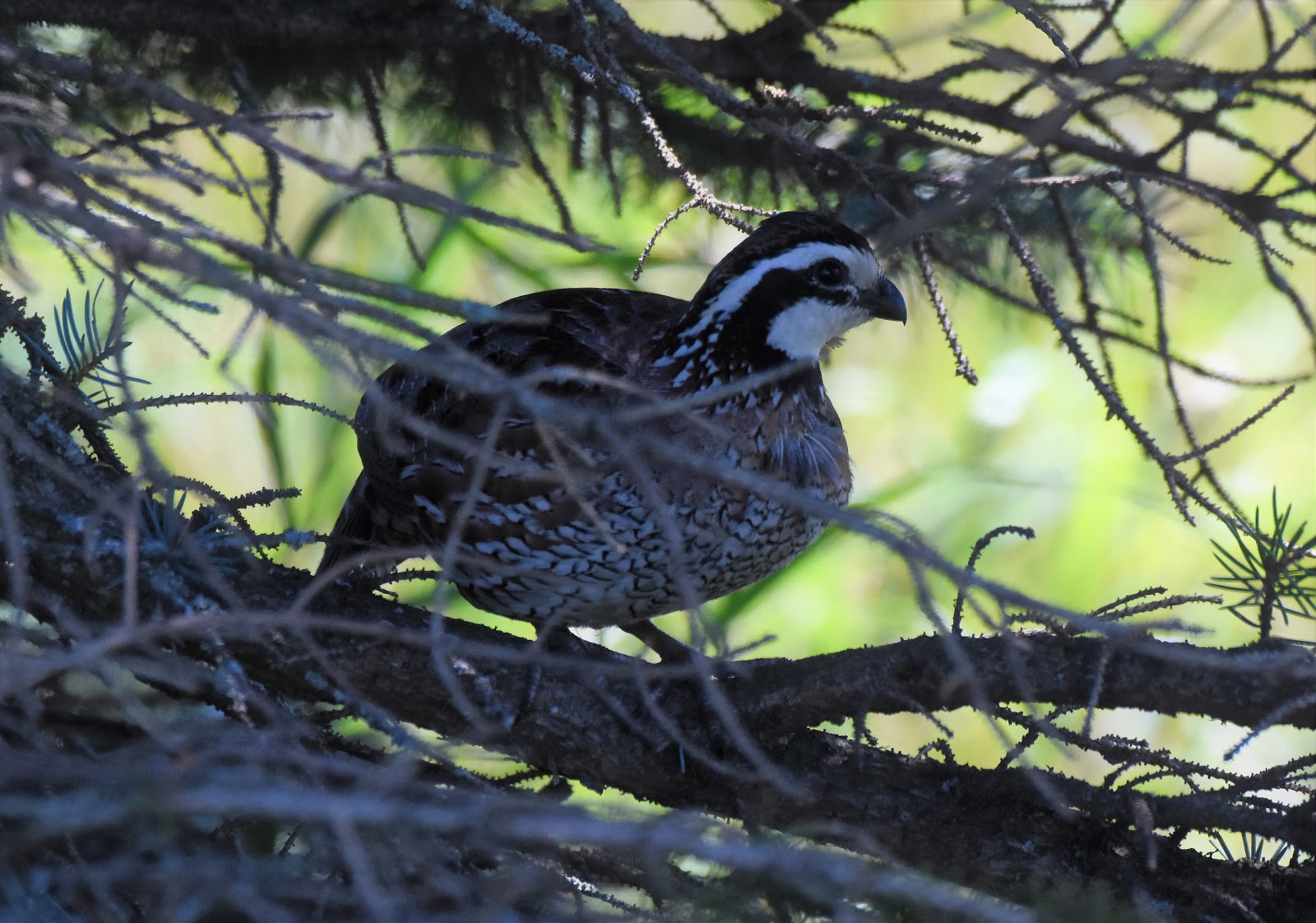
a Northern Bobwhite in Wisconsin
Finally.  There are two great mentions here.  We cannot forget these Arizona birds.  And it's important to note their status.  The Northern Bobwhite was once commonly found in the southern grasslands of Arizona.  Some even say that there are still small populations that continue along the US/Mexican border.  They are a unique subspecies of Northern Bobwhite that are often called Masked Bobwhite.  


Similar to the Masked Bobwhite, this is another subspecies of Northern Bobwhite in Chiapas, Mexico
This subspecies of bobwhite was wiped out from the area due to cattle grazing.  Today as the Federal Government restores the grasslands of the Buenos Aires Wildlife Refuge, it faces the huge task of reintroducing this species back onto their former grasslands. They have a facility that contains 98% of the world's population of Masked Bobwhite. The Phoenix and San Diego Zoos are also involved now to protect these birds from another possible avian flu epidemic.  It has been a decades struggle and their reintroduction has hit many bumps which include disease and domestication. Today, workers are trying something new and perhaps, Arizona will one day have a wild and special population of Northern Bobwhite living freely in the grasslands along the border. 


Greater Sage-Grouse in the Pacific Northwest
And finally, it is important to note that Arizona was once home to a small population of Greater Sage-Grouse in the very northern regions of the state along the Utah border. I remember asking myself this question years ago.  Why couldn't there be Greater Sage-Grouse here?  Over time, I discovered from study and conversations that their ranges across the US and Canada have seen drastic changes over the decades as housing and farming developments destroyed a lot of their habitat.....and leks.  In a recent report, their populations have risen sharply which gives me hope for their future.  Will they ever return back to Arizona?  Is there a lek we don't know about along the border?  These are questions that only time will answer.  


Photo not mine.  This is from Tucson Daily Photo
I love the chicken birds. In Arizona, you can reliably count on 5 species of grouse, quail and turkey.  The question is. Can you find them all? I still need to find that darn Dusky Grouse!  My next series will be on Grebes and Loons.  Until next time.....

Monday, January 4, 2016

Las Aventuras: Americano

Working at our Mexican booth with Yogi for the Wings Over Willcox event
I began 2015 with 588 Life birds. And I finished with 704.  My first life bird of the year was the Common Crane and the last?  You'll find out:) "Americano" has been one of the most challenging years for me as a birder.  There were things I loved about this chapter of my birding career and other things I'd rather not repeat.  Let's take a look back at 2015.  While Colorado and New Mexico have stolen my heart, California and Utah made me cringe. Mexico was a thrill as were Wisconsin and Arizona. So let's get started!

The most exciting outdoor trip?


Mary's Lake Campground near Estes Park, CO
During the month of June, we headed up to Estes Park for a camping trip.  It was in our campground that we heard a Boreal Owl calling.  The weather was great as were the hikes!  From the post, Legends of Destiny. 


The most frustrating experience?


In the cloud forests near San Cristobal De Las Flores, Chiapas
I learned some very important things about myself during my trip to Chiapas, Mexico.  1.  I really hate rain while I'm trying to photograph life birds for the first time.  2.  Large groups are not my thing while I'm searching for life birds. Birds tend to hide when crowds amass in great numbers. I loved the people, but 12 people in a birding group is challenging for a wandering gypsy:) Oh! And 3. Giving up control on how you bird!  That was really hard! From the post, Rain Rain Go Away!


The craziest experience?

I wanted a California Condor this year but not in Arizona.  I had wanted to see if I could find one in Utah at Zion National Park. BUT!!!! In order to get to the spot, we had to do this crazy hike to the top along a cliff.  I hate heights and this trek truly challenged me:) I honestly didn't research this one and let Micheal plan it out.  I'm glad he didn't tell me ahead of time how scary this hike would be. Luckily, I found my California Condor at the top and the hike paid off! From the post titled, Mukuntuweap.

Angel's Landing

A Moment of Pure Joy?

Bear Lake, Rocky Mountain National Park
One of the most magical moments happened this year during a snow storm in Rocky Mountain National Park, CO. It was a silent and beautiful walk through a snowy and quiet woods along a mountain lake.  I was with my birding bud Kathie Brown.  The birds weren't very vocal, but the walk was quiet and the scenery was breathtaking around Bear Lake. I felt like a little kid again playing in the snow. From the post titled, Winter Wonderland. 

Best couple activity?


We got married in Rocky Mountain National Park with our families together.  Here we rented cabins and it was like we were back in Minnesota at the summer cottage so many years ago. The post is titled All With the Family. 

Strangest bird?


This gorgeous little brown bird, the Cinnamon-bellied Flowerpiercer, hopped around like a warbler yet hung out with hummingbirds.  It was VERY unusual!  As the name suggests, it uses its' bill to pierce flowers for nectar. While hummingbirds pollinate other flowers, this "nectar robber" does not:)  Fascinating!

Rarest sighting?


What was my best bird this year?  Well there were many, but there is usually one that truly stands out.  This year it was a Nava's Wren. It's a very specialized bird living in a hard to reach habitat.  The bird is only found in 9 locations in a very tight geographical area. It's range is...you guessed it....declining due to urban sprawl, cattle ranching and road construction. It's a bird of the darkness.  It clings to the shadows.  It lives and breeds within limestone caves and can  be found around limestone outcroppings.  This wren was tricky!  But a little patience paid off BIG TIME.  From the post, Vanishing Lands. 


Best study sessions?


I have gotten to the point now in my birding where I am fascinated by data.  This year, my first count was with Magill.  Here we ran around the urban sprawl of downtown Phoenix counting the expansion of Rosy-faced Lovebirds in some sketchy areas. I loved it!  My other project is ongoing and continues in Northern Sonora at the Aribabi Ranch.  It's a newer "patch" that I have been monitoring since 2013.  From the posts, To the Heart of the Matter and The Water Highways


Stupid moment?


Elegant Trogons.  I hear their call and always get excited.  So I leap over rock and river to observe this lovely bird.  As I am recording audio on this bird, I slip and my cell phone slowly flies out of my hand as I say, "Noooooooo!"  It lands in the river upright and is my first cell phone mishap.  Luckily, I find out Micheal extended the warranty on my phone and we were able to replace it. From Blood and Stone


Most epic moment?


Searching for the White-tailed Ptarmigan at the Alpine Level of Rocky Mountain National Park.  That was one epic trek!  From Destiny Awaits

Most painful?

 Oh, that one is easy.  There was a hot Mexican number by the name of a Tufted Flycatcher(Code 5) who decided to make the forests of the Huachuca Mountains home for the summer. In May, we hiked miles to get to this bird through forest, rock and stream to find these two tiny birds nesting. It took everyone about a week to recover, but those flycatchers were sooooo cute!  And worth it! Plus the hike took us down into some amazing scenery.  The Tufted Angels


Favorite place to bird?

The Chiricuahua Mountains.  If you have never been, you must go. This place has more animals than people!  It's so much fun. 


From the Portal based blog series Not All Who Wander Are Lost

A place I could call home?


I love Gunnison and I keep dipping on the Gunnison Sage-Grouse. And I hope I keep dipping on the bird because I love going back to that cute little town in Southwestern Colorado. 

Perfect weather?


I've discovered I love snow. I love a hot steaming cup of coffee as I watch birds in the snow. I love birding New Mexico. A LOT.  I love birding Wisconsin. A LOT.  I left my family in Wisconsin many many years ago because of the weather.  In my younger years, I had to explore the world and now as I age, all I want to do sometimes is go back to my personal Shire.  Is that strange?  I think that's why I love New Mexico so much.  The people are real.  They are kind much like the people of Wisconsin.  And these two states win the Americano award this year for best local eats, friendliest people and best overall birding.  From the posts Close Encounters of the Bird Kind and A Balancing Act. 

Bitter Lake near Roswell, New Mexico

The social connect?

 This year I had the pleasure of birding with several incredibly cool people that I had never met before.

Kathleen Cameron explores Madera Canyon for the first time!

Most overlooked place to bird?


Gunnison, Colorado.  There's more here than just the sage grouse!

Most scenic?


Heart attack moment but WOW!  The Alpine region of the Rocky Mountains is spectacular!  What a treat!

Sacred Bird Moment?


I was surrounded by thousands of Sandhill Cranes alone as they passed just feet above my head.  I could feel their wing beats as they went to settle down in a water area nearby.  From the post Carry Me Wind

The "I hate all birders who don't have jobs" moment?


Probably one of the biggest moments for birders this year in Tucson happened when a pair of RARE Trumpeter Swans flew into the Sweetwater Wetlands for the day.  Every birder and their mother went to observe these birds.  And me?  Oh, I just stuck in my classroom staring at children taking a test.  I paced my room like a caged animal.  When that school bell rang, I shot out the door to observe my lifer Trumpeter Swans before the sun set. That night, the swans left Tucson and were never seen again. From the post Miraculous Chaos

The worst decision?


Gray Vireos can suck it.  There is one excellent place to see this amazing bird.  If you have a good vehicle, the roads of Mt. Ord can be quite inviting.  However, even if you have a good vehicle, that doesn't guarantee you won't get a flat tire in the middle of nowhere. But hey...the views are amazing!  So are the Gray Vireos. From the post The Land of Shadows.  

Most studied bird?


Hermit Warblers.  This bird wasn't a lifer but it was the most studied.  During migration, I went to several locations to really understand this bird.  And I feel like I now know this warbler well.

The bird that scares! 


The Pomarine Jaeger.  A bird that eats gulls.  It's a flying tank on steroids.  And there's nothing stopping it!  Favorite Jaeger hands down!

The bird that forced me into a place I would never visit.


Utah. The land of Chukars and weirdos stuck in the 1950's culture of secrets, fake smiles, lies and cloning their neighbor, the Joneses. But it's one of the few states with countable Chukars.  It was exciting to see this bird with my friend Mia.  Utah's culture was not my thing. The landscape was quite beautiful but I will not be returning there anytime soon. 

Last bird?


 Perhaps in the strangest of ways, I was meant to find the Whooping Crane.  It was not expected during my visit to Wisconsin and yet there it was. I began the year with a crane so it seemed natural to end with another amazing crane.  This endangered bird was a great way to bookend my year of discoveries.  I sat in my car with the windows down breathing the chilly air thinking about the amazing world of birds.  During 2015, I saw 560 incredible birds in North America meeting my year goal.


As we begin the year again, I sit down and plot a new course taking me both to familiar and unknown areas searching for our planet's birds. I will take on new roles as a bird field guide. My life continues to change as it does for everyone. Let's get this 2016 year started with wonderful memories.  Until next time!

Wednesday, October 28, 2015

Antelope Island

Bison at Antelope Island State Park
We wandered further North into the state of Utah searching for the Chukar. This bird originally hails from Pakistan but was introduced into the US as a game bird.  The bird prefers rocky and arid landscape which was exactly the reason why we had to go to Utah.


Helping us find this bird was none other than Mia McPherson.  She is one of the best wildlife photographers out there.  And it turns out that she's also a wonderful person to get to know!  Our main target was the exploration of Antelope Island State Park near Salt Lake City.  It's located within the glassy waters of the Great Salt Lake.


Thousands of American Avocets hang out near the causeway
As we scanned the causeway onto the island, we saw thousands of birds covering the patchy stretches of water around the Great Salt Lake. Today that "lake" is disappearing due to drought conditions and water usage. Waterless piers that once held skimmers are now void of any traffic.  Hopefully, Utah will benefit from the wet El Niño winter pattern that has begun to take hold for many of the Western states.  

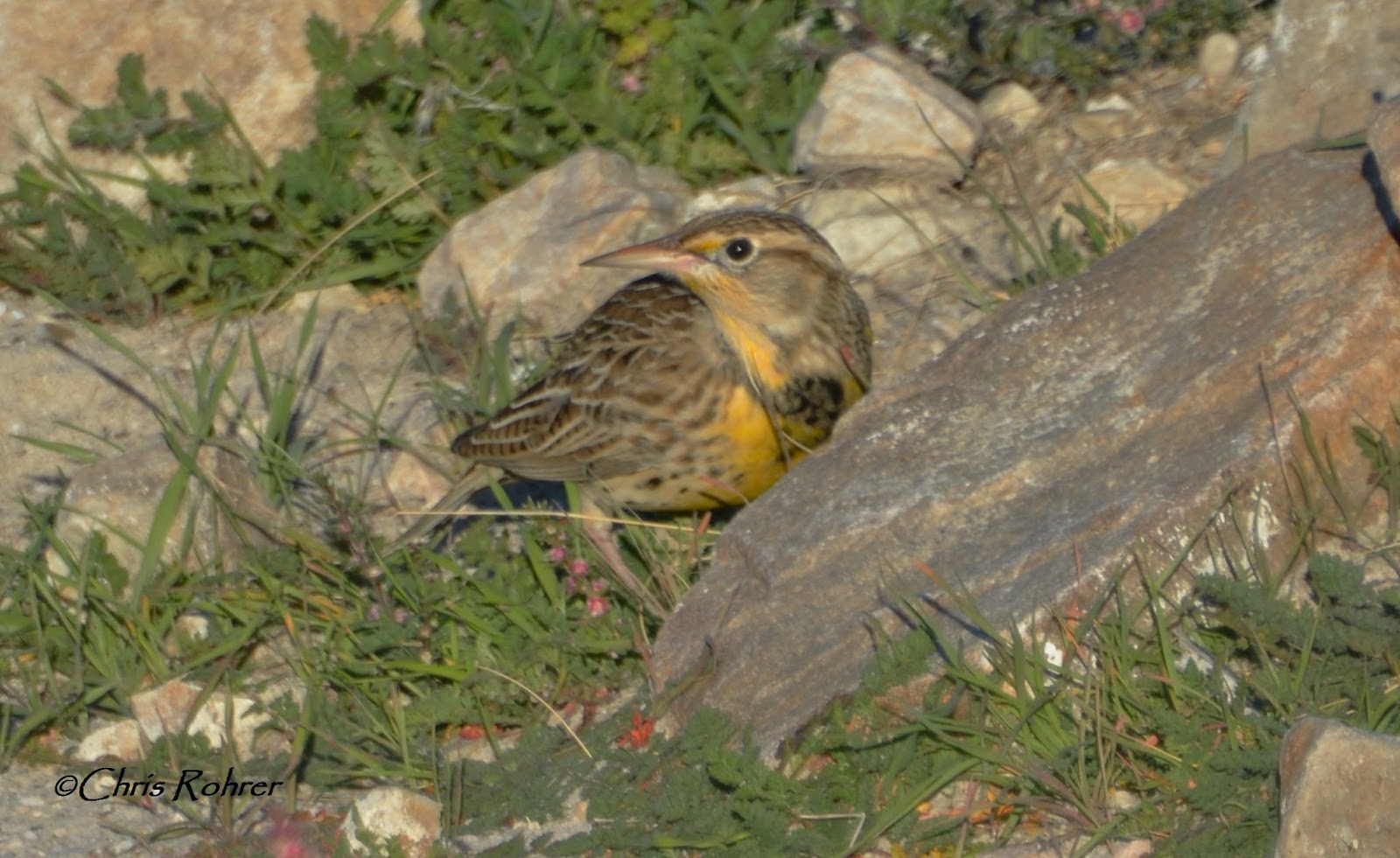
Western Meadowlark near the empty piers
And yet, there are still areas that have larger patches of water. It's strangely a beautiful sight to see.  There were so many water birds around this island that I forgot we were exploring a drier area of the US. 

Phalaropes fly over our heads from out of nowhere!
Once on the island, I kept my eyes and ears open for the Chukar.


Several moments later, I heard "different" birds making an unusual chatty sound nearby the visitor center.  My eyes focused on the various rock outcroppings and boulders in the area.  And then......


......it happened!  I saw Chukars sitting on top of rocks.  And not just one or two but MANY!  I quietly walked down the path and turned the corner of a large boulder.  As I did, a pair of Chukars faced me only several feet away.  And in that moment of quiet, we watched each other carefully.

Chukar
Antelope Island is truly a magical space that doesn't feel anything at all like Utah.  Or maybe it does feel like Utah? I don't know.  I haven't visited enough of Utah to make a judgement, but I can tell you that I loved it. I highly recommend this state park for a visit. There were RV's parked in their camping areas and I was a bit envious that people were able to spend several nights on this island.

Sage Thrasher
The golden light of the Utah sun made for wonderful photo opportunities. A pair of Sage Thrashers popped up on greasewood for some lovely views.

Horned Lark
While Mia navigated around the island, we were always careful to keep an eye open for the many bison walking around the roads and paths.


We stopped along the way investigating unusual habitat on the island.  At this particular stop(below), Mia showed us an older Black-billed Magpie nest.  This dome creation is a piece of art!


At one point, I had my window open and almost fell asleep.  I was SO relaxed. The urban sprawl of Salt Lake City stopped at the the entrance to the causeway.  And the island was a sanctuary of peaceful thoughts.


The golden browns of the landscape can make bird spotting a challenge.  Take for example this Wilson's Snipe below.  Mia spotted the bird along a riparian area and it took me several minutes to find her snipe!!!  It was only a couple feet away from my face!  Camouflage!

Wilson's Snipe
Our adventures in Utah would continue one more day.


I'd like to thank Mia for her friendship and also for her time showing us around the natural spaces of Salt Lake City.  I will never forget this trip out to Antelope Island. 


On our final voyage into Utah, there was one other bird I so badly needed to find.  Stay tuned for more......