Showing posts with label Vesper Sparrow. Show all posts

Monday, May 25, 2020

A Mental Pause

Mountain Bluebird
After the constant chases for really rare birds, it was time to take a break from all this Covid madness.  We headed up to the White Mountains to celebrate the end of our school year party.  Usually we go to Mexico, but this year, we altered the plan and chose cooler temps. Plus the border is closed:(


I went with my peeps where we drank beer, hiked and of course, watched birds, Elk, Pronghorn and so many other critters! They have eased restrictions in many places around the state and we were able to have our first beer together in public.  I didn't realize how wonderful that would feel. And there was live music! It was a well earned break.

Vesper Sparrow
It was also a working vacation so we brought our laptops and had zoom meetings.  This was the final week of school! We were at our whit's end with some of our students. And unfortunately with some parents who didn't monitor their kids better.  I hope, but I doubt it, that they can appreciate our classroom management skills now.  Things are still not normal.  Summer school was cancelled after much discussion.  Many parents refused to do online summer school (I get it) but it couldn't  be done.  Now there will be no summer school making the consequences for students who failed courses much more meaningful. 


Band-tailed Pigeon
It certainly has been a challenging time for all of us. Parents are NOT teachers.  And we are NOT parents.  A lot of students did a great job online, but for the ones who didn't do any work, it made things very stressful.  Sometimes I'd have to break quarantine and go to school and call parents.  I'm certainly not calling them on my personal phone!  From my work phone, they got an earful...in a kind and wonderful way.  But it was direct and to the point.  


We gave our seniors a proper send off.  It wasn't the same though and for many, it hit them that night as they wouldn't be able to throw tortillas into the air and say good-bye to one another. I felt their sadness on this day. I volunteered because believe it or not, I missed them. (Don't share that information with any of them though:) I felt a little bit of moisture around my eyes and rubbed it away. It must have been allergies. However, our school did a great job giving those kids....those young adults....a proper closure. The admin did a huge amount of work organizing this major operation in a safe manner for all.  My hats off to them!

Bullock's Oriole
As we were signing off, I also had the hard realization that my Panama trip would be cancelled.  The Corona virus has taken off in Central and South American countries.  The borders into Mexico are closed. Panama has banned all commercial flights into the country.  I haven't seen my friend Gordon, who was supposed to go on this trip, in over 2 MONTHS!  In fact, I miss many of my birder friends. Watching the Seniors at graduation process their final days also forced me to realistically evaluate what would happen for the summer. It put me in a funk. 

Desert Grassland Whiptail
The silver lining? Our Tucson Audubon fundraising event was more than a success!  We raised over 53 thousand dollars for this year's birdathon fundraising drive! We were super thrilled!  There were more participants this year AND we raised more money for a great cause!


There are days when I feel like I'm moving from one endless morning into another.  Summer has officially started for teachers here with those lovely hot 100 + temps. All of us are in this uncertainty cloud. Summer is about renewal for us.  Now, there is nothing to look forward to.  There is just a lot of unknowns. It was good to hear that I'm not the only one dealing with this stuff. I still hold onto my Panama ticket with the dreams that I will be able to go even though our group will not. It's not going to happen.  The Harpy Eagle will have to wait. 

Yellow-breasted Chat

Oh I still look at our AZ birds with a great fondness.  But I'm a gypsy at heart.  My hunger to learn more is ever present.  I have put together the last of my western birds that I need for my Plan B Tufted Puffin project. Plus, it's an escape from the heat. It would be a beautiful trek into California, Oregon, Washington, Montana and Idaho states.  There are 17 life birds left in this region.  Assuming I find all these birds, there will be little need to visit the Northwest again. Over the years, I have enjoyed dipping on the Gunnison Sage-Grouse in Colorado because it just means I get to keep going back there and trying. There is the Black Swift under a waterfall in Ouray, Colorado that I need to visit.  So on and on it goes, but I see the end coming for these states.  And it's hard to imagine never going back to them again.  

Turkey Vulture
10,000 life birds is a dream.  They keep me focused like a laser pointer. In Arizona, what was once a challenge for me, is now known and memorized.  I still pick up a few things here and there about our local birds.  They are still interesting, but it's not new.  I have this drive to push the envelope. And my focus has wandered. Reptiles have captured my interest. This year alone, I have actively sought, or not, snakes!  What is happening? The things that scare me are now the things I really want to learn about! Of course, having a friend like Celeste who loves herps has made me more curious about them. 

Yellow-headed Blackbird
One night, while I walked out into my garden and filled my bird feeders, I saw the moon flowers of my night blooming cacti. The air carried the heavy fragrance of the honeysuckle vine.  It was my little moment of perfection here in Tucson. In my garden, I have created a home for wildlife. I find that I've been turning more into a local naturalist. My cats certainly approve!  They do a great job chasing the White-winged Doves off of the window feeders!


I'm glad to be able to bird with my friends who are here.  My mind is also with my friends afar.  And my thoughts wander towards those who have life circumstances that have redefined their explorations for now. Birding used to be so easy.  Our lives are like an hour glass; we only have so much time before that sand runs out. It's been a meaningful time for many of us learning that we are all social creatures. For some, this is a dream!  I used to take some of my travel for granted, in that I could always do it if I wanted. Now that everything has been turned upside down, I crave that time with other people wanting to do those treks to new worlds and cultures. 


My brother back in Wisconsin has been enjoying the massive migration of the Ruby-throated Hummingbirds, Orchard and Baltimore Orioles, Scarlet Tanagers and Rose-breasted Grosbeaks.  And of my family, I think he is the one who understands my love for birds the most.  Granted, a lot of my family loves the birds, but he has a bird book!  And he was able to pick out an Orchard Oriole.  Maybe one day when we are older and retired, my brother and I will go on a birding trek somewhere and do some hiking. This is certainly a time of great pause in our lives.   


The canopy of a Central American rain forest will have to wait. 
Next week, we explore the border along Southeastern Arizona. It's a rare trek for two days into some really wild country!  Until next time.....

Monday, November 25, 2019

Slow But Steady

A Rock Squirrel keeps on the look out for a very hungry Red-tailed Hawk in the area

Before my trek to Oregon, I began to feel pain around the left side under my rib cage.  This routinely has happened to me since I was 32 and always during the same time period.  I'm not sure what it is, but I end up in the ER every time and every time they tell me I'm fine.  And then I throw money out the window. Money that could be used to pay off bills OR go on a birding adventure. 

Chipping Sparrows at Reid Park
For the remainder of the year, I have decided to stay in Tucson.  I was going to head to Mexico City over the holidays, but I think I need to let this body rest.  I will say that it has been nice NOT having plans over break. Instead I'll be working on making better habitat for my birds in the garden. 

American Pipit at Canoa Ranch
While the pain has subsided quite a bit, I still don't feel 110 percent. I'm running at 80 percent right now.  I've found that if I relax, everything gets better.  I've been go go go for so many years that I think my body is telling me to stop and just be present in the moment. 


A Verdin interrupts a Brewer's Sparrow's alone time
And not so far away from my home, I can find so many wonderful local birds and still be home by the late morning.  I get anxious if I don't go birding.  I have to bird at least one place once a day for at least 15 minutes. So it's fun birding my own backyard and I am thankful for my feeders. 


Grasshopper Sparrow at Canoa Ranch
And for everything that has happened over these past weeks, I have a better appreciation for those who want to bird but struggle with health or aging issues while on the trails. 


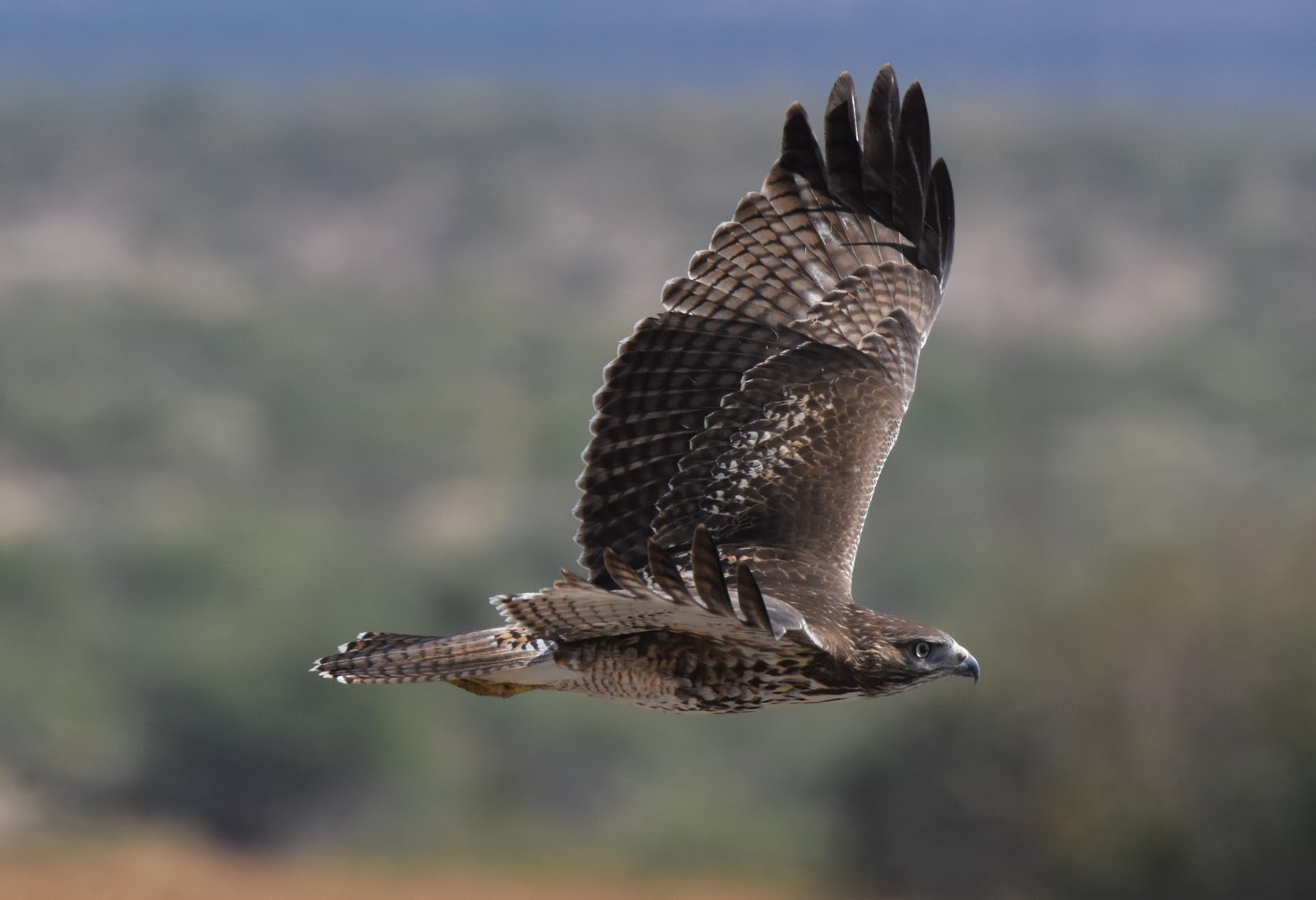
A Red-tailed Hawk hunts and jumps off a perch
I find that birding keeps my mind distracted from my own issues. And birds are amazing. 

Vesper Sparrow
And while I'm resting, I've been doing research on several countries for next year's treks.  Travel is a marvelous thing and reading up on new species of bird takes time. My office is cluttered with bird books and magazines. 

Phainopepla
I bird the local parks with vigor observing closely the birds that I know well.  And with that pent up birding energy, I've discovered some amazing birds without having to drive far.


Black-crowned Night Heron, juvenile
Winter has arrived in the Old Pueblo.  As of this write, yet another rain storm is projected to hit us by Thanksgiving. 


Black-tailed Prairie Dog
Like always, we keep our eyes out for rarities.  So even when I'm sick, I still make a little time to look for something new at a local hotspot.  Hopefully things will get better and I'll be on that road again soon searching for new species.  To all of my US readers, have a wonderful Thanksgiving. And to everyone else, hope you have a great week ahead.


A rare Ruddy Ground Dove on my survey grounds at Reid Park
Until next time friends....

Tuesday, October 3, 2017

Las Aventuras: Arizona Sparrows

A beautiful Baird's Sparrow taken in the pristine San Rafael Grasslands near Patagonia
Continuing with Arizona birds, I thought I'd focus on sparrows today.  And only sparrows(because there are a lot of them!) This is a group of birds that will challenge beginners.  While some are easy to ID AND find, there are others that are quite the opposite:) I won't be including towhees or longspurs or those Lark Buntings:)  This is one of my favorite groups of birds and this past week was an exciting one for birders in Southern Arizona.  But more on that later.....


Today we'll look at the common and rare sparrows found in Arizona during both our summer and winter months.  Let's start with the Baird's Sparrow.  This is a secretive wintering sparrow found in the grasslands of Southern Arizona.  While it is common within its habitat range, it's a difficult bird to view due to its mousy nature in the grasses.  I spent a weekend with a group of sparrow researchers to learn about this particular species.  It was fun and very rewarding to aide in their research. Birders sometimes have difficulty separating this sparrow from the Grasshopper sparrow.

a plain Savannah Sparrow near Sonoita, AZ
In fact, a lot of people groan at sparrow ID.  But over the years, I have really come to love this group of birds and their habitat.  Another wintering sparrow in Arizona is the Savannah Sparrow.  There are many subspecies of this bird and often birders are confused at first by the majority of Savannah Sparrows found here.  Their lores aren't as yellow(or no yellow!) as their subspecies counterparts.  Look at the photo above to get a better idea. 

Grasshopper Sparrow at the Cienagas Grasslands
Also found in the same wintering grassland habitat as the Savannah and Baird's Sparrows are the Grasshopper Sparrows.  They can be secretive as well during the winter months. But during the summer months, they are much easier to spy on their breeding grounds. Arizona is home to Grasshopper Sparrows all year round.  We have a specific subspecies(Ammodramus savannarum ammolegus) that lives here.  It's a bit darker than its subspecies counterparts. However, in winter, two subspecies can be found together in the grasslands making it a fun study session.

Rufous-winged Sparrow at St. Gertrudis Lane near Tubac, AZ
Sparrow ID can be challenging, but this is what makes birding a lot of fun! Understanding a sparrow by their call, movement, and knowing their habitat can help make ID'ing the bird easier. 


Rufous-winged Sparrow near Amado, AZ

Thought to be extinct many decades ago, the Rufous-winged Sparrow is a sparrow found in only a small habitat range in the Sonoran deserts of southern Arizona and the northern state of Sonora. Today, these sparrows are doing very well as their numbers appear to be growing again.  Recognizing habitat was a major factor for saving these sparrows, a plan was put into place to keep cattle grazing out of certain areas. In 1936, the species began to recover and today they can be found once again in good numbers around washes, grasslands, mesquite forests, etc. This is a sparrow that birders specifically look for here in Arizona as it cannot be found in other states around the country.  It is what we call an endemic to Arizona.

Chipping Sparrow along the DeAnza trail
Chipping Sparrows are common and widespread across the country.  Here in Arizona, Chipping Sparrows can be found all year round at the right elevation.  During the winter months, MANY Chipping Sparrows can be found around the state wherever there is water, grass and some trees:) They seem to enjoy the forest's edge. 

Black-chinned Sparrow near Mt. Ord
Black-chinned Sparrows are beautiful.  This is an easy one to ID but finding them can be difficult.  For example, trying to find one in Pima county is tricky.  They are found in a very specific habitat and elevation around places like Mt. Lemmon and Florida Canyon.  These sparrows become an easier spot up in the Phoenix area around places like Mt. Ord. When ebirding, be careful not to confuse the similarly named Black-THROATED Sparrow with Black-chinned Sparrow.  I've done that more than once:)

Lark Sparrow at Lakeside Park, Tucson, AZ
Lark Sparrows are another easy and widespread sparrow for Arizona.  During the winter months they are found in many of our hotspots in large groups.  What's cool about this bird is that it makes a buzzing fan noise that sounds like an insect. 


Rufous-crowned Sparrow at the Patagonia Rest Stop
One of the largest sparrows is the Rufous-crowned Sparrow.  It's also very common and widespread in the right areas all year round.  Sometimes from a distance, I think I am looking at a Canyon Towhee until I get closer. 


The next sparrow is a rare wintering Clay-colored Sparrow.  Now, they aren't common, but they're also not uncommon.  The bird will always be flagged on ebird.  If you have a camera, make sure you can get a pic of the cheek patch to help distinguish this bird from the similar looking Brewer's Sparrows.  It's a very subtle difference but an important one if you want to add it to your Arizona list. To make the ID even harder, the bird usually doesn't make its buzzy call like it does during the summer months.  Brewer's Sparrows at the beginning of their winter migration have fresh new plumage that can look bright like that of the Clay-colored Sparrow.  So cheek patch and divided crown are important field marks for this sparrow. 

A rare Clay-colored Sparrow at Bartlett Lake Marina, Maricopa County.  Often seen during the months of September and October passing through the area to their wintering grounds.  And sometimes one of them stays for the winter. 
The next sparrow loves desert hillsides.  It's also on most birders MUST SEE list for Arizona.  It's rather common in its habitat range BUT the habitat is tricky and usually requires a full day drive to the border.  I have taken many birders to find this species and I have to admit that it's fun but the rocky terrain is much to be desired. Common in a place called the California Gulch during the summer, ABA listers hope to see this bird in its breeding habitat on the hillsides. Now, this species does hang around all year in smaller numbers along the watering holes BUT they are trickier to find.  So for the summer trek, bring a good vehicle and lots of water!


Five-striped Sparrow in the California Gulch
Another favorite of mine is the Lincoln's Sparrow.  This sparrow has a finely streaked breast with a bit of yellow coloring around the malars to help with the ID.  It's common in Arizona all year round.  These sparrows winter in Southern Arizona around riparian areas and can be found up in places like Greer during the summer months.

Lincoln's Sparrow in Greer, AZ
These next birds are FUN!  But they can be tricky.  They are also present all year round but during the winter months, they are mousy and difficult to find. Many do migrate south, but a couple stay here. During a wet monsoon season, they are very vocal and active EVERYWHERE in the grasslands. 

Botteri's Sparrow at Empire Ranch in Pima County
The most common sparrows in the grasslands during the summer are the Botteri's, Cassin's and Grasshopper sparrows.  It's also the best time to get great observations of them. Study their calls and behaviors and you'll have NO problems.

Grasshopper Sparrow at Empire Ranch
A plain sparrow, the Brewer's Sparrow, is common and widespread along washes and farm areas.  During the winter months, they are often seen on fences near sorghum fields or dry washes with grass. 

Brewer's Sparrow on the Santa Cruz Flats
The striking and gorgeous Black-throated Sparrow is a common sparrow to the Sonoran Desert.  It's a bird that people want to see. The Black-throated Sparrow is an easy sparrow to ID and considered by many as one of the elegant ones:) It lives here year round. 

Black-throated Sparrow in Portal, AZ
A rare sparrow, the Golden-crowned Sparrow, might be found every great once and awhile mixed in a group of White-crowned Sparrows.  They aren't that common in Arizona and are indeed rare.  Even more rare than the Clay-colored Sparrows. To find them, find flocks of White-crowned Sparrows and carefully go through each and every bird. Who knows?  Maybe you'll find one. 


Golden-crowned Sparrows are rare in Arizona but with a lot of effort, a birder COULD find one. This was taken in Portland, OR
So let's head back to similar looking sparrows found in the same habitat at the same time.  If you haven't had much experience between a Botteri's or Cassin's Sparrow, they can be confusing.  It took me awhile to understand both these birds.

A Rootbeer delight!  The Botteri's Sparrow
So here's the skinny.  The Botteri's Sparrow(above) is a warm chocolaty color with a dash of lemon on the edge of their wings.  It has a ball drop call but it takes awhile to get to the ball drop:) Also, it's bill is quite large when compared to the Cassin's Sparrow.

A beautiful Cassin's Sparrow at the Cienagas Grasslands
The Cassin's Sparrow is PLAIN.  Sometimes there is a debate. Who's plainer, the Brewer's Sparrow or the Cassin's Sparrow?  And that's always an interesting conversation.  Or not:)  I find them all fascinating.  Why?  Well for one, the male Cassin's Sparrow LARKS during the monsoon season to attract a female.  See video below. 


It's flight is also unique as the wing beats are shallow and fast.  I might even say Bobolink like.


Sometimes there are sparrows that are seen everywhere and all the time.  Take for example the wintering White-crowned Sparrow.  I watched one take a bird bath at work during my lunch break.  Currently in birder discussions, this sparrow may be split into 2 species, both of which we have here.  Pay attention to the lores, Dark-lored(Mountain) and Gambel's(white). The bird below is the Gambel's White-crowned Sparrow. 

White-crowned Sparrow taking a dirt bath
With sparrows, it's all about the details.  Brewer's vs Clay-colored, juvenile White-crowned Sparrow vs juvenile Golden-crowned Sparrow, Bell's vs Sagebrush, etc.  Sparrows are tricky!  Here is the dark-lored White-crowned Sparrow below.  Can you tell the difference between the Gambel's and Dark-lored?


a dark-lored White-crowned Sparrow Will it be split?
But one sparrow that is easy to ID with its necklace is the Harris's Sparrow.  This is a rare sparrow for Arizona and it is generally seen during the winter months hanging out with.....White-crowned Sparrows:)  Or at least, it likes the same kind of habitat.  

A juvenile Harris's Sparrow at the Bosque Del Apache visitor's center
Now how about a super tricky sparrow species?  The Sage Sparrow complex.  Several years ago this species was finally split into two recognized species.  The most common of the two is the Sagebrush Sparrow found in sparse sagebrush habitat.  To be quite honest, the landscape and habitat for these two birds are not my favorite, but I did what I had to do.  

A Sagebrush Sparrow near Casa Grande, AZ
After the split happened, I attended an AZFO(Arizona Field Ornithology) meeting to learn more about these two species because I had NO idea how to ID the very similar looking Bell's Sparrow from the Sagebrush Sparrow.  It was a good conference and I quickly learned that the Bell's Sparrow has darker throat stripes(malars).  In fact, the malars are darker than their gray heads.  Furthermore, the Bell's Sparrow likes vegetation/sagebrush that is closer together.  Studies were done in both the "Thrasher Spot" near Buckeye and Robbin's Butte. They found more Bell's Sparrows in Robbin's Butte due to the close vegetation groupings.  The Thrasher spot had fewer Bell's Sparrows due to the sagebrush being spread further apart.The Sagebrush Sparrow arrives first and is the last to leave. The Bell's Sparrows generally arrive mid-November and leave early February. So the window for viewing this bird is quite narrow.  Either way, the habitat, especially at the Thrasher spot, looks like something out of a Mad Max movie. 

Bell's Sparrows at Robbin's Butte
I smile every time I hear out-of-state birders talk about our Song Sparrow.  Like the Savannah and Grasshopper Sparrows, our Song Sparrow is different.  It's more rusty red and it's a pretty common sparrow here in Southern Arizona all year.  Now in winter, we can get the other darker subspecies, but if you spot a rusty colored sparrow that looks like a Song Sparrow, you're viewing the Southwestern version of this bird. 

Song Sparrow at Sweetwater Wetlands, Tucson, AZ
Now let's get into some more strange sparrows.  Swamp Sparrows can and do winter here in Arizona.  They are NOT reliable and can be VERY tricky to spot.  But somehow every year, I manage to see or hear one or two in southern Arizona.  Take for example, the Swamp Sparrow below.  While looking for other birds, this little one popped out of the reeds along Patagonia Lake for a nice observation!

Swamp Sparrow at Patagonia Lake State Park
Another sparrow that is always a treat to see (but never location reliable) is the random White-throated Sparrow.  This photo was first taken during my first year of birding. During the winter months, I was birding at Sweetwater with my friend Kathie.  I remember complaining to her about how boring the sparrows were and then I saw this one.  And she got excited.  Little did I know that I found a rare bird!  It was exciting.  First year birder me has grown so much.  Today if I met my former self, I would have slapped my face and screamed, "What's wrong with you?!!! Sparrows are cool!" The reason I said what I said? I couldn't ID them and didn't think I ever could.   

My first White-throated Sparrow at Sweetwater Wetlands
Which bring me to my first sparrow I ever found alone in the wild, the Vesper Sparrow.  Again this is a common wintering bird in the grasslands.  Its nice pink legs, complete eye ring and overall streaky appearance makes this sparrow a relatively easy one to ID.  I reached out for help and called on a friend, master birder Scott Olmstead, who helped me figure out the bird on my own by asking me the right questions.  I'm not going to lie. This bird, which is now a snap to ID, wasn't always so easy:)

Vesper's Sparrow in the grasslands near Sonoita, AZ
The Fox Sparrow is another rare wintering sparrow that ALSO may be split down the road.  Like the White-throated or Swamp Sparrows, I never expect to see one.  And then I do.  They are often found shuffling around in leaf litter like a towhee near grasses and low branches near riparian areas or watering holes. 

My only good photo of a Fox Sparrow from Santa Cruz Island, CA
Now let's talk about the mega bird of the week!  Last week was an epic one. I love sparrows so much and this is one I wasn't expecting to ever see in Arizona, but then I did.  I had to make BIG choices.  I was at work when the report of a LeConte's Sparrow came into the birding newsroom. 


Nothing gets the heart tickin' than a good ol' fashioned sparrow chase.  I paced my classroom like a caged animal.  The problem?  I didn't have my camera!  The sparrow would be a life bird and if accepted by the state record committee, it would be the 3rd time that this sparrow has been seen in Arizona.  So it was a very good bird.  My work was close to the site.  There was no time to go home and get my camera because by the time I would have returned, it would have been dark. 


This sparrow wasn't going to wait around.  There was no tomorrow. It was a lifer, state and county bird.  When a bird meets those three conditions, it's a must go NOW with or without the camera. I rigged my IPhone and binos together to get the shot below. 

IPHONE shot of a RARE LeConte's Sparrow at Dove Mountain Golf Course
It was an exciting moment.  It took us around an hour to locate the sparrow but when the sprinklers went on around the golf course something clicked inside my head.  Sparrows like to bathe in water.  And sure enough, many sparrows were coming out to bathe.  I spotted another birder on the greens who waved over to me.  We met up and soon spotted the LeConte's Sparrow.  It didn't take long before the rest of the birders showed up behind us.  And there we all witnessed a Christmas miracle happen just a few feet away from us.  The sparrow moved closer feeding just a foot away.  No one moved.  No one said a word.  Then a sprinkler went on and spooked the bird off the greens and forced the now wet birders to retreat:)


Nelson's Sparrow along the coast of Maine/this would be RARE for Arizona
Other sparrows that have been reported over time have been a Nelson's Sparrow.  This is one cool bird and it would be a MEGA for this state.  When it makes its call, the sparrow sounds like it's dropping coins in a bucket!  

A Field Sparrow in Dodgeville, WI  But for one to show up in Arizona??!!!  That would be RARE!
Field Sparrows have been reported. That would be a cool one to chase. Again, it would be a MEGA.

American Tree Sparrow at Woodland Dunes in Two Rivers, WI  This is a very rare bird for Arizona in that it should never come this far south.  But one did!
An Arizona birder that most of us know here had an American Tree Sparrow stop by his feeders.  Yeah, that's another epic sparrow. 


If you don't understand sparrows or love them, then look at the amazing places they'll take you. How breathtaking is the scenery behind these people putting up their sparrow nets?  Any day, I get to work with sparrows is a good day


During our winter sparrow count, I met birders from New Mexico for the first time.  Above Dr. Janet Ruth releases that Savannah Sparrow.  And below a young Jason, learns how to band under the leadership of Janet.  Today, he's an expert bird bander!  


If I worked with birds in a job setting, I think that I'd focus my studies on sparrows. In fact, I probably would do a thesis or graduate paper on them. Sparrow research helps us understand how "healthy" a grassland is.  Their numbers, or lack of, help us determine if a grassland region is in good or poor health. This research speaks volumes about the importance of native grasses for these birds. The more sparrow/bird diversity found in a grassland; the healthier the ecosystem. 


All sparrows today mentioned in this post are ABA countable.  And let's not forget the invasive old world sparrow.....the House Sparrow. Sure people call it a "trash bird" here in the US, but we forget that their numbers have critically declined in Europe where they once thrived in great numbers.  Just something to think about.  Never take a bird for granted because tomorrow, they could be gone forever. 


Until next time.....