Showing posts with label Rose-breasted Grosbeak. Show all posts

Sunday, August 25, 2019

A Time For Study


Before everyone in Wisconsin had vacation, I had a little time to hang out with my friend Nancy.  She lives on this beautiful farm FULL of cool critters.  So on this day we spent time with a hummingbird banding team from Milwaukee at her place.  Also joining us was new friend and birder Travis.  He brought his kiddos to help with the banding project of Ruby-throated Hummingbirds. 

Chimney Swift
Nancy helped record data while the rest of us carefully trapped hummingbirds for banding. "Trapped" makes it sound terrible but I assure you that none of the hummingbirds were harmed for this very important tracking project.  The team members banding these little birds are professional and excellent at what they do. 


During my time in Wisconsin, I ran surveys for my hometown helping several organizations for our 5th and final year of the Wisconsin Bird Breeding Atlas.  

Canada Goose
Wisconsin in June is lovely.  It wasn't too buggy nor was the bug population quite the same as it was in Maine:)  The birding challenge? Water levels are rising and swallowing up land around the Great Lakes and have affected the piers, shorelines, and road systems which normally allow for easy access to birding hotspots.


I wore water shoes on several of the trails at Woodland Dunes because the boardwalks were submerged under river water. 


The end of this boardwalk at Woodland's Dunes was completely submerged. 
It was crazy.  In some areas, I wasn't able to access platforms!

Blue-winged Warbler
I focused my energies on warblers and sparrows.  Two Rivers and Manitowoc are unusual cities in that northern breeding Canadian warbler species can sometimes be found breeding in our area. 


I'd monitor the rivers and lakes as well for that breeding information. 

American White Pelican 
I'd do stationary counts for 15-20 minutes each day and collect data. 


May, June and July are especially important months in regards to breeding birds. 

female Red-winged Blackbird

For example, if I saw this female Red-winged Blackbird carrying food, I'd enter that this bird was carrying food. 

Clay-colored Sparrow
During my sparrow surveys, I'd mark down if these birds were in their normal territories.  For example, I'd check areas from years past where I've seen these birds before.  In the case of the Clay-colored Sparrow above, I marked "singing male". 


Everyone in the state of Wisconsin was working around the clock to collect the data to complete their data blocks on this last year.  I could only give a couple hours a day. 

Red-bellied Woodpecker
At Nancy's place, we found so many incredible things. 

Rose-breasted Grosbeak
While our hummingbird banding was happening, we were also making an inventory of all the birds she had on our property.  Nancy's property covered an "atlas block".  Normally birders who live in their "blocks", because it's close to home, like to cover their area. Some adopt other blocks around their areas. 


White-crowned Sparrow
Once a birder has found enough breeding evidence on 40 species of birds in their block, they've completed their area. That block will go dark. While home, I helped complete some of the blocks and/or add more information to those blocks. 

Purple Finch

In Manitowoc county at Nancy's place, we discovered a RARE, for the summer, White-crowned Sparrow.  And I was able to confirm a pair of breeding Purple Finches for the atlas.  I was not able to see a nest, but food was being gathered.  Historically, Purple Finches used to breed during the summer in Manitowoc. 


There were a lot of people managing records and checking areas for birds.  


Back home, where I could stay close, I watched Purple Martins feed their young.  This can be a tricky species to find.  They depend entirely on people to provide homes on the eastern half of the US.  


Purple Martin populations on the eastern side of the US are declining.  And if you don't know where to look for the colonies, they can be very difficult to find.  I found 2 breeding colonies in my town.  A third colony had collapsed and the population for that area had completely disappeared. 


It was fun watching these fast birds snatch butterflies and other insects out of the air and then swirl down to feed their young. 


I took notes and lots of documentation. It was an absolute thrill to be able to contribute to the count.  Next week, we'll explore the idea of birding near family.  Do you document your birds in your area when you find evidence of breeding? Until next time.....

Tuesday, November 7, 2017

No Day But Today

Vermilion Flycatcher during one of my weekly surveys at Reid Park in Tucson, AZ

"The heart may freeze or it can burn
  The pain will ease if I can learn

  There is no future
  There is no past
  I live each moment as my last 

  There's only us
  There's only this
  Forget regret-or life is yours to miss

  No other road
  No other way
  No day but today!"-Rent

Another routine check at El Río Preserve in Marana, reveals a mile long string of Yellow-headed Blackbirds passing by the moon at sunset

On the trails this week, I did a little bit of tactical, studied and artistic birding.  It was a crazy week full of super early mornings, even by a birder's standards.

a Scaled Quail at Cochise Lake

We came back from Colorado and stopped at the beautiful Cochise Lake in Willcox, AZ.  This was my artistic birding. We had to prioritize our stops. So we skimmed through New Mexico in order to watch the beautiful sunset over Cochise Lake.

a Javelina feeds from the grasses of the golf course at Willcox

It was so peaceful and beautiful.  As the sun went down, several hundred Sandhill Cranes flew above our heads.

Sandhill Cranes at sunset
That is the true art of birding. It was a magical way to end our day.

Greater White-fronted Geese at Willcox
Days would follow and it would be time for studied birding.  Studied birding is my way of doing regular visits to local hotspots and recording important information. This year I have chosen Reid Park and several other hotspots to do my weekly counts to better understand bird patterns.

juvenile male Rose-breasted Grosbeak
On this day, I went to the Santa Rita Lodge and sat with out-of-town birders helping them ID unusual birds.  Sometimes, I just throw myself into the mix.  They don't know who I am and I don't know who they are.  But it's the most natural way of meeting good people.  I spent my morning helping these birders ID female hummingbirds(which can be tricky).

Rufous-winged Sparrow
I also studied several lower elevation birds that weren't supposed to be at the feeders.  Across the map, we are noticing birds moving up in elevation due to global change.  Take for example the Rufous-winged Sparrow ^(a Southern Arizona favorite) and the Lark Sparrow below.  Both of these birds should be found at the lower elevations of the Santa Rita Mountain range.  But here they were.

Lark Sparrow
Then there's tactical birding.  Tactical birding can be interesting.  Or it can be terrible.  A Wood Thrush was reported in a very remote and unlikely place in our state.  I needed this bird for the state AND I also needed better views of this bird.  I've only heard these birds calling from the dark areas of the woods in Maine and in Wisconsin. 


I didn't want to drive nearly 2 hours to this place called Dateland.  But any chance to get better views of a bird that I had only heard in my life was worth the trek.  We gambled and were rewarded with stunning views of this normally secretive thrush.


Wood Thrush
People have asked me how I balance it all out.  It's tricky but I make the time.  Just like people make time to exercise, etc., I make sure I put in the time for my birds. So many birders have said, "You can rest when your dead." And they're right. There's work.  There's home.  There's family and friends.  And there's birding:) 


Until next time.....

Saturday, July 9, 2016

The Duck Hunt


Ring-necked Pheasant
I was so excited to take Gordon to one of my favorite places to bird in Green Bay.  PLUS! We were officially going birding during the summer here.  Something I had never done before.  We went on an overcast day to the Bay Beach Wildlife Sanctuary.  It turned out to be a great outing full of amazing birds! A lot of wild birds call this park their home because it's full of great habitat!


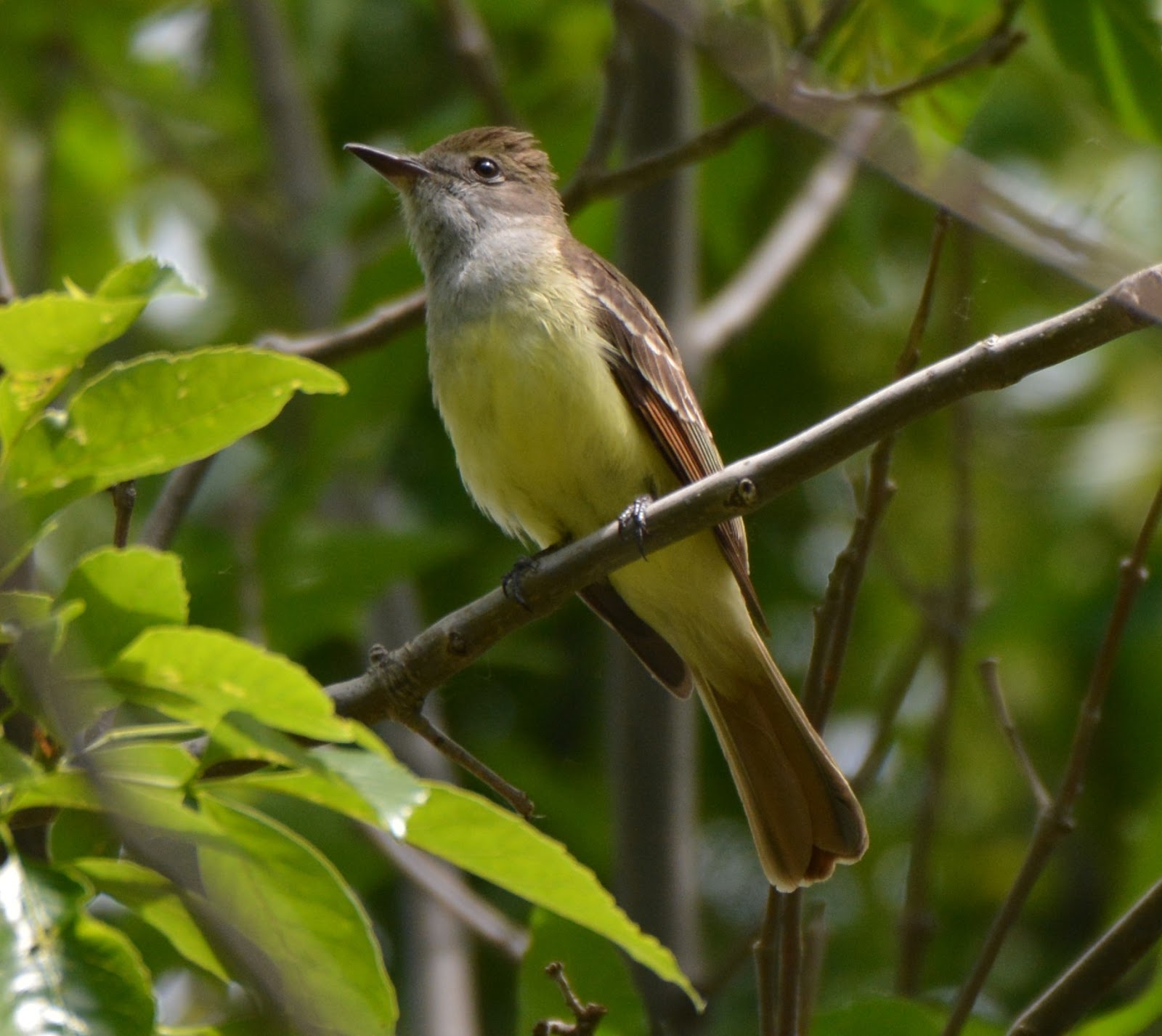
Great Crested Flycatcher
Gordon needed the American Black Duck on his lifelist.  From my experiences with these ducks in various states, they can be difficult for photos. I've been in many areas where they are swimming a mile away from shore.  Sometimes they are behind the reeds and difficult to see.  But at Bay Beach, they come right up to you!  I was excited to add data to the lacking information at this site about these ducks for the month of June. 


At Bay Beach Wildlife Sanctuary, the ABDU walk up SO close to people because people love feeding the ducks...and geese...and swans?!?! They sell bags for a dollar at the desk:) I checked records on this duck and there weren't any for this spot during the month of June!  So it was a gamble. This could be a disappointment or a fun find for Gordon. It was a lifebird and that was our goal. For me, I was just super thrilled to bird the area again.  During the winter, many of the waterfowl come to hang out along the river shore near the rehabilitation center. It's quite a show!

Tree Swallow
We started off with some amazing birds all around us.  If you are a birder, you should definitely give this place a look.  If you're not a birder, you should still go and take the family.  It's a large preserve funded by the city of Green Bay.  It's also free to visit!  How sweet is that?  Your kids are going to love it!


There were so many birds calling and we were still trying to figure out the various calls.  It was after all, a whole new group of bird song we had to learn!  

Rose-breasted Grosbeak
I let out a sigh of relief when we found 3 of the ducks still hanging around the area.  Granted, they aren't in large number during the summer because they are breeding in the lake, but I knew there had to be some hanging out.  Thank the bird gods!  Once the target bird was found with excellent observations, it was time to just have fun and bird.  The American Black Duck is a bird species showing a decline in numbers due to hybridization with Mallards.

American Black Duck
I nearly crapped my pants when I surveyed the area and discovered SWANS in the area!  At first I clumped them all together and called them Tundra Swans. Gordon takes a closer look and discovers a Trumpeter mixed in for the fun!!!  They are rare for this area during the summer months, but a few remember this place as home and have stayed around the grounds where there is plenty of food and hospitality:) Most of the Tundra swans are breeding in Canada and Alaska while the Trumpeter Swans have a more diverse range.  


Hey, what species are you?  You look like me, but something is not quite right. 

Okay.  Ready for your bird lesson?  I've put both similar looking swans together. There are two noticeable differences with these birds.  Can you see what they are?


Tundra Swan
Now look carefully.  Hint.  The field marks are with the bill. 

Trumpeter Swan
Did you figure it out?  Or did you give up and just feed the swans instead?:)  The yellow lore(near the eye) is a great field mark for the Tundra Swan.  It's not always clear due to the distance so sometimes we have to look at the bill(which is the second field mark), the way the bird flies or more importantly, listen for their distinct calls. 


Another bird of interest for me was the Purple Martin. There are several pairs here that nest.  In the photo below, you'll notice House Sparrows taking over the nest boxes.  I apologize to my European readers for what I am about to write.  These aggressive sparrows are a nuisance and have taken over much of the Martin space.  Native vs Non-Native species.  In some cases, House Sparrows and European Starlings are "removed" from the area so that the native birds can nest.  These Purple Martins seem to be "tolerating" their neighbors for the moment.

House Sparrows and Purple Martins
A beautiful songbird that comes to the feeders in the eastern half of the US is the American Goldfinch.  It's a stunner with that brilliant yellow coloring.  I had to laugh while entering the data.  First off, most of the eastern birds either have the words "Eastern" or "American" in front of them. They were like foreign words to me while I was jotting down the info.  Arizona bird lingo would pop up and eventually I'd just cut to the word...Goldfinch!  Or Towhee! Or Duck! 


American Goldfinch

Here is a link to the Bay Beach Wildlife Sanctuary and our June checklist from this location.  Until next time!


Thursday, June 23, 2016

Birding Wisconsin

Cedar Waxwing at the Gill Farm
 The Wisconsin adventures are about to begin.  I'm still on the road and will be getting back to you all during the month of July so I apologize for my absence. It has been a fun trek into the Eastern part of the US looking for rarities and other beautiful things. 

My niece is growing up SO FAST!
I'm spending much needed time with the family.....

A mother Eastern Phoebe guards her nest
 ......and their birds.  Sometimes I tune out and revert back to my old self.  Just for a moment. 

Rose-breasted Grosbeak at a nest in Peninsula State Park
 We explore nature preserves, campgrounds and meet wonderful new people on the road. 

Searching for Barn Swallow nests in an old cattle barn at the Gill Farm
I eat Mom's homemade cooking.  There are dumplings and kraut, brats, sausage sticks and CHEESE!  Yum!!!  We grill out.  We gossip. 


And while doing so, my lifer American Woodcock stops to visit while I am without my camera.  I do have a Malibu and Rum in my hands though.  It figures that a secretive bird would stop by and visit when I am not prepared!  My family all watched the bird land and then take off.  The moral of the story.  Never leave your camera in the car:)

My brother gets the fire going.  I make the same expression when the American Woodcock stops by to PEEK on us. No photo.  Next time.
Other birds stop by and calmly pose for photos.  Heck!  Some of them even nest on the porch!


Babies take selfies.

The family gets together for Father's Day
And Downy Woodpeckers come for a sip at the feeders. 


My brother Jared exposes me to a new toy....the drone.  It's easy to operate, but the filming part is tricky.  I safely navigate the drone away from people and birds, but my brother has other ideas:)  


And while all this commotion is going on, I sneak in the time to chase rare birds in Wisconsin. There are rainy days which I treasure because the cool temps allow me to sleep in and enjoy my vacation. 

The Little Gull
 Every part of the world has its challenging birds. Here in Wisconsin, gulls are the challenge as are the many flycatchers.  I like gulls so I don't mind sitting through the thousands of them looking for one or two rarities. 

Red Admiral
So on this overcast and cool morning, I scoured the Sheboygan shoreline and found 3 Little Gulls mixed in with the hundreds of similar looking Bonaparte's Gulls. 


The header to this blog contains a Bonaparte's Gull so you can imagine how much I loved observing all of these birds.  They are one of my favorite gulls that I don't get to see often because I'm in Arizona:) It was a treat!  After a half hour, I located one Little Gull on a shoddy pier.  

Bonaparte's Gulls and a Little Gull.  Can you find the bird?
 Other gulls joined the fun as the Little Gull wobbled around the "Big Leagues".  I think Ring-billed Gulls are small but when they stand next to the Little Gull, they are GIANTS!

A Ring-billed Gull is a giant to the much smaller Little Gull
At the end of my count, I found 3 of them mixed into the crowd.  They have a shorter bill, are a quarter size smaller than the similar looking Bonaparte's Gulls, and have darker legs.  The cap on the head was also slightly different as were the primary tail feathers.  But to the naked eye, they look the same.  I found these birds because there wasn't anyone around me during the early morning hours.  The birds made their weird sounding short squawks at one another. Once I located the "different" calls, I was able to have a debate inside my head.  Why aren't these Bonaparte's Gulls?  I know. I know. I need to see a counselor:)  But hey, it's better than getting into a political debate with my father!  So let's turn off the news, internalize a little more, and enjoy nature!  Birds make for a much healthier debate:)

Door County with the family.  My niece catches me falling asleep on the ferry to Washington Island
At the end, I was confident about my ID. Native to Northern Europe and Asia, these Little Gulls have a known smaller population around the Great Lakes area and East Coast.


The people started arriving and asking me about the Pelicans.  Instead I spoke with them about the rarer gulls.  I helped other birders get on the birds and it was a satisfying bird challenge. But the people were still jabbering on about the PELICANS!  So I'll jabber about them as well in a future post:) Their presence is significant. Today it's raining in Wisconsin and I love it.  The temps are a cool 58 degrees and I have the house to myself!!  I sip my coffee with my gentle music playing in the background.  The doors are open and a breeze is moving through the house.  Tonight, we try out Bloody Mary's at a local restaurant.  Yeah, birding and family is a lot of fun.  Over the next several weeks, my friend Gordon and I will take you on some epic adventures that truly challenged us in the state of Wisconsin.   


I'd also like to make a shout out and thank Nancy and Earl Gill for their wonderful hospitality. Several of the photos featured in today's post are from their property. Nancy gave me a tour of their beautiful farm and a delicious jar of canned pickles!  I like pickles but these pickles are amazing.  Needless to say, I'm rationing the jar:)  SO GOOD!  There are so many shades to birding.  I love Wisconsin.  I love the relaxed pace.  Arizona birding is wonderful but it's stressful when you're with so many professional birders! They've made me a better birder, but sometimes the birding can be demanding there. Here, it seems less stressful with a lot more laughing.  And when I'm with my Shire, I feel at home.  Until next time........