Showing posts with label Purple Martin. Show all posts

Monday, September 16, 2019

My Desert My Home

Broad-billed Hummingbird
After two months of absence, I returned home to Tucson.  It felt good to be in my own space again and to hear my own voice. 


I am connected to the wildlife here.  I feel their living presence around me.  Nothing surprises me here anymore.  It's my home I know best. I hear their voices and understand their movement.

White-nosed Coati
I see my friends and it all makes me happy. 

Rufous-crowned Sparrow
There is beauty in every space IF we know how to look for it.  But somehow, this desert space is way more epic than anything I've seen around the world. 


A sunrise.  A sunset.  A monsoon shower.  A Gilded Flicker calling to the other.  "Come here!  I found a hill of ants for dinner!"  The other responds and flies to its mate. 


I sit under a ramada in the 100 plus temps.  A migrating Wilson's Phalarope casually passes me by. 


Wilson's Phalarope
I hear the rustle and anger of birds in a tree.  I suspect a snake is raiding a nest. 

Sonoran Whipsnake
Purple Martins are amazing birds, but somehow my desert Purple Martins are better:)

Purple Martin, the desert subspecies hesperia

Especially at sunset near their Saguaro home. 


I am back in my own car again, the USS Betty White.  As the sun sets at Saguaro National Park, I think to myself that I am one lucky guy.  There is no place like home. 


Sunday, September 1, 2019

The Rubberband


Oh trouble was brewing at the Rohrer household.  A little demon child known as J-man kept his Uncle and Grandparents busy. His ailing grandfather needed some quiet time to heal after his heart surgery. And so his uncles and grandma kept both he and his adorable baby sister busy. 

Baltimore Oriole
Birding with family can often be difficult. Still, it can be done, but it requires careful planning.  Here are some things I've learned from over the years to accomplish my birding goals while spending that quality family time that is much needed. 


Family fun at Bay Beach.  Also near the site of secret breeding Piping Plovers!

1. Find ways to include light birding while spending quality time with family.  My personal goal is to blend birding into the outdoor activities.  We have to begin somewhere and teaching our young minds is important to the future of birding. It starts off with curiosity.  A trip. A pair of binoculars and some hands on experience with birds. Toddlers are tactile.  So are Canada Geese. 


Over a hundred Canada Geese overtook J-man and one gave him a little nibble. The child who caused terror to others was terrorized himself, for a moment. There was a scream and then some crying involved. He flew up to Grandma for protection and for fun, I threw a little more corn around Grandma's feet to hear her yell out. I'm terrible.  I know:)


2.  Stay close to home. You never know when you will be needed for.....
a. family pictures  b. family dinner  c. babysitting
d. running errands or e. all the above:)


A fledged Chipping Sparrow

3.  Be clear on what you want to accomplish.  You can't do it all, BUT you can knock off some birds from that much wanted list. 

So many nephews and nieces
During my trek home, I was only focused on warblers and sparrows.  There was a possibility of adding two new lifers to the list. The Hooded Warbler was one of those warblers.  It was only 10 minutes away from my parent's home. 


Hooded Warbler
4.  Do your birding in the morning or early afternoon.  Birding is best in the morning, but sometimes there are errands that have to be run.  Most people work during the day.  Family generally meets at night or on the weekends.  If you can't go in the morning, try for the early afternoon when the grandkids or nephews/nieces are down for their nap. 


Family photos are NEVER easy. 


But they are always memorable and a necessary evil:) Never take those moments for granted because you don't know if you'll get the same opportunity again.  So much can change in a short time. 


My lifer Hooded Warbler in the dark forest of Point Beach State Forest

5.  Challenge yourself and stay within your own county.  You may have seen a Wild Turkey a million times in a million other places, but did you see one in your hometown? Be a kid again and play detective working on hunches.  

Wild Turkey
6.  Remember to stop birding as well. I speak to the choir here when I say it's hard to turn off the birding gene, but try and do it.  I was proud of myself this summer when I could completely let it go and not keep looking at every bird flying past my radar. 


I feel like Cambrie in this shot.  Trying to get that perfect family pic is NO easy task. 

7.  Carefully choose the places you'd like to bird. Keep the family in the loop where you plan on birding.  Keep it a half hour or so, no more, from home. 


American White Pelicans hang out near the Manitowoc Marina
8.  On occasion, treat yourself to a full day of birding.  Don't feel guilty.  It's your holiday and you deserve some quiet time away from the family. 


Cerulean Warbler
Even though I had seen the Cerulean Warbler once before, I wanted to see it again.  It's one of my favorite warblers.  And it was on my short list of birds I wanted to see while back home. 

Purple Martin
9. Let yourself just flow with the family plans.  Ebird wherever the family goes.


My brother Adam bought a pontoon and it allowed us to count birds along the river in his backyard.  We discovered several new bird species breeding along the river like Spotted Sandpipers. 
10. Create new hotspots for the public. You know your hometown best. 


When I was home, I discovered this beautiful rare Horned Grebe(below) near my brother's cabin.  There was no ebird hotspot so I created one. We can discover new birds by just paying attention.  This Horned Grebe completed an atlas block for someone. They were thrilled. 

A rare Horned Grebe!
I am more aware now of the world around me. Birders can make anything work with a little ingenuity. I use the word "rubberbanding it".  I'm never too far from home and if I'm needed back home ASAP, I am able to "snap back" in a second. I don't see it as limiting in any way.  It just makes me a little more creative with my birding. 

Who added the dog?!  

Hope you found these tidbits useful. Everyone has a different situation so do what's best for you.


Until next time.....


Thursday, August 24, 2017

Treasure Hunts


The month of August is a busy one.  I've returned back to work, continue to monitor key bird areas around Tucson and lead several trips.  August is also known as an excellent month for shorebird research.  And it's also challenging due to their hidden and remote locations. 


Currently in my yard, I am monitoring a Broad-billed Hummingbird nest. On the 14th of this month, I found the nest with two eggs.  


Now I have two baby hummingbirds growing up right before my very eyes.  The mother decided to put this nest right next to my car.  So now I have to be super careful getting out!


Okay.  Currently, their bills are poking out of the nest and it's a bit of a poop fest. I know it's a full time job Mom but couldn't you clean up around the edges?:) To help Mom out, I filled up the feeders.  She now begins to catch insects and drink nectar to make a slurry for the babies. Think of it as a bug protein shake. And there are plenty of mosquitoes in my garden right now.....so have at it:)


August also brings with it bugs and heat.  However, shorebird migration is rather exciting.  Encouraged by a report from friends, I went with Micheal and Magill to find a rare Ruddy Turnstone.  It was nasty work.  I have a strong stomach but on this day, I almost lost it.  

White-faced Ibis
It was 108 degrees and we were at a cattle slop pond, not the most scenic of places to bird. The flies were terrible.  And the smell.....well that was its own special reward.  At one point, I almost threw up.  I looked over at Magill and asked her what that god awful smell was.  She pointed to the pile of dead cows and I almost tossed my cookies. We were downwind from the ground up piles of rotting flesh.


I laughed because Micheal had just gotten out of work and there he was in his bright pink scrubs in the middle of Mad Max land.  However, I needed company.  I can't drive these longer distances anymore without falling asleep at the wheel. It's hot and it's boooooring!

An excellent state bird for Arizona, the Ruddy Turnstone
State birds are difficult now and they require some team work if only for shared misery and encouragement.  Micheal enjoys birding when we are in beautiful places.  He also likes cool looking birds.  This one didn't do it for him, but it was an important state bird.  


A couple weeks later, I get a text from Magill about a Red Knot.  This is ANOTHER state bird that can be tricky to spot.  It's also a very rare migrant.  But the catch?  It was found at yet another sewage treatment facility up in the Phoenix area.  

Stilt Sandpiper
 During this time of year at the Glendale Recharge Ponds, it's hot and muggy.  At one point, Micheal almost passed out from the heat.  He did get to see the bird but once again, he wasn't thrilled. When these birds are in their breeding plumage, they are quite beautiful.  


A fantastic state bird for Arizona, the Red Knot
Once again we celebrated another new state bird for Arizona.  This month alone has landed me THREE very tricky birds for the state.  I missed the Fulvous Whistling-Ducks and Reddish Egret due to the time factor. There just wasn't enough time with my busy schedule. 


While work has taken up a good chunk of that precious time, I have found a little break time to monitor our nesting Purple Martins at my job site. They are gone now. But each year I get a couple weeks with them before their large group migrates away. 

I'd like to also stress the importance of vegetation.  If that saguaro wasn't there, there would be no Purple Martin activity ever. Sadly, this saguaro has seen the pristine desert around it disappear over the last 16 years.  Today, a huge solar panel stands next to the last of its remaining brethren. They are also now surrounded by a developing housing project.  Yes, I worry about this saguaro and I will be sad if anything ever happens to the 4 that still remain.  But this one saguaro has been home to 5 different nesting bird species AND provides food during our hot spring month of May for our desert birds!

a male Purple Martin flies about their Saguaro
Between the bugs and the heat, I'm ready for this month to be over.  If you like birding and don't care about chasing state birds, there are many great alternatives for cooler birding on the higher elevations. 


I just came back from Mexico and will be writing that blog post in a few days.  I'm taking the weekend off to catch up with all of you and have a nice cup of coffee in my pajamas. 


So for now, I hope you avoid(or not), nasty piles of ground up dead cattle.  If you are in Arizona, this is where you'll find the rare treasure birds right now.  These excellent birds are found around these poop filled watering holes.  While it's not as scenic as say the Grand Canyon, it's where state chasing birders go this month.  Until next time.....

Saturday, July 9, 2016

The Duck Hunt


Ring-necked Pheasant
I was so excited to take Gordon to one of my favorite places to bird in Green Bay.  PLUS! We were officially going birding during the summer here.  Something I had never done before.  We went on an overcast day to the Bay Beach Wildlife Sanctuary.  It turned out to be a great outing full of amazing birds! A lot of wild birds call this park their home because it's full of great habitat!


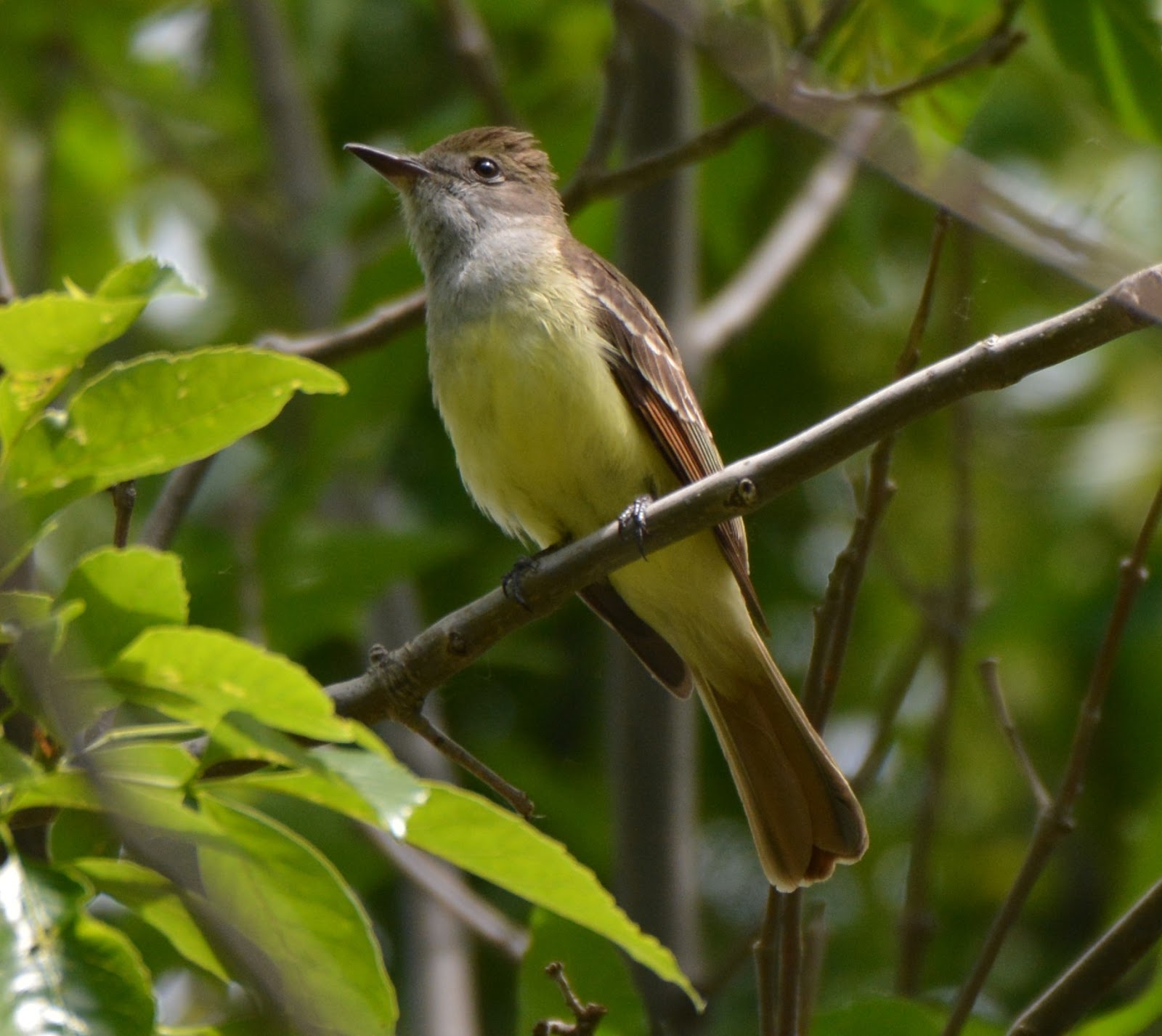
Great Crested Flycatcher
Gordon needed the American Black Duck on his lifelist.  From my experiences with these ducks in various states, they can be difficult for photos. I've been in many areas where they are swimming a mile away from shore.  Sometimes they are behind the reeds and difficult to see.  But at Bay Beach, they come right up to you!  I was excited to add data to the lacking information at this site about these ducks for the month of June. 


At Bay Beach Wildlife Sanctuary, the ABDU walk up SO close to people because people love feeding the ducks...and geese...and swans?!?! They sell bags for a dollar at the desk:) I checked records on this duck and there weren't any for this spot during the month of June!  So it was a gamble. This could be a disappointment or a fun find for Gordon. It was a lifebird and that was our goal. For me, I was just super thrilled to bird the area again.  During the winter, many of the waterfowl come to hang out along the river shore near the rehabilitation center. It's quite a show!

Tree Swallow
We started off with some amazing birds all around us.  If you are a birder, you should definitely give this place a look.  If you're not a birder, you should still go and take the family.  It's a large preserve funded by the city of Green Bay.  It's also free to visit!  How sweet is that?  Your kids are going to love it!


There were so many birds calling and we were still trying to figure out the various calls.  It was after all, a whole new group of bird song we had to learn!  

Rose-breasted Grosbeak
I let out a sigh of relief when we found 3 of the ducks still hanging around the area.  Granted, they aren't in large number during the summer because they are breeding in the lake, but I knew there had to be some hanging out.  Thank the bird gods!  Once the target bird was found with excellent observations, it was time to just have fun and bird.  The American Black Duck is a bird species showing a decline in numbers due to hybridization with Mallards.

American Black Duck
I nearly crapped my pants when I surveyed the area and discovered SWANS in the area!  At first I clumped them all together and called them Tundra Swans. Gordon takes a closer look and discovers a Trumpeter mixed in for the fun!!!  They are rare for this area during the summer months, but a few remember this place as home and have stayed around the grounds where there is plenty of food and hospitality:) Most of the Tundra swans are breeding in Canada and Alaska while the Trumpeter Swans have a more diverse range.  


Hey, what species are you?  You look like me, but something is not quite right. 

Okay.  Ready for your bird lesson?  I've put both similar looking swans together. There are two noticeable differences with these birds.  Can you see what they are?


Tundra Swan
Now look carefully.  Hint.  The field marks are with the bill. 

Trumpeter Swan
Did you figure it out?  Or did you give up and just feed the swans instead?:)  The yellow lore(near the eye) is a great field mark for the Tundra Swan.  It's not always clear due to the distance so sometimes we have to look at the bill(which is the second field mark), the way the bird flies or more importantly, listen for their distinct calls. 


Another bird of interest for me was the Purple Martin. There are several pairs here that nest.  In the photo below, you'll notice House Sparrows taking over the nest boxes.  I apologize to my European readers for what I am about to write.  These aggressive sparrows are a nuisance and have taken over much of the Martin space.  Native vs Non-Native species.  In some cases, House Sparrows and European Starlings are "removed" from the area so that the native birds can nest.  These Purple Martins seem to be "tolerating" their neighbors for the moment.

House Sparrows and Purple Martins
A beautiful songbird that comes to the feeders in the eastern half of the US is the American Goldfinch.  It's a stunner with that brilliant yellow coloring.  I had to laugh while entering the data.  First off, most of the eastern birds either have the words "Eastern" or "American" in front of them. They were like foreign words to me while I was jotting down the info.  Arizona bird lingo would pop up and eventually I'd just cut to the word...Goldfinch!  Or Towhee! Or Duck! 


American Goldfinch

Here is a link to the Bay Beach Wildlife Sanctuary and our June checklist from this location.  Until next time!