Showing posts with label Bobolink. Show all posts

Monday, June 24, 2019

"Maine-iac Birders"


I had arrived at the tail end of migration yet again. The minute I saw Blackpoll Warblers, I knew the game was over. My quest for Bay-breasted and Cape May Warblers would have to wait for another day. 

How does one say gaudy in Maine-ish?
But that didn't stop our grand adventures.  Birding around Maine is as scenic as it gets in the US.  However, the bugs were relentless.  Black flies, mosquitoes and ticks were in full force.  And I thought Wisconsin was bad.  Maine, besides maybe Florida, beats most of the states for crazy bug attacks. Although, I've heard Alaska is a nightmare in summer. They say bird along the coast, but honestly, the coast was just as bad. 


Broad-winged Hawk
Between the odd and fantastical, we discovered many incredible birds together. I loved seeing several bird species better.  Several were on my list of "must see again". 


As Kathie and I both explored beautiful spaces near her home, we observed many birds singing and moving about branches. 

Blackpoll Warblers are one of the last warblers to migrate
Many birds were setting up territories. 

Bobolink males call and set up their territories
And between the constant attack of the blackfly, I was able to get off a couple shots here and there.  It's no wonder why warblers love Maine.  There's plenty of food for them there:)


Then an amazing thing happened!  I was able to get wonderful observations of a bird I had only seen briefly ONCE, the Scarlet Tanager. 


When they are breeding, they are super difficult to observe.  Luckily we hit a fantastic observation window where they were still moving and calling out in the open.  I not only got to see this bird once but MANY times.  We even rescued an injured one!


Purple Finches are wonderfully colored and were in good numbers everywhere we went. 

A finch dipped in raspberry jam, the Purple Finch
Vireos made me cringe.  They all sound similar.  My job was to find a Philadelphia Vireo and separate it from the Red-eyed and Warbling Vireos in the area. 

A pair of Red-eyed Vireos
Some birds are super tricky.  I had some work ahead of me.  Every day we went out and counted birds. 


Even though the migration was coming to an end, there were still a lot of great warblers out there. 


Chestnut-sided Warbler
A Veery popped out into the open. 

Veery
The exciting shrill, "Free Beer!", of the Alder Flycatcher made us smile. 

Alder Flycatcher
The picturesque Cedar Waxwings posed often in budding Apple Trees. 


Cedar Waxwings
Baltimore Orioles collected cattail fuzz for their nests. 

female Baltimore Oriole
Gray Catbirds appeared from behind our backs always watching us from the shadows. 

Gray Catbird
Black-throated Blue Warblers were loudly calling inside the forests. 

Black-throated Blue Warbler
And this Ruby-throated Hummingbird fiercely protected his feeder from other hummingbirds. 

Ruby-throated Hummingbird
The electronic warble of the Bobolink was a common sound among the wildflower tinged grasses.


In short.  It was nice revisiting several bird species that I don't get to see often in Arizona.  Once we finished our first sweep of the common birds, we began our journey for the harder ones.  And those stories will be told over the next several weeks. So until next time, use some bug spray:)  This wet and cold summer of the North has arrived. 

Monday, May 29, 2017

The Whirling Dervish


It started as an innocent weekend up in Phoenix.  I'd visit my family during Comicon and then head north of Phoenix with friend and birder Gordon to the town of Pine for a little research on the northern most range of the Sulphur-bellied Flycatcher. That was the plan....


We had a great time watching everyone dress up for Comicon.  While enjoying the ambience, we kicked back a few Malibu and Cokes at the pool with my family.


Then it was time for sushi.  We had an amazing dinner.  During our visit, I had my phone off for much of the time.  Then I took my phone out......

Part of my family
"Code 5. Little Bunting reported at the Mexican border!"  It was the first Arizona record ever.  I hugged everyone good-bye and Gordon and myself were off the next day bright and early to hopefully spy this amazing Eurasian bird. How in the hell did it get down here?!?!


Sunday morning arrived bright and early.  We were at the border town of Douglas at a random hotspot called Slaughter Ranch Museum.  If you like US history, I think you should visit here.  I'm not sure what the story is behind the ranch, but it looked interesting. It's 5 bucks to get into the place. I know, I know.  I'm terrible.  But we're birders. We're all about the habitat and birds!  Slaughter Ranch did not disappoint.  Well, it did if you went to find the Little Bunting on Sunday.  It never showed. However, let's start at the beginning....of the line:)


You know it's serious business when you find a very long stretch of vehicles lined up to get into any museum. We arrived just as they were opening the gates. Anytime a mega rare bird shows up in Arizona, it's like a special holiday of friends and family getting together to celebrate a bird. This was to be the location of our church get-together.  So at the Church of Birds, some 50+ members arrived and flooded the property as they set up a perimeter around the pond.  Mass was about to begin!


Now I've heard some people call the Church of Birds a cult.  Maybe.  I mean it represents every type of human/bird hybrid personality out there like 1) The ducklings (they respond well to direction).  2) The mother ducks ("While I'm not the bird police, I  we need you to get out of this area and get in line behind me!").  3) The doves (they always wait for someone to feed find the birds for them).  4)The jays (they look pretty innocent, but they are always watching you and everyone else for an opportunity to mob when your guard is down; they like to hang around together in groups of 4 or 6) 5) The paired swans(independent married couples who float around wherever, oblivious to the ducks and ducklings and any other birds) And the waxwings(or the roamers). I'm definitely the nomadic bird.


The duck, duckling and dove hybrids all stay behind and concentrate their efforts on the Little Bunting.  The jays stay near the gang but continue their whispers watching the others move about them. Several of the waxwings realize there are too many birders hanging out in the area where the bird was foraging the day before.  So like the waxwings do, both Gordon and myself go where the food bird song is being heard.  We searched similar habitat that might have been attractive to the Little Bunting. 


All the while, we were observing some amazing birds. At one point, I just let the Little Bunting go and opened myself up to relax and bird.  We were going to do that anyway up in Pine. It was time to just have fun and observe the incredible amount of bird activity on this museum's property. And when we did, we discovered something more.......


Great Horned Owlet
The heat of the morning began to wear on me.  We needed water.  As we slowly made our way to the car, we noticed a different looking bird moving through the grasses. Birding in the Arizona sun is taxing.  In Wisconsin, when the weather is too cold, I snap a panorama of pictures of the ice sheets with gulls on them.  I stitch that panorama together later in the warmth of my house and ID the gulls from the comfort of my desk. So on this day, I did the same thing with the strange bird.  I was too tired to concentrate anymore. 

Barn Swallow
We eventually returned back to Tucson and I filed my reports, recordings and photos.  When I got to the files of the unusual bird and blew the picture up, I realized that we had something very special, a rare migrating Bobolink.  We both became very excited and I sent a couple photos to friends to verify the bird.  It was indeed a female Bobolink, the first record for that area ever.  I wanted to get the word out to other birders and immediately filed the photos and documentation into the rare bird alert.


 The Bobolink was a state bird for both myself and Gordon.  While we didn't spot that Code 5 Little Bunting, we had a blast exploring a new part of the state.  


And for our hard work, we were rewarded with a different rare bird.  Even better?  We were able to contribute new data for that area!  The countdown begins. I have some very exciting projects coming up in the next few weekends.  Stay tuned for more......

Thursday, July 14, 2016

The World of Horicon


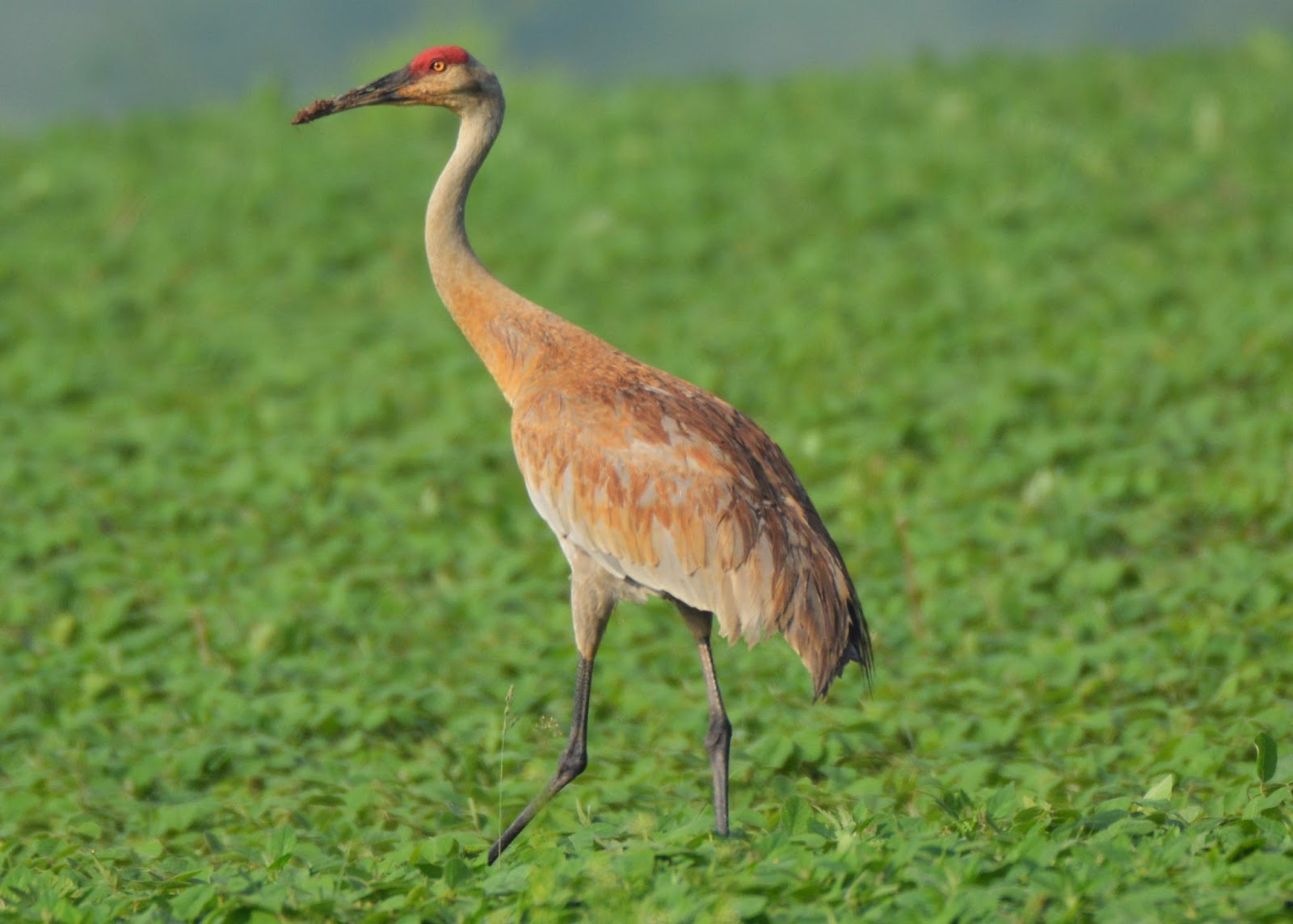
Sandhill Crane
Close to my home and near my heart is the magical world of Horicon National Wildlife Refuge.  It's a large area full of incredible birds and peaceful walks. 

Eastern Wood-Pewee
As a child, I remember taking the winding country roads through aging little towns with my grandparents.  Returning as a birder, I saw so much more! 


There were so many stops along the way that I forget where we saw all of our birds.  I just remember having a good time spotting several species that are often difficult to photograph in Arizona. 

Eastern Kingbird
On this day, we would search for Gordon's lifer Bobolink.  And we found plenty:)  

Bobolink
While we search for the Bobolinks, a soggy Song Sparrow pops up to see what we are doing in the prairie grasses. 

Song Sparrow
Tree Swallows shine like sapphires against the bright sunlight. 


Tree Swallow
And Black Terns fish along our gravel path. 

Black Tern
My heart gets beating when I see one of these birds in breeding plumage.  I quickly walk forward.......


......and almost trip over this rock......


......WAIT!  NOT ROCK!  A Snapping Turtle! 


Thanks Gordon for the heads up:)


We had a great morning out at Horicon National Wildlife Refuge.  It's a large area so it definitely requires many more visits.  

Clay-colored Sparrow
Until next time.....


Tuesday, July 28, 2015

600 Life Birds

Oh the road can be sooooo slow!  Life birds?  What are those?  Last year in April I was at 500 life birds.  Throughout the year, I added birds regularly every month.  This year it has been a trickle:) I suppose it gives me a chance to absorb all the amazing observations of the birds without feeling rushed.  I do hope to make up for the birds down in Mexico this year. Will I be able to make it to 700 by the year end?  Here are the stories behind each of the top ten birds.

Monk Parakeet
The Monk Parakeet was seen downtown Ft. Myers, Florida near a swimming pool.  I grew up with these birds at home as they are sold in the pet trade as Quakers. In fact, this is how they invaded the US! Loud, ruthless and quick to multiply, the Monk Parakeets have become established in many US communities which include cities like cold Chicago and tropical Florida.  My bud Sydney and I played a hunch and followed the human trail to several nest sites and voila! There they flew in great numbers with twigs and branches making nests around power lines and palm trees.

Wilson's Plover
The Wilson's Plover was number 510.  I went to Bunche Beach, Florida to count hundreds of shorebirds only to come out with thousands of chigger bites!  It took nearly two months for my body to heal!  It rained after I heard and saw the bird.  I was able to help several birders get their scopes on the this plover.  Later in Mexico, I would see this bird once again under much better circumstances.  Sunny and bug less! It's call is distinct and easy to pick out.

Rose-breasted Grosbeak
At 520, a Rose-breasted Grosbeak made its way into Willcox, AZ.  I went to chase the bird and hung out in a very kind man's backyard.  There we watched this beautiful bird feed off of his fruiting mulberry tree.

Bobolink
By life bird 530, I was in Maine visiting Kathie.  Together, we went to a field near her home and discovered the magnificent Bobolinks.  There they called and collected caterpillars for their young ones. This is one unusual and gorgeous blackbird.

Black Guillemot
Life bird 540 happened near Eastern Egg Island.  This Black Guillemont went after what looked like twizzler's licorice.  I braced myself on the rocky boat as I snapped off several shots of this bird flying near the side of our boat.  At this point both Micheal and Kathie were under the weather and very seasick!  Now THAT was an adventure I won't forget anytime soon:)  Nor will they.

Blue-headed Vireo
In the dark mossy forests of Maine, we discovered a Blue-headed Vireo.  This lovely bird graced the branches while we sweat it out in the woods:)  This bird made 550 on the list. 

Prairie Warbler
At 560, the Prairie Warbler made its swirly call as the rain began to fall.  I was able to briefly see this bird before it went back into hiding as two young morons revved up their truck and sped past us on the dirt roads of Maine. 

the exotic Northern Red Bishop
At 570, I was alone again in California.  Here I spotted the exotic invading Northern Red Bishop.  What a beauty!!!

Wrentit
By December, it all began to slow down.  Again, I returned to Southern California where I stood silently near a city park lake and watched the Wrentits move around me.  This was Life bird 580.  


At 590, the Black-throated Blue Warbler was a real shyster. Not all life birds play nice.  We sat and waited and waited for this warbler to come out.  When he did, the tiny warbler was so far away! I finished in the US with number 599, the Painted Bunting.  But I wondered which bird would mark the magical 600.  Drum roll...............


Green Parakeets
We flew into Southern Mexico during the night hours.  At dawn, the first bird that made itself known was the Green Parakeet. They seemed to be flying everywhere around us.  And so in my life, number 600 marks the Green Parakeet. The adventure continues next week as we begin our exploration into Chiapas, Mexico.