Tuesday, February 16, 2016

The Slippery Slope


Scouting areas for my tour.  Sandhill Cranes launch at sunset in the thousands over a field at the Kansas Settlement

When is too much birding wrong?  For those addicted, never.  For the spouses involved with these addicts? Often. Yes I am an addict, but in today's post, my addiction prevented a disaster. And I gotta tell you all, life experience, knowledge of my birds and working with groups of people saved this outing from becoming truly disastrous! It's certainly one I won't forget anytime soon. Today's post is about the human side of birding. So here we go.....


A Red-tailed Hawk for my photographers in the group
The ancient and wise birders warned me. But I'm a glutton for punishment. Damn my stubborn German side! I promised I'd help out with a birding tour during the Wings Over Willcox festival.  This was my first time as a paid bird guide and I learned LOTS from this little adventure! Mainly that it's not an easy job. But I liked the check:)


a nice Vesper Sparrow to find out who my birders and photographers were; this is a good bird to help me figure out who is a serious birder or beginning birder; it's also an easier sparrow to explain when it's time to talk about "field marks" for the beginners
We had all levels of birders in the group ranging from no experience to A LOT of experience. I was ready for their challenge. It was a, "I've never seen a Pyrrhuloxia before."(easy) to "I've never seen a Montezuma Quail."(Now you're talking!) trek. As a teacher, this is something I can handle easily. I have the knowledge. My stops and bird searches were fine, but there was something more important than the birds.....bathrooms! Thanks to my friend Kathie, I remembered to make sure we had frequent stops.  Although I still lost one man to the woods:)  I felt his pain!


Mexican Jays came in for a visit on the way up to the Chircahua National Monument

By guiding an already preset route designed by the coordinators and drivers at the festival, I studied my habitat and made notes on the birds my crew would probably want to observe.  My tour was called "Birds on the Mountain"....specifically the Chiricahua Mountains. An epic place to bird. I am quite familiar with these mountains and truly enjoy birding this area. So I studied the route they told me we were taking and was shocked early morning to find out that we were going elsewhere. NO communication! When I do a trip somewhere, I expect to be taken to the places promised in the brochure. So it was going to be one of THOSE trips....the "think on your feet" kind.  All the scouting I did was for naught.


The creek before the fatal mistake of driving the slippery slope

As with every group I teach, I ask beforehand what birds they wanted to observe.  Then I asked how many were photographers, etc etc.  The overall expectation was that we would be heading to Portal or at least Rustler Park for the Mexican Chickadee.  The problem?  The route was scheduled to go to the Chiricahua National Monument which is a beautiful place to visit but not very birdy due to the windy conditions of the peaks.  It's a place you take photographers, not birders. And it wastes precious birder time on the road. It also wasn't in the brochure.


Pretty but not much in the way of birds; photo taken 5 years ago 
The other problem? SNOW. This is a non-negotiable variable and it's okay. What's not okay? The drivers and coordinators knew there was snow on the mountain and yet still planned on driving the routes!  In my mind, I was livid!  We had the time and they paid the money.  I had a back up plan but it was rejected. I began to ask myself if drivers and bird guides have occasional disagreements during a tour. And if so, how do they deal with it? So here's where it gets very interesting.


Instead of changing the route to a safer one, they kept going with their original one.  Midway up to the Monument, we had to turn around because the road was closed due to heavy snow. Even though they already knew that.  I could have prevented what the drivers were going to experience. But as I have learned from my own experiences, sometimes, you just have to let things play out as they will.  Clearly I was also forced to be a participant in this routing disaster of a plan. In the back of my mind, I heard the ancient voices of my bird masters whispering, "We told you."  And they really did. Last year. 


We could learn so much from Sandhill Cranes.  They fly in an organized pattern.  Humans?  Not so much.
Then we went into Pinery Canyon and tried for another spot where the group could sit and watch the bird feeders.  This would satisfy the photographers in the group.  Everything seemed to be going well until we saw that the road to Rustler Park was closed. Again this was expected. I wasn't expecting the lower road to be an obstacle! Again, the drivers were warned. In the birding world, you have to adjust according to the weather. We had enough gas, time and food and drink. Yet, the overall plan was not to be reexamined.  In teaching, this is called a poor evaluation. 


Coues Deer

Had we been on the "birdier" side of the mountain heading up from Portal, it would have been different. Paved roads, more stops and less snow. We still wouldn't have been able to make it up to Rustler Park, BUT we could have gotten to the research station or the George Walker house or the lower level birding trails! I began to question if this route was planned by an actual birder or a Sunday afternoon driver looking at pretty scenery. The driver's mission was to take us to the end of Pinery Road where we'd eat lunch at this locally run campground.  The problem?  Our vans got stuck on a steep ledge.  One of our participants had a meltdown and ran ahead of the van. I made more mental notes inside my head. And I took pics.  I couldn't make this stuff up even if I wanted to!


Excellent drivers backing up on a very dangerous ledge with a lot of physical pushing and yelling back and forth.  Something about turning the wheels...:)
In my teacher calm, I helped direct everyone to where they needed to be. I also reminded them to look around the area and keep birding. And I also pointed out photography opportunities like the icicles hanging from the cliff. During that time period, a Canyon Wren, Golden-crowned Kinglet and Hairy Woodpecker made themselves present.  


Meanwhile the driver's were stressed to the max, but with a little group effort all was not lost and we were able to get the vans off the ice and down into an area where they could safely drive again. Another promised location not happening! We ate lunch along a cold creek where someone asked me about American Dippers. I shared my personal stories while eating my turkey on rye.  Another asked me if eating turkey was a birder faux pas. My response, "Not when it tastes so good." 


Because I was leading, my job is to get people on the birds and photographers ready for action so I don't have many photos of the experience.  Here is a stock photo from my Montezuma Quail studies.  This one was taken in 2014.  The latest Montezuma Quail photo can be see in a recent January post of this year. 

There was an older gentleman who was an excellent birder and had helped us get the vans from sliding off the cliff. I asked him what he wanted to see more than anything else in this world.  His answer, "Montezuma Quail". This was one of the few birds we had within our limited range from our list of possible birds we could see. And by the bird gods, I would get him his quail.  He had been searching for them for years and was frustrated.  I know these birds well! As I pointed to a patch of grass and rock along a dry wash, I told him to keep both eyes open. As I stepped down, a twig snapped and EXPLOSION! Five Montezuma Quail burst forth from the grasses!


Our trek lead us back into the grasslands where the group would also net a covey of 14 Scaled Quail.  The day ended up being a 3 Quail Day which was awesome.  Participants were able to observe Coues Deer and Coati.  We also were able to get them several lifers, but not the birds they were expecting like Blue-throated Hummingbirds and Mexican Chickadees.  I have seen a few Blue-throated Hummingbirds winter in the Portal area.


Another photo of a great bird that I was not able to find for my group.  This is the Blue-throated Hummingbird which does winter in Portal.  Not in great numbers but they can be found around the Bed and Breakfast feeders there. It was a bird they were hoping to see from the brochure.
I have also learned from my career that if you are given a lemon, you have to try and make lemonade. Sometimes the sugar is missing:)  But you have to try.  What was even more challenging for me on this tour was the mentally unstable woman in our group. The group did not particularly care for her too much. So I had to figure out a way to deal with that situation. And she was touchy! With friends, it's one thing but with strangers, it's not appropriate. At the end of the tour, I was mentally and physically exhausted.  When I finished my paperwork, I spoke with the coordinators. 


I stop the vans for a bird count on our way back to Willcox.  Not everyone saw the first Pyrrhuloxia and in this field there were two along with a great many other birds. While the mountain birds were quiet, the grassland species were very active!
They said the group had a great time which I had not been expecting to hear.  For many, it was an adventure.  For me, it was a routing disaster.


This is another bird the group got to see.  The Bridled Titmouse.
In short, they asked me back for next year. And this is what I said, "Only if you allow me to plan the route and really define the meaning of "Birds on the Mountain". I knew what the group was expecting. I don't think the coordinators did. Next time I do ANY guiding, I'll be the coordinator of the route and drivers 100%.  I'm OCD about my work."  They were birders.  I am a birder. And they should have stuck to the brochure because that's what the participants paid for! 


The Yellow-eyed Juncos played hard to find. Normally, they sit right in front of you for attention:)
What did I learn from this? Well, it's the age old adage, "If you want to do something right, you have to do it yourself." So I won't EVER let that happen again.  I have enough experience with people and planning to know how to do this properly!  And if they don't like it, they can find another leader.  Then they asked me to be on the committee.  Oh boy.


Our overall total for birds that day was at 51 species.  I found myself discussing the subspecies ID of Dark-eyed Juncos. We had Pink-sided, Gray and Oregon varieties. I found my group their lifer Yellow-eyed Juncos which played harder to find than normal. Usually, they're the first bird you see!  Everyone had a 3 quail day.  

These are stock photos from my photography collection. 

 I found the crew an excellent Red-tailed Hawk moment (above) and ONE Ferruginous Hawk. There were 12 remarkable White-winged Doves. And I was able to get them on 3 Brown Creepers of the Mexican subspecies which could be separated down the road as a new species of bird. Oh and yes, we found 3 Pyrrhuloxia:) 


After the tour was over, I was in control again. Next time I make the calls. I'm not trusting others to do it especially when my name in on the line:)  Guiding groups can be wonderful or terrible. I am grateful for the experience because it taught me a lot about guiding a large birding group of 20+ people. Until next time.....

Friday, February 12, 2016

Budgeting The Birds


Silently, I walk through the grasses. Thinking. And thinking.  I began this quest 5 years ago with a Manakin.  This challenge grew into something bigger than me and so began the expedition of the heart and mind.  A newbie.  Everything fresh.  Everything strange. 

Rock Wren
Trapped by my own faults, I am forced to take these personal local courses over and over again.  No real challenges other than the one at home.  Freeing myself of student loan debt.  Cursed.  Stupid.  Debt. I absolutely hate it. Education is important, but so is my lifetime sanity:)  I'm so close to having my total freedom back. I can't help but think of all the other "newer" students with this financial weight that will follow them for decades into the future. 

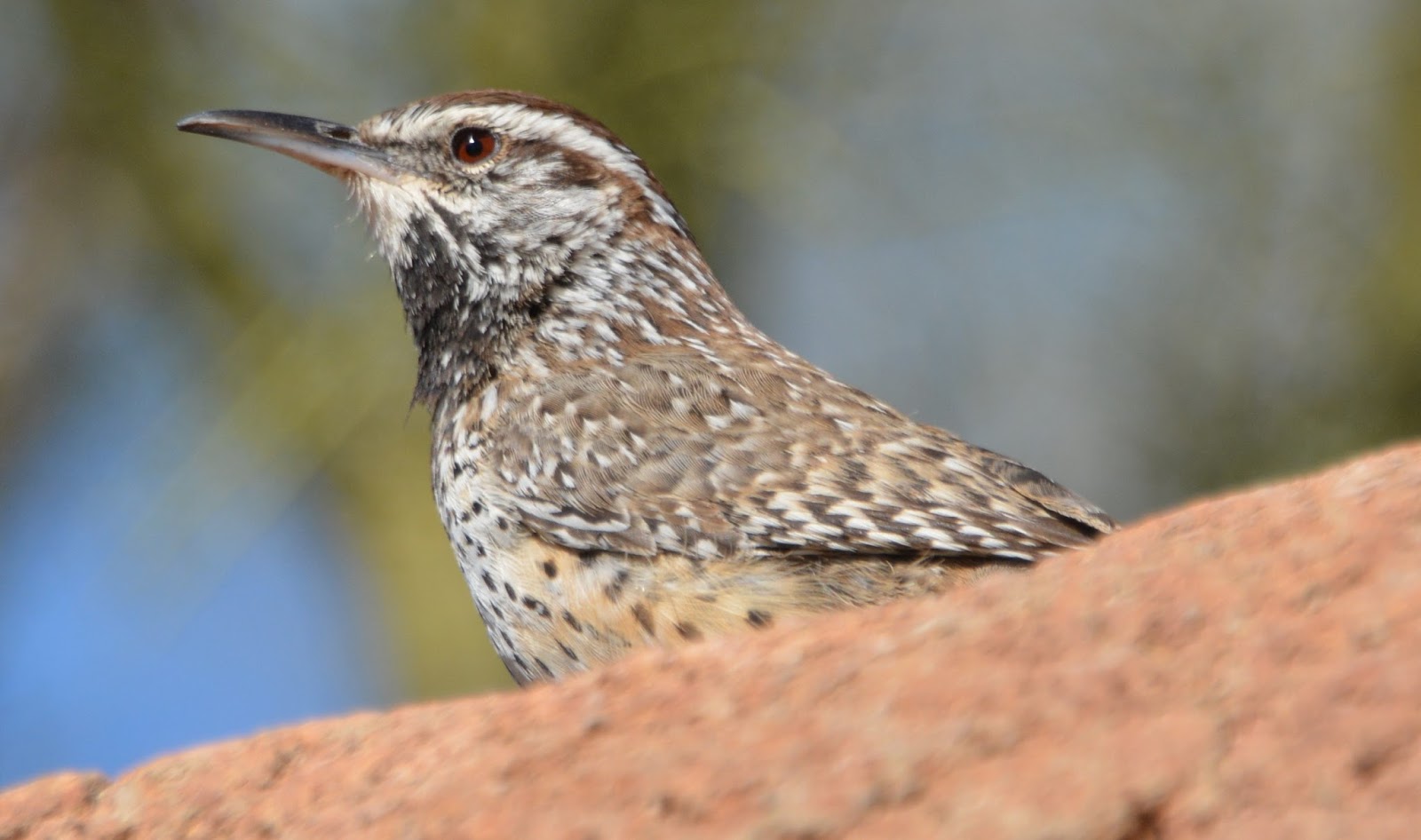
Cactus Wren
The Cactus Wren rattles away.  He is mischievous as he calls to his partner after finding a patch of food.  She responds and follows him into the prickly shrubs chasing off the House Sparrows.


I was doing my annual survey of the Cactus Wrens around their various locations. BUT, I wanted something juicy and challenging.  So I made some side treks to make it all happen.  They were million dollar birds for cheep:)


Brown birds.  Lots and lots of brown birds fascinate me.  A flock of Brewer's Blackbirds hang near a bush.  One flies into the shadows of a larger Ocotillo. 

Brewer's Sparrow
In a way, I'm no longer that kid who is asking for help anymore.  I'm now helping out others and it feels good. It feeds the teacher part inside of me.  A snowbird with binos asks me at the Desert Museum why our Cardinals are black.  My response, "Ahhh, how exciting!  You've found a Phainopepla guarding his patch of desert mistletoe!"  She's now discovered a new Sonoran desert bird and plant species.  


Phainopepla-male
We play of course.  Crowds are shy around the Desert Museum's new and awesome Vulture Culture. They have a Black and Turkey Vulture on display there. Micheal is a sport and has fun. Once adults see us goofing around and laughing, they do the same. It's funny how humans are pack animals.  What's socially acceptable?  And what's not?  When it comes to learning, I think we should all have fun. 


Micheal makes a convincing Turkey Vulture but strangely he doesn't like leftovers
As we have fun and enjoy the outdoors, I am careful not to let the birds take over unless they are doing something really cool:) But I continue my annual studies and record data for nesting Cactus Wrens, Barn Owls as well as keep tabs on the many wintering grassland species.  I keep my distances.  And I keep my reports secret. 


Everything I have done; I have done my myself. That doesn't mean I've done it alone, quite the contrary. There have been countless people who I would call "teachers". Without their guidance and training, I wouldn't be where I am now. I refer, of course, to my own planning and studies with others.  Currently, I am researching the Spotted Dove.  Recently through my work with California birders, I found out that there is a healthy population of Spotted Doves on Catalina Island.  Before they could only be found in a nasty neighborhood of LA which birders have said is NOT ideal for birding. So I like safe and scenic. It should be an easy find. And to be honest, it should be a wonderful vacation. So in a month, we leave for Avalon and I can't wait to continue my work on the Pacific Ocean.  


No educational institution taught me how to speak Spanish or be a teacher or be a birder. For the first two titles, they certainly charged money for it.  Lots and lots of money.  Degrees are no more than pieces of paper.  And in the end, it means absolutely nothing.  It's what you bring to the table.  For my students, I tell them to take control of their education.  A degree in Spanish means nothing if you don't speak Spanish.  LIVE in a Spanish speaking country.  Theories and books won't make you a teacher.  You are born one or not.  So volunteer and work with people for EXPERIENCE.  


First spot.
The same is true in the birding world. The true test of the Arizona birder's ID course falls upon the sparrows, flycatchers, longspurs and pipits. Birding can be as simple as a Cardinal or as difficult as a Sprague's Pipit.  Last year, I went with my friends to find a Sprague's Pipit.  We saw it, but someone from outside my group called out the ID before I could do the ID myself.  All I had to do was look at the bird and count it.  I wanted to EARN that bird.  


I wish this one has turned out better but I was excited seeing the bird. Next time I will be much more relaxed.
On a recent trek out to the Santa Cruz Flats, I helped another birder get his nemesis Sprague's Pipit.  I gave him the field marks and together we walked the path.  We counted many American Pipits and Mountain Plovers in the fields, but it was the solitary bird that held my interest. No bobbing.  Just mousing around the grasses.  Behavior. 


My first spot
Then a ray of light hit the pipit-looking bird and revealed bright pink legs. Field marks. We got our poor ID pictures for evidence, but it was an amazing experience to observe a bird without the fear of other birder parties flushing this secretive pipit into a further field. Our Sprague's Pipit casually walked from one field into the next, crossing the road with it's very large feet.

Brown birds are as cool as the ones with color. Tricky to separate from the numerous American Pipits.  BUT solitary from the flocks of AMPI, streaky back, pink legs, NO bobbing tail but it did bob the head back and forth; overall lighter in color with light streaking on the front.  It can be difficult.
 Distance was important.  We were close enough with our binos yet far enough away to not disturb the bird. And that's what I remembered from our first observation as it was an issue. At least for me. One group would get too close and flush the bird into another field much further away. While I may have had my lifer Sprague's Pipit last year, I felt for the first time that I EARNED my bird. It's a pretty special feeling.  But even better?  Helping someone find their nemesis bird while enjoying wonderful observations of a naturally very secretive bird in the field. 


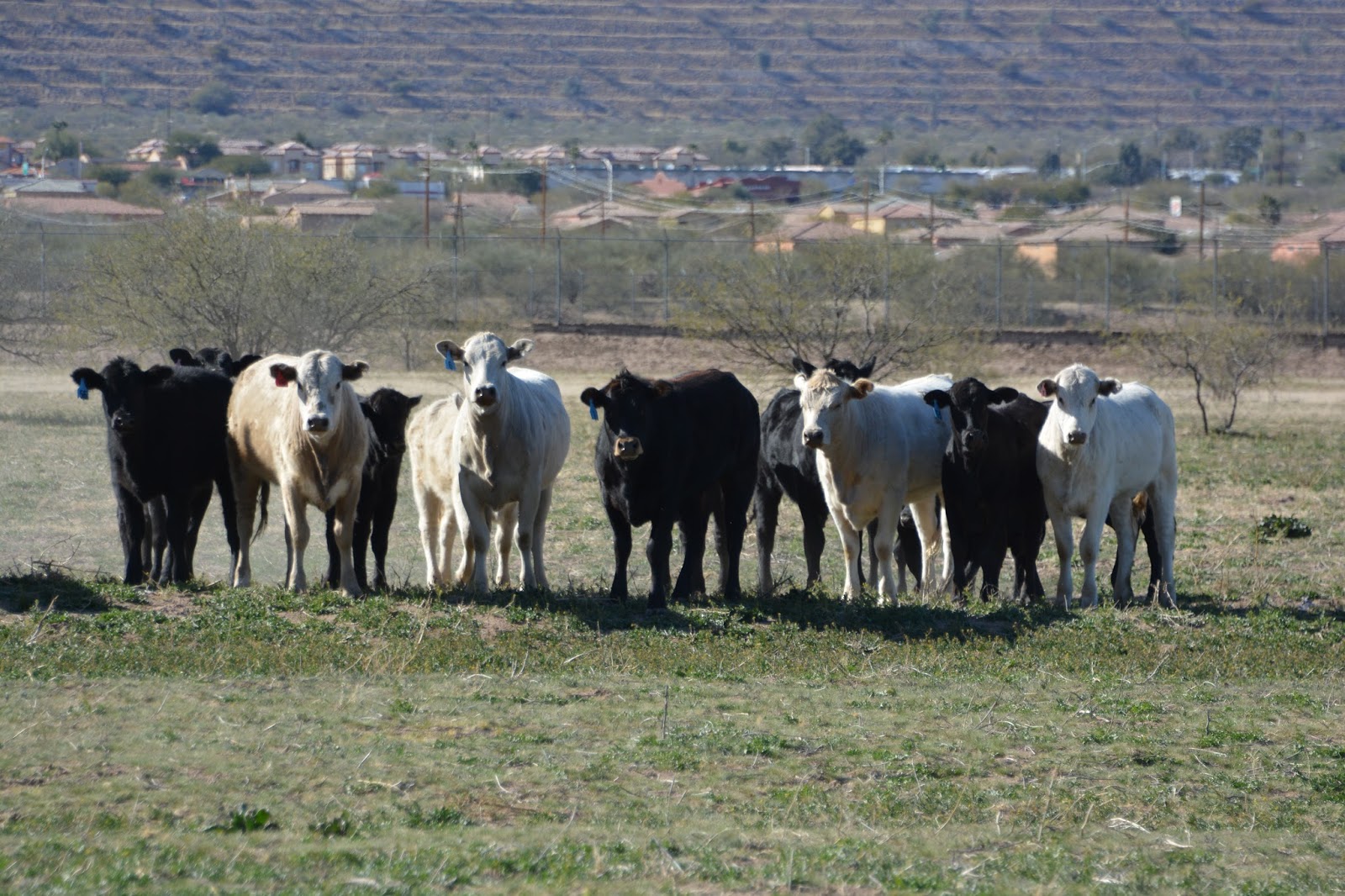
Cattle "helping us" find/flush our lonspurs:)
The same cannot be said about the McCown's Longspur.  Generally, longspurs are one of the most difficult birds to photograph. This was like a homework assignment I kept putting off. Grassland birds are my favorites, but they sure do require patience and focus. 


While it wasn't planned, I met up with another birder who had been there for an hour trying to locate the longspurs.  We dealt with extreme wind and dust.  Other birders were there and it was interesting to watch the various individuals.  Some wanted the "gimme" lifer but didn't help at all with the search.  Others simply gave up and left.  But if you give yourself up completely to the moment, anything is possible.  Forget about home, forget about work, forget about the sunset:)  Just be in the moment.  Become the flock. Forget the stinging dust. The frigid wind. And the glaring sun.  Just focus on the energy that is "the flock". My watering eyes did hurt after the observations (which was then followed by a headache), but it was worth the intense search.


McCown's Longspurs-overall a rather dull bird.  For Arizona birders, this is a Master's level bird.
Within a half hour, I was able to help my friend lock on to these very difficult birds.  They were mixed into a flock of several hundred Horned Larks and Lark Buntings.  And there were just two of them!  And they were small.  Brown birds at their very best!


Random Slider Turtle photo

While none of this is easy work; it has become a simpler task. Understanding a simple word like "warbler" or "longspur" will usually imply certain behaviors and often involve a headache later on:) After an hour of cracked dry lips, sore eyes and being all covered in dust, it was time to go home. The mission complete. It was exciting.  The way I imagine a final exam to be in the field studies of AZ Ornithology.  I heard one birder say, "It's what separates the boys from the men." And I'm guessing the girls from women? The birds from the birders?:) I'll just restate it in my own geeky way, "I passed this Jedi test."  


Renee, a creative and funny soul who loved Star Trek as much as I do.
I am constantly reminded that life is not a given.  It should not be taken for granted, ever.  This past week, I received my first check ever for guiding a bird tour and it was VERY nice.  But I also lost a friend.  She was someone who I loved visiting with every year at our Thanksgiving dinners. Renee Sampson, you are loved and will be missed. 


Chestnut-collared Longspurs in Willcox, AZ
I'll be back in the grasslands again thinking some more while helping Tucson Audubon save our declining populations of Chestnut-collared Longspurs.  Once, the McCown's Longspurs were commonly found in small numbers in Southern Arizona.  Today, they are extremely rare to find around their former habitats.  This could also happen to our Chestnut-collared Longspurs if we are not careful.  What's bigger than any of us?  Saving our planet. 


Meanwhile our Jaguar roams the Santa Rita mountain range. Our secret was released by National Geographic just a couple weeks ago.  Hopefully with our combined efforts from all the conservation groups, we will help bring once common wildlife back into our area.  The Jaguar is a wonderful example of what could be once again if we are not reckless.  


At the Buenos Aires Wildlife Refuge with Bruce Berman
As you can see, even though I have financial matters to consider now, Arizona is a GREAT place to be broke.  For a birder:) Until next time.....


Friday, February 5, 2016

The Twice-told Tale

Glassy reflections at the San Rafael Grasslands

"All this has happened before and it will happen again."  Each year I retrace my steps, but I am certainly coming to the end of it all.  There is only "out there" now, beyond Arizona. 


I've finished up most of my work in Arizona and there are just a few places I need to survey again for my final birds. The Black Rail, the American Three-toed Woodpecker and Dusky Grouse. I need a photo of the Flammulated Owl, but I can do that elsewhere.  Arizona, it has been fun, but it is time to focus on the world at large.  Now my work will take me into the various locales around the Americas. Or I will be helping out with various projects around the state.

American Kestrel
So when it came time to plan for the weekend, I could only think of the grasslands. They are my favorite places to bird. I asked my friend Marla if she wanted to go for a drive through an amazing area.  And she was up for it.  There was that same rare Yellow-throated Warbler hanging out in Patagonia Park again this year, but I had no desire to chase it. Those days are over. Instead, I helped guide some visitor's to where the bird may be hanging out.  If you want to read about it, you can click on last year's report.  I'm not telling the same story twice on this blog:)

The beautiful San Rafael Grasslands
I saw my Baird's Sparrow and White-tailed Kites, but I was more interested in letting Marla find them.  She had never seen these birds before and it was great showing her around the San Rafael Grasslands.  There is something fun about helping others explore new areas. I like taking pictures but lately, I've been into the binos a lot more. So in a moment of my yearly reflection, I thought about what I will plan for this upcoming year. No more chasing the same rare birds. No more of the "same" experiences.  It's time to focus on other things. 


When with non-birders, it's fun to make finding birds a game. And it was fun watching Marla stumble upon a rafter of turkeys. After I heard her gasp, I knew she spotted something nice. They were our first of the year Wild Turkeys!  After counting each and every one of them twice, we came to the conclusion that there were 28 of them!

Wild Turkeys in Patagonia
January has passed and I will disappear for awhile from the birding world in Arizona.  It's a break long overdue.  There is still one trip left in Yuma.  And one for Greer.  I think I feel this way EVERY winter before spring break.  It's hard to break routine:)  Even with fun hobbies!

Canyon Towhee in Patagonia
One last note. Before the weekend started, I went with my colleagues to prepare for the annual breeding event at our school. And yes I'm talking owls here:) My ebird records were showing that it was time for our Mama Owl to begin nesting. So we prepped her nest, Oro Valley style, and cleaned out the debris from last year for our very high maintenance Soccer Mom Owl:)  And we loved it!

Peter Fletcher climbs the ladder to clean out the debris with gloves.  We put in a new blanket so that Mom can stay cozy on her nest.
 By Monday, our Great Horned Owls were preparing to nest again and we were thrilled. This is one of the reasons why keeping data is awesome! It has happened before and it will hopefully happen again. And there is something very rejuvenating about it all.

Last years brood:)
 It's like seeing that first tulip appear out of the snow.  A sign that vacation is near:) 


In the meantime, I'll continue working in the bird world.  I'm thinking about doing another "Birds in Blooms" series while I'm waiting for the next big trek. I'll be out in the grasslands again doing more surveys for my own records and helping out Tucson Audubon with Longspur and Sparrow studies. My favorites!


Dark-eyed Junco(Pink-sided) 
I plan to finish off this last series of "grassland" blogs at the Buenos Aires Wildlife Refuge next week.  

Arizona Woodpecker

Here are my half hearted(or whole hearted) attempts at good photos of birds already seen.  Although, I still strive to get better photos of a Red-necked Grebe:)  The pic below represents a slice of the 179 species seen during the month of January. After seeing birds over and over again, I have learned to hone in on their behaviors and it is rewarding. My difficult objective was achieved, 7 new state birds and 4 new lifers(Yellow-billed Loon, McCown's Longspur, American Bittern and Barrow's Goldeneye!) The challenge has ended and now it's time for adventure!