Showing posts with label Common Tern. Show all posts

Wednesday, March 1, 2017

The Wildest Birds


They say that after 400 state birds, it gets interesting. The chases are more intense and often times, our treks take us to the far reaches of the state boundaries so that we might try and add one bird. And sometimes that bird isn't even a lifebird!  Here's a look at the crazy vagrants(or not) that have come to visit Arizona. Warning: some of the photos presented today are of really BAD quality!  It just shows that being a birder is a 24/7 kind of job! At number 400......

Prothonotary Warbler State Bird 400
The Prothonotary Warbler hid in the Arizona Cottonwood leaves during a warm spring day.  It wasn't hard to find but it did require a little patience.  This warbler was close to home and obviously a no brainer to chase. 

Nutting's Flycatcher 401(upper right hand corner) The rest are all the similar looking Myiarchus species!
Then came the Nutting's Flycatcher.  I hate this bird.  It's not exciting to me NOR was the crazy drive to Lake Havasu.  To be honest, it was one of the last of my "expected" birds on my state list to find.  When you get to the bottom of the barrel, you do what you gotta do.....rent a crazy monster truck to the top of a rugged road and find this uneventful number. To make things worse with this bird?  It was in a remote area.  While it was beautiful, there were moments I panicked. Never again.....

                                                                   Black Rail 402
To make things worse, we went to find a Black Rail on the same day. When I decide to rip the bandage off.... Of course, I knew that spotting this lifer and state bird was most likely not going to happen because 1) It's a rail. 2) It's a tiny rail. and 3)Birders rarely ever see this bird. Many times it's a count as a heard only bird. So I brought my phone and took this vocal recording of the bird.  After many mosquito bites and hearing the bird, we drove away from the dark Yuma night for another several hour drive home.  

Red-headed Woodpecker 403
Things started to get exciting when this Red-headed Woodpecker made its way into Arizona and hung out in a very hidden and secret location. This bird was closer to home BUT we needed a sturdy vehicle to get there.   Thankfully, we had one!

Pine Flycatcher 404
An ABA first(first time in the US), the Pine Flycatcher, was a hike and a rocky road trip that had us all biting our nails.  After a little sun and heat along with drinking lots of water, we found this female flycatcher making a nest in a sacred glen.  Magic!

Berryline Hummingbird 405
I'd chase this next one, the Berryline Hummingbird, often and dip. And I would always dip on the bird since it came to visit during my international treks.  So while I sat at the hummingbird ramada of Miller Canyon, I was shocked and surprised to see this bird casually fly to the feeder.  There was no plan.  It just happened as it happened. Right place; right time.  The way real birding should happen.


The heat of the summer came and so did a rare Hudsonian Godwit.  This lifer was seen with a scope demonstrating that not all state birds, or lifers, play nice for viewing. 

Hudsonian Godwit 406
On a beautiful trek up to the White Mountains, we finally discovered the American Three-toed Woodpecker!  It only took 5 attempts!


American Three-toed Woodpecker 407
Then.  A major fallout happened from Hurricane Newton.  I paced my classroom after hearing the news about crazy ocean birds dropping from the sky.  During the last bell, I shooed my students out the door and grabbed my umbrella to witness storm-petrels in the desert!  The drive seemed like eternity.  It was an event I'll never forget.

Wedge-rumped Storm-Petrel!!! 408
The shadows from the clouds of the hurricane made photography nearly impossible.  We watched helplessly as this Least Storm-Petrel(below) perished in the waters. So adding state birds can also be a sad one. 

Least Storm-Petrel 409
But some birders held hope when we saw a healthy Black Storm-Petrel fly around the ponds of a water treatment plant days after the storm. By nightfall, we believe this bird made it back to Mexico(which isn't too far away).  This bird has occasionally strayed into Arizona as it lives off the shores of Baja California.

Black Storm-Petrel 410
Some state birds don't play fair. Here is the case of the accidental pretty bird. During work (and during yet another storm), we were all having lunch when Margie spots this rusty orange and black bird from the office windows.  "Chris, what is that bird?"  OH. MY. GODS!  A rare Orchard Oriole came to visit and I did not have my camera.  So Margie snapped a shot with her IPHONE.  The bird took off afterwards and wasn't seen again. 

Orchard Oriole 411
A boring bird to add to the state list, the California Scrub-Jay, was more of a technical trek.  I don't really care for those too much but we were able to hear the bird and check it off the list. 


California Scrub-Jay 412
Another stormy (do you see a pattern here?:) and fun day out after work had me using my cell phone to snap a picture of the Common Tern.  I don't always bird with my camera now.  Sometimes I just want to be a birder with binos and not bring that heavy camera. 

Common Tern 413
The furthest and most stressful bird of the year, the Lesser Sand Plover, had me in suspense for a couple weeks.  It was a state first/lifer that required MANY hours of driving.  Thankfully, it waited for us before disappearing into the unknown THE NEXT DAY!  Talk about luck! Afterwards, we slowly birded our way back down to Tucson visiting with friends and not wasting gas on one bird. The whole trek took 3 days long.  

Lesser Sand Plover 414
While not ABA countable, I'm counting this one.  Monk Parakeets have been breeding in this state for awhile and if the birds breed successfully, I count them. For the ABA listers out there, I actually got my countable Monk Parakeet in Florida several years ago. If it's one bird group I enjoy the most, it's the parrots/parakeets.  So I have been studying their populations around the US for quite some time. There were several AZ populations of the Monk Parakeets years ago but then they mysteriously disappeared.  Over the years, we have tracked down their disappearance and in the process, have also relocated their last breeding colony. Several colonies were taken out by wildlife management as they were considered invasive.  And the neighbors didn't really appreciate the noise:) This is a bird of interest for me in this state.  I'll continue monitoring the small? population.  There are rogue birds discovered every year in strange places around Phoenix.  

Monk Parakeet 415
After finding the Pacific Wren 2 years ago, it was time to locate the Winter Wren.  Easy. But the little buggers are tricky to capture on camera as they act like little mice with wings!

Winter Wren 416
Then a Christmas miracle happened.  A happy male Long-tailed Duck came to visit for quite some time.  And he made many birders happy:) It was strange observing this one in the sunny Phoenix area.  Back home in Wisconsin, they love the icy waters! But this one had a taste for the desert:) A true "snowbird"......

Long-tailed Duck 417
The Rose-throated Becard was tricky.  I tried once for this bird in Arizona but it hung out in a remote area. I dipped! And I had to have my car aligned after driving on that washboard of a dirt road! I've seen the bird many times in Mexico and Guatemala but never in the US!  This year several RTBE were seen along the DeAnza trail and I was able to add this bird to my state list.  It felt good!

Rose-throated Becard 418
The Mexican bird species all played nice for me this year.  Normally the elusive Green Kingfisher doesn't like to hang around for a pic.  But thankfully two stuck around this winter in Patagonia for a photo shoot.  Finally!

Green Kingfisher 419
I didn't chase a Palm Warbler outside of Tucson because I knew one would eventually come to me.  All I had to do was be patient.  It has been a good year for adding warblers!

Palm Warbler 420
And more recently, I finished with yet another "FINALLY!" as we spied this Tennessee Warbler.  State birds after 400 are not easy and it gets trickier as we climb the ladder towards the top.  There are no prizes other than the smiles and satisfaction that happen when we find difficult birds. I should also mention that I wouldn't chase many of these birds without the help and support of friends like Brian, Magill, Gordon, Muriel, Kathie, Jeremy, Janine, Babs, Micheal and so many others. Let me put it this way.  When you are dealing with remote areas, always...ALWAYS bring a friend for safety. I now sit at 421 and wait. Who will the next state bird be?

Tennessee Warbler 421


Sunday, August 7, 2016

Summerfest


Another summer has come and gone just as quickly as the one before it. For a birder, it's a reminder that time is running out for the year!

Garter Snake in Wisconsin
Each year, I sit down and make a list of birds and places that need to be seen.  It becomes more and more complicated as I go.  This summer was an interesting one.  

Pronghorn in the CiƩnagas Grasslands
Between the ABA splits, Arizona, California and Wisconsin, I have been able to add 29 new life birds to the list this year.  The challenges increase for each new bird found.  


Woodhouse's Toad
Some of the highlights, so far, (for this year) have included birds like the Pine Flycatcher, Kirtland's Warbler, Spotted Dove, Little Gull, Yellow-billed Loon, Streak-backed Oriole and Rusty Blackbird. None of these birds were located close to home so it takes a great deal of planning and strategy to find them. 

Inca Dove
And it should be mentioned that as I find new birds, I also have better views of others. Plus I've had the pleasure of meeting so many wonderful people along the way.

Blue-winged Teal
Currently, I sit at 734 lifebirds. And I do mean sit.  I still have a potential pelagic to do as well as 2 other trips before the year is up. I'm hoping to hit the 800 mark before the December 31st deadline! Wishful thinking? Or a fool's errand?  That remains to be seen.   As long as I move forward and do not become stagnant, I'm okay.  As I advance in my years, a lot of my work will take me out of the country more often than it does now.  I have pretty much finished finding new birds in AZ and surrounding states. Of course, there will be rare birds visiting like they do, but there won't be as many to chase. Soon it will be time to tackle a bigger place, known as Earth.

Baltimore Oriole
My current stand for the year is 435 bird species seen in the US.  And for North America, 444 birds. 


Common Terns
I never know what each year will bring, but it seems to me that this year has been about target birding very specific areas that require a lot of energy and planning for just ONE bird. For example, a trek out to Catalina Island landed us the Spotted Dove and US countable Red-billed Tropicbird. A lot of study went into the Kirtland's Warbler habitat in Wisconsin.  We wanted to see that bird in Wisconsin and not Michigan so it took us several months to plan on legal ways of finding the bird without getting in trouble.    

Botteri's Sparrow
Some birds, like the Rusty Blackbird, required me to go to the area 3 times before locating it. And one of those times, we had someone shooting at us! Other birds, like the Little Gulls, required patience as I scanned through hundreds of Bonaparte's Gulls. 

Cassin's Sparrow
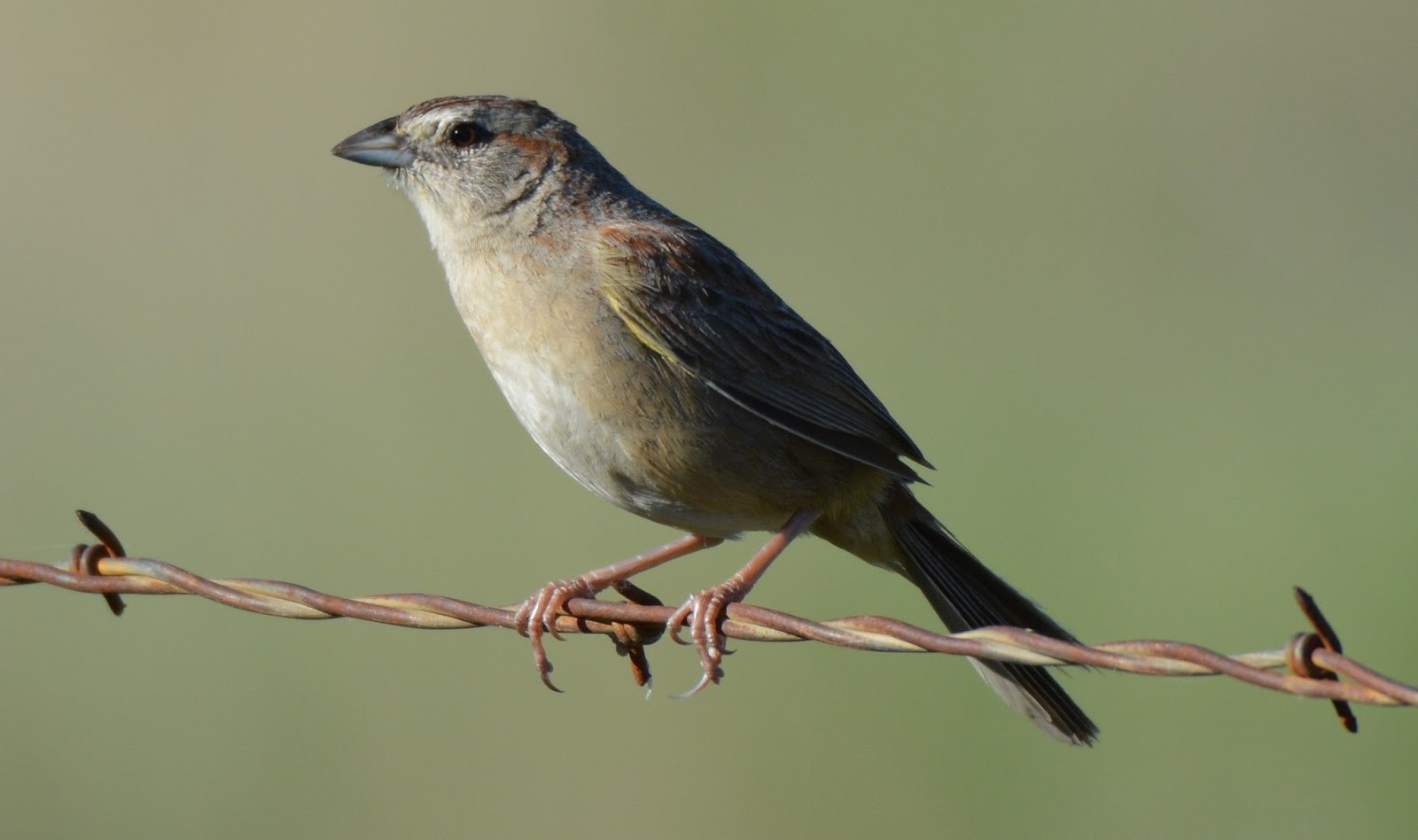
While out on the road in southern Arizona, we had excellent views of breeding Botteri's and Cassin's Sparrows in the grasslands. In the large scheme of things, I have seen a lot of rare birds like the Arctic Tern and Purple Gallinule. The most important thing to remember about birding is that it's about YOU and the BIRDS.  I think people can get lost with the whole "competition" thing.  It's not a competition, but it certainly feels like one sometimes.  For me, it's about mastering the art of birding. This is also a potential career move after retirement. For me, it's about the travel and storytelling behind each new bird found. I'm a world birder not just an Arizona birder.  It'll be hard to let go of that ownership and attachment that I have for this state. It is, after all, where I began really studying my birds. I have to save that money for other expenses now which should include some remodeling of our bathrooms...or a tile floor:) 


Nesting Gray Hawks are studied by the UA
I ask myself these questions daily. What can I do better?  I've never seen that behavior, is that common?  Why wasn't I more patient?  Why wasn't I quick enough with my camera? Where's the darn bird?!!:) I am forever addicted to these birds.  At family events, I'm still looking at birds in the sky while everyone is drinking their beer and chatting about the every day life. I love nature.  And I love being outdoors(minus the bugs and heat). I am so curious about what's going on around me that I forget that the "boring stuff" is important stuff to other people. Don't get me wrong, I still like a good gossip session:)

Killdeer
As this summer ends, I learn that birding for lifers isn't about the quantity.  It's always about the quality of observation.  Each year varies in theme, but if one thing is certain, it's that this all is extremely challenging as it takes me out of my comfort zone.  There is so much to do. And so much to see. As my summer comes to an end, I begin another period of planning for the fall and winter months.  The checklist slowly shrinks as I target areas where there are birds I have never seen.  This year's theme, "Home" will continue. 


Saturday, October 3, 2015

Overboard!

Western Gull at sunrise
I had been looking forward to this one and only pelagic this year off the coast of California with Magill. This ten hour journey was intense but VERY worthwhile.


We, along with 88 other people(can't even get away from the people offshore!), went with Pacific Nature Tours to find lots of great birds.  The ocean weather was hot and I.....overdressed:) My mission?  To study jaegers, shearwaters, storm petrels and auklets. 

Sooty Shearwater
Surprisingly, I was able to move around the boat without too many people getting in the way.  The hierarchy of birders was also evident. I think we had everyone from beginners to the pros on this trip.  Our ebird reports certainly show the depth of reporting that had occurred!

Pacific Nature Tours
Pelagic photography is some of the hardest thanks in part to a moving boat, rocky waves, overcast(or bright) conditions and lightning fast birds.  And of course....maneuvering around people when a rare bird was seen:)

Pomarine Jaeger
Jaeger fest was a success!  We had all 3 Jaegers show up around our vessel.  I really had a great time studying the VERY slight differences between the three species. I now know some of the field marks, and hopefully I should be able to ID these jaegers down the road by myself.  Well in theory:)


The Pomarine Jaeger is a bulky tank with wings.  The Long-tailed Jaeger(below) is as elegant as it is beautiful.  But why isn't this a Parasitic Jaeger?  Well it's duller in color, but that's not a good field mark to go by. The best field mark? We were able to see the tail which was flat and not pointed.  This bird is also more tern-like in flight. It has a flight pattern similar to that of an Elegant Tern....slow with deep wing flaps. Observing the behavior was key here.  The Parasitic and Long-tailed Jaegers can be difficult species to separate when they are in their basic plumage. 

2nd Year Long-tailed Jaeger
Also along for the ride were many Common Terns and a few Arctic ones as well.

Common Tern
During the course of the day, we saw many of the very brown Parasitic Jaegers.  At one point, one chased a Common Tern!  Very exciting. 

Parasitic Jaeger chasing a Common Tern
The Parasitic Jaeger did not get the tern.  But the flight for life action happened for a good couple minutes. 


There were a few birders on board who have seen most of the birds in the U.S. and only needed ONE special bird to complete that goofy artificially created American ABA list. They were looking for the endangered and rare, for the U.S. at least, Craveri's Murrelet.  Our adventure would take a "tern" for the worse as a birder lost his balance and hit his head on a metal rail. He went out like a light! And I could hear groans from both sides as he went down....literally. 


The guy on the right is one of the several lead ebirders on board recording accurate distance and taking bird counts. We were not to submit our own reports as this company would do it for all.  No complaints here and THANK YOU!  That let us really bird.  And the ebird reports were stunning!
Unfortunately, according to the rumblings, this man did not plan well for the pelagic journey and forgot to take his diabetic medication. People went to help him and he did recover.  The Coast Guard was called and we were ordered to return back to port.  For the birders searching for the elusive Craveri's Murrelet, they lost their chance. There were a lot of angry birders.  Some vocal.  Some not.  Who was more selfish? The birder who didn't plan well?  Or the birders who paid good money to find a rare bird?  I'll let you all be the judge.  It is the price we pay when we all bird together in large groups.  If it's one thing I've learned this year from Mexico and now this pelagic, it's that I prefer to bird with a small group of friends or alone.  But sometimes you can't avoid the crowds...especially on a pelagic. 

Black-vented Shearwater
Eventually my eyes blurred from the intense sun and blue ocean.  I began to get a headache from straining my eyes into the distant horizon.  There were smaller birds like the Cassin's Auklet. 


Photo by Justyn Stahl
The world is such a complex place. I visibly see things changing.  Our planet is changing.  And global warming is real.  We read or hear about it in the news.  But I actually see it!  I don't know how I feel about it all.  I am just an observer in this short lifetime. 


My action shots of this relatively small bird:)
Some birds are taking advantage of this climate change while others face extinction due in part to their food source disappearing or moving to another area.  This year alone, the Pacific coastline has seen a massive die off of the Cassin's Auklet and other sea birds. 


I am constantly in deep thought about this planet. Eventually my brain shuts down and my eyes give out. And so I just focused on the moment and art of the Western Gull.  Lifebirds are challenging.  When there aren't new birds to find, I just relax and enjoy the moment. That's when my art can happen. 

I'm watching this beautiful dolphin jump and then am startled to find a microphone up my backside! I mean....let's have a drink first buddy! Geez! A very large man hung his body over the side of the boat to capture their sounds and crunched me into a tight space where I almost lost my balance.  SO RUDE!  I left.  If I could swim, I would have jumped in with these dolphins to get away from some of these goofy people. 
We found so many species of dolphin and whale.  On our trek we had migrating Blue and Humpback whales. 


When all was said and done, we got back into our rental car and were glad to go back to our open spaces in Arizona.  


I'm naturally claustrophobic but on our trek into California, I was reminded why I moved away from this state so many years ago.  There were TOO MANY people. Everywhere. 


Eventually someday, I will have to bird areas with even higher concentrations of people.  I'm thinking Japan here.  I'm a giant and I know how crammed their country can be:)  Birding does not come without challenges.  But again, that's what is exciting about it all. 


It's fun getting old and cranky:)  Life is good.  This pelagic trek netted me several more life birds.  I am now 4 short of 700. Where will the life bird adventure lead us now?  Stay tuned for more.