Showing posts with label Cassin's Sparrow. Show all posts

Thursday, July 23, 2020

After Covid

My first outing was to Madera Canyon where I watched two Coatis roaming around their patch for food
When you're almost dead and don't have the energy to clean, there's the aftermath of house cleaning!  Good gods!  There was laundry, bed sheets to wash, cleaning the floors, dishes and so on and so forth. And then, there's the whole covid sleep factor. 


Nova "helps" me organize a trip.  Knock on wood.  I'm hoping it happens. 
When you have covid, sleep is amazing.  I have spoken to so many dead people in my dreams in crazy fantastical places that it's not even funny.  The dreams are intense and real.  And the sleep is deep and sound.  Maybe it's because we have one foot in the grave now?  Who knows?  But it has created a terrible sleep pattern over these past 2 months!  I stay up until 4 in the morning and sleep until 11 everyday but expect myself to keep the same daily routine with less time to do so!


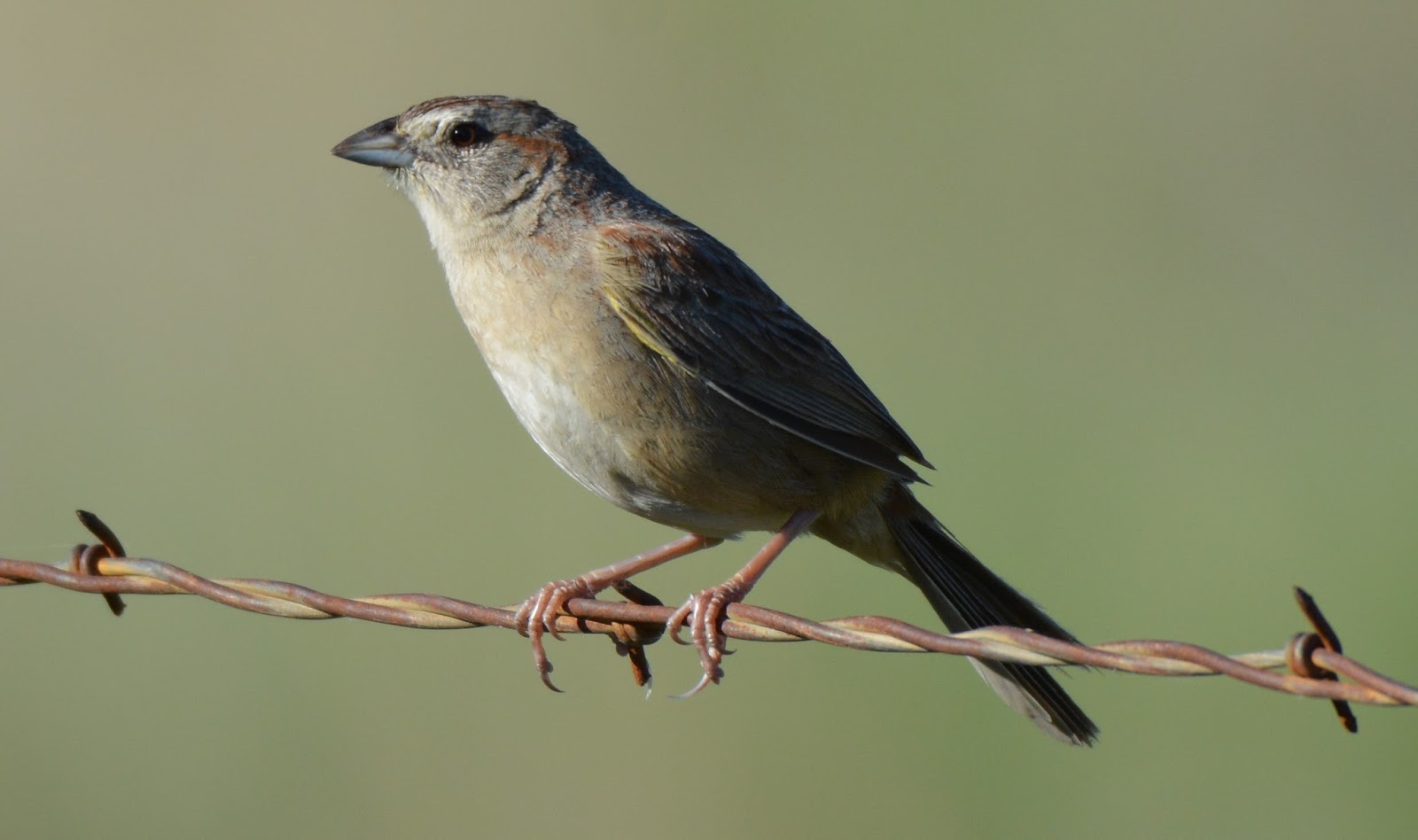
Cassin's Sparrow
After a month of quarantining, I am slowly getting my groove back.  I had a haircut!  And I've been hesitantly interacting with humanity. Once you get covid, you don't ever want it again. I went to the post office today to mail off some masks to a friend but noticed two "Karens" without a mask in our mask mandated city of Tucson. It made me angry.  There were so many people being careful and two jackasses didn't social distance or wear a mask.  My attitude? Get the hell out of the post office.  I don't want covid again. And it's not fair to the all the people who were standing there socially distancing with their masks on.  There's a special place in hell for people like that.  Needless to say, I reported the post office for servicing those covid spreaders. If we don't take this seriously, I will never see my students again.  My tolerance for stupidity is very low now.  And I am angry. There were a lot of wide eyes at the lady. I won't be going to the post office again. 


Blue Grosbeak
The public is exhausting. I am grateful for the friends and family who brought us groceries while we were down.  Even today after the covid, shopping can be very draining. So much careful planning has to happen for every visit to a store. I try to go when numbers are low.  And I avoid shopping on the weekends now. I think that was the hardest thing to do......grocery shop again.  The body has to build strength again and those first baby steps were hard.  I'd break out in a sweat for a minimal amount of exertion. So I had to approach my birding that same way for a week until my body could build strength.  It was a treat to see people outside exercising as if there wasn't any major pandemic going on.  It has also been very strange that there hasn't been any real quarantining happening in Arizona even after we became the hotspot.  If you're lucky to leave your covid hell, it's a real eye opener!


a juvenile Bridled Titmouse begs the parent to feed them
Escaping the endless horrible news after quarantine is a must. I get so bored, but thankfully, I enjoy writing. For several weeks, I pulled out those "emergency blog posts" while we were dealing with our sickness.  I lost the stamina to write.  Now that I'm back to "normal", I have enjoyed the writing process again. I had a few students who shared with me their stories of the covid infection.  Here is some useful information if you get the mild case of covid. There are 3 choices with this virus. You either are asymptomatic, have a mild case(what we had) OR you are in the ER/Covid Unit/ventilator due to breathing issues. If you experience "allergies or a slight cough", get tested as soon as you can. After the hellish experience with our mild case of covid, we were told by doctors that a slight cough can be expected for a few weeks after you had the virus. (which was good to hear).  It's probably similar to what smokers experience.  Hopefully it's not for life. 

Lesser Nighthawks are quite visible now at sunset.  We had one fly over the garden recently.
One night, my stubborn German side came out and said, "You're going for a walk!" Part of the resistance building came from simple walks at night or from the car.  My first attempt was a walk around Agua Caliente Park when everyone went home.  I watched Lesser Nighthawks and Purple Martins zip around me at sunset. 

Greater Roadrunner
During those first few outings, I just drove in my car and went to places away from people.  Monsoon is here now and it has been rather beautiful so I did my yearly trek during a rain event to count Cassin's Sparrows in the grasslands.  There was lightning so I stayed in my vehicle, the USS Betty White. 


A lot of the action has been also happening at home.  I've been purchasing more oranges and seed for ONE station under our oak trees in the courtyard. You can see the plants getting "excited" for the rain events.  The humidity in the air is wonderfully nasty for humans but the plants love it!  It looks like they are almost glowing green as if they were giving a sigh of relief. And after getting beat up by the sun for nearly 2 months, they immediately perk up with that glorious first nitrogen rich rain!

a view of the beautiful monsoon sunset from our side garden
Tucsonans get excited about the monsoon season.  Most people groan elsewhere but in the desert West, it's a celebration. It also makes for very comfortable birding after the rain event. I just have to be careful with the lightning. It's not a joke here. Birding is also good for the memory.  I had a moment on the trail today when I forgot the name of the blackbird with red on the wings.  Seriously! I stopped what I was doing and concentrated.....RED-WINGED BLACKBIRD! It took about 30 seconds to remember. I was a bit scared that I couldn't multi-task and remember all the birds zipping around me.  Baby steps. 


A first for our patch!!!!!!  A Bullock's Oriole visits our feeder!!!!  It was so exciting!
I am so glad we secured our place with our catio screen.  Crime rates in midtown have gone up.  For TWO nights, there has been a police helicopter shining lights over my garden!  An armed felon hid on my neighbor's patio!  It was very scary.  And then the next night, two men, one without pants, lit a dumpster on fire and ran into our little forested oasis. But no worries readers:)  I have strategically placed deadly cacti, like cholla in unexpected areas where people could run or hide. It's super painful if you step on it. They are placed near lush vegetation making the person think that it's "safe" to hide.  LOL!  Besides keeping the criminals out of our oasis, I also placed cacti like cholla in our garden to encourage Cactus Wrens and Curve-billed Thrashers to nest.  They have lost habitat in midtown due to construction and so I'm trying to help them out. They do visit our gardens often for insects, etc. 


This has been a good year for our Broad-billed Hummingbirds.  We've had lots of nesting happening.  I keep putting in their orange jubilee plants and keep the feeders full.  They stick around all year on our property. 
And after being in bed for nearly a month, I got fed up looking at ugly ceilings.  So, I pulled out the supplies I had stored and mustered the little energy I had to begin Covid Project 3, the Coastal Room.  


This room surprised me with different challenges.  The vinyl material I used did not want to stay up on the ceiling unlike the other room. There were cuts in the ceiling for electric additions.  And notice that there is an area of the vertical wall that needs to be re-painted.  As I began the art of redesign, I cleared the area for a blank slate. 


I watched so many DIY projects on Youtube and did a lot of reading.  The glue did not work.  I used tacks to keep the thin planks up on the ceiling and quickly realized I was going to need a staple gun to make this project work. Plus the tack method, which worked in the other room, did NOT work in this room.  And it killed my thumbs. 


Each day I did little by little.  My body would get tired and then I knew it was time to stop.  I wasn't going anywhere so I didn't force myself.  


As the ceiling was being completed my photography began to come in.  So I started placing the work in different areas to get a feel for the coast.  


Like a jigsaw puzzle, I began to sort out all the pieces and details.  


I sat back one evening and smiled.  It all fit together.  Now there is more I have to do!  Do you see where the horizontal seams are on the ceiling between the wood planks?  Well.  A wooden beam will cover that seam adding to the coastal charm.  I need more reds and whites over the next couple months to complete this project.  So I look forward to adding those fun and simple ideas.  When I finish this, I'll post the complete pictures.  Right now, I'm happy how this turned out, but I want to finish this before work starts up again.  Until next time and thankfully there will be a next time......stay safe and free from the nasty covid.  Avoid the Karens at all cost.  You don't want this. Now that we've recovered, I'm even more careful.   


Wednesday, August 16, 2017

The Grassland Road


Several months ago I began working with Luke Safford to guide a trip with Tucson Audubon and their wonderful Southeast Birding Festival. I got to pick the place and how we birded.  So I had to choose.  My favorite places to bird in August are the grasslands, Mt. Lemmon and Willcox Lake. So I chose my absolute favorite, Las Cienagas Grasslands. 

Botteri's Sparrow
 It was a bit scary but Luke was very helpful and gave me all the tools I needed to tailor this trek for our guests.  I needed a driver.  Done.  I wanted another guide with me.  Done.  Before I knew it, our trip to the grasslands was booked!  Twenty hopeful birders got into our two vans and placed their life lists in our hands!  The thing about the grasslands is that I feel very connected to the birds here. I knew our guests would fall in love with the landscape.  And they'd soon fall in love with our sparrows.......even if they didn't think they would:) 


In fact, as an educator, I feel it important to bird areas that have the most activity.  During this time of year, the grassland birds are extremely vocal and easily seen.  Our friends had no problem spotting birds.  But my goal?  Teaching them the calls and sounds of our grassland birds.  And by the bird gods did they learn them!  I had goosebumps listening to the birders pick out the sounds while ID'ing the birds on their own.  


To make things even better?  First class personality and professional bird guide, Chris Benesh joined the party. He is a relaxed and funny guy who helped take the stress out of this trip with our 20 guests. I'm not used to leading a group with so many people!


The weekend before the festival, I went with Magill Weber and we birded the area for my target birds that I wanted to present to the group.  On our list, I had put down birds like the Thick-billed Kingbird, Cassin's, Grasshopper and Botteri's Sparrows, Eastern Meadowlarks and the Cassin's and Western Kingbirds.  BUT.....to make something truly special....I mean.....really really special.....I feel that there needs to be more than just birds.  


And the Cienagas Grasslands have it all.  There is history.  There are birds.  There is epic landscape dotted with colorful wildflowers.  And there are Pronghorn. I feel at peace here. 


I think this trip was one of the cheapest of the tours.  And it was the one that made a lasting impression on everyone.  We saw coyotes, pronghorn and prairie dogs.  Speaking of Prairie Dogs....

Mojave Rattlesnake during our scouting mission
 We were running behind schedule and I was worried we wouldn't make all of our stops because we were enjoying the morning.  So I had scheduled a stop at the Prairie Dog settlement on the tour.  I wasn't sure if the group wanted to go and see more mammals but thankfully several participants spoke up and said that they wanted to see the furry little critters.  So we went.....

Cassin's Sparrow
 Cassin's Sparrows were EVERYWHERE!  This is a specialty bird here in Southern Arizona during our monsoon season.  They are very vocal and the last of the sparrows to breed for the summer.  And they can breed many times during a nice wet monsoon season.  This year has been another exceptional year for this grassland species. 


We arrived at the Prairie Dog settlement. I was looking for Burrowing Owls.  They were looking at the dogs.  


Juveniles played.  Adults fed.  And an Australian couple was more interested in a strange bird out in the field. Chris was helping other birders ID certain critters. I was helping a birder ID a Western Kingbird in flight when Willy and Jess asked me about the weird looking bird.  Thinking regular resident birds, I asked them if it was a Killdeer.  They told me "no".  It was too big.  Ok.  How about a Long-billed Curlew?  Hesitation.  Then Willy said he was pretty sure it wasn't a curlew. That got my attention. 

Black-tailed Prairie Dog
 I left the lady after she had ID'd her Western Kingbird. I joined the group who were all now looking at this strange bird.  What happened afterwards was funny and awesome at the same time.  Both Chris and myself put our binos up on the bird and excitedly told the group that we had a mega rare bird!  The Upland Sandpiper!


Everyone became serious.  Photographers grabbed their cameras.  Never in my life had I expected to see an Upland Sandpiper in Arizona!  The birders got excited and their cameras began snapping off shots left and right.  


I think I almost wet my pants.  It wasn't a lifer for me but it was an excellent state bird! No scope was needed and everyone got to see the bird well.  It doesn't get better than this in the epic world of birding. 


Upland Sandpiper
Chris immediately called the Andrew Core hotline(the AZ rare bird alert contact) and I went to the Arizona Rare Bird page on Facebook to post our findings. During that morning, other birders would visit our very special find and be able to count it on their lists.  That night a huge storm blew into the area and the Upland Sandpiper disappeared.  


 What a very special weekend we all had!  One of the participants said that when we got quiet during our initial ID, they knew we had a special bird.  They were excited for us as well!  There's nothing quite like the adrenaline rush of finding something new.  


 I lead a tour the next day to Madera Canyon.  We found some excellent birds and it was fun watching people get excited about adding lifers to their lists.  And it was fun leading them.  Even better?  Raising money for a good cause!  I will continue to help support Tucson Audubon for as long as I can.  They do a great job protecting our areas around the state.  It gives me great pride to hear people say the words, "Wow! This is so beautiful!"  A lot of the money raised helps protect these amazing wildlife sanctuaries of our state. 


My life is different now.  My birding style has changed.  I feel absolute joy watching others discovering our birds for the first time. Just look at the intensity above as they discover their first Painted Redstart.  I want to send a shout out to Luke Safford for helping me put this trek together and to Hollie Faulkner Mansfield for her amazing driving skills.  She seriously has a talent for taking the roads slow so that I could listen for birds.  And also to Chris Benesh for joining the trek. What an honor! I don't know how you do it as a full time job but I do know why you do it.  I was exhausted after a busy weekend out.  Eventually I'll get to the Costa Rican posts, but I am off this weekend to help out with the Jaguar cams and bird surveys down in Mexico.  It will be my final trek down to this particular site so I am a little sad about it all.  I'll have that report next week.  Here are the ebird reports from our trek out to the Cienagas Grasslands. 
For the Cienagas Grasslands, click here
For the Prairie Dog Colony, click here

Until next time.....


Sunday, August 7, 2016

Summerfest


Another summer has come and gone just as quickly as the one before it. For a birder, it's a reminder that time is running out for the year!

Garter Snake in Wisconsin
Each year, I sit down and make a list of birds and places that need to be seen.  It becomes more and more complicated as I go.  This summer was an interesting one.  

Pronghorn in the Ciénagas Grasslands
Between the ABA splits, Arizona, California and Wisconsin, I have been able to add 29 new life birds to the list this year.  The challenges increase for each new bird found.  


Woodhouse's Toad
Some of the highlights, so far, (for this year) have included birds like the Pine Flycatcher, Kirtland's Warbler, Spotted Dove, Little Gull, Yellow-billed Loon, Streak-backed Oriole and Rusty Blackbird. None of these birds were located close to home so it takes a great deal of planning and strategy to find them. 

Inca Dove
And it should be mentioned that as I find new birds, I also have better views of others. Plus I've had the pleasure of meeting so many wonderful people along the way.

Blue-winged Teal
Currently, I sit at 734 lifebirds. And I do mean sit.  I still have a potential pelagic to do as well as 2 other trips before the year is up. I'm hoping to hit the 800 mark before the December 31st deadline! Wishful thinking? Or a fool's errand?  That remains to be seen.   As long as I move forward and do not become stagnant, I'm okay.  As I advance in my years, a lot of my work will take me out of the country more often than it does now.  I have pretty much finished finding new birds in AZ and surrounding states. Of course, there will be rare birds visiting like they do, but there won't be as many to chase. Soon it will be time to tackle a bigger place, known as Earth.

Baltimore Oriole
My current stand for the year is 435 bird species seen in the US.  And for North America, 444 birds. 


Common Terns
I never know what each year will bring, but it seems to me that this year has been about target birding very specific areas that require a lot of energy and planning for just ONE bird. For example, a trek out to Catalina Island landed us the Spotted Dove and US countable Red-billed Tropicbird. A lot of study went into the Kirtland's Warbler habitat in Wisconsin.  We wanted to see that bird in Wisconsin and not Michigan so it took us several months to plan on legal ways of finding the bird without getting in trouble.    

Botteri's Sparrow
Some birds, like the Rusty Blackbird, required me to go to the area 3 times before locating it. And one of those times, we had someone shooting at us! Other birds, like the Little Gulls, required patience as I scanned through hundreds of Bonaparte's Gulls. 

Cassin's Sparrow
While out on the road in southern Arizona, we had excellent views of breeding Botteri's and Cassin's Sparrows in the grasslands. In the large scheme of things, I have seen a lot of rare birds like the Arctic Tern and Purple Gallinule. The most important thing to remember about birding is that it's about YOU and the BIRDS.  I think people can get lost with the whole "competition" thing.  It's not a competition, but it certainly feels like one sometimes.  For me, it's about mastering the art of birding. This is also a potential career move after retirement. For me, it's about the travel and storytelling behind each new bird found. I'm a world birder not just an Arizona birder.  It'll be hard to let go of that ownership and attachment that I have for this state. It is, after all, where I began really studying my birds. I have to save that money for other expenses now which should include some remodeling of our bathrooms...or a tile floor:) 


Nesting Gray Hawks are studied by the UA
I ask myself these questions daily. What can I do better?  I've never seen that behavior, is that common?  Why wasn't I more patient?  Why wasn't I quick enough with my camera? Where's the darn bird?!!:) I am forever addicted to these birds.  At family events, I'm still looking at birds in the sky while everyone is drinking their beer and chatting about the every day life. I love nature.  And I love being outdoors(minus the bugs and heat). I am so curious about what's going on around me that I forget that the "boring stuff" is important stuff to other people. Don't get me wrong, I still like a good gossip session:)

Killdeer
As this summer ends, I learn that birding for lifers isn't about the quantity.  It's always about the quality of observation.  Each year varies in theme, but if one thing is certain, it's that this all is extremely challenging as it takes me out of my comfort zone.  There is so much to do. And so much to see. As my summer comes to an end, I begin another period of planning for the fall and winter months.  The checklist slowly shrinks as I target areas where there are birds I have never seen.  This year's theme, "Home" will continue. 


Tuesday, August 19, 2014

Working With Unknowns

Thick-billed Parrots at the Sonoran Desert Museum.  This is a place I like to go and actively study my birds.  
Lately, I've taken on a slower birding pace due to the heat and my work. Oh wait! I need to track down a Painted Bunting, Short-tailed Hawk, Mississippi Kite, Mexican Chickadee, Ridgway's Rail(formerly known as a Clapper Rail) and several other elusive-but-already-seen birds like the Pinyon Jay and Brown Pelican(for AZ).

A Swainson's Hawk alongside the road near St. David
This is probably the closest I'll ever get to doing a "Big Year" in the US.  I mostly stayed within the United States to search for new birds. I thought that while I was doing that I'd rediscover a lot of the other birds already seen.  So it has been a lot of fun chasing them down. 

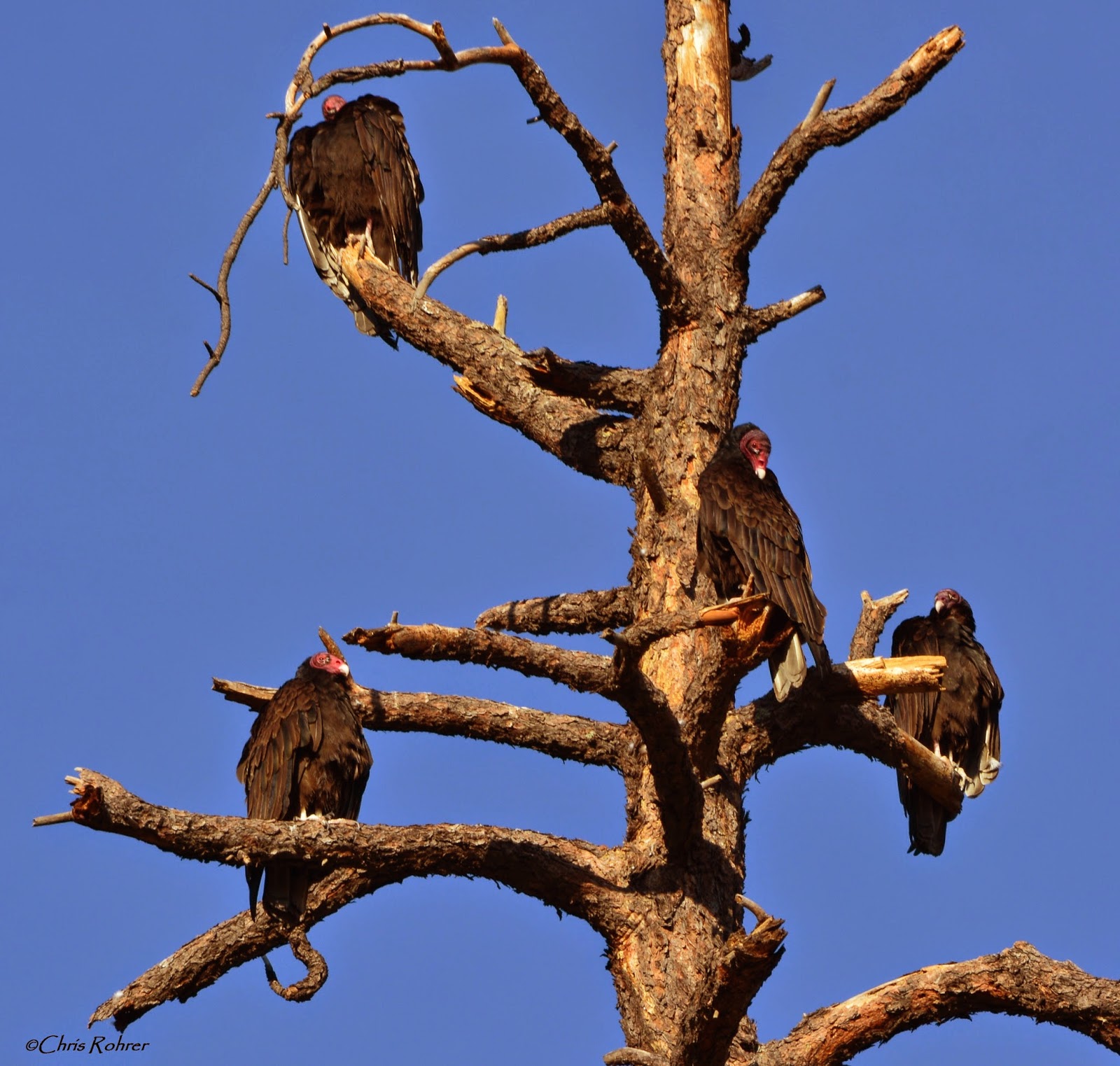
A kettle of Turkey Vultures on Mt. Lemmon

Next year it will be a different game as we head to Southern Mexico.  In fact much of my work will be taking me out of Arizona.  There are lots of other new birds for me here in the US but my attitude is to take it slow and enjoy the fun.  

A pair of Red Crossbills(male and female) in Greer
July and August are the starts to early migration, but since I had done all my running around earlier in the year, most of my work is done within Arizona.  For the birds mentioned above, I need time and money to find them.  Since my work has begun again and my funds are exhausted, I have to budget yet again for the new year.  Plus I am personally exhausted. I have seen 442 bird species, so far, in North America. So there are nice trips coming up over the next several months but they aren't as frequent as they once were.  Which is good!

A Mountain Bluebird in Greer
I was going to head over to find the Mexican Chickadee in a remote part of the state, but the uncertain monsoons came and wrecked major havoc around the area.  Imagine desert landscape without water.  And then imagine sudden raging rivers coming out of nowhere carrying you away on an isolated road!  That's what happened with this poor lady below! Over the past several days, there have been many rescues around Southern Arizona due to the heavy monsoon rains.  Running washes are no joke!


Pic courtesy of KOLD news
The treks right now are very dangerous as we experience random intense storms, deal with really bad insects known as chiggers, rattlesnakes(cool) are out with their little ones and the heat is oppressive.  So I stay close to home and bird locally for an hour or so before returning to my air conditioned home.  I find that August and October generally tend to be my "off" months when it comes to birding.  

Female Vermilion Flycatcher
It allows me to catch up on my reading and studies on birds I'd like to find.  I think the highlight for me this month has been my study of the Cassin's Sparrows in the grasslands.  They are rather plain birds but they are so different from their relatives.  During breeding season, they will shoot straight up into the air and back down again.  I think these birds are real gems because they are difficult to ID when they aren't "larking".  So it's great fun to spend a good part of our birding adventures just observing one bird.  I have spent a lot of time studying this bird at home so that when I go out into the field, I am able to recognize the various behaviors and sounds of this bird right away.  I really enjoy the challenging birds. P.S.  Any bird with the label "Cassin's" is a piece of work.  Ask any beginning birder:)

Cassin's Sparrow in the Buenos Aires grasslands
In fact many of my evenings are spent inside of bird guides.  There are SOOO many birds.  Flycatchers can be tricky and offer a real challenge sometimes when it comes to ID.  But my biggest challenge will be the sea birds found off of the coast of California.  To me, they all look the same.  I'm beginning to note the differences between Skuas, Gulls, Terns, Jaegers, Petrels, etc. 

Great-crested Flycatcher at Merepoint, ME
On occasion, I've been known to go to an area and not really study up on the place. Sometimes it's on purpose and others times it isn't. Take for example the bird below, the Upland Sandpiper.  I didn't even know this bird existed until Kathie had mentioned to me that this was a bird she had hoped to observe.  So while I was in Maine, I studied the call which is pretty cool.  The bird runs around in grassy areas and can often be hidden from sight if it's not sitting on a fence post.  And their call!!!  I started laughing because to me, it sounds like a guy whistling at a woman passing by.  By today's standards that activity in the US is considered tacky, but we aren't dealing with humans here, are we?:)  Pretty awesome bird.  I'm no scientist but my first impression was that the bird was the offspring of a Curlew and Sandpiper:)  In fact, it looks like the evolutionary step between the various species.  They are after all related. 


Upland Sandpiper in the Kennebunkport Plains
 Other birds that are difficult for me are the warblers.  I think they're tricky for everyone not only because they're small but because there are so many of them!  In Arizona, I know where I can find my warblers but when birding another state, it's all unknown.  I try to study their habitats, but memorizing it all is impossible. In fact, the bird guides have several pages dedicated to ALL the warblers! Take, for example, the Prairie Warbler below.  I kept hearing this call that I could not ID. I went through every warbler call I knew in my head and it wasn't matching anything I knew.  At that point, I realized I was dealing with a life bird.  But who was it?  I had heard it several times on the trip to Maine but couldn't pinpoint it. Then it happened!  We were able to get a visual on the bird calling and that's when we discovered our Prairie Warbler!  But alas, the rain began to fall and the observation ended:(


Prairie Warbler near the Kennebunkport Plains, ME
I always hope for better observations.  Seeing common birds spoils us into thinking that they are all this way.....but as many birders and photographers know.....it's not.  On our camping trip to Greer, I was hoping to observe Red Crossbills better.  And we did!  It's never a given as all of it is always unknown, but when it happens, there is an internal sigh.  Even if the chances are good, I try to hold back from saying outloud, "Oh we'll find that bird!" because it will jinx the observation!  


Okay, so some of you might be wondering how a Crossbill eats?  The bill is shaped to get the seeds out of pine cones!  Pretty cool!  They eat other things as well like insects, but they do have an interesting bill!

Summer Tanager at Audubon's Paton's House in Patagonia
So on these days of extreme heat, raging rivers, nasty chiggers and avenging baby rattlesnakes protecting themselves from being stepped on, I take a step back and explore close to home....and study.  One of my projects in the next couple years is to take on the Eared Quetzal and Thick-billed Parrots of Chihuahua, Mexico.  They do rarely show up here in Arizona, and when they do, the whole birding world from around the US flocks to find them.  Sadly, these parrots were extirpated from our area a long time ago.  They tried to reintroduce them back into their former habitat many years ago but found that hawks had taken over the area making it difficult for the parrots to reestablish themselves. Another issue was starvation.  Since many of these parrots were captive bred relying on human handouts, they didn't stand a chance.  The project was terminated with little hope. Today, the parrots can be found in a small area of Northern Mexico.  However, once and a decade one shows up.....:) 


 I also believe this is a sensitive species in that if one did show up, it would be kept secret on places like Ebird.  I've discovered sensitive birds over the past several years and those records are locked for my eyes only and the researchers at Ebird.  In part, it's to keep the bird(s) safe from poachers or photographers who would endanger a bird for a photo.  


Anyhow, it's good to take a break and do so some relaxing.  I'll be back in force at the end of the month searching for some rarities in Sonora, Mexico, learning about birds and doing some birding with Gordon and AZFO in Globe and finally, taking a trip up to Colorado.  But for now, it's back to the books. And it's kind of nice:)  More soon......