Showing posts with label Lesser Yellowlegs. Show all posts

Saturday, May 2, 2015

Veni, Vidi, Vici

The power and beauty of nature! at Empire Gulch
This weekend was a whirlwind as the Wrenegades united once again for a good cause to find as many birds as we could around Southern Arizona. It was a successful trek into mountain, riparian, desert and grassland habitats.  Along the way, we avoided heat stroke, falling asleep at the wheel and a rabid skunk attack!

Northern Pygmy Owl
 Overall, our team discovered 163 birds which beat our record from last year. There were a lot of great birds that unfortunately were too far for my camera to pick up. Or it was too dark!  Among my favorites were an Olive-sided Flycatcher, Flammulated and Barn Owls, and Buff-breasted Flycatcher.

Two-tailed Swallowtail
 Timing is everything on these trips and it's tricky business doing three things at once. However, I need to train and practice for this upcoming Mexico trip! Finding the birds.  Entering the data.  And photo documentation.  By the end of our Audubon Birdathon, we were exhausted. I fell asleep but woke up later with a splitting headache!  I've never experienced that kind of pain before and I think it was related to an overworked eye.  It's intense non-stop birding that really doesn't allow for a break.  So when I got home, I took a shower and fell asleep. 

Wrenegade strategist and data analyst Tim leads the team over a stream to potential birds while Wrenegade surveyor Sara carefully scans the surrounding area with her excellent spotting. 
 But our treks were successful and very rewarding. Anytime you work with a group, you always pick up something new that you didn't know before. Take for example, these Black-tailed prairie dogs(below).  They are a threatened species that have been reintroduced back into the CiĆ©nagas Grasslands near Sonoita after being wiped out since the early 1900's.  These mammals have been doing very well and seem to be reestablishing their population once again. In the past, ranchers poisoned these "pests" off their lands. This is a keystone species for the grasslands in that other species benefit by their presence.  Without them, other species begin to decline.  Since their introduction, Burrowing Owls have returned thanks to the abandoned Prairie dog burrows. 


In other news, I have been following my heart on several other birding treks.  We were going to hike up a mountain a week ago but it had rained that day.  Working on a hunch, we headed down to Cochise Lake and scored big!  Not only was it freezing cold(very unusual this time of year) but the storm pushed a thousand+ shorebirds our way!  Hot birds for this frigid day included my first state Sanderling, a Greater White-fronted Goose, Bonaparte's Gull, Forster's Tern, and my favorite, the Franklin's Gull(below).  


Large numbers of Lesser Yellowlegs(below), Long-billed Dowitchers and Wilson's Phalaropes were also present. White-faced Ibis and Marbled Godwits dotted the lake shore as well.  It was an amazing day out. Plus shorebirds are a fun challenge. Sometimes you gamble and win!  This day was definitely one of those times:)

Lesser Yellowlegs
It's now May and my current list for North American birds is at 303 species for the year. Last year I finished the year with 476 birds(including Mexico).  This year I hope to beat that number with 500. The Life bird chase has slowed down dramatically now until I am free from work for the summer.  This year has been quite unique for me. The "Americano" chapter of my birding life feels different.  For one thing, it lacks the crazy adrenaline chases of last year's "Across America".  It's much more relaxed, but I find myself pulled in deeper to the birds that I know. For many I smile, but for others I worry. 

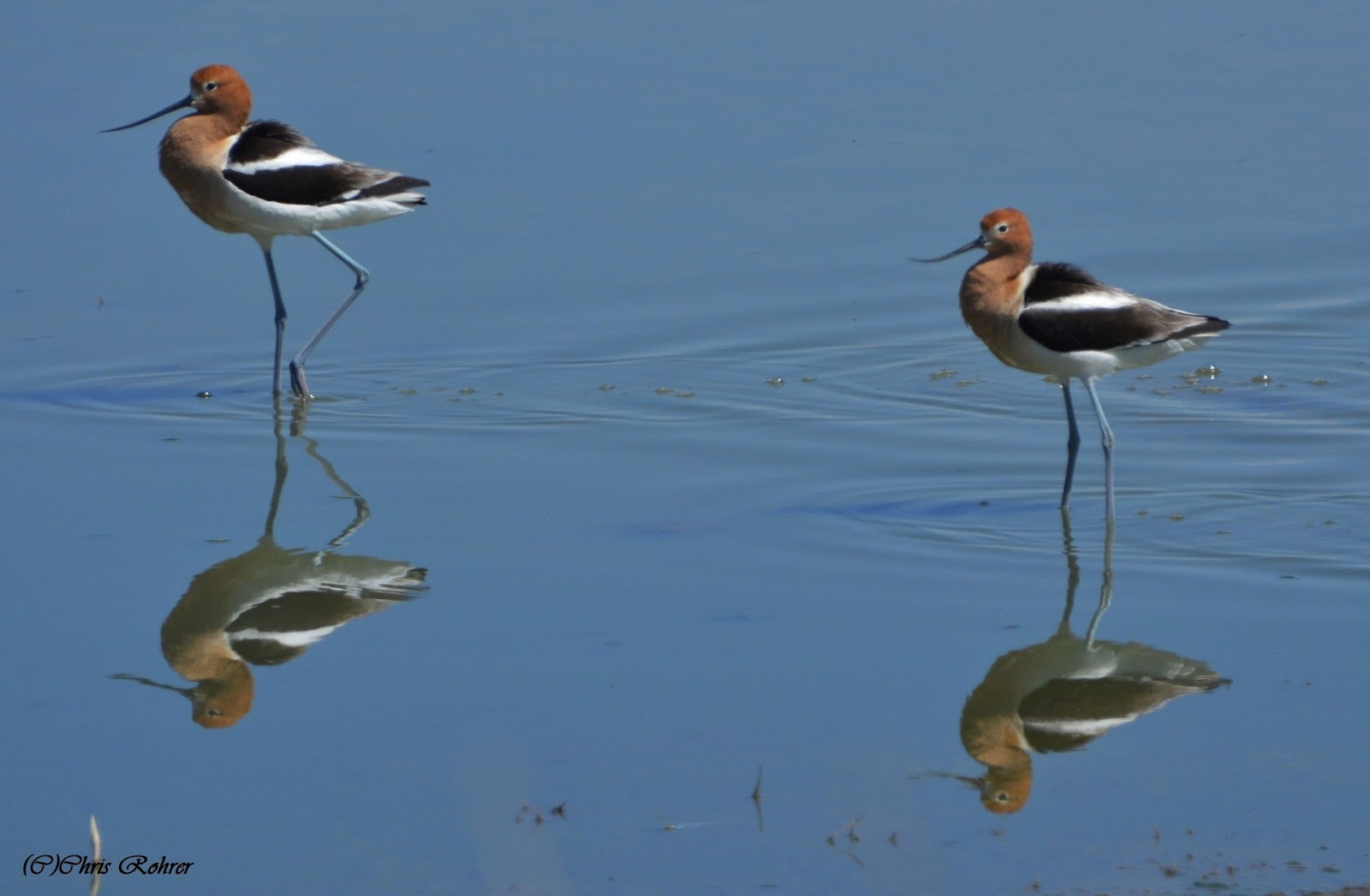
American Avocet
For example, the Barn Owl below.  I have been documenting a lot of dead Barn Owls this year along our highways.  This particular LIVING owl is also nearby the interstate and I worry for its safety.  They are low flyers and are often hit by motor vehicles. Their numbers seem to be in decline in many areas.  When I see an owl, I get excited, but I never want to disturb them.  I quickly snap their picture from a distance and leave.  Sacred birds, they are.  I wish this one well!  


I leave you with a collage of the owls I've seen this year.  I've heard several others and will hopefully get some photo documentation on them. The Flammulated Owl still evades my camera. Although it had no problem flying over my head early Friday morning! Next week, we slow down and enjoy an event known as "The Big Sit".  If you'd like to donate to the Tucson Audubon, click here. A login is not required after you go to the donate button. Remember, we are the Wrenegades and our fearless leader is Jenny Wren:) A Birdathon Big Day is an important way to share the excitement of being outdoors and watching birds while raising funds to support the programs that make this region a better place for us all to live(or visit!) and enjoy. Since 1987, Birdathon has garnered support for birds and bird-friendly habitats, and for Tucson Audubon's work to conserve these unique natural resources and to educate our community on their importance.  Until next week friends....


Top left-Long-eared owl, Top right- Barn Owl, Bottom Left-Spotted Owl. Middle Right-Great Horned Owl  Bottom Right-Northern Pygmy Owl

Tuesday, May 7, 2013

Specks of Dust


On a prayer and on a hunt, we chased several birds near Lake Cochise in Willcox, AZ.  Things have been warming up and I had hopes to find my Scaled Quail.
Spotted Sandpiper
I also had hopes of getting better observations of birds that I have on my lifelist. On this day, I would finally have some wonderful views of the Spotted Sandpiper, Lesser Yellowlegs, Franklin's Gulls, and Marbled Godwits.
But after circling the lake many times and looking into the waters, our eyes began to blur from the intense focus and count.
Franklin's Gull
Was there only one Franklin's Gull?  Or were there 2 or 3?  After doing several scans, we were successful in spotting 3 of these lovely birds.
And there was dust.  Dust storms blew into our area like mini-tornadoes. I wear contacts so I had to protect the eyes from the intense dust.
They are quite common in the deserts of the Southwest and also very beautiful....from a distance.
The birds were unaffected as we circled the lake 5 times observing such rarities like the Wilson's Phalaropes. 
Lesser Yellowlegs
Shorebirds are becoming easier to ID for me.  We moved behind blinds to observe many of these birds without disturbing them.  The only issue we had was from a random dirt bike that sped quickly around the lake and .......you guessed.......stirred up more dust!
But there were so many magnificent birds out there to get on camera.   The White-faced Ibis is a shy bird and one that can detect a birder in close proximity.....blinds or no blinds:)
White-faced Ibis
They strike me as Egyptian by the way their bill is curved.  During migration, the White-faced Ibis fly through Arizona.
I enjoy these kinds of observations while birding.  Sometimes the birds are so small that it's difficult to see them clearly.
Including the Marbled Godwit trying to hide in the grasses.  But the bill is much too hard to disguise.
Marbled Godwit
The Wilson's Phalaropes were a bonus bird for me and in great numbers.  At one point, a Peregrine Falcon came out of nowhere and scared up the flocks.  As they did, we were able to observe the birds as they flew circles around the lake.

Wilson's Phalarope
Flocks of birds flew around the lake.  Two Red-necked Phalaropes and a Baird's Sandpiper were supposed to be in the mix, but we could not find them.  And we spent hours looking for them in the water, around the water, above the water........until our eyes blurred and saw yet more......dust.
Phalaropes with Mr. Franklin
We did find the Scaled Quail and I believe that Kathie was able to get great shots of them. I tried but they were quick within the tall grasses.  Another time.  Now if I find the Montezuma Quail that will be the last quail found here in Arizona for the year. They are extremely elusive and probably THE hardest of the birds to find.  Most people just count them on voice alone.  That won't be me because I'd love to see this beautiful bird.  Las Aventuras has more to come.  Stay tuned!
Lesser Yellowlegs
Gadwall 4


Mallard 6

Blue-winged Teal 2

Cinnamon Teal 8

Northern Shoveler 100

Green-winged Teal 2

Ruddy Duck 60

Scaled Quail 4

Eared Grebe 1

White-faced Ibis 10

Turkey Vulture 4

American Coot 30

Killdeer 6

Black-necked Stilt 4

American Avocet 36 There were many in the lake and in the other side pond.

Spotted Sandpiper 2

Lesser Yellowlegs 3

Marbled Godwit 1

Western Sandpiper X

Least Sandpiper X

Long-billed Dowitcher 12

Wilson's Phalarope 30

Franklin's Gull 3

Eurasian Collared-Dove 8

White-winged Dove 3

Mourning Dove 1

Peregrine Falcon 1

Cassin's Kingbird 4

Western Kingbird 2

Horned Lark 16

Northern Rough-winged Swallow 2

Barn Swallow 26

House Wren 1

American Pipit 6

Yellow-rumped Warbler 1

Chipping Sparrow 6

Brewer's Sparrow 3

Vesper Sparrow 10

Pyrrhuloxia 1

Eastern/Western Meadowlark 1

Great-tailed Grackle 4

House Finch 6

House Sparrow 12


Thursday, May 2, 2013

American Avocets


During this time of year, American Avocets dot the waterways around Arizona.  In Tucson and surrounding areas, they are more commonly seen during migration.  
The shots today were taken at Cochise Lake at Willcox.  Originally I went to find the Scaled Quail reported in the area.  I did find them....by accident.  But it was because I was trying to get clearer shots of the American Avocets.  Some birds are tricky to capture perfectly in full sun.  And with our bright blue Arizona skies, these birds can reflect some of that light causing the pic to blur.  But not today.
The camera used is a Nikkon D5200 DSLR.  The lens is the best kind as it can shoot long range or short range acting as two lens in one.  No switching needed for the wildlife shots.  It has a 28 to 300 mm lens range which will now allow me a fuller detailed pic.  A camera hood was added to the lens to block out the sun.  While I enjoy photography, I am now ready to push the limits and want that detail without any slight blur. You'll be seeing more of these shots coming up in future posts.
I had missed birding with Kathie and called her up one day to see if she was up for another birding trek.  I don't have to twist her arm for trips like these:) It was a beautiful day as we circled Cochise Lake in Willcox.
I tried different angles with movement, etc.  All the pics taken on this post today were used with the same lens!!!  It comes highly recommended for any wildlife photographer as one can pull back for the glorious landscape shots or focusing tightly on a subject further away.  Canon offers a lens similar to the Nikkon series and I'll be looking into that lens down the road.
In this last pic, we see American Avocets with two Lesser Yellowlegs.  This lens is amazing and has converted me:)  It's all about the lens with these cameras.  And of course, the costs prove that:) More coming up.....