Friday, April 21, 2017

Las Aventuras: Birds and Blooms 2017

Pomegranate.  The most expensive fruit out there and yet it grows all over the city.  So many people let this fruit go to waste.  Why?  It's too messy and stains outfits. 
I sat down this past week and began reading one of my favorite blogs, Ragged Robin's Nature Notes. While I was reading about her fun at an English garden, I began to think....which is clearly a dangerous thing for me to be doing these days:) Basically, Caroline inspired me to get off my butt and do a little local arboretum fun of my own. 


So without further ado, here's Tucson's very own Birds and Blooms 2017 edition!  Here's a little preamble before I get started.  1. If you love plant collections and desert birds, there are three places you need to visit in Tucson. The Tucson Botanical Gardens, Tohono Chul Park and my favorite, the Desert Museum.  Today we visit Tohono Chul Park.  2. Since I'm still waiting for my 500 mm lens, I have chosen to use my 55 mm lens(which I've never used before).  And that was the challenge.  So here goes.....


One of the best times to visit Tucson and Southern Arizona is during our spring months.  April really is perfection. However this year, we've seemed to skip from winter straight into summer.  For people living in Tucson, our gardens can be a sanctuary for many of our living desert creatures.  If you come from the green belt of the US, you may feel helpless and frustrated by your desert landscaping skills.  Don't worry.  You can still have a lush and beautiful desert backyard sans the grass and high water bills!


First off, I recommend visiting the three places mentioned above as they give great ideas about planning your backyard.  AND!  Each of these places offers really fun courses on Tucson gardening!  So let me start with the first thing on my mind. Shade.  

A nest......
Creating shade in our desert community is a MUST.  It can save you money on that air conditioning bill, create a space to read and have coffee in the morning OR just make things 10-20 degrees cooler in your yard.  For wildlife, it's a sanctuary.  I looked up into the canopy of this Texas Ebony Tree and whom did I spy?

A Cooper's Nest
A very silent Cooper's Hawk.  Tip number 2.  Plant ONLY things that grow in the desert!  Here we live in the Sonoran Desert which means we have SO much to choose from!  I believe we are the lushest(is that a word?) desert of the world.  So, place plants that will attract butterflies and birds into your yard.  This Baja Fairy Duster below is attractive to both hummingbirds and butterflies.  Plant a Hackberry Tree and hope to discover one day a rare Rufous-backed Robin in your yard during the winter months!

Marine Blue butterfly on the Baja Fairy Duster
And for potted plants?  Go for it.  Buy crazy colored pots(or not) for your seasonal plants.  Many Tucsonans choose herbs like lavender and basil.  They do great in our hot summer climate. 

Lavender!
 Keep the pots close to the hose so that they are easy to water.  If you are on the outskirts of town, wire mesh is needed to keep Javelina, Deer and other critters from munching on your plants.....unless of course, you don't mind:)


Recently, I spoke with several birders who created a yard just for shade and the critters.  Cathy Skow, who recently had the rare Golden-crowned Sparrow in her yard, strategically placed several key plants in her viewing line.  How did she know what to plant?  As a birder who needed ideas, she went to the one place in town that has many birds, the Sweetwater Wetlands.  There she found several key plants like the saltbush that attracts a lot of smaller birds like sparrows and warblers.  She liked what she saw and put the plant into her yard. Brilliant!  And guess what?  That's where the Golden-crowned Sparrow liked to hang out with its White-crowned Sparrow friends.  


I love color and I love pots and I love bird baths and I love tile.  We live in Tucson.  Make it colorful.  So sure, we don't have grass and that's okay.  We also don't have to mow lawns!  Make  your gardens come alive with practical things that will add color and structure to your space.  I have wind chimes and a sun catcher.  I also am addicted to cobalt blue pots.  Have fun.  The more color you add; the better. And for carpeting the desert floor with green?  Why not try agaves and other succulents like aloe and put them in clusters?  They really make a space pop!


I use my pots for my tropical cacti and succulents.  Also note.  There's a Verdin on top of one of the plants.  This lens was challenging!!!


The more I travel to other habitats outside of the Sonoran desert; the more I realize how much I love cacti.  Also, cacti in the spring will add color.  But most of all, it adds structure and character.  


I like cacti because it also adds a security benefit around our home.  It keeps the meth addicts off our property.  When you live in the city, you always have to think about protecting your home.  A nice wall of prickly vegetation will do the job:)


Water features are also nice as they add sound and attract lots of birds!  Water features can be easy.  You can do electric or use solar panels!


In the pic below, two Lesser Goldfinches come in for a quick drink and then fly off. 


Many desert gardeners like to make an informal trail around their garden.  


You can build piles of rocks into areas for lizards to hide and live. In Tucson, we have lots of them during our warm and hot months.  

Desert Spiny Tail
Some still like the living Ocotillo fences.  This was popular many years ago.  Today, the fad has kind of faded:)  Instead, plant the entire Ocotillo and watch the blossoms attract various species of hummingbirds and bees. 


A forest of Cholla cactus can be deadly for trespassers or......


......a nesting ground for your Cactus Wrens and Curve-billed Thrashers. 

The beautiful Cactus Wren
It's amazing that these birds don't stab themselves in and out of their nests.  I guess it's another good reason why they have feathers:)


I thought about my own garden while I did this trek today.  My garden that I began 7 years ago continues evolving.  The large plants have grown and now must be pruned back from structures.  They have also created shade. 


The shade has changed what I can grow under the canopy of the trees.  I haven't done that part of my garden yet.  

Zebra-tailed Lizard
I hate watering plants now so it's all native stuff.  The vegetation that needs constant watering is gone.  


Our water fountains are great except that one needs to be constantly cleaned and maintained.  I don't like that anymore so I just maintain my solar run bird bath. 


I have made my yard a better place for lots of birds.


When I came home today after my trek to the Tohono Chul Park, I felt motivated to work in the 90+ degrees.  And interesting enough....


My female Broad-billed Hummingbird let me know that she was nesting once again in the same spot as last year.  She rebuilt the nest from last year and again has chosen my garden to be her home. It's an honor!


And when I started attracting new birds and critters into my yard, I knew I had done something right.  The only problem?  I'm older and lack the motivation to begin phase 2 of the project:)  But each year, I add something new and over time that adds up. 


A note about Ragged Robin's Nature NotesđŸ˜‰Caroline writes from England about so many things related to nature.  She's part birder, part historian, part garden explorer and a lover of all things wonderful.  She especially likes moths. At the end of many of her treks, she'll finish with a wonderful dessert.  Sometimes I imagine having dessert and tea with her.  And maybe someday we will! Anyhow, check her blog out.  It's a perfect way to get your morning going. Until next time.....


Saturday, April 15, 2017

Oculus Reparo

Greater Roadrunner
A little over a year ago, I updated my camera gear to a 500 mm lens.  She was a monster, but oh how magnificent were those photos!  

Turkeys put on a display at the Santa Rita Lodge in Madera Canyon.  Photo taken with my cell phone
Now she's in the shop due to the zoom feature (which locked up on me last week). Here are the last of my 500 mm shots.  

My first White-faced Ibis of the year flies over my head at the Coachline Lake in Marana
I kept my emergency 300 mm lens from my last camera but oh.....I so notice the lack of detail in the photos now.  So while I wait for the 2 weeks to pass, migration is happening all around me. 

Rare for the US but common in our southern Sky Islands, the Buff-breasted Flycatchers are quite active on top of Carr Canyon
I have been swamped with work and with visitor's from out of state coming to bird.  It's so easy to escape and join others to find birds when there is a lot at home to get done:) Elf Owl vs Fixing The Ceiling Fan? Or Tufted Flycatcher vs watering the garden?


I might be reaching a new chapter in my life with our local birds in the sense that I don't need to drive two hours to see an American Golden Plover.  Instead, I'm okay birding a local patch nearby my house. 

My first of the year Grace's Warbler on top of Carr Canyon
And while I am without my lens, I'm actually enjoying the fact that I don't have it.  My binos have been all that I've been carrying lately. 

A beautiful Swainson's Hawk takes flight
So, I don't have any pictures of the Golden-crowned Sparrow I saw at a local resident's home this past week(thank you Cathy!). And it was also on that night that my camera lens decided to freeze up on međŸ˜ đŸ˜  I don't have a pic of the Broad-winged Hawk I saw getting harassed by a Great-tailed Grackle.  These are all rarities that I think require photo documentation, but it's not going to happen for the next several weeks.

Jenny (first person in the pic) tolerates Bill's crazy bird addiction.  When the Elf Owl shows, everyone is thrilled.  Madera Canyon this time of year is AWESOME! 
I went out one evening with Bill and Jenny from Wisconsin to Madera Canyon and helped them locate Elf and Whiskered Screech Owls.  We also got a visual of the Mexican Whip-poor-will.  All three were lifers. 

A bathing female Yellow Warbler at Sweetwater
On the day I saw this bathing Yellow Warbler, I met up with Nathan and Stella from Maryland at Sweetwater.  I'm not sure if Nathan's Dad will talk to me after he drove up a rocky road on Carr Canyon for the Tufted Flycatcher. He was visibly shaken and stayed inside of his car. I forget flatlanders are not used to our intense Arizona rugged landscape.  To him, I offer my sincerest apologies. I had new tires put on my passenger vehicle and showed them that I also made it up the road without incident.  They had a rental and it was really ok.....but still.  Finding some excellent birds can be challenging.  Their reward?  Beautiful views of the rare-to-the US Buff-breasted Flycatchers. 

Green Heron at Sweetwater
While I wait for my lens to return, I'll still continue birding.  

a large kettle of Turkey Vultures lands in the Arizona Cottonwoods for the night
One last note.  If you've been following Las Aventuras for a few years now, you'll recognize these characters:)  This year, our Great Horned Owl team, Mike, Janet, Peter and myself, purchased a new basket for our nesting owls.  

Great Horned Owl at my work site
 We weren't sure if they'd take to the new basket as they began nesting in the Saguaro nearby. 


 BUT, there were a lot of kids walking past that area and the owls decided to move to the new basket.  This year, there are only two owlets  because the first two eggs were placed inside the arm of the Saguaro.  When they moved to the basket, those eggs were abandoned. 


Anyhow, their progress is on track.  My biggest complaint?  That stupid string.  We were so worried that the basket would fall during our windy season in March that we overdid it:)  My guess is that this weekend or the next will be their first venture outside the basket. Both Mom and Dad are trying to push them out to get them on the ground.  Owlets learn to walk first.  Then fly(sometimes into buildings:) and then hang out with their parents before flying off into our nearby wash.  Until next time friends.....

Sunday, April 9, 2017

Between Blade And Blossom

Monarch Butterfly
It has been a lovely spring migration so far this year.  As birds arrive, I watch how they interact with the blooming plant life. 

Arizona Bell's Vireo
Tucson is also home to some amazing butterfly life as well.  As everything blooms, we watch Monarch, Queen and Pipevine Butterflies connect with the colorful array of wildflowers. 

Northern Rough-Winged Swallow
Warblers and Vireos are easier to see as the trees are only just beginning to leaf out. 


Yellow Warbler
Many species of bee visit our wildflowers. 

Desert Globemallow
I hear the call of a Verdin and approach this Blue Palo Verde slowly.  Among the massive yellow explosion, I find.....

Blue Palo Verde
......a Verdin making a nest and snipping off the delicate yellow blooms of the tree. 

Verdin in Blue Palo Verde
I know that the wild Tree Tobacco is popular to many hummingbirds.  I stand and watch the tree knowing that there will be a hummingbird arriving soon to feed from the tubular flowers. 

Black-chinned Hummingbird staking out a Tree Tobacco
I discover a turf war between male Black-chinned and Anna's Hummingbirds.  The Black-chinned hide in the shadows and send the male Anna's Hummingbird away. 


Anna's Hummingbird
The Black-chinned Hummer resumes his feeding from the plant. 


The Arizona Bell's Vireo calls from the mesquite; a favorite haunt of the bird. 


The last of the wintering Orange-crowned Warblers picks apart this cattail. 

Orange-crowned Warbler
 And as fresh blades grow high, a rare American Bittern hides in the shadows feeding from tadpoles. 

the American Bittern at Sweetwater
Spring has arrived. Birders keep their binoculars near with the hopes of spotting something rare during migration.  Each day can be an exciting one. This is one of the best times to visit Southern Arizona.  You never know what will show up.  Until next time.....


Saturday, April 1, 2017

Las Aventuras: 7 Years Strong

male Rufous Hummingbird
This past March, Las Aventuras celebrated 7 years of "work" on the internet machine.  Slowly this blog is getting closer to a million hits which blows my mind away.  The journey has been incredible!

Broad-billed Hummingbird
People ask why I blog.  Sometimes they think it's kind of a joke, but I'll tell you why it's not.  When I began blogging, I couldn't have answered these questions because I didn't know much at all!  I just wanted to have a running diary of my garden. Today, it's crystal clear why I do what I do.  If you're looking into blogging on blogger or wordpress, here's what you need to know. 

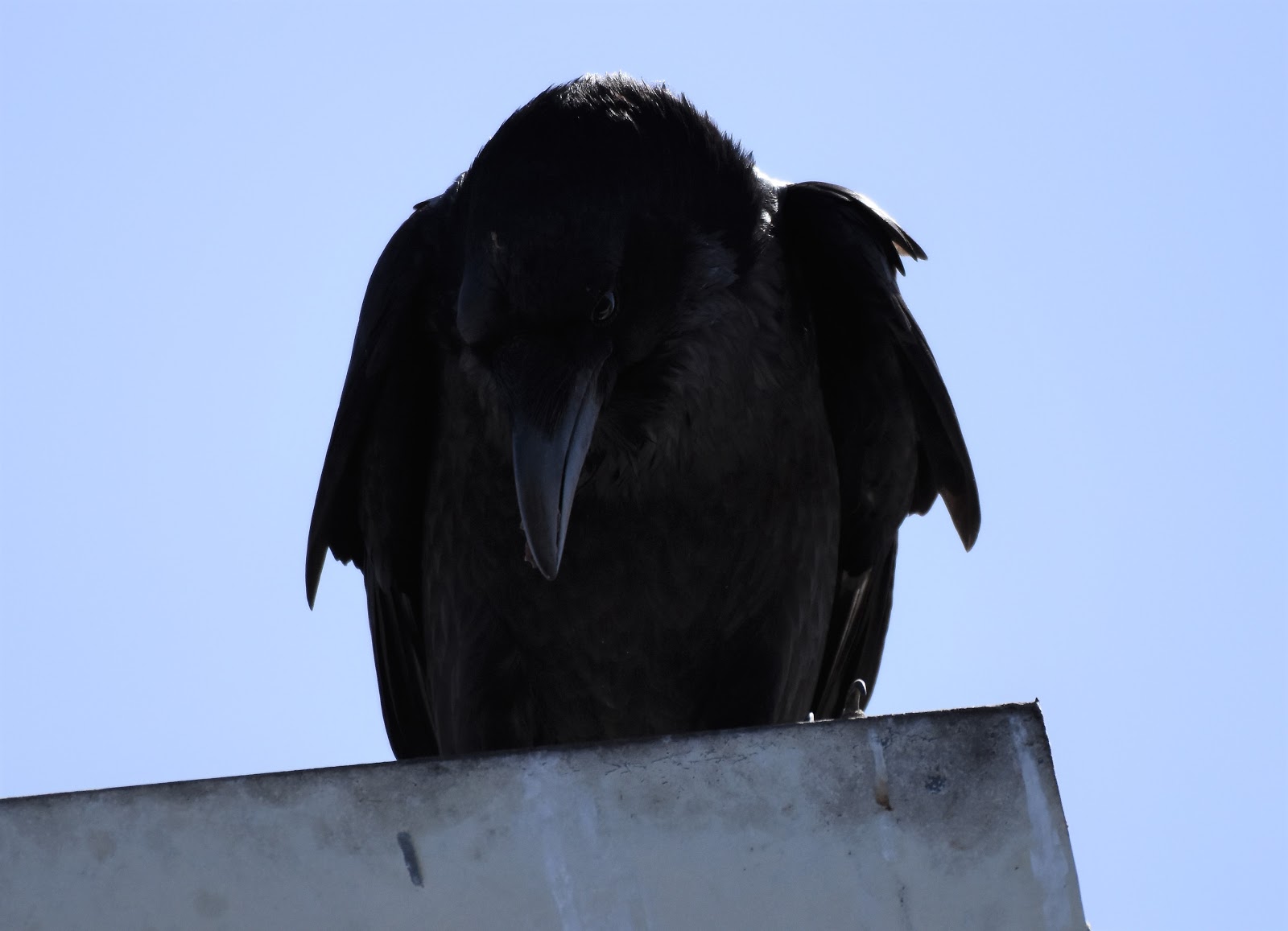
Common Raven
It takes time. None of it was overnight.  I began with an idea and it turned into something else.  I wanted to document my garden plans around our place and it was great until I stopped gardening.  Then, the title, "Las Aventuras" really hit its mark when I discovered birds.  The blog truly shows the beginnings of my birding career and the adventures that have ensued since I began chasing our planet's birds. 

Chihuahuan Raven
From novice to ?  As a birder I am continuing to grow.  But when I began this blog, I really knew nothing.  Today I help guide people around southern Arizona to find birds.  It's not a job but a way to connect with my readers and make new friends. And it's also a way to manage my sanity in this crazy world of ours. 

Dark-lored White-crowned Sparrow
The social connection.  I have met so many painters, birders, photographers and friends because of this blog.  Many people joke about the world of online social media, but it isn't a laughing matter if you use it the right way.  I wouldn't have met MANY of the incredibly talented and wonderful people out there if it wasn't for this blog.  I have grown as a birder because of their knowledge and expertise. And vice versa.  We grow together and accomplish the impossible when we put our minds together.....at ANY age. 

Canyon Towhee
Writing.  On a blog, you can write whatever comes into your brain.  My advice?  Keep it short and sweet.  The writing and photography are my favorite parts about putting a post together.  NEVER delete your old work.  Look back at it and discover how much you've grown as a writer, photographer and blogger.  

Inca Dove and Pyrrhuloxia
Photography.  I LOVE THIS PART!  When I began this blog, I found pics on the internet to help aide with my writing.  I then purchased primitive cameras to help begin the narration of my stories.  Plants don't move so it's easy to get a pic of them. Were they quality shots?  That part is debatable:)  But when I got into the wildlife part of the blog, it became tricky.  I'll admit it. I had lens envy and today after about 5 camera upgrades and thousands of dollars, I have a nice set up.  Of course that requires a financial commitment but I am now satisfied with the captured details from our amazing observations out yonder.  Finding the right camera equipment is important.  I thank Gordon Karre for aiding me in that department.   


Cell phones take GREAT photos!
You can take courses on photography, as many do, but it's your experience with the camera out in the field that makes you stronger. Weather conditions, lighting conditions, and positioning oneself to safely capture wildlife in action are all biggies.  Never endanger yourself or the subject you're observing.  That's proper etiquette out in the field.  PLUS, you'll really get to see some amazing behaviors by not interfering with the wildlife.  And I shouldn't forget to add.  It's not the size of your lens that matters.  Some of my purchased work here in Tucson had me using a point-and-shoot camera.   It's the photographer that makes the magic happen. So my point?  Get out there and start taking pics!  Photography is an exciting part of our blogs!

Western Screech Owl
And most of all, a blog is YOUR story.  As much as I do it for others; I also do it for myself.  Writing down my information helps me retain the data in my head while helping others interested in birding the places I've visited.

Lincoln's Sparrow
Both blogging and birding have changed my life for the better.  It's not just a "hobby"; it's part of who I am.  There is a quote that sticks with me to this day in regards to how learning never stops.  Albert Einstein once said, "I have no special talent, I am only passionately curious."  And in this case, for me, this refers to our planet, our planet's birds and the preservation of habitat for future generations. It's also about the human stories that tie into the birds.  

White Wagtail at the Ajo Sewage Plant
This blog is uniquely my own and I am proud of what I have done. Ok enough of this stuff. Let's quickly talk about the Arizona Code 5 bird of the week!  A White Wagtail is currently being seen in the ancient mining town of Ajo!!!  Code 5 is serious business because it's rare!  The only AZ record of this bird was back in 1985 at the Grand Canyon.  The lure for me?  Drop everything and GO!  This was a lifebird, a state bird AND a county bird.  When a bird meets all 3 of these criteria, it's an absolute no brainer!  The White Wagtail hails from Europe and Asia and is seen yearly in the US.  But to have one in AZ?!!!  That is big news.  Until next time friends!  And thank you for reading Las Aventuras..... 


New friends, the Teuke family, from Wisconsin stop and search for the White Wagtail in a very remote area of our state.  EPIC!