Showing posts with label Streak-backed Oriole. Show all posts

Saturday, July 8, 2017

Playa Tamarindo


While visiting Liberia, we had set a day aside for a trek to the nearby Playa Tamarindo.  We were hoping to find some sea birds along the beach and estuary. 


One of the biggest discussions for this trip was whether or not we'd rent a car.  It's easy and many tourists do it. We spoke with several of them about their experiences and for the most part, they were glad they had their car. However, it is also costly and can be stressful during severe weather situations.  Sometimes the conditions of the roads were terrible.  Sometimes we observed that parking was an issue. And other times, we discovered that having a car would have added hours onto our route because we couldn't short cut via boat or train. Local transportation in Costa Rica is sound.  And it's also cheap. So we began our early trek at the Liberian bus station.  Here's a tip for people thinking about using the buses here. ALWAYS find out when the last bus leaves an area and you'll be ok. Schedules change often so speak with the person at the counter selling the tickets. My greatest fear was missing that last bus back to Liberia. 


The local bus stopped at every little town on the way to pick up people wanting a little beach time.  Some people worked in Tamarindo.  Little did we know, but it was also a huge tourist magnet. And there seemed to be plenty of surfers. 


Green Heron
But that didn't stop us from birding.  We were asked by several people if we wanted a nature tour.  The price was around 20 dollars per person.  Knowing that we'd do treks like this in other places, we opted out. Plus, I've found that we're our own best guides. 

Orange-chinned Parakeet
One of our target bird groups was the hummingbird.  Where in the world were they?


We certainly saw signs for them.  And where were the sea birds?  Where were the gulls and terns??!! None of them would have been a lifer but I was looking forward to observing a few of these birds along the beach. From my Central American experiences, I actually think the Caribbean side of Central America is better for sea birds along the coast during the summer.  I was, however, surprised by 2 Brown Pelicans and 4 White Ibis!  Definitely not on my radar. 


It came time for lunch.  Picking a spot was difficult because there were a lot of great places to eat.  I wanted something Costa Rican while the other two wanted something different.  So we found a nice mix of restaurants with general outdoor seating. It was popular with the young surfer crowd.  I listened to the conversations that I once had myself not so many years ago.  "Where are you from again?" "I'm from California. I'm sorry, where did you say you're from?" "I'm from Switzerland." And then on and on.  When will they mention the party? There's always a party involved.  And as if on cue, "Did you go to last night's party? I drank 9 cups of______" The conversations were deep and full of the standard self-absorption that you'd expect to find with young adults. That still didn't stop me from eavesdropping🙂 "Yeah, I've been here and there." And blah blah blah. At one point, one of the dude's asked the Cali girl if she remembered him from the night before.  And she replied straight out, "No." and walked away.  Ouch.  I guess they won't be "hooking up" anytime soon. 

Green Iguana
Sex, alcohol and our crazy youth.  They used to be part of the every day adventure. Not anymore.  Now, instead of the thrill of the party; it's all about finding wildlife.  It's weird how our life priorities change as we get older. We left the surfers behind and no one noticed the "old" people leaving.  Ouch!


Great Kiskadee
Back on the beach, we slowly moved away from the crowds of people and headed towards the estuary hoping to find a Boat-billed Heron or pirate.  We didn't find either, but we did see this....


A parent Mantled Howler Monkey watched as its offspring fed from the lower branches of a tree. 


I kept my distance because I know how powerful these monkeys can be!  Over the years, I've had one try and bite me in Peru.  Another threw poop at me in southern Costa Rica.  And yet another monkey nearly hit me with a mango in Panama.  Thankfully, the longer lens allows us closer viewing. 


At one point, this little one stared into the eyes of Gordon.  He probably thought that Gordon looked like Charlton Heston from Planet of the Apes.  "Look, it's a man!"


The skies became darker and we could hear a storm in the distance. 

Streak-backed Oriole
As we headed back to our bus stop, we paused to look at some birds we have observed in the past.  


White-fronted Parrots above and below. 


And while we saw quite a few birds, I'm not sure we picked up anything new. I know Gordon added his lifer Blue-gray Tanagers to the list.  Still, it was a fun trek to the beach.  

Hoffman's Woodpecker
The most interesting observation for me on this day came from the Brown-crested Flycatcher. It's important to note that this bird is of the Ometepe subspecies. I've noticed that ebird has started listing subspecies for this flycatcher. As we'll find out in several posts, I'll explain why it's often important to add the subspecies listing when possible. 

Brown-crested Flycatcher(Ometepe subspecies)
The nerdy bird discussion must have gotten the best of Micheal.  While he said he was still birding, I caught him using his binoculars for other interesting beach sightings:) 


Then a crocodile nabbed him!😉  Seriously though, we did see two of these large reptiles near the estuary.  Some of you may have heard of a surfer a couple years back attacked by one of these ocean crocs in Tamarindo.  It was a rare incident. From what I saw, the public beach was busy and full of swimmers and surfers.  Crocs prefer the shallower calm waters near mangroves.  As we neared the estuary, where they like to hang out, we kept on the lookout.  There are signs but as we know, not everyone reads them.  Overall, it's really a beautiful place to surf and enjoy the beach.  


For our Tamarindo report, click here.  Until next time.....surf's up!

Monday, January 18, 2016

The Borderlands


The borderlands of the US are some of the wildest and most remote areas of the American Southwest.  It's often best to go with water, friends and a good vehicle for these treks. 

Ferruginous Hawk
After I returned from Wisconsin, I had wanted to go to Yuma and find a rare Streak-backed Oriole.  It's a three hour drive and I didn't want to make it alone. The trek to Yuma can be...somewhat dry:) When my friends Gordon and Muriel said they were chasing the bird, I asked if I could join them. They still thought I was in Wisconsin.  And I actually was at the time of my text:)

Streak-backed Oriole
They were very kind and let me hitch a ride on this very early morning trek. Since it was the first day of the year, we felt that it was important to start the year off with a "proper" bird:) That's the birder rule.  The other birder rule is to record every bird you see on that first day.  On this day, we would find the beautiful Streak-backed Oriole from Mexico:)

Burrowing Owls
We also made lots of other discoveries on our way back home.  There were plenty of Burrowing Owls around the farming fields. But as we were counting birds, my body decided it couldn't take the stress anymore and I crashed.  I had just returned from Wisconsin and slept for 3 hours before getting back on the road again in Arizona!  I think at one point I did some snoring.  

Can you see where the border is?  Hint:  the left side is Mexico and the right is the US.  The dry creek bed is basically the dividing line. 
I also had signed up previously to help out with the Atascosa CBC count around the California Gulch and Warsaw Canyon areas along the Mexican border the following day.  So as I said good-bye to Muriel and Gordon on Saturday, I was off with Dave and Ron on Sunday doing more area counts of birds. Yes I was still exhausted. But it was for a good cause and a way to help out Tucson Audubon. 

We print a map and find a new riparian area to bird along the Warsaw Canyon area.  I write in my notes that water in winter is very important for the Five-striped Sparrow.  There was a springs/creek along a rocky outcrop. And it was here that we found one of these sparrows.  On the other counts for the day, several other FSSP were discovered around similar spots. 
As we walked along the springs of Warsaw Canyon, we found wonderful birds like the Elegant Trogon, Five-striped Sparrow and Black-capped Gnatcatcher.  The roads along the border were rocky and steep, but somehow we managed to get to our very isolated locations. 

Common Hog-nosed Skunk
This area was full of fantastic wildlife.  Throughout the day, we had excellent views(!) of the very secretive Montezuma Quail!  Their numbers were quite impressive, but that didn't stop them from disappearing quickly into the vegetation. 

Female Montezuma Quail pretending to be a rock. It took me 5 minutes to locate her!  That's how "invisible" they can be!
The border can be hot and dangerous.  My tip to birders/historians/hikers/off road junkies/herpers/wildlife trackers, and everyone else who wants to visit these areas?  Bring food and water with you.  Use a sturdy vehicle that can handle off road conditions.  If you can, try and bring a friend or two with you. And always keep your eyes open. Cell phone service is spotty and doesn't work much of the time. Most of the time, the border crossing folk won't do any harm. I've been into other areas when I first began birding that had opened my eyes up to what is "THE BORDER".  It's the reason why I now carry a cell phone that has a tracker on it. I went 12 years without a cell phone! Now I'm addicted and straying away from my story so....With all that said, I have NEVER had issues in this area(Ruby Road/Peña Blanca Lake), but I have heard stories. Water and flat tires should be your main concern. And keep it all locked up. 


As we chased a Northern Beardless Tyrannulet, we found a water depot for people crossing this very isolated stretch of desert. A church organization from Tucson supplies water and food in this hidden location. These "watering holes" have been controversial as this church has been in the news several times for its humanitarian work along the border. I have no opinion on the matter, but I do hate the trash left behind in the nearby wash!


As Dave drove his all terrain vehicle up the sharp and rocky "roads", I laughed. I think it's something I do when I'm nervous.  But it was kinda fun:) We were going up some steep inclines! Luckily none of us had to use the bathroom! 

Northern Beardless Tyrannulet

As the day came to close, I thought about how crazy my start to the New Year had been. From snow to desert and then back to snow again.  I feel like I've finally hit my stride as a legit birder and that everything I've done has lead me to this moment in my life. And yet I still have so much to learn! My focus this year is on finding new state birds for Arizona. Over the next couple weeks, we'll explore the beautiful Ramsey Canyon, Lake Havasu and the Willcox area.  If you haven't done a CBC(or Christmas Bird Count) with your local Audubon, I highly encourage trying it out. And throughout the year, your local Audubon will have many other events planned! Check it out! It's good for the birds and it's a great way to meet new birders and make friends. And of course, learn about our feathered friends. Until next time.......


Sunday, December 20, 2015

The 700 Club

Green Jay-in Chiapas, the Green Jays have yellow eyes.  In Texas, Green Jays have dark eyes.
If there's one thing about a growing life bird list, it's learning that you have to be patient.  The first and middle part of 600 was not easy at all.  And I have to admit, I was doubting I'd hit my year goal of 700 by the end of December. 


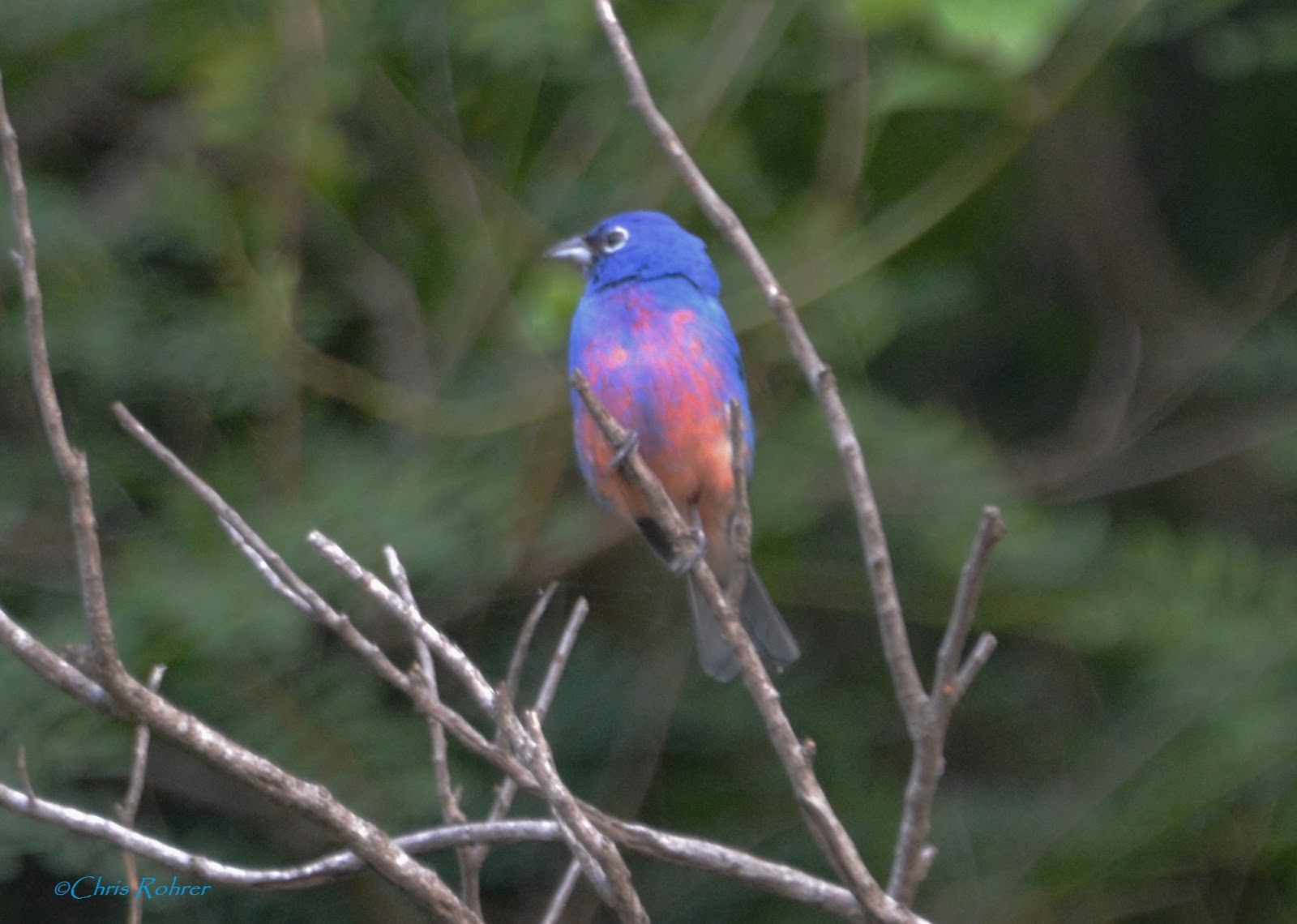
Rose-bellied Bunting or as it was once called, Rosita's Bunting
Many of the birds on my 600 list are neotropical birds.  They are some of the hardest birds to spot.  And while I'd like to say I'm getting better at finding them, I'm not:) 

White-winged Tanager
So I learned some valuable things on my personal journey to the 700 Club.  No more large groups.  I know I will have to do this down the road again, but I do not prefer large numbers of people.  While I enjoyed their company, knowledge and friendship, I much prefer the quiet and slow methods I use in the field alone or with friends.  And there's something special about ID'ing a new life bird on your own....

Stripe-throated Hermit
Every day there was something new flying past me and I couldn't keep up!  It was exhausting and fun.  The one thing I loved about our organized tour in Mexico?  The transportation.  It was nice to be told to meet the leaders at their buses each day at a certain time. When I do these treks alone, I always have to think about how I will attack the bird challenge.  Many times I stay in one spot for a week and really bird the heck out of it both day and night.  On our trek into Chiapas, it was FIVE new locales in FIVE days! 

Crimson-collared Tanager
It was amazing and the leaders were wonderful.  The reason for this important trek into Chiapas was for the endemic and difficult to find birds like the Nava's Wren, Pink-headed Warblers, Blue Seedeater and Long-tailed Sabrewing.  These were the birds I needed help finding because some of the birds were on private lands or in hard to access areas.  So in the shadows of the forests, we searched and searched for these brilliant birds. 

Barred Antshrike
Along the way, I found lots of other cool birds like this Olive Sparrow below.  The sparrow species make me smile and they are one of my favorites.  

Olive Sparrow
We saw trogons, motmots, chachalacas, guans and curassows, and lots of other brightly colored birds. 

Russet-crowned Motmot
So what am I feeling right now at the 700 level?  It's hard to explain, but I feel like I'm sinking into a birder stereotype that I fear most.  It's the one where I become a much more serious person.  It's the one where I lose human emotion and isolate myself in a space only filled with birds.  I'll try and fight that inner lifeless scientist away because birds are more than just data. I still will be a scientist in my own right....just one who laughs and enjoys the adventures along the way. I've met a lot of birders who can be too serious for their own good! The experience to 700 is completely different than the one I took to 100, 200 or even 300.  I'm a sharper knife now.  And with every moment free, I find myself engrossed in a bird book or TV program or studying new areas around the US and world. 


Great Curassow
As I sit in my car, fly in a plane or read reports, I separate the good and bad observations happening out in the field.  I add some of my own rare birds.  Others report their rare birds.  And so on and so forth....

Northern Bobwhite
But 700 was difficult.  I'm not going to lie.  It was the hardest challenge yet. 

Ruddy-breasted Seedeater
Sometimes it was the culture.  Utah challenged me with its 1950's culture of "Keeping Up With The Joneses".  Yuck! And California made me yearn for the open lands back in Arizona. There are too many people in that state!  However, when I spotted a new California endemic bird, I forgot about all of it and just smiled. 

Streak-backed Oriole
Mexico made me smile because I truly love this country and our time in Chiapas flew by so quickly there. It's been years since I visited this country's interior due to the drug trafficking and kidnapping. I can say that Mexico has become safer again for travel!  But still, I'm not taking any chances.  I'll always travel with a group of people now to this country. In February, Las Aventuras will return to Sonora, Mexico for another bird trek!

White-fronted Parrot
Then there were the birds!  Mexican birds hid.  Sea birds zipped past our vessels.  Other birds were perfectly camouflaged! 

Nava's Wren
And some birds challenged my patience!  This bird above is the number one success story of the year. The Nava's Wren hides in the dark shadows of Mexico's dry rain forest. It's habitat is very tight.  There are only 9 locations where this bird can be found and it's in some rather remote areas. We waited and waited and waited for this bird.  Some birders were super sick due to food poisoning, but by the bird gods, everyone made sure they saw the Nava's Wren.  One man collapsed onto the ground waiting to see this bird.  Now that's dedication!

Lesser Roadrunner
Four years ago I began this journey.  There are over 10,000 birds on this planet which leaves me approximately 9,300 more birds to find:) Oh may the BIRD GODS be good to me!  I'll certainly die trying to find them all!

Plain Chachalaca
A lot of strategic planning goes into everything I do. I like the planning part a lot.  It's the budgeting I hate!

Green Violetear
For next year, I'm planning on setting my life bird goal at 800....maybe 850.  I'm tossing around ideas like Canada, Alaska, the Pacific Northwest, Cuba, Florida...or just a simple summer, vacationing in my beautiful home state of Wisconsin.  And of course, I will do my mandatory pelagic like I do each and every year. But who knows where that will take place. 

Blue Seedeater-a difficult bird to find!
There are many California birds I still need to find.  There are still many Wisconsin birds I need to find.  But overall, North America is starting to shrink:) Yet still....there are hundreds of new birds that need to be found.  Some birds require their own trek!

Long-tailed Jaeger
Casual ocean treks will now be very focused and calculated. 

Sooty Shearwater
A Bay Area trip, with a Monterrey or Half Moon Bay stop, will be needed. But that is something I want to do with Micheal. 

Pomarine Jaeger
North America is a great big continent to explore.  One could easily spend a lifetime here discovering everything there is to know about our wildlife. I can't believe how much I've learned in such a short amount of time.  But my mind is like a sponge.  I'm a detective on a case. 

California Quail
I imagine I am the bird sometimes.  This helps me figure out where they may be hiding.  And quite a few of these birds like to hide!

Chukar
As this chapter of "Americano" comes to an end; another will begin.  Where will it take us?  Your guess is as good as mine.  But it's sure going to be a fun ride!  Over the next several weeks, at least until the end of the year, Las Aventuras will be leaving the desert once more to find a few more new bird species. In January, I will feature the highlights of 2015. Until next time.... 

The Pacific Wren
Number 700 was the Pacific Wren.  It was seen in the snow with most excellent company.  Birds take us to fantastic and magical places.  You never know where you'll wind up.  Until next time!