Showing posts with label Russet-crowned Motmot. Show all posts

Sunday, December 20, 2015

The 700 Club

Green Jay-in Chiapas, the Green Jays have yellow eyes.  In Texas, Green Jays have dark eyes.
If there's one thing about a growing life bird list, it's learning that you have to be patient.  The first and middle part of 600 was not easy at all.  And I have to admit, I was doubting I'd hit my year goal of 700 by the end of December. 


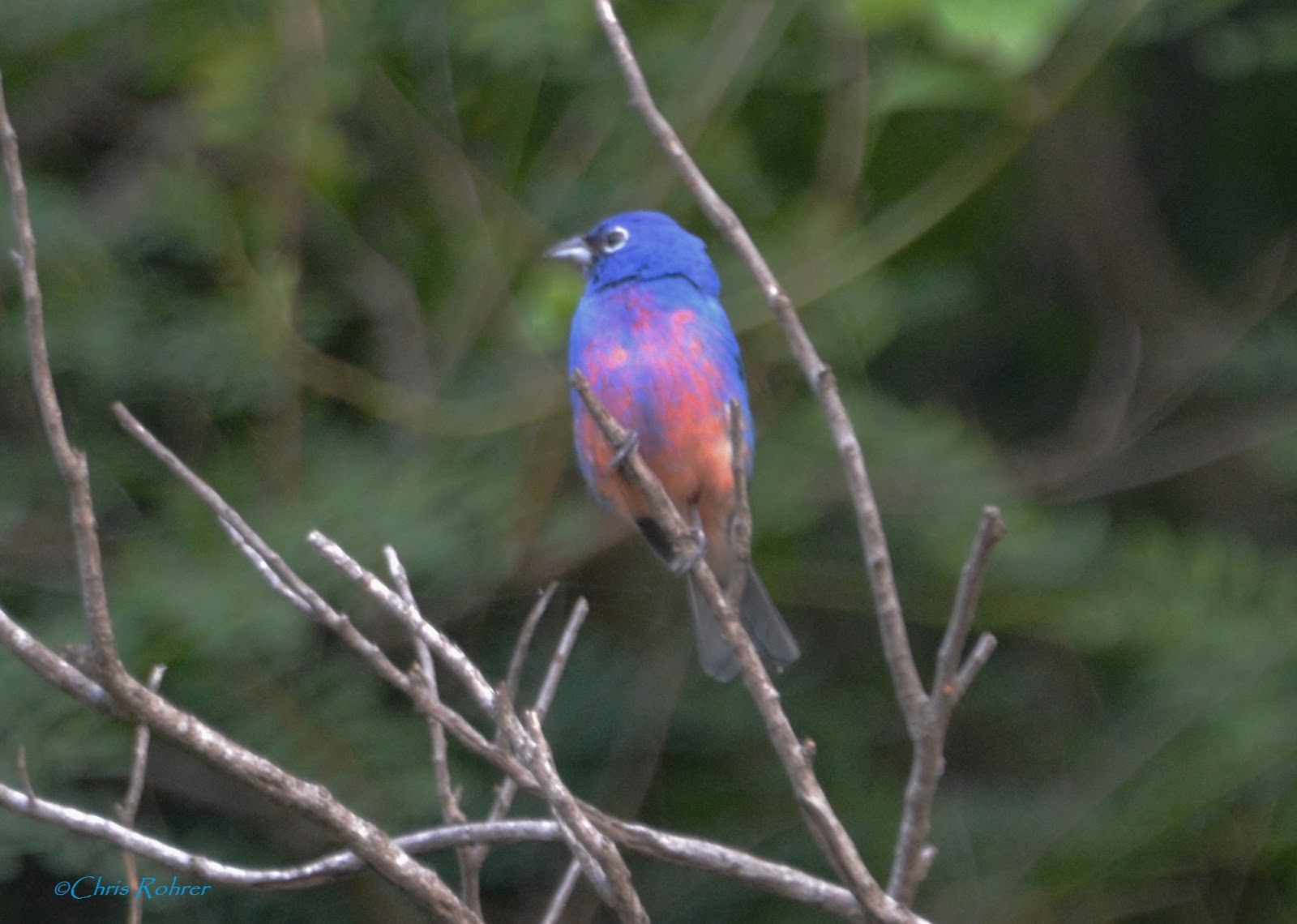
Rose-bellied Bunting or as it was once called, Rosita's Bunting
Many of the birds on my 600 list are neotropical birds.  They are some of the hardest birds to spot.  And while I'd like to say I'm getting better at finding them, I'm not:) 

White-winged Tanager
So I learned some valuable things on my personal journey to the 700 Club.  No more large groups.  I know I will have to do this down the road again, but I do not prefer large numbers of people.  While I enjoyed their company, knowledge and friendship, I much prefer the quiet and slow methods I use in the field alone or with friends.  And there's something special about ID'ing a new life bird on your own....

Stripe-throated Hermit
Every day there was something new flying past me and I couldn't keep up!  It was exhausting and fun.  The one thing I loved about our organized tour in Mexico?  The transportation.  It was nice to be told to meet the leaders at their buses each day at a certain time. When I do these treks alone, I always have to think about how I will attack the bird challenge.  Many times I stay in one spot for a week and really bird the heck out of it both day and night.  On our trek into Chiapas, it was FIVE new locales in FIVE days! 

Crimson-collared Tanager
It was amazing and the leaders were wonderful.  The reason for this important trek into Chiapas was for the endemic and difficult to find birds like the Nava's Wren, Pink-headed Warblers, Blue Seedeater and Long-tailed Sabrewing.  These were the birds I needed help finding because some of the birds were on private lands or in hard to access areas.  So in the shadows of the forests, we searched and searched for these brilliant birds. 

Barred Antshrike
Along the way, I found lots of other cool birds like this Olive Sparrow below.  The sparrow species make me smile and they are one of my favorites.  

Olive Sparrow
We saw trogons, motmots, chachalacas, guans and curassows, and lots of other brightly colored birds. 

Russet-crowned Motmot
So what am I feeling right now at the 700 level?  It's hard to explain, but I feel like I'm sinking into a birder stereotype that I fear most.  It's the one where I become a much more serious person.  It's the one where I lose human emotion and isolate myself in a space only filled with birds.  I'll try and fight that inner lifeless scientist away because birds are more than just data. I still will be a scientist in my own right....just one who laughs and enjoys the adventures along the way. I've met a lot of birders who can be too serious for their own good! The experience to 700 is completely different than the one I took to 100, 200 or even 300.  I'm a sharper knife now.  And with every moment free, I find myself engrossed in a bird book or TV program or studying new areas around the US and world. 


Great Curassow
As I sit in my car, fly in a plane or read reports, I separate the good and bad observations happening out in the field.  I add some of my own rare birds.  Others report their rare birds.  And so on and so forth....

Northern Bobwhite
But 700 was difficult.  I'm not going to lie.  It was the hardest challenge yet. 

Ruddy-breasted Seedeater
Sometimes it was the culture.  Utah challenged me with its 1950's culture of "Keeping Up With The Joneses".  Yuck! And California made me yearn for the open lands back in Arizona. There are too many people in that state!  However, when I spotted a new California endemic bird, I forgot about all of it and just smiled. 

Streak-backed Oriole
Mexico made me smile because I truly love this country and our time in Chiapas flew by so quickly there. It's been years since I visited this country's interior due to the drug trafficking and kidnapping. I can say that Mexico has become safer again for travel!  But still, I'm not taking any chances.  I'll always travel with a group of people now to this country. In February, Las Aventuras will return to Sonora, Mexico for another bird trek!

White-fronted Parrot
Then there were the birds!  Mexican birds hid.  Sea birds zipped past our vessels.  Other birds were perfectly camouflaged! 

Nava's Wren
And some birds challenged my patience!  This bird above is the number one success story of the year. The Nava's Wren hides in the dark shadows of Mexico's dry rain forest. It's habitat is very tight.  There are only 9 locations where this bird can be found and it's in some rather remote areas. We waited and waited and waited for this bird.  Some birders were super sick due to food poisoning, but by the bird gods, everyone made sure they saw the Nava's Wren.  One man collapsed onto the ground waiting to see this bird.  Now that's dedication!

Lesser Roadrunner
Four years ago I began this journey.  There are over 10,000 birds on this planet which leaves me approximately 9,300 more birds to find:) Oh may the BIRD GODS be good to me!  I'll certainly die trying to find them all!

Plain Chachalaca
A lot of strategic planning goes into everything I do. I like the planning part a lot.  It's the budgeting I hate!

Green Violetear
For next year, I'm planning on setting my life bird goal at 800....maybe 850.  I'm tossing around ideas like Canada, Alaska, the Pacific Northwest, Cuba, Florida...or just a simple summer, vacationing in my beautiful home state of Wisconsin.  And of course, I will do my mandatory pelagic like I do each and every year. But who knows where that will take place. 

Blue Seedeater-a difficult bird to find!
There are many California birds I still need to find.  There are still many Wisconsin birds I need to find.  But overall, North America is starting to shrink:) Yet still....there are hundreds of new birds that need to be found.  Some birds require their own trek!

Long-tailed Jaeger
Casual ocean treks will now be very focused and calculated. 

Sooty Shearwater
A Bay Area trip, with a Monterrey or Half Moon Bay stop, will be needed. But that is something I want to do with Micheal. 

Pomarine Jaeger
North America is a great big continent to explore.  One could easily spend a lifetime here discovering everything there is to know about our wildlife. I can't believe how much I've learned in such a short amount of time.  But my mind is like a sponge.  I'm a detective on a case. 

California Quail
I imagine I am the bird sometimes.  This helps me figure out where they may be hiding.  And quite a few of these birds like to hide!

Chukar
As this chapter of "Americano" comes to an end; another will begin.  Where will it take us?  Your guess is as good as mine.  But it's sure going to be a fun ride!  Over the next several weeks, at least until the end of the year, Las Aventuras will be leaving the desert once more to find a few more new bird species. In January, I will feature the highlights of 2015. Until next time.... 

The Pacific Wren
Number 700 was the Pacific Wren.  It was seen in the snow with most excellent company.  Birds take us to fantastic and magical places.  You never know where you'll wind up.  Until next time!


Saturday, August 1, 2015

Birding Chiapas


Keel-billed Toucan NOT taken in the wild but at the zoo.  It's captive and does not count.  But gods it's a gorgeous bird! To find this bird, go to Palenque, Chiapas. 
Where do I begin?  I suppose from the start, but it will be difficult to incorporate all my thoughts into one post. Over the next several weeks, I'll be covering a lot of different topics from bird photography to group dynamics while birding. In the past, I've always planned and organized my own trips, but for this trek, I let others do it for me.  The allure?  We had great guides lined up for the tours which included some very rare birds on the endemic list.  There were two birds specifically on this trip that were important for me to observe. And one I needed help finding.  


As we flew out into the night skies above Mexico City, I felt homesick for all my friends who live in the surrounding states.  As a younger man, I rented an apartment during a summer in Mexico City, partied in amazing locales, studied at the university in Guadalajara, spent many vacations in Puebla and Tlaxcala, ate at great restaurants and discovered the wonders and beauty of Mexican culture. 


Our destination was Tuxtla Gutierrez, Chiapas. This is a state I have never visited before so it was on the top of my list of places to explore. Instead of cultural study, as I usually do, I focused solely on the wildlife and natural parks found around the area. 

Tiger Longwing
Rain forest birding is some of the MOST difficult birding out there.  On our first day in Tuxtla Gutierrez, we were all anxious to get out into the field again and find birds!  On this trip, my friend Gordon got a taste of birding in the tropics for the first time and it was fun to be there with him as he experienced a bit of international birding.  We had many birds to find and so we headed out to the local zoo in Chiapas.  As I've previously mentioned about zoos, they are great places to find local birds within an artificially created safe zone. The birds I present to you all today are wild birds that hung around the zoo(minus the Keel-billed Toucan).  Don't ask me what critters they had in their cages because I won't remember:)  I was more interested in the wild bird population living on the property. 


Plain Chachalaca
Many of our new birds were ground birds like the Plain Chachalaca above.  Around southern Mexico and Guatemala, grouse make for a tasty treat. This is why the Ocellated Turkey is listed as Near Threatened. When I first went to Mexico, I discovered that the country, when compared to other Spanish speaking countries, had been terrible maintaining their wildlife populations. Some states, like San Luis Potosí, had wiped out montane forests. Similar experiences/observations in other Mexican states had me concerned. While hunting may have subsided a bit, it appears habitat loss has become the number one issue for this country. It's also an issue in many parts of the world including the U.S. (but more on that in a few weeks.) With that said, Chiapas has set aside large tracts of rain forest habitat and they currently are working on mangrove restoration along their beaches. The trash issue also seems to be a lot less than I remember!  These are all great things and I hope it continues. 

Plain Chachalaca chick
How about the birds?  Featured above are pics of a Plain Chachalaca.  I was so excited to see these "new" birds. I remember having one perch on my shoulder in Panama, but it was not wild. 


These birds were common and observed on many of our treks around Chiapas. 

Zoomat entrance
Our stop at Zoomat was productive and exciting. Our visit perhaps made us a bit cocky with our cameras.  Birds seemed easy and cooperative to document.  This would NOT be the case for the rest of our trip:) Difficulty level for birding this area: Easy. 

Crested Guan
The next bird featured is the Crested Guan.  I had seen this bird before in Guatemala and this was the ONLY time we saw this bird in Chiapas.  But in the zoo, the birds casually hung in silence above picnic tables or near restaurant stands making me think that they enjoy scraps:)


I think the iguana above was part of the zoo display, but I really don't know.  These large reptiles hang out in many different locations.  On another trek we spotted two of these large lizards in the wild at a local park.  

Green Jay
Also at the zoo?  Green Jays!!!!!!  WOW!  In Chiapas, the Green Jay has yellow eyes.  And on this trip, I learned that the Green Jays in Texas have dark eyes.  Something new I didn't know!

 Fatima Peacock (Anartia fatima)
Wrens in the Neotropical world are awesome.  They have beautiful songs and wonderful coloring. This Banded Wren was a thrill!

Banded Wren
Also very common to the Chiapas landscape?  Russet-crowned Motmots. We had plenty of opportunities to see these birds on many of our outings. 

Russet-crowned Motmot
How about a crazy bird?  This was another bird that was only seen at the zoo.  The Great Curassow is listed as vulnerable due to habitat loss and overhunting.  Here at the zoo, it casually walked the grounds without the fear of either.  Look closely at the pic below to see a young bird walking with the mother. 

Female Great Curassow with chick
It was comical watching people eat at the picnic tables with these large birds walking around them. 


Male Great Curassow versus human butt
I noticed that two of the birds at this zoo had bands on them.^  


Finally today folks, I want to share MY bird of the day along with the endemic black Agouti from the photo below.  I was SO excited to finally see the skittish White-tipped Dove out in the open.  These birds are often heard but rarely seen. It was a bird I already had on my life list but one without photo documentation. It appears that several zoo scraps were enticing enough to lure a couple of these secretive birds from the dark forest. 

White-tipped Dove and Agouti
I could have smacked the birder who said that he wasn't really interested in "doves". "They're drab and boring." I mean...I get where he's coming from here, but still, this is no ordinary dove! It's not often you see these birds so I observed for as long as I could.  Pretty epic moment!  I'm not sure I need to go to Texas anymore after this visit;)


My journeys will continue over the next several weeks.  I'll be sharing thoughts on the pros and cons of guided tours, listers, photography, and of course focusing on some of the most amazing places we stopped to bird. I'll also be featuring beautiful butterflies in several of my posts from Chiapas. So let's get this party started. Until next time friends.......