Showing posts with label Crimson-collared Tanager. Show all posts

Sunday, December 20, 2015

The 700 Club

Green Jay-in Chiapas, the Green Jays have yellow eyes.  In Texas, Green Jays have dark eyes.
If there's one thing about a growing life bird list, it's learning that you have to be patient.  The first and middle part of 600 was not easy at all.  And I have to admit, I was doubting I'd hit my year goal of 700 by the end of December. 


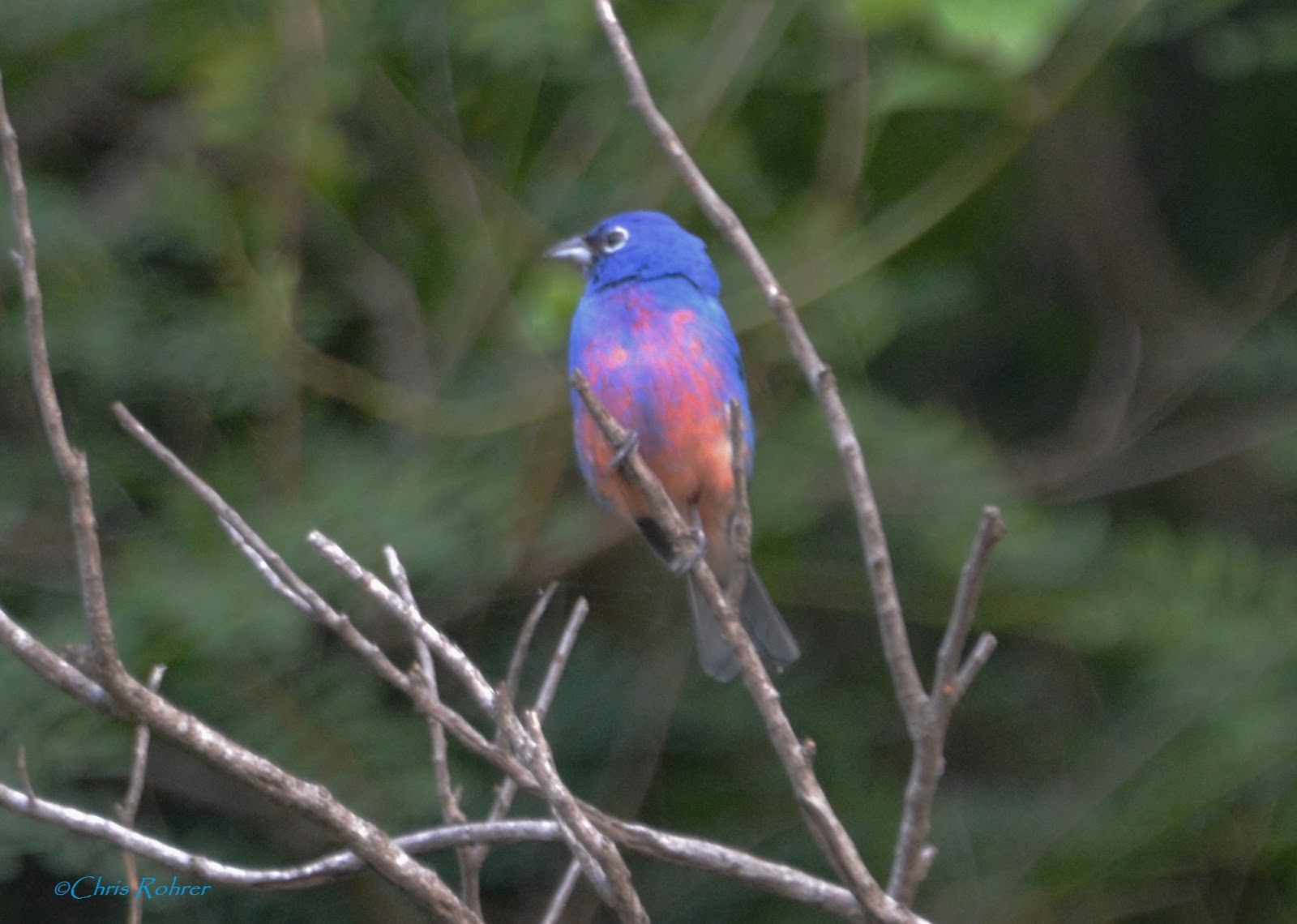
Rose-bellied Bunting or as it was once called, Rosita's Bunting
Many of the birds on my 600 list are neotropical birds.  They are some of the hardest birds to spot.  And while I'd like to say I'm getting better at finding them, I'm not:) 

White-winged Tanager
So I learned some valuable things on my personal journey to the 700 Club.  No more large groups.  I know I will have to do this down the road again, but I do not prefer large numbers of people.  While I enjoyed their company, knowledge and friendship, I much prefer the quiet and slow methods I use in the field alone or with friends.  And there's something special about ID'ing a new life bird on your own....

Stripe-throated Hermit
Every day there was something new flying past me and I couldn't keep up!  It was exhausting and fun.  The one thing I loved about our organized tour in Mexico?  The transportation.  It was nice to be told to meet the leaders at their buses each day at a certain time. When I do these treks alone, I always have to think about how I will attack the bird challenge.  Many times I stay in one spot for a week and really bird the heck out of it both day and night.  On our trek into Chiapas, it was FIVE new locales in FIVE days! 

Crimson-collared Tanager
It was amazing and the leaders were wonderful.  The reason for this important trek into Chiapas was for the endemic and difficult to find birds like the Nava's Wren, Pink-headed Warblers, Blue Seedeater and Long-tailed Sabrewing.  These were the birds I needed help finding because some of the birds were on private lands or in hard to access areas.  So in the shadows of the forests, we searched and searched for these brilliant birds. 

Barred Antshrike
Along the way, I found lots of other cool birds like this Olive Sparrow below.  The sparrow species make me smile and they are one of my favorites.  

Olive Sparrow
We saw trogons, motmots, chachalacas, guans and curassows, and lots of other brightly colored birds. 

Russet-crowned Motmot
So what am I feeling right now at the 700 level?  It's hard to explain, but I feel like I'm sinking into a birder stereotype that I fear most.  It's the one where I become a much more serious person.  It's the one where I lose human emotion and isolate myself in a space only filled with birds.  I'll try and fight that inner lifeless scientist away because birds are more than just data. I still will be a scientist in my own right....just one who laughs and enjoys the adventures along the way. I've met a lot of birders who can be too serious for their own good! The experience to 700 is completely different than the one I took to 100, 200 or even 300.  I'm a sharper knife now.  And with every moment free, I find myself engrossed in a bird book or TV program or studying new areas around the US and world. 


Great Curassow
As I sit in my car, fly in a plane or read reports, I separate the good and bad observations happening out in the field.  I add some of my own rare birds.  Others report their rare birds.  And so on and so forth....

Northern Bobwhite
But 700 was difficult.  I'm not going to lie.  It was the hardest challenge yet. 

Ruddy-breasted Seedeater
Sometimes it was the culture.  Utah challenged me with its 1950's culture of "Keeping Up With The Joneses".  Yuck! And California made me yearn for the open lands back in Arizona. There are too many people in that state!  However, when I spotted a new California endemic bird, I forgot about all of it and just smiled. 

Streak-backed Oriole
Mexico made me smile because I truly love this country and our time in Chiapas flew by so quickly there. It's been years since I visited this country's interior due to the drug trafficking and kidnapping. I can say that Mexico has become safer again for travel!  But still, I'm not taking any chances.  I'll always travel with a group of people now to this country. In February, Las Aventuras will return to Sonora, Mexico for another bird trek!

White-fronted Parrot
Then there were the birds!  Mexican birds hid.  Sea birds zipped past our vessels.  Other birds were perfectly camouflaged! 

Nava's Wren
And some birds challenged my patience!  This bird above is the number one success story of the year. The Nava's Wren hides in the dark shadows of Mexico's dry rain forest. It's habitat is very tight.  There are only 9 locations where this bird can be found and it's in some rather remote areas. We waited and waited and waited for this bird.  Some birders were super sick due to food poisoning, but by the bird gods, everyone made sure they saw the Nava's Wren.  One man collapsed onto the ground waiting to see this bird.  Now that's dedication!

Lesser Roadrunner
Four years ago I began this journey.  There are over 10,000 birds on this planet which leaves me approximately 9,300 more birds to find:) Oh may the BIRD GODS be good to me!  I'll certainly die trying to find them all!

Plain Chachalaca
A lot of strategic planning goes into everything I do. I like the planning part a lot.  It's the budgeting I hate!

Green Violetear
For next year, I'm planning on setting my life bird goal at 800....maybe 850.  I'm tossing around ideas like Canada, Alaska, the Pacific Northwest, Cuba, Florida...or just a simple summer, vacationing in my beautiful home state of Wisconsin.  And of course, I will do my mandatory pelagic like I do each and every year. But who knows where that will take place. 

Blue Seedeater-a difficult bird to find!
There are many California birds I still need to find.  There are still many Wisconsin birds I need to find.  But overall, North America is starting to shrink:) Yet still....there are hundreds of new birds that need to be found.  Some birds require their own trek!

Long-tailed Jaeger
Casual ocean treks will now be very focused and calculated. 

Sooty Shearwater
A Bay Area trip, with a Monterrey or Half Moon Bay stop, will be needed. But that is something I want to do with Micheal. 

Pomarine Jaeger
North America is a great big continent to explore.  One could easily spend a lifetime here discovering everything there is to know about our wildlife. I can't believe how much I've learned in such a short amount of time.  But my mind is like a sponge.  I'm a detective on a case. 

California Quail
I imagine I am the bird sometimes.  This helps me figure out where they may be hiding.  And quite a few of these birds like to hide!

Chukar
As this chapter of "Americano" comes to an end; another will begin.  Where will it take us?  Your guess is as good as mine.  But it's sure going to be a fun ride!  Over the next several weeks, at least until the end of the year, Las Aventuras will be leaving the desert once more to find a few more new bird species. In January, I will feature the highlights of 2015. Until next time.... 

The Pacific Wren
Number 700 was the Pacific Wren.  It was seen in the snow with most excellent company.  Birds take us to fantastic and magical places.  You never know where you'll wind up.  Until next time!


Monday, August 10, 2015

Vanishing Lands

Will this road into a protected reserve be a blessing or a curse?
The whole purpose of my trip to Chiapas was centered around our El Ocote trek.  There were several birds endemic only to a small region of Mexico and two of them were on this day trip.  During our time out in the field, I'd hear many people use the word endemic(specific to one area/location).  There was "endemic" as in the "regions between Guatemala and Mexico".  And then there was "ENDEMIC" meaning only found in a narrow band within a small part of Mexico.  Two birds, the Nava's Wren and Long-tailed Sabrewing, were the main reasons I returned back to Mexico.  I needed help finding the Nava's Wren.


I have several strategies I utilize when birding new areas.  1. Research my area for endemic birds like the Florida Scrub-Jay in.....Florida:) And 2. Find them first.  Everything else will fall into place. The endemic species on our planet really face an uphill battle.  And like the Florida Scrub-Jay, these birds could face extinction within the near future due to habitat loss and fragmentation of their habitat. This fragmentation can lead to the birds being "trapped" and confined within one area where they won't be able to breed with other populations. The good news is that there are people listening and work is being done to protect some of these areas like the Ocote region.   But just how well protected are these "biospheres"?

White-winged Tanager
And this got me thinking at a very deep level.  Why are we, as people, allowing greed and capitalism to destroy these incredibly beautiful areas?  It would be easy to blame Mexico for their semi protected wildlife nature reserves.  We found bananas growing in the middle of the forest.  There's a road cut through this mountain range that they are planning to make into a highway.  This highway cuts into the very endangered Nava's Wren territory.  They breed and nest within limestone caves(some along the road) and like many birds, they prefer to remain secretive in the dark forests within this very specific habitat. My experiences abroad have shown me that highways allow people access into these areas so that they can slash and burn the intact forest.  And along with the wood material/farming/cattle land that comes from this act, they will also poach the creatures that live in these protected areas. I could shake my finger at Mexico for being reckless. 

Stripe-throated Hermit
But it isn't just Mexico is it?  It's here in the US, Great Britain, Australia, Nicaragua and pretty much happening all over this planet. Who am I to judge Mexico when we have a mining operation attempting to infiltrate our sacred Santa Rita mountains here in Southern Arizona?  Or the suburb with an Italian flare that will take MORE water from what's left of our precious San Pedro river near Sierra Vista! And while in Mexico, I heard talk of a canal going into Nicaragua that was secretly passed by their President.  Apparently China is paying for the construction and it has already begun.  This would cut into Lake Nicaragua and across large tracts of pristine forest while dislocating thousands of indigenous people.  Ecosystems are in jeopardy. The lake is freshwater and obviously the ocean is not. And with China basically running the canal, I see lots of terrible things happening. Nicaragua doesn't have the money or resources to clean up natural disasters and yet, they are agreeing to put this canal into THEIR country.


When we visit these very special places, I try to memorize every little detail because I know it will change.  The deeper into the life bird realm you go, the more you discover about the world around you.  I am an observer. When I chose this life several years ago, I realized that I could one day face the inevitable  possibility of a bird going extinct from my life list. There is profound sadness in that realization.  Today's trek was a mixed bag of the good and bad. 

Long-tailed Sabrewing
The weather conditions were again not so great on this morning so my pictures are not as crisp as I'd like them to be.  Our first special bird of the day was the Long-tailed Sabrewing.  I was glad to have Martin with us on this trek.  He was a book of knowledge and experience.  Again I learned lots from this wonderful man. 


Slate-colored Solitaire
The Long-tailed Sabrewing is an endangered bird found naturally around the Isthmus of Tehuantepecin of southeastern Mexico around the states of Veracruz, Oaxaca and west Chiapas(where we were). This bird's population numbers have been declining due to habitat destruction.  

Blue-black Grosbeak
We spent a good amount of time observing this bird feed from the Birds of Paradise in the area. Martin pulled out his scope and we all had great looks at this large sabrewing.  

Crimson-collared Tanager
As we continued on, the group noticed Bananaquits in the area.  I scratched my head for a moment before spotting a stretch of banana plants along the road.  Then it all made sense. This road is just the beginning of exploitation. 


On a positive note, the area was deemed as a protected space for our next bird, the Nava's Wren.  I enjoy hummingbirds like the next person, but wrens and sparrows and terns and cryptic birds get my blood flowing.  Our wrens in the Americas(yes, the US is included:) are spectacular.  So we continued onwards.  My heart started beating rapidly for this one. 

Black-faced Grosbeak
We had a wonderful guide by the name of Michael Retter(works with the ABA) who did a great job locating one of the wrens.  This was definitely a bird where I needed a guide!  Patience is a virtue.  And in the darkness, one bird followed us.  We saw glimpses here and there.  One of Martin's eyes squinted from concentration.  The man of much travel had another lifebird on this trip that he desperately needed to observe. Our fingers twitched above the capture button of our cameras.  But we would not rely on the automatic to focus.  It was manual here on out. 

Olivaceous Woodcreeper
Distractions were constant. We patiently stood.  And stood some more.  The wren was calling.  But birds like the Red-billed Pigeon(below) flew over our heads. Focus Chris.  You are given only this time and nothing more. My finger trembled over the trigger.  My ears tuned into the call and located the bird hiding in the foliage.  But my eyes!  These damn eyes!  It is my one true limitation as a birder.  Being blind in one eye and poor sight in the other really messes up my chances for spotting birds in dark conditions.  But I sure can hear them.  


Red-billed Pigeon
Then a miracle happened.  The shadow moved into an open dark space and delighted the group of birders. 


Nava's Wren
Even I could see the bird!  I focused the best I could on the wren while he skulked from within his dark layer.  It was now or never! And during our excitement, I tried to keep my hands steady on my binos. Within a few moments, the bird disappeared into the darkness again. 


It felt good.  Everything else after this trek was gravy.  But I was left sad after the observation. Does this bird have a chance? The Nava's Wren has a restricted range in easternmost Veracruz, one site in Western Chiapas(that would be us) and two in eastern Oaxaca. This bird is listed as Vulnerable due to its' limited range. Sometimes it's not that the bird is hunted or poached; it's just that it naturally has a small population that is vulnerable to human encroachment. While land has been set aside for these birds here in Chiapas, we also observed that farming has infiltrated this particular spot. Just what exactly defines a "protected" area?  Hopefully some lines will be drawn to help keep this region TRULY protected. So for now I throw this question out to the international community?  Are there natural areas in your part of the world that people are trying to develop but shouldn't?