Showing posts with label Northern Jacana. Show all posts

Saturday, September 12, 2020

The Pima County Birding Challenge


From the birdy office of Las Aventuras, I bring you all the latest in Pima County birding.  Pima county is located in beautiful southeastern Arizona and this year has been an exceptional year for crazy birds.  Pima County has improved a lot of habitat over the past two years at parks and water reclamation plants. With covid ever present in all of our lives, many are forced, or have chosen, to stay home. 


With every major wildlife trek cancelled, I had to find myself a new challenge for the year.  In fact, I think a lot of people have done the same in their own way.  I chose to add new "life" birds to my Pima County list this year.  Every time, I reach a mile marker, I post about it.  For the world life list, it's every new hundred birds.  With my Pima County list, it's every 10 birds. The start of those new ten birds began on October 2019.  On Wednesday, I completed that "10" marker milestone. 
 
Painted Bunting at Agua Caliente Park

There is something very rewarding about staying within your own county and birding.  It makes you a better birder. And a better detective. It's also fun.  It can also be tedious. One of the birds, I hadn't had on my Pima Life List was the Painted Bunting.  It was a lot of fun to chase and easy! It was also a bird that required a better observation.  This year in Pima, Painted Bunting, the western subspecies, have been everywhere and in good numbers.  They will disappear with the warmer weather come October. 

Arctic Tern at Canoa Ranch

The Arctic Tern was one that wasn't on anyone's list.  It was a mega rarity that showed up at Canoa Ranch.  There were very few documented cases of this tern in Arizona.  That was until now. 


Birders from all over the state came to see this bird as it was a very good state bird for many people. 


This has been the year of rare Mexican migrants. A first Pima record, Clay-colored Thrush, showed up in Arivaca along a muddy watering hole full of worms. There it sang its beautiful song.

Clay-colored Thrush at Arivaca Cienegas Creek Preserve

Again, this was a bird that has only one other record in the state.  But it stuck around and people from all over the state came to Pima County to chase this rare bird.  I remember the several sightings to be quite beautiful and memorable. 


This next Pima "lifer" was not my favorite chase.  I like vireos and the hike was gorgeous on Mt. Lemmon, but the terrain made it difficult to get good views of this somewhat rare breeder on Mt. Lemmon. 

Gray Vireo on Mt. Lemmon
  
While looking for the bird, I almost stepped on the Sonoran Gophersnake below.  The hike itself was new for me.  I will admit in years past, I was quite lazy to chase this bird.  It's a cool bird but it didn't inspire me to look for it in Pima when they are quite numerous in Maricopa County.  So this bird was work. 


On that day, I got to meet the Bowens.  They are doing a big year in Arizona and doing quite well.  If these rarities keep showing up like they are, they could break the year record!  


Another chase that didn't really excite me but needed to happen was for the rare Sanderling.  It was at a sewage pond far away.  Pima County is quite large.  In fact, it's larger than some states!

Sanderling at Ajo WTP

The consolation prize for not only finding this bird was from all the incredible blooming wildflowers along the road.  It was also a more innocent time before covid took hold of everything. It would be the beginning of the end to all new promises of 2020.  Trips and festivals were starting to be cancelled. I remember feeling melancholy on this day. It was a long drive with much time to think. 


Then came the Sagebrush Sparrow.  It was a cold winter day and I was in the mood to play detective.  So I did.  That's when I found my Pima lifer Sagebrush Sparrow.  Again, I had been lazy with this one.  These sparrows are much easier in other counties of Arizona. I remember sitting in my vehicle speaking with Park Ranger Chip Littlefield about putting together a special field trip to Saguaro National Park with my students. Again, this was a time full of hope and excitement.  

Sagebrush Sparrow in Marana

An enjoyable chase for a Ruddy Ground Dove in December 2019 brought me to the rose garden of Reid Park. 


There I watched this somewhat rare dove forage around the garden for bugs. 

Ruddy Ground Dove at Reid Park

The next bird is a curiosity and probably the most unknown random species in Pima County.  Unlike most places in this country, the American Crow is super rare here.  I've lived in midtown now for years.  With covid happening and work at home, I leave my doors and windows open to hear all the wonderful birds on our property.  I don't have pics or a sound recording but I believe we are on some sort of migration route for these birds. I've checked records on ebird and there seems to be specific time periods with a "line" showing a route over the Rincon mountains into areas like Willcox, etc.  Their unmistakable "CAW CAW CAW!" was heard in March as I was gardening outside. I looked up and they zipped over our El Presidio grounds....again.  In October, I got a visual of them as they were making a lot of noise flying over our house. I don't have digital evidence for ebird and their evaluation crew, but I am hoping to get some documentation on this bird next month.  It's always in the afternoon when I'm in the middle of something.  Had I not been working from home, I would have missed them!  

American Crow over El Presidio Courtyard


Another treat was a beautiful hike back in December last year to the Buenos Aires Wildlife Refuge.  It was a cool winter day full of birds.  I was excited to chase this rare warbler for Pima County.  He was sneaky too!  The Prairie Warbler was like the cherry on top of an amazing day of birding. Plus I like hanging out with the volunteers there listening to them speak about the Northern Bobwhite reintroduction efforts happening. 

Prairie Warbler at Buenos Aires Wildlife Refuge

The detective work in Pima County is far from done.  I still have a LeConte's Thrasher to chase which is not really a fun idea for me because it's far and lives in some of my most unlikable bird habitat....the Mad Max Beyond Thunderdome habitat.  Desolate, remote and hot. 


There is truly only one man in Pima right now "in charge" of all the birds.  Brian Nicholas, since he has retired, has really done an amazing job connecting other birders to some rarities.  He specifically monitors Canoa Ranch where a very rare national, state and Pima County bird showed up.....the Northern Jacana.  Like the Eared Quetzal, everyone is flying or driving from all over the country to see this bird and get it on their lists. 
It's a pretty common bird in Mexico and I've seen them close to the AZ border in Sonora, Mexico.  But this one crossed over into the ABA area.

Northern Jacana at Canoa Ranch

And finally I got another Pima lifer, the Black Tern. Normally they migrate this time of year through parts of Pima County but they never stay.  I've been too lazy to chase them over the years.  I had tried initially and then just took the approach...."If I'm in the area one day..."  And that was the case with the Northern Jacana.  Birders were saying, "Have you heard?  They have 4 species of tern down there at the Amado pond."  This past week with that Black Tern, I added number 381 to my life list in Pima County.  Now that is something!

Black Tern at Amado WTP

We can give up or we can create our own challenges during these challenging times.  I'd rather try my best even if I'm not exploring strange new worlds and civilizations.  There is still adventure nearby.  But instead of us traveling to all those exotic places to find them; we wait for them to visit us. Until next time.....

Tuesday, July 18, 2017

Costa Rica: The Urban Birding Report

Parque Nacional
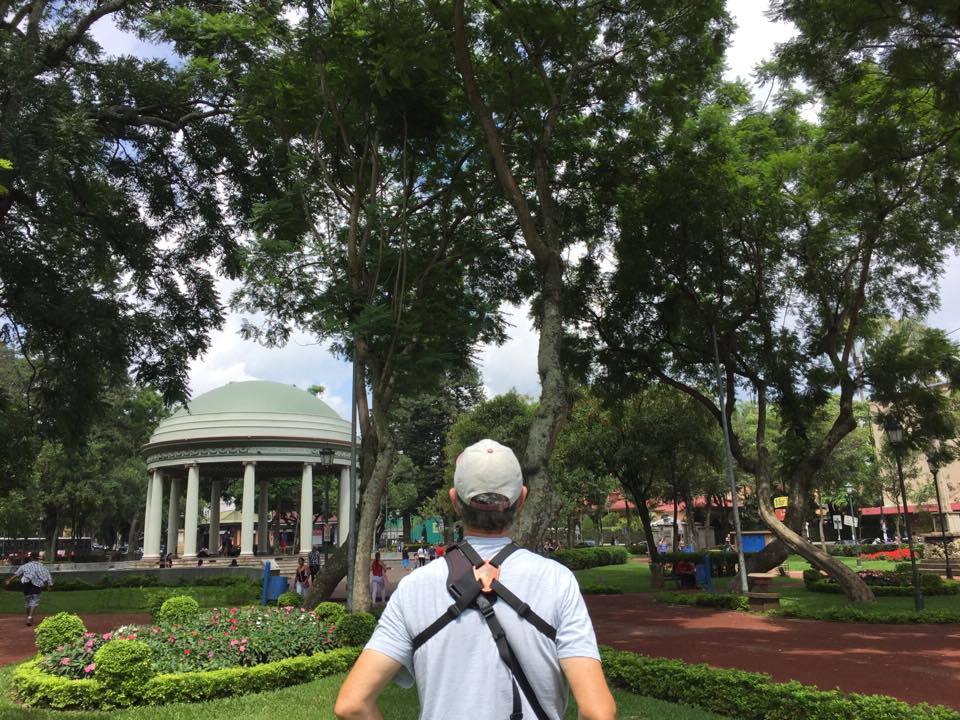
Every year, I like to take a walk on the wild side and do some urban birding at the places we stay.  I usually add a couple lifers from the long walks, but that's not the main purpose of this type of birding.  It's just a "fun" exercise into the world of local birding.  What do the people living in these urban places see?  So today, I'll take you to THREE places we visited. We'll visit Parque Nacional in downtown San Jose, Parque Metropolitano La Sabana just outside of the downtown, and CATIE near Cartago.


First off.  For those of you following our travel plans.  We left Monteverde by public bus.  There were two times that this bus left Monteverde.  There was a direct bus to San Jose at 7:30 and 2:30 PM. We noticed that the bus was FULL.  So buy your tickets early.  When you travel, you always go during the light of day as it's much safer. Plus you get more birding time for that day.  


Several hours later, we arrived in San Jose at our hotel.  It was very nice and near many of San Jose's museums and restaurants. At this point, Micheal wasn't having anymore birding for the day.  It's hard to switch off the birding button when there are so many lifers to be discovered. For non-birders, they want to kill the birders for their non-stop chatter of birds.


Crimson-fronted Parakeets were common everywhere in and around San Jose
And at this point, I think the true birder, Gordon wanted to strangle me.  I'm kind of a spontaneous birder who likes to sing the song "Qué será, qué será! Whatever will be, will be!"  I tend to meander sometimes and he is super target focused:) We push each other to do better and that's teamwork. But I kinda got a day to play and research. And be a gyspy. 


Always seen in pairs feeding or just....cuddling
We did add the very common Crimson-fronted Parakeets to our lists.  I love parrots and parakeets so it was pretty exciting.  As for the safety at the Parque Nacional?  It was safe during the day, but according to the locals, not so safe at night.  Watch your things at all times.  While we were there, I spotted a group of guys watching people.  Fortunately for us, there were lots of school kids, families, tourists and locals enjoying the park. 


Blue-gray Tanagers were common almost everywhere we went
Then we passed the train station on the way back to our hotel and said, "Hey, let's take a look."  I saw this schedule and got excited.  We could take a train to Cartago for cheap!  Why not??!!  I asked the workers in the train station if that schedule was legit and their shook their heads yes.  


LOL!!!  The next day we were on our way to Cartago to meet up with friend and birder, Serge Arias.  This train was CRAZY!  It was open, as in NO doors, and very rocky.  At times, I thought the train would fall apart.  Our taxi driver was shocked that we even took that train.  "That's not safe! Cars hit that train all the time"  LOL!  Again, we traveled by day and were surrounded by nice people. So that's always a good thing. And it took us to the very beautiful city of Cartago for a little more than the US $1.50!  You can't beat that price!


Ahhh, look at Gordon's face.  This is classic.  And Micheal!  They're enjoying the torture:)  Serge Arias met up with us and we had a blast.  I'll focus more on Serge and his guides in the next two posts.  Right now, we're going to explore a really cool location just outside of Cartago to expand on this idea of urban birding. 


University of Costa Rica-Cartago division
Universities are great places to explore.  Granted, in Costa Rica, there were always guards at the entrances.  Normally you need a student pass, but I've discovered several ways I can weasel my way onto most campuses. I'm also an educator so I'm part of the academic world. Not that it matters, but it's the unknown benefits of teaching that can help open doors:) Plus, we're adding data to ebird.  So how is that not citizen science at work for the academic world?:)  During our treks to San Jose and Cartago, we'd explore two campuses.  For the San Jose campus, I spoke with the guard in Spanish and he was really kind to let us enter through the gates.  And for the Cartago entrance, Serge was able to get us into the area without any problems.  Although he warned us that we might be turned away.  Oh yeah....:)


Boat-billed Heron
We had almost given up hope that we'd ever see a Boat-billed Heron after dipping on the bird at Playa Tamarindo.  But Serge knew that there were several around this lagoon/lake.  And there were!!

Northern Jacana
Safety factor?  Safe.  Well, except for the caiman in the area.  We always had to watch out for them while birding the perimeter of the lake. 

Purple Gallinule
It rained and rained......

Cattle Egret
.......but the birds were really cool.  


After our day with Serge, we returned to San Jose via a local bus. During my research, I was shocked to discover Yellow-naped Parrots at a local park.  Now had I known what I know now, we wouldn't have gone because we added this bird later in Liberia.  But this story is worth telling.....


I think we walked 20 some miles on this day.  The Yellow-naped Parrot is endangered in several areas of Central America due to poaching.  The bird can mimic sounds and is very popular with people. So we headed to this park, La Sabana.  I'm ALWAYS careful with my camera.  I put it in a backpack away from the public eye and I ONLY take it out once we are at our location and in a "safe" area. 


Parque Metropolitano La Sabana is not for the faint of heart.  It may be an ebird hotspot but it's not a safe one
I've tried several times for this bird during my various treks into Central America and have dipped.  And this bird is the reason why we went.  We arrived at the park and I was already getting a sketchy vibe, but I saw joggers and elderly people walking.  THAT'S always a good sign.  But the park was unevenly safe.  People had warned us that there were areas where men would disappear into the bamboo groves with other men. oh oh.  But that didn't bother me.  Bamboo doesn't scare me, but here's what did.  

Variegated Squirrel
No.  No.  It wasn't this Variegated Squirrel above either.  We had located the Yellow-naped Parrots, or at least one of them.  I took out my camera and put it together to snap photos.  The area was clear and there was a kind woman walking on the track.  Safe.  Right?  WRONG.  She warned Micheal that I needed to hide my camera because of two boys in the distance.  She pointed in their direction.  I kept my eyes out for them.  But the birds distracted and before I knew it, they were closer. 

Yellow-naped Parrot seen at a restaurant stop heading towards Monteverde.  This was a captive bird. 
At one point, the young sketchy man told his friend in Spanish to stop riding his bike because he saw that I had a camera. Little did he know that I knew Spanish. What did we do? Before any of this had happened, I made a gamble. I had located the patrolling police with my eyes and also kept my eyes open as to where the runners were in case the teenagers got close.  And as predicted they got CLOSE!  I stopped and looked at the biker letting him know I knew he was eyeing up my camera. I should have taken a pic with my Iphone:) Wait?!!  Just how many thousands of dollars do birders carry on their bodies? We're like walking banks!  Then I signaled for the police at the other end of the lake.  They came.  As they did, we moved quickly to where the crowds were. Poor Micheal was wearing flip flops. It was serious at the time. I disassembled my camera and packed it back up.  The young men were trapped by the police and we left the area. We got our bird but I would not recommend gambling like this.  If the police hadn't come when they did, I might have been without a camera. Or worse! This isn't my first time at the rodeo though.  Again language is super useful here. I would not have played this game in any new culture that I was unfamiliar with.  In short, I won't forget our first experience finding the Yellow-naped Parrot anytime soon. 


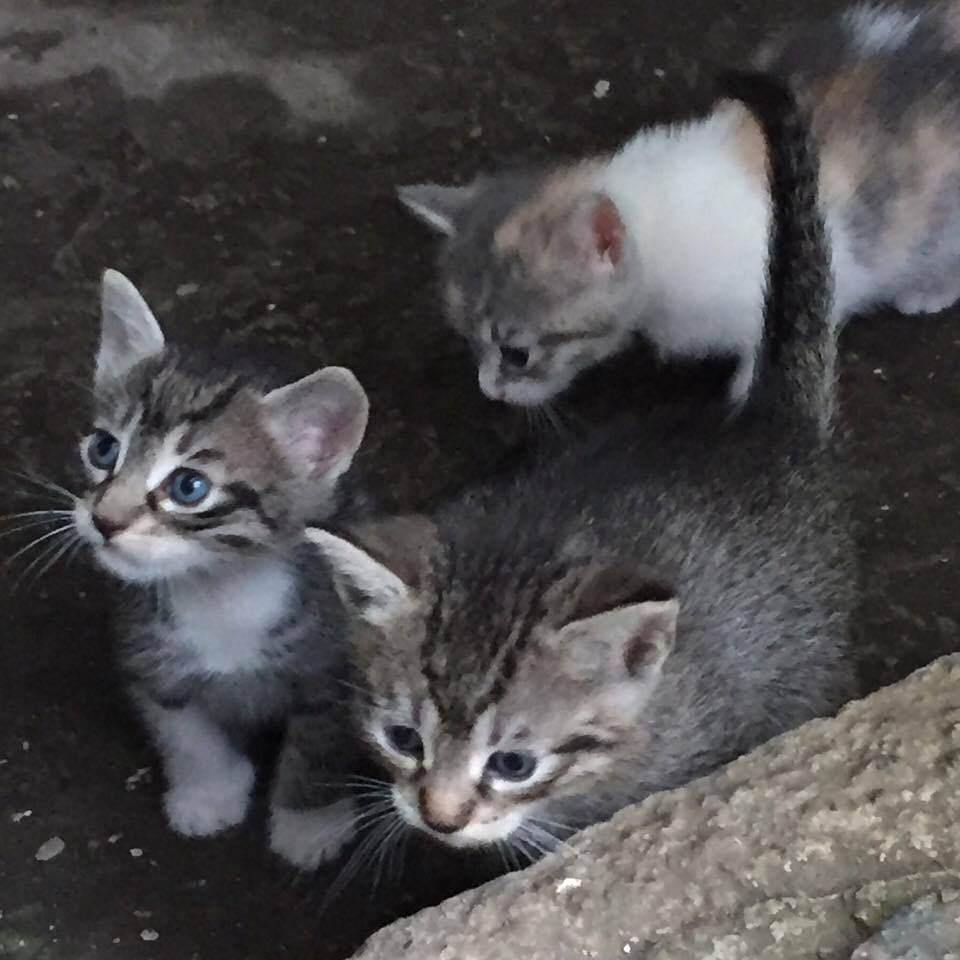
When we returned back to our hotel, we were greeted by these little kittens.  I wanted to be a hoarder so badly and take them all home with me.  So, for this Parque Metropolitano La Sabana, I would, based on our experience, not recommend for birding unless it's on the weekend when there are lots of families grilling out.  People do bird there and it is a hotspot on Ebird but unless you're with a group of people, I would not recommend visiting alone.  


Urban birding is an adventure.  The number one danger factor in birding comes from...(drum roll)...other people.  Grizzly bears and Jaguars and Tigers got nothing on the evil world of humanity.  Every place has its challenges.  In Arizona, it's the lack of water and extreme heat. Anyhow, here are the reports from our urban trekking.....
For San Jose, Parque Nacional, click here.  Safety factor.  Safe during the day.  Be careful at night. Go with others. 
For the University of Cartago, click here. SAFE! But keep your eyes open for Caiman. 
For the Parque Metropolitano La Sabana, click here. I do not recommend this park unless you visit on the weekend and with a larger group of people. 
For the University of Costa Rica, click here. Safe!  Try to go when the garden is open because there are some great birds hiding in that area.  There is also a river that runs through the campus.  Very nice place to bird.  

Wednesday, September 18, 2013

The Ebb and Flow

“It's a dangerous business, Frodo, going out your door. You step onto the road, and if you don't keep your feet, there's no knowing where you might be swept off to.”  J.R.R. Tolkien , Lord Of The Rings


Our trek would continue.  After much hiking, I explained to my friend that she would enjoy this next birding venture.  A trek down the Río Dulce.

Masked Tityra-lifebird
We hiked for many days in the heat and humidity.  Our bodies needed a break, but I also needed to continue finding birds.  Everyday, the area hostels offered treks from the town of Río Dulce to the town of Livingston by boat for about 25 US dollars. It's a beautiful ride down this river.

Put a bird on it!  In this case a Great Egret:)
With the breeze on our backs, we navigated around the river picking up people from their  huts.  Many of the places were tucked away on the side of the river hidden by beautiful vegetation. We were so tired that at one point on this boat ride, I almost fell asleep but an Osprey or Tern would fly by quickly awakening me.
It was still fun to find birds that I had already seen like the Osprey, Cattle Egrets, Neotropic Cormorants or Royal Terns in the area.  It was a game.  How many species could I find from sitting in my boat?  
Brown Pelican-I have never seen one in its breeding plumage!
 This river led to the Caribbean Sea and it was this particular habitat I needed in order to find all of these species.  For my friend Lynda, it was an introduction to the Garifuna people of Livingston.  It is a secluded town surrounded by rain forest.  For me, it was retracing my steps on this river once again as I had in the past.....searching for birds.
The iconic men in their wooden canoes were still there fishing in the great waters, but there were also Magnificent Frigatebirds flying over our heads this time. I had finally hoped to add this species on the Guatemala list for the year.  This time around I was able to watch them in flight and notice their various molts.  Some were all black while others were black with white.

Magnificent Frigatebird
 Meanwhile we passed many homes built on this river. The only access was by boat.


Along the shores, I added the Northern Jacana(below) to my Guatemala list.  It wasn't a lifebird, but it certainly was my first time really looking at the bird.  Before, I had taken its presence for granted.  The Jacanas are an interesting group of birds.....especially the Wattled!

Northern Jacana
 I told the Captain that I was counting birds on the river.  The older gentleman smiled and understood the purpose of my visit.  He told his navigator to make sure we stopped by "Bird Island".  And he had my instant respect. Most of the time, the tourists were thrown in a bus and taken to and from their destinations without any considerations.  It is rather common in Guatemala to have rough rides anywhere you go, especially if you're a traveler looking to save some money.  So be aware.....


We stopped near "Bird Island" and my heart melted at the sight of this Groove-billed Ani. They are such unusual looking birds and this particular one reminded me of my cat at home.  I love how it perches on the branch!  Cassie, our cat, puts her paw down the same way the Ani puts the wing down. Plus this has to be one of my favorite birds:)

Groove-billed Ani
 The trip also added another lifebird to my list....the Pale-vented Pigeon!

Pale-vented Pigeon-lifebird
So remember to put those lazy birding days in between the difficult ones to let your body rest.  It can be very draining.  This was a perfect way to bird and relax at the same time.  My friend said to me that it was a vacation and indeed it was, but time was ticking and I only got one shot to find birds here.  It wasn't like back home where I'd be able to go back the next day if I dipped on a bird. On this day, I'd pick up two new lifebirds and 20 new birds for my Guatemala list.

Royal Terns
On the way back, I closed my eyes and slept to the rhythm of the boat bouncing gently on the river.