Showing posts with label Clay-colored Thrush. Show all posts

Saturday, September 12, 2020

The Pima County Birding Challenge


From the birdy office of Las Aventuras, I bring you all the latest in Pima County birding.  Pima county is located in beautiful southeastern Arizona and this year has been an exceptional year for crazy birds.  Pima County has improved a lot of habitat over the past two years at parks and water reclamation plants. With covid ever present in all of our lives, many are forced, or have chosen, to stay home. 


With every major wildlife trek cancelled, I had to find myself a new challenge for the year.  In fact, I think a lot of people have done the same in their own way.  I chose to add new "life" birds to my Pima County list this year.  Every time, I reach a mile marker, I post about it.  For the world life list, it's every new hundred birds.  With my Pima County list, it's every 10 birds. The start of those new ten birds began on October 2019.  On Wednesday, I completed that "10" marker milestone. 
 
Painted Bunting at Agua Caliente Park

There is something very rewarding about staying within your own county and birding.  It makes you a better birder. And a better detective. It's also fun.  It can also be tedious. One of the birds, I hadn't had on my Pima Life List was the Painted Bunting.  It was a lot of fun to chase and easy! It was also a bird that required a better observation.  This year in Pima, Painted Bunting, the western subspecies, have been everywhere and in good numbers.  They will disappear with the warmer weather come October. 

Arctic Tern at Canoa Ranch

The Arctic Tern was one that wasn't on anyone's list.  It was a mega rarity that showed up at Canoa Ranch.  There were very few documented cases of this tern in Arizona.  That was until now. 


Birders from all over the state came to see this bird as it was a very good state bird for many people. 


This has been the year of rare Mexican migrants. A first Pima record, Clay-colored Thrush, showed up in Arivaca along a muddy watering hole full of worms. There it sang its beautiful song.

Clay-colored Thrush at Arivaca Cienegas Creek Preserve

Again, this was a bird that has only one other record in the state.  But it stuck around and people from all over the state came to Pima County to chase this rare bird.  I remember the several sightings to be quite beautiful and memorable. 


This next Pima "lifer" was not my favorite chase.  I like vireos and the hike was gorgeous on Mt. Lemmon, but the terrain made it difficult to get good views of this somewhat rare breeder on Mt. Lemmon. 

Gray Vireo on Mt. Lemmon
  
While looking for the bird, I almost stepped on the Sonoran Gophersnake below.  The hike itself was new for me.  I will admit in years past, I was quite lazy to chase this bird.  It's a cool bird but it didn't inspire me to look for it in Pima when they are quite numerous in Maricopa County.  So this bird was work. 


On that day, I got to meet the Bowens.  They are doing a big year in Arizona and doing quite well.  If these rarities keep showing up like they are, they could break the year record!  


Another chase that didn't really excite me but needed to happen was for the rare Sanderling.  It was at a sewage pond far away.  Pima County is quite large.  In fact, it's larger than some states!

Sanderling at Ajo WTP

The consolation prize for not only finding this bird was from all the incredible blooming wildflowers along the road.  It was also a more innocent time before covid took hold of everything. It would be the beginning of the end to all new promises of 2020.  Trips and festivals were starting to be cancelled. I remember feeling melancholy on this day. It was a long drive with much time to think. 


Then came the Sagebrush Sparrow.  It was a cold winter day and I was in the mood to play detective.  So I did.  That's when I found my Pima lifer Sagebrush Sparrow.  Again, I had been lazy with this one.  These sparrows are much easier in other counties of Arizona. I remember sitting in my vehicle speaking with Park Ranger Chip Littlefield about putting together a special field trip to Saguaro National Park with my students. Again, this was a time full of hope and excitement.  

Sagebrush Sparrow in Marana

An enjoyable chase for a Ruddy Ground Dove in December 2019 brought me to the rose garden of Reid Park. 


There I watched this somewhat rare dove forage around the garden for bugs. 

Ruddy Ground Dove at Reid Park

The next bird is a curiosity and probably the most unknown random species in Pima County.  Unlike most places in this country, the American Crow is super rare here.  I've lived in midtown now for years.  With covid happening and work at home, I leave my doors and windows open to hear all the wonderful birds on our property.  I don't have pics or a sound recording but I believe we are on some sort of migration route for these birds. I've checked records on ebird and there seems to be specific time periods with a "line" showing a route over the Rincon mountains into areas like Willcox, etc.  Their unmistakable "CAW CAW CAW!" was heard in March as I was gardening outside. I looked up and they zipped over our El Presidio grounds....again.  In October, I got a visual of them as they were making a lot of noise flying over our house. I don't have digital evidence for ebird and their evaluation crew, but I am hoping to get some documentation on this bird next month.  It's always in the afternoon when I'm in the middle of something.  Had I not been working from home, I would have missed them!  

American Crow over El Presidio Courtyard


Another treat was a beautiful hike back in December last year to the Buenos Aires Wildlife Refuge.  It was a cool winter day full of birds.  I was excited to chase this rare warbler for Pima County.  He was sneaky too!  The Prairie Warbler was like the cherry on top of an amazing day of birding. Plus I like hanging out with the volunteers there listening to them speak about the Northern Bobwhite reintroduction efforts happening. 

Prairie Warbler at Buenos Aires Wildlife Refuge

The detective work in Pima County is far from done.  I still have a LeConte's Thrasher to chase which is not really a fun idea for me because it's far and lives in some of my most unlikable bird habitat....the Mad Max Beyond Thunderdome habitat.  Desolate, remote and hot. 


There is truly only one man in Pima right now "in charge" of all the birds.  Brian Nicholas, since he has retired, has really done an amazing job connecting other birders to some rarities.  He specifically monitors Canoa Ranch where a very rare national, state and Pima County bird showed up.....the Northern Jacana.  Like the Eared Quetzal, everyone is flying or driving from all over the country to see this bird and get it on their lists. 
It's a pretty common bird in Mexico and I've seen them close to the AZ border in Sonora, Mexico.  But this one crossed over into the ABA area.

Northern Jacana at Canoa Ranch

And finally I got another Pima lifer, the Black Tern. Normally they migrate this time of year through parts of Pima County but they never stay.  I've been too lazy to chase them over the years.  I had tried initially and then just took the approach...."If I'm in the area one day..."  And that was the case with the Northern Jacana.  Birders were saying, "Have you heard?  They have 4 species of tern down there at the Amado pond."  This past week with that Black Tern, I added number 381 to my life list in Pima County.  Now that is something!

Black Tern at Amado WTP

We can give up or we can create our own challenges during these challenging times.  I'd rather try my best even if I'm not exploring strange new worlds and civilizations.  There is still adventure nearby.  But instead of us traveling to all those exotic places to find them; we wait for them to visit us. Until next time.....

Thursday, May 21, 2020

Opening the Floodgates


Before I begin this report, I need to let you all know that I have been waiting to get one particular shot for this post today.  It only took me 3 attempts to do so! I apologize for the late posting. Now on with the show.....

An Arctic Tern shows up.  Historical records say that this would be the 7th sighting for the state and a first photo documented bird!
This year has been quite slow in the "crazy rarities" chase.  That was until April happened.  Strange reports have been coming from homeowners across Southeastern Arizona about odd bird sounds around their patches and also about rare birds being seen around their feeders! In fact, a birder reported that she thought she heard a different trogon around her patch. Elegant Trogons are "common" and expected down here.  Many of us who bird here are very familiar with their calls. Her thought was that the call being made was that of a Mountain Trogon. The bird was never confirmed.  But it is one of the next expected birds to show up in Southeastern Arizona. 

Will a Mountain Trogon be a first record for the state?
Over the years, there have been secret sightings of breeding Blue Mockingbirds. These rarities have shown up in Arizona before and are definitely considered by birders to be gems.  But it's the first state report of a species that gets birders into a frenzy! And then all birders from the 1st Age to the present come together as they look at each other in great mystery.  "Are you the great Gandalf we see on ancient ebird reports?", asks the young birder who spends all their time researching historical data from the 1900's.  Some wear an invisible cloak like that of the Black Rail, rarely seen but always heard.

Blue Mockingbirds have been seen and banded in Arizona
Other rare gems include the Yellow Grosbeak, Eared Quetzal, or Aztec Thrush. A birder in Arizona has the potential for a real exciting time here.  Others claim, there's a secret population of Thick-billed Parrots hiding in the mystical Chiricahua Mountains! But these are stories for another time. 

Fan-tailed Warbler
Often I believe that I'll never see such crazy things happen.  Never in my life would I have expected to see a Fan-tailed Warbler, Pine Flycatcher or 3 species of storm petrels in the desert, but it happens.  And usually, it's not all at once. 


Berylline Hummingbird

As I shoot forward into the present, I am confounded by a great mystery in my mind.  For the past 3 weeks, several amazing discoveries have happened here in Arizona.  Normally a Berylline Hummingbird has been a rare yet regular late spring/summer visitor. About 2 years ago, they became easier to see again. Before my time, White-eared and Berylline Hummingbirds seemed a bit more regular until we had the massive fires on the Huachuca Mountains during that first decade of 2000. From that time, they've been one day wonders. Last year there was a late staying Berylline Hummingbird in Portal at the Southwestern Research Station. The current Berylline Hummingbird has been at the Santa Rita Lodge feeders for a few weeks now. White-eared Hummingbirds are also beginning to nest again in small yet stable populations. 


One night recently, I escaped the heat with a friend into the world renowned Madera Canyon and was floored to see a Berylline at the feeders!  I don't keep up with the rarities outside of Pima County unless I haven't seen the bird in Pima or the state of Arizona so this was a fun surprise!

Plain-capped Starthroat
Another fun hummingbird that can show up this time of year is the Plain-capped Starthroat.  What a thrill!

Crescent-chested Warbler
Then something even crazier happened.  In the magical, mystical mountains of the Chiricahuas, a birder discovered a pair of breeding Crescent-chested Warblers!  And even more than that, there were more than 2 warblers in this remote canyon! Never in my life had I expected to see these birds in the US.  


But then again, Tufted Flycatchers, Flame-colored Tanagers and Slate-throated Redstarts have also bred here. In fact, the Flame-colored Tanagers are back again near Ramsey Canyon!


Birders, during this pandemic, went crazy and broke quarantine as only birders can and will do.  Hundreds from all across the US drove(or flew!) and camped in this beautiful canyon to see these very visible warblers.  They are still present today. This will be a first record for the US if these birds successfully nest. 


But it gets better.  I thought, "Ok, this will be the bird of the year or summer."  But I was wrong again.  On Friday of last week, a Clay-colored Thrush was reported!!! And in Pima County!  This is yet ANOTHER Mexican bird.  One was seen last year in Portal but the record wasn't accepted.  However that may now change with this very public bird!  It will be the first record for Pima County.

Clay-colored Thrush
And how quickly we forget about last year's surprise first record, the White-throated Thrush! These birds are adding up to something bigger.  Evidence that Mexican birds are moving up into Southeastern Arizona and beginning to breed. 

White-throated Thrush
We are often chided as idiots here in the US by savage mongrels.  "Climate change is a hoax." Is it?  While Arizona has always had Mexican vagrants show up here in the state, we are noticing trends.  

Green Kingfisher
Ten years ago, it was tough finding Black-capped Gnatcatchers, Rufous-capped Warblers, Rose-throated Becards, Green Kingfishers and even Elegant Trogons. I remember a birder once saying that Elegant Trogons could never be found in Pima County.  And if the world wasn't changing, he would be correct.  But we are finding Elegant Trogons expanding their ranges as are all these other species. Today, Trogons are almost a given. I say almost because I still hear stories from birders about how they chased these birds for 40 days and 40 nights:)  With the right patience and timing, you can find all these gems here in Southeastern Arizona.

Birders have had a fun time watching incredible birds out in the field
Of course, the mysteries still continue.  We await the report of a Rusty Sparrow or White-tipped Dove which are only miles south of our Arizona/Mexico border.  There are many more species on that list, but over the past 5 years, we have been observing an increasing trend of Mexican vagrants.  It certainly makes Arizona birding fun but it is also an alarm that change is happening.  

I expect the first tern I'd see this year in AZ would be a Forster's.  Turns out I was wrong.  It would be a state and Pima County first Arctic Tern
Why are these birds here? Has habitat been lost in Mexico that's affecting these birds? An air flow change? Or are the birds increasing in population and expanding their range like our Elegant Trogons and Black-capped Gnatcatchers?  Did the quarantine of human kind affect migration habits of the birds this year?  Are waterways affecting bird habitat in the state of Sonora and Arizona?

Cheroot shares a bit of cheese during a lunch break while observing the nesting Crescent-chested Warblers
One thing is certain.  Change is happening. I know in Pima County, there have been some great changes happening here.  We've created better birding hotspots.  Or we're improving the quality of known birding hotspots.  It has been exciting for many of us who live in this area as we are seeing a real change happening around us. Much of this thanks in part to Tucson Audubon and Pima County with thousands of hours put in by workers and volunteers! Water is the key to everything here in the desert.  And the birds are gravitating towards  these places.  As I've said before, Arizona birding attracts a lot of people from all over the world and the quality of birder has also gotten better, thanks in part to the dedication of ebird reviewers and bird leaders.  


As for the lady who reported a possible Mountain Trogon.  I believe you heard something different and I won't be shocked if someone reports one at some point. Will Military Macaws show up next? There had been a report and pics of them in Patagonia many many years ago before the time of ebird and digital documentation.  What about a Black-throated Magpie-Jay? Elegant Quail? We are watching the world unwind.  It is both exciting and sad at the same time.  People can deny all they want.  But we, the birders, see it happening in front of our very eyes.  I've posted some very terrible videos of two great thrushes below.  Both times I had these birds alone in the wild.  Very special observations indeed!

Birders wait and wait and wait.....for the superstar, the Clay-colored Thrush


Until next time.......

We spend the evening listening to the beautiful song of the Clay-colored Thrush at the Arivaca Cienega creek


Saturday, November 9, 2013

Los Momentos Profundos


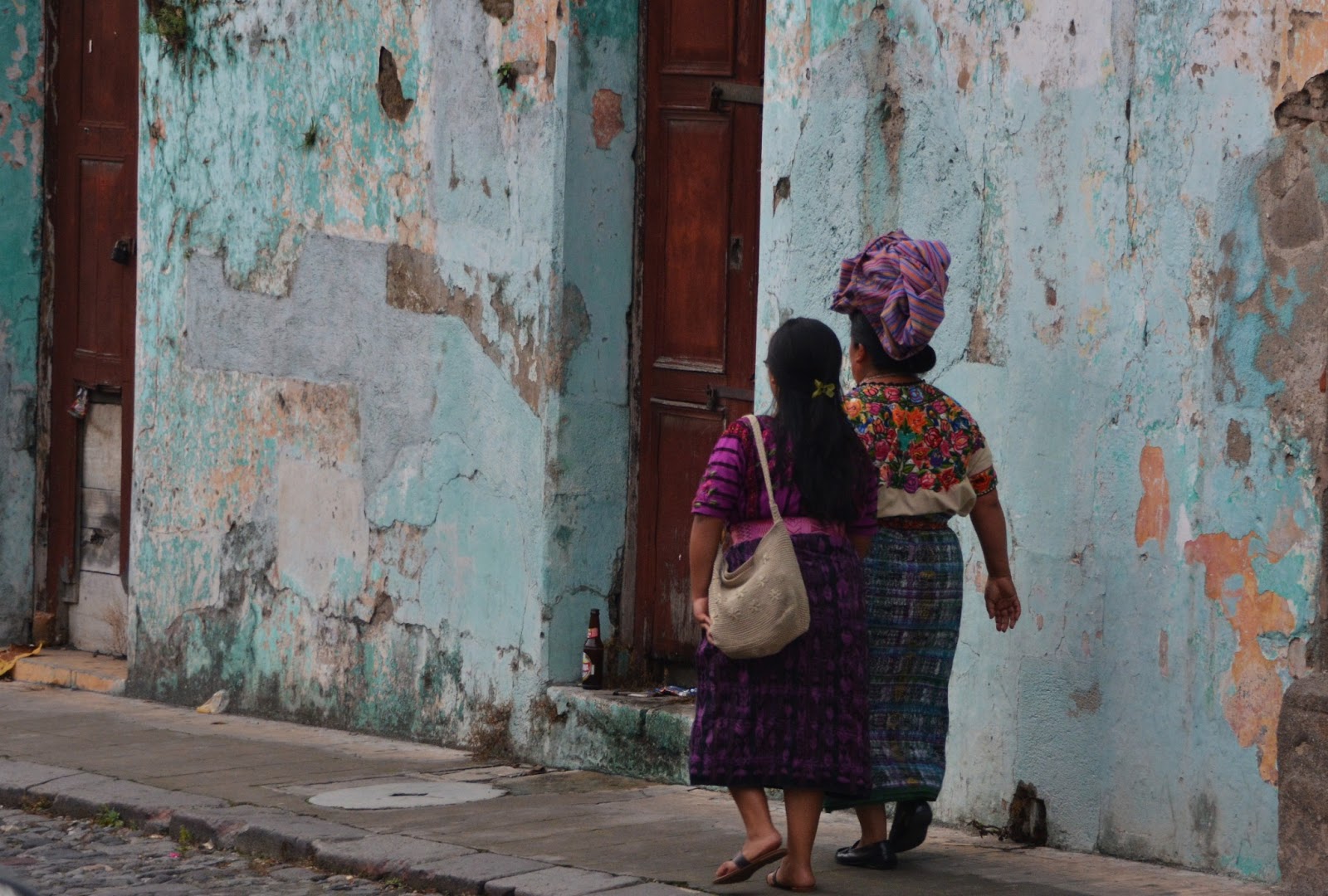
The primary purpose of my trip to Guatemala this past summer was birding, but I am also fascinated by the human condition.  We are a race of peoples full of wonderful cultural identities and language variations. And yet, people are beginning to look the same as our technologies bring us all together. For me, it's getting harder and harder to find those authentic shots out in the field. Mayan people still dress the same but the difference is that they now hold a cell phone next to their traditional wardrobe.......which sharply contrasts the old world with the new. But today's post is really about how much extra work it is to bird in foreign places....especially when you're doing it in a world of constant distraction.


I would leave to find birds in public areas.  People would stare at me strangely, but I am beyond caring anymore.  It is my goal to find birds and other wildlife in this life of mine. Customs are different and yet, the human heart is universal.   People still celebrate childbirth and marriage.  They still mourn death etc.etc.  As I am pulled into the bird world more, the human side of me withdraws a bit.  I still feel compassion.  I still care, but it's difficult to put this transformation into words.  Life is a personal journey that isn't always clear. I've also noticed these same qualities with other wildlife aficionados. We go out of our way to AVOID people while on our bird missions. Thankfully my friend Lynda was there to keep me "present" in the real world.

Yellow-winged Tanager
The distractions of daily life interfered many times with birding.  Keeping an eye on traffic and people was exhausting. Many times I eavesdropped on Spanish conversations around me to keep us safe from harm. And while danger was never an issue, there were people constantly trying to take advantage of the gringos.  It became an irritation negotiating with others.  How much time would we spend on the road going from A to Z?  I began to miss birding in the US again.  It was all so much easier. Or was it?  Then my mind wandered to cold locales like Canada or Alaska.....places that catered to birders.  Perhaps this is a sign that I am indeed getting older.  But I wanted easy access to the birds and animals. However we all know the saying, "No pain; no gain."


It was a constant battle.  "Would I like to buy something?"  No. I'm not heartless, but I've been there and done that. Instead of seeking Spanish and knowledge about the people like I did before; I now searched for something higher......our vanishing wildlife.  I wanted to know more about their conservation efforts.


Photographers and birders need to be aware of their surroundings at all times.  I have chosen this challenge as I try to find as many of these birds as I can, but I will also do my best to be safe. When there is extreme poverty, it's about basic survival. Theft is common in this country if you aren't careful(especially around Guatemala City and Lake Atitlan(certain locations). We had to constantly watch our equipment as we traveled. How can someone think about the future when their daily basic needs aren't met? And it's not just Guatemala.  It's everywhere.


All I need is food, shelter and sleep.  That line repeated itself in my head over and over.  Wasn't I the privileged spoiled one?  Is it not frivolous this "hobby" I do?  I would ask myself that as I was collecting data for Ebird.  But really, I was selfishly finding new life birds and taking snap shots of them. But it's your vacation Chris.  YOU deserve this.  I would struggle with these thoughts throughout the trip.  I wasn't a tourist or a Spanish student anymore.  I was an observer.  One who can comfortably write a blog about his bloated experiences abroad.  But one thing was true.  I had to find birds and not waste my time in Guatemala.  Not many cared nor understood my need to observe and count them.  Again I was thankful to have my friend there to keep me "present".


 Lynda reminded me to take pictures of the people. All of this was new and exciting for her.  I don't know how she put up with me for so long:)  My thoughts wander these days....a lot.  She would ask me many times to repeat what she said.  And I would repeat them to let her know that I was listening.  But sometimes I'd make an observation and just stare at the rain coming down or watch the gentle waves hitting the shoreline. Sometimes the thought was too deep to explain.  It would take forever to share my past experiences of "what was" in Guatemala to "what is now". A lot had changed. So I would sip my coffee and think about how I could poorly verbalize my thoughts.


And color was not lost on me.  The photographer was still fascinated by it all.  We would come to love our meals in Guatemala.  The food was excellent and every dinner a delight. Some nights I couldn't sleep as I had become excited about the birds I could possibly find the next day.


Our morning would begin with coffee and breakfast.  Afterwards, we'd get walking to our destinations. After all, the secret to birding well is exploring every nook and cranny in one area.  Each area, even within a block radius, has different birds. But a puff of exhaust would hit our faces as we hiked over cobblestone and rock roads.  We had to always watch carefully and make sure we wouldn't get hit.  Birds can fly and avoid all the traffic. With people, it's a different story:)

A chicken bus
Mired in human chaos, it was a true challenge to find the birds.  They were there.  I just needed to keep focus from all the distractions around me.

Azure-crowned Hummingbird

At our hostel, a Bird of Paradise attracted this Azure-crowned Hummingbird until a backpacker scared it away.  He would reappear once all the people had left.

Clay-colored Thrush
In Central Park, the Clay-colored Thrushes nested secretly above the trees.  While I observed this new lifebird species, a sketchy man came up to me for money!


The Rock Pigeons blended perfectly into the statues on the building. So did many other birds....

The Guatemalan Flag
I hid on our hostel rooftop to capture Blue-Gray Tanagers consuming peaches.    Then the woman making my breakfast asked me what I wanted to eat and the birds were gone! A necessary distraction:)

Blue-gray Tanagers
Birding abroad was challenging as it was thought provoking.  I liked the challenge.....for awhile.  Then I began to show signs of wear.


But by the end of the trip, we became tired of the mosquitoes and sweat. Finding lifebirds finally took a backseat as I lost myself within a misty pool on our last night. For several hours I swam alone listening to monastery music play in the background.  Monsoon storms lit up the night sky revealing the towering volcanoes off in the distance.  My friend treated me to a night of royalty at a 5 star hotel.  We both were finally able to sleep well:) There were no distractions at all.  No car alarms going off at 3 in the morning. No storms knocking out power to our fans in the steamy rain forest. No bugs.  No worries about anything. But it wasn't cheap.

Black-capped Swallows on a wire in the overcast sky
As I begin to sign off from my Guatemala adventures, I wanted to share several swallows found swooping around people.  Above, we have Black-capped Swallows.


Also among the bunch of birds high above were Northern Rough-winged Swallows.


There are all kinds of birders out there. I had to be on a budget to do this trip, but I also know many birders who can afford the 5 star + treatment while birding.  With my budget, I had many more obstacles and therefore, the life birds were a lot more work.  Here is the conflict for me.  If I had the money, would I choose the 5 star option?  To be honest, I would answer yes because it was much more comfortable.  But there is that other part of me that thinks about how the rest of the world lives.


For now it's not an issue as I still need to stay on budget. I sat alone in the pool that night thinking about all of these things. The bruises on my shoulders from the camera strap were allowed to heal.  My eyes were allowed to rest as the bird search had come to an end. I no longer had to deal with adding to my collection of mosquito bites all over my body. No worries about bed bugs or fleas jumping off of dirty stray dogs and cats. My calloused feet could relax.  And I was able to soak in every single glorious moment without any distractions.  Perfection. 


One last account from my Guatemala travels coming up.......