Showing posts with label Purple Gallinule. Show all posts

Monday, October 7, 2019

The Rains of Migration

A gorgeous view to the entrance of the Chiricahuan Mountains
Birders often gamble while traveling to new places when searching for new species. Sometimes the weather cooperates.  And sometimes it doesn't.

Jeff tries to get that perfect shot of a Blue-throated Mountain-gem
This past weekend I had the fortune of showing Floridian birding friend Jeff the wonders of the magical Chiricahua mountains. He was in search of several really cool Arizona rarities AND a couple resident birds. 

Wilson's Warbler

(Un)fortunately on our planned outing, it rained all day long with the temps in the lower 50's.  These were the coolest temps we've had in a long time!  I was not appropriately dressed and froze my butt off!  BUT, I love the cold.  It makes me happy.  And so did the rain.  However, Jeff wasn't having it. This was his ONE shot for several lifers. 


Jeff searches high and low for the White-eared Hummingbird, a species that like to hang out near riparian streams and oak trees
I know how he felt, but truly it was a magical day out even with the rain. I told him not to lose faith.  We'd find birds even in the rain.  They might not be in best photography light, but they'll be around the mountain. Jeff drove with the windows down so I could hear the bird conversations happening around our vehicle. 

A rare Berryline Hummingbird comes to the feeders

Our first stop was for the Berryline Hummingbird at the Southwestern Research Station. It didn't show first thing in the morning.  And it began to rain.  So I suggested we hunt for the Mexican Chickadees first.  Later on in the morning, we returned to a hungry Berryline Hummer feeding at one of the stations. Hummingbirds get super active during rain events so I knew the bird would be around the feeders. 


The Berryline Hummingbird is a rarity for Arizona but does often show up several times a year during the summer.  However, they don't always stick around like this female did. While at the Southwestern Research Station, I noticed this vehicle and laughed. It made me think about all the birders who don't have an SUV or bigger car to drive on our rugged Arizona roads.  There are some birders who really chance it out there and gamble their lives with their older vehicles. I'll sometimes arrive at a location and wonder how in the world they safely made it with the car they were driving.  I was once that birder not so long ago:)


While on the road, we had amazing views of a Band-tailed Pigeon. These pigeons are secretive and often skittish in Arizona.  This bird analyzed its situation before quickly flying off. 

My favorite sighting of the day was this Band-tailed Pigeon
High on the Chiricahuan mountains, we drove through the clouds.  These massive gray blobs of moisture began to descend all around us.  The conditions began to turn for the worse. 


At one point, I felt like I was in Oregon or Washington state.  Everything was so green and lush. And while we were driving up to Rustler Park, I began hearing Mexican Chickadees.  And lots of them!

Mexican Chickadee

My only photo is the one I took(above) years ago in the same general vicinity.  These chickadees are super difficult to snap photos of!  We tried several times attempting to capture that one awesome shot.  Jeff saw plenty of these chickadees but they didn't want to pose for a pic.  I couldn't believe the numbers this year.  This species has done very well!


Blue-throated Mountain-gem
And of course, another resident, the Blue-throated Mountain-gem was in great numbers.  Jeff was excited to see this gorgeous hummer as well. 


The mountains were full of our regular resident birds as well.  At one point as one of the clouds descended upon our position, it pushed down a huge number of migrating birds into the trees.  We were literally surrounded by dozens of Western Tanagers!


A Purple Gallinule is an expected rarity for Tucson in the newly flowing Santa Cruz River.  Clearly this restoration project is doing its job. 

What had seemed as a lackluster monsoon season in southeastern Arizona this year has turned into an exciting bang to the end of the season.  We have been getting storm after storm now when it should all be winding down.  With these storms, comes lots of vagrants!


It was a special treat to be able to bird with Jeff during that magical rain event.  Setting aside the photography, as I do often now, the act of birding is a thrill. Much of my photography is just for documentation and this blog now. In the true sense of birding, you just have to experience a new bird with your eyes and ears. And we did. I think for every 10 new birds I discover; I may get 7 lifer shots of which 5 are only great.  We spoke about that in the car. On that day, Jeff added 4 lifers to that lifelist and we dipped on one of our targets, the White-eared Hummingbird.  But I wasn't hopeful for that one as they had just left the nesting site. When it began to rain in that particular spot, we didn't see any birds at all except a Hammond's Flycatcher. And that's all part of the game. 


And speaking of games and difficult birds!  Next week we celebrate fall up in Flagstaff as we search for my nemesis, the Dusky Grouse!  Until next time....

Monday, July 9, 2018

The Caroni Wetlands

Little Blue Heron
One of the places I had really been looking forward to exploring was the Caroni Swamp. It's surrounded by wetlands and has a lot of birds not found at Asa Wright. 


Young birders discover a Boat-billed Heron
The Caroni Swamp is known for their endemic and national symbol, the Scarlet Ibis. I was really looking forward to seeing this amazing nightly show. But as I was doing my research, I had been seeing records of American Flamingos showing up in the swamp. Oh my gosh!  Would I finally get to see my first flamingos?!!

Masked Cardinal
As we made our way down into the mangrove area, we stopped and looked at reptiles, crabs and mammals.  In between it all were plenty of birds!  


Birders modeling appropriate swamp gear.  Note the stylish pants tucked into the socks.  This supposedly helps keep chiggers off your body.  It didn't work with me. 
On our way down to Caroni, I went with a group straight out of a birding outfit magazine.  They were all wearing the model gear and I had a laugh. And while writing that last line, I need to mention this info for you all interested in birding Trinidad or Tobago. No camouflage clothing in Trinidad or Tobago!  The guy on the right somehow lucked out.  They made a baby strip down to nothing but diapers in the airport because the kiddo was wearing camouflage.  Apparently this is military apparel and should only be worn by the military.  


Pied Water-Tyrant
Anyhow, for those of you familiar with Trinidad, they used to take people to a hotspot known as the Trincity Sewage Treatment plant.  Well, it's no longer there but there is another spot nearby found here.  There were caiman in the ponds so be careful.  The Pied Water-Tyrant was a friendly bird and reminded me of our Vermilion Flycatchers here in Tucson. 

juvenile Purple Gallinule, note the blue shield
We walked the tropical sludgery.  A storm was coming and I could feel it in the air! My body is a living barometer.  The higher the moisture; the more I sweat and get uncomfortable. Thankfully, I brought my umbrella with me everywhere I went. I had one big backpack.  It had my water container and umbrella. 


I walked carefully with our guide Magis along the muddy road keeping my eyes open for the large reptiles nearby.  


Eventually we boarded our boat and headed down the mangrove highway into the open waters of the swamp.  There we'd spy snakes and a few little Silky Anteaters all rolled up into a ball. 

the Trinidad tree boa is a common snake found resting in tree branches above the waters of the mangrove forests, the latin name is Dormilona(the sleeper) or Corallus ruschenbergerii

As the mangrove opened up to us, I had to make a decision.  My mouth dropped wide open.  To the left, we spied American Flamingos and on the right, it was Scarlet Ibis city. And in between, there were life birds galore.  I didn't know where to begin so I just did my best to document as best as I could.  No where on my trip would I see these birds again as they were hidden well within the boundaries of the preserve. 


Nelson was our group leader who has a lot of family history here at the Caroni Swamp.  His Grandfather proposed to save the wetlands decades ago and was beaten for getting the movement started. People wanted(and continue) to poach this area for food, but the swamp was decimated by locals who had almost destroyed this fragile ecosystem. Sadly, years later, he died from brain injuries. His father continued with the conservation project until his death.  And now, Nelson keeps an eye out and works within this very important wetlands.  Recently, as of last year, American Flamingos had returned to the swamp. When word got out, all 6 of these rare-to-Trinidad flamingos were shot and killed for their special meat.  What meat?! They are not endemic to the islands but they are protected as are the Scarlet Ibis. 

the subtle beauty of a Cocoi Heron
It is now up to Nelson and others to call upon the Trinidad government to monitor these waters from poachers. There are A LOT of poachers in Trinidad. I saw them sporadically during my bird searches.  When a visitor saw this flamingo massacre happen, he filmed it and put it on Facebook.  The government was horrified that people were viewing their country in this light and began patrolling the swamps once again to protect the sanctuary thanks to Nelson's suggestion and pressure from the international community. Recently, Nelson had some equipment stolen from his company.  The government is now helping him out to keep Caroni free of crime. It is really one of the few places to visit in Trinidad that holds a bit of magic for all travelers and locals alike. Today, due to the protections, this bird sanctuary is healing and many species are returning to the area in better numbers. 


And because of this government support and his efforts, over 100 hundred American Flamingos have returned to the swamp.  I had originally thought that the Scarlet Ibis would steal the show but it was the free Flamingo that stole my heart.  Have you ever seen a wild flamingo in flight?


Magis brought a nice cold bottle of rum punch with him and since I was on a boat full of kids, no one really touched the bottle.  I let my guard down and just began to relax and watch the incredible show at sunset!


How many times have I seen flamingos in the zoo and walked past them?  Finding them in the wild was a show stopper and a completely different experience.


juvenile Scarlet Ibis
The Scarlet Ibis, meanwhile, were flying in the thousands to their roosting place adding to the dramatic backdrop. 


The scarlet red colors dotting the vibrant green vegetation reminded me of a Christmas tree. Instead of lights, there were red bows. 


We parked our canoe boat as two flamingos flew over my head.  They were pink batons with wings. 


Some were very light pink while others were a darker rosy pink.  


Then a huge red flush surrounded us as the Scarlet Ibis went to roost one final time.


As we headed back in the dark, I had a nice buzz.  There was one last life bird that we spied on the way back.  I thought I had seen this bird before but I took the pics anyway as he hung out near the nest.  Come to find out I hadn't seen this bird!  So I'm glad I focused a bit.  The confusion?  The more tropical you go, the more names and hyphens are added. 


Black-throated Mango female
 This was clearly one of the mango species.  At the lodge, there is the Black-throated Mango.  And in the swamp, it's the Green-throated Mango.  Ok.  


When I submitted the list to ebird, I discovered an extra lifebird.  So I did the research and discovered that I had confused the Green-throated Mango with the similar sounding Green-breasted Mango we had seen in Costa Rica last year. That was a close one.  I would have kicked myself for missing this bird.  Note to self, relax on the rum punch:)


Green-breasted Mango
The wetlands were a real treat to see.  When I hear the word swamp, it doesn't sound so nice to me, but it really is a beautiful place where you can only find certain species of birds.  It was an easy trek on a boat and an enjoyable experience.  


As we left the shallow waters, I glanced one last time upon these little islands to memorize the landscape.  This will most likely be the last time I ever visit this place in my lifetime.  I hope it stays protected and beautiful forever. For my reports, click on the "here" button for more pictures of birds not mentioned in this post. 
For the new sewage treatment coordinates, click here.
For Caroni Swamp, click here.
In next week's report, we'll explore some of the superstars of the Trinidad birding world.  

Tuesday, July 18, 2017

Costa Rica: The Urban Birding Report

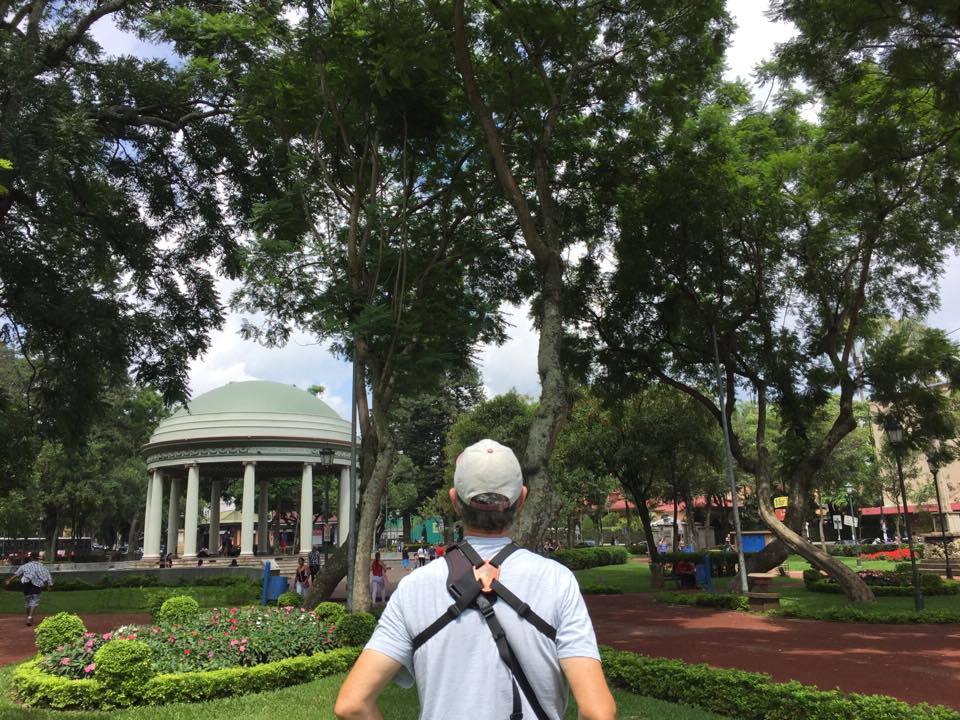
Parque Nacional
Every year, I like to take a walk on the wild side and do some urban birding at the places we stay.  I usually add a couple lifers from the long walks, but that's not the main purpose of this type of birding.  It's just a "fun" exercise into the world of local birding.  What do the people living in these urban places see?  So today, I'll take you to THREE places we visited. We'll visit Parque Nacional in downtown San Jose, Parque Metropolitano La Sabana just outside of the downtown, and CATIE near Cartago.


First off.  For those of you following our travel plans.  We left Monteverde by public bus.  There were two times that this bus left Monteverde.  There was a direct bus to San Jose at 7:30 and 2:30 PM. We noticed that the bus was FULL.  So buy your tickets early.  When you travel, you always go during the light of day as it's much safer. Plus you get more birding time for that day.  


Several hours later, we arrived in San Jose at our hotel.  It was very nice and near many of San Jose's museums and restaurants. At this point, Micheal wasn't having anymore birding for the day.  It's hard to switch off the birding button when there are so many lifers to be discovered. For non-birders, they want to kill the birders for their non-stop chatter of birds.


Crimson-fronted Parakeets were common everywhere in and around San Jose
And at this point, I think the true birder, Gordon wanted to strangle me.  I'm kind of a spontaneous birder who likes to sing the song "Qué será, qué será! Whatever will be, will be!"  I tend to meander sometimes and he is super target focused:) We push each other to do better and that's teamwork. But I kinda got a day to play and research. And be a gyspy. 


Always seen in pairs feeding or just....cuddling
We did add the very common Crimson-fronted Parakeets to our lists.  I love parrots and parakeets so it was pretty exciting.  As for the safety at the Parque Nacional?  It was safe during the day, but according to the locals, not so safe at night.  Watch your things at all times.  While we were there, I spotted a group of guys watching people.  Fortunately for us, there were lots of school kids, families, tourists and locals enjoying the park. 


Blue-gray Tanagers were common almost everywhere we went
Then we passed the train station on the way back to our hotel and said, "Hey, let's take a look."  I saw this schedule and got excited.  We could take a train to Cartago for cheap!  Why not??!!  I asked the workers in the train station if that schedule was legit and their shook their heads yes.  


LOL!!!  The next day we were on our way to Cartago to meet up with friend and birder, Serge Arias.  This train was CRAZY!  It was open, as in NO doors, and very rocky.  At times, I thought the train would fall apart.  Our taxi driver was shocked that we even took that train.  "That's not safe! Cars hit that train all the time"  LOL!  Again, we traveled by day and were surrounded by nice people. So that's always a good thing. And it took us to the very beautiful city of Cartago for a little more than the US $1.50!  You can't beat that price!


Ahhh, look at Gordon's face.  This is classic.  And Micheal!  They're enjoying the torture:)  Serge Arias met up with us and we had a blast.  I'll focus more on Serge and his guides in the next two posts.  Right now, we're going to explore a really cool location just outside of Cartago to expand on this idea of urban birding. 


University of Costa Rica-Cartago division
Universities are great places to explore.  Granted, in Costa Rica, there were always guards at the entrances.  Normally you need a student pass, but I've discovered several ways I can weasel my way onto most campuses. I'm also an educator so I'm part of the academic world. Not that it matters, but it's the unknown benefits of teaching that can help open doors:) Plus, we're adding data to ebird.  So how is that not citizen science at work for the academic world?:)  During our treks to San Jose and Cartago, we'd explore two campuses.  For the San Jose campus, I spoke with the guard in Spanish and he was really kind to let us enter through the gates.  And for the Cartago entrance, Serge was able to get us into the area without any problems.  Although he warned us that we might be turned away.  Oh yeah....:)


Boat-billed Heron
We had almost given up hope that we'd ever see a Boat-billed Heron after dipping on the bird at Playa Tamarindo.  But Serge knew that there were several around this lagoon/lake.  And there were!!

Northern Jacana
Safety factor?  Safe.  Well, except for the caiman in the area.  We always had to watch out for them while birding the perimeter of the lake. 

Purple Gallinule
It rained and rained......

Cattle Egret
.......but the birds were really cool.  


After our day with Serge, we returned to San Jose via a local bus. During my research, I was shocked to discover Yellow-naped Parrots at a local park.  Now had I known what I know now, we wouldn't have gone because we added this bird later in Liberia.  But this story is worth telling.....


I think we walked 20 some miles on this day.  The Yellow-naped Parrot is endangered in several areas of Central America due to poaching.  The bird can mimic sounds and is very popular with people. So we headed to this park, La Sabana.  I'm ALWAYS careful with my camera.  I put it in a backpack away from the public eye and I ONLY take it out once we are at our location and in a "safe" area. 


Parque Metropolitano La Sabana is not for the faint of heart.  It may be an ebird hotspot but it's not a safe one
I've tried several times for this bird during my various treks into Central America and have dipped.  And this bird is the reason why we went.  We arrived at the park and I was already getting a sketchy vibe, but I saw joggers and elderly people walking.  THAT'S always a good sign.  But the park was unevenly safe.  People had warned us that there were areas where men would disappear into the bamboo groves with other men. oh oh.  But that didn't bother me.  Bamboo doesn't scare me, but here's what did.  

Variegated Squirrel
No.  No.  It wasn't this Variegated Squirrel above either.  We had located the Yellow-naped Parrots, or at least one of them.  I took out my camera and put it together to snap photos.  The area was clear and there was a kind woman walking on the track.  Safe.  Right?  WRONG.  She warned Micheal that I needed to hide my camera because of two boys in the distance.  She pointed in their direction.  I kept my eyes out for them.  But the birds distracted and before I knew it, they were closer. 

Yellow-naped Parrot seen at a restaurant stop heading towards Monteverde.  This was a captive bird. 
At one point, the young sketchy man told his friend in Spanish to stop riding his bike because he saw that I had a camera. Little did he know that I knew Spanish. What did we do? Before any of this had happened, I made a gamble. I had located the patrolling police with my eyes and also kept my eyes open as to where the runners were in case the teenagers got close.  And as predicted they got CLOSE!  I stopped and looked at the biker letting him know I knew he was eyeing up my camera. I should have taken a pic with my Iphone:) Wait?!!  Just how many thousands of dollars do birders carry on their bodies? We're like walking banks!  Then I signaled for the police at the other end of the lake.  They came.  As they did, we moved quickly to where the crowds were. Poor Micheal was wearing flip flops. It was serious at the time. I disassembled my camera and packed it back up.  The young men were trapped by the police and we left the area. We got our bird but I would not recommend gambling like this.  If the police hadn't come when they did, I might have been without a camera. Or worse! This isn't my first time at the rodeo though.  Again language is super useful here. I would not have played this game in any new culture that I was unfamiliar with.  In short, I won't forget our first experience finding the Yellow-naped Parrot anytime soon. 


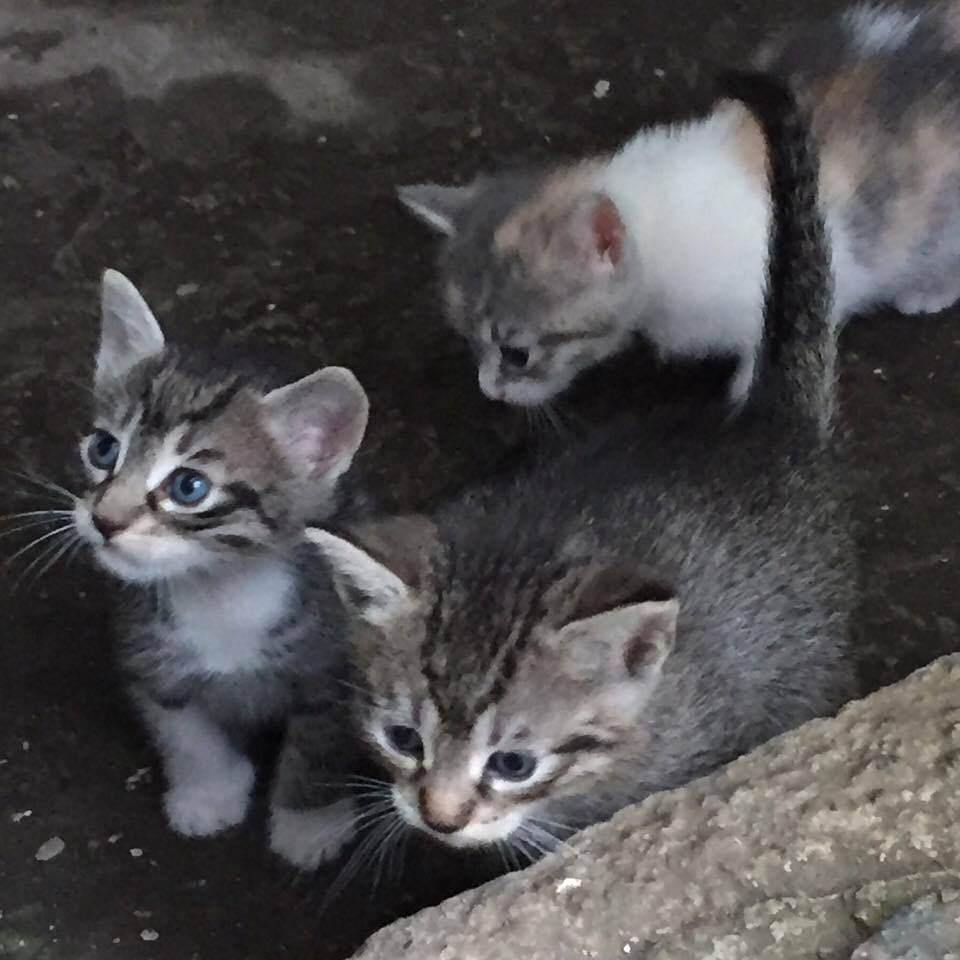
When we returned back to our hotel, we were greeted by these little kittens.  I wanted to be a hoarder so badly and take them all home with me.  So, for this Parque Metropolitano La Sabana, I would, based on our experience, not recommend for birding unless it's on the weekend when there are lots of families grilling out.  People do bird there and it is a hotspot on Ebird but unless you're with a group of people, I would not recommend visiting alone.  


Urban birding is an adventure.  The number one danger factor in birding comes from...(drum roll)...other people.  Grizzly bears and Jaguars and Tigers got nothing on the evil world of humanity.  Every place has its challenges.  In Arizona, it's the lack of water and extreme heat. Anyhow, here are the reports from our urban trekking.....
For San Jose, Parque Nacional, click here.  Safety factor.  Safe during the day.  Be careful at night. Go with others. 
For the University of Cartago, click here. SAFE! But keep your eyes open for Caiman. 
For the Parque Metropolitano La Sabana, click here. I do not recommend this park unless you visit on the weekend and with a larger group of people. 
For the University of Costa Rica, click here. Safe!  Try to go when the garden is open because there are some great birds hiding in that area.  There is also a river that runs through the campus.  Very nice place to bird.