Showing posts with label Eurasian-collared Dove. Show all posts

Monday, February 23, 2015

To the Heart of the Matter

Lovebirds galore at Encanto Park!

Twiddling my thumbs until the next great journey arrives, I joined AZFO and Magill Weber this past Saturday to find the exotic Rosy-faced Lovebirds up in Phoenix.  Their expansion continues across this great metropolitan area.  Our task?  To find as many of these lovebirds as we could.  

Guardian Rosy-faced Lovebirds
I've been finding that I need to "spice" up my birding life a bit by doing different types of birding.  This lovebird quest was right up my alley!

a new ebird hotspot!  Margaret T. Hance Park!
Over the past 30 years, these lovebirds seem to have taken over the Phoenix metro by storm.  Their numbers have been increasing and today, these African migrants are now considered an established resident within the greater Phoenix area.  We do not have them in Tucson....or at least not yet. Back in 1987, the Rosy-faced Lovebird was first reported breeding in the East Valley near the Apache Junction and Mesa city border. Today, these colorful little birds can be counted on the ABA list.....but ONLY in Maricopa county.

Fledgling Rosy-faced Lovebird.  One of possibly 4 in this nest!
So I had an absolute blast hanging out with Magill as we explored all the urban parks within our count area.  It wasn't too hot as we visited places like Encanto and Steele Indian School Parks.  We even created a new Ebird Hotspot!!!  We're proud to welcome Margaret T. Hance Park to the Ebird map. If you live in Arizona, it's right next door to the Phoenix Japanese Tea Garden above the freeway tunnel. 


Blood=heart=love=lovebirds
We went to each of the parks covering many of the palm trees looking for nesting birds.  Often times, lovebirds will fly as a flock into the various desert trees near water sites.  All of the parks we visited had plenty of urban water and grass.  And homeless people.  Skater people. Blood drive people.  People selling their religion. Balloon releasing birthday people. Needle using people. And I could go on and on.  Arizona city parks.  Definitely not the same type of park I remember from my childhood in Wisconsin:)

Magill narrowly escapes an urban water disaster! We had to get a closer view of possible nesting lovebirds around this tricky gate.
But we were a team and stood together in some of the sketchiest areas as we counted oh SO MANY lovebirds!  Our final tally was around 113 lovebirds within our count area.  There were lots more we didn't see. 


I think one of the biggest things, for me anyway, is having a sense of humor.  It's important to laugh and have a good time between the bird observations.  I've been with some birders in the past who don't have a sense of humor. OR!  Have completely lost their sense of wonder.  Part of this lovebird count was to get into the "nitty gritty" places often overlooked by so many people.

We discover a forest in the middle of our area
Magill is great and I really wish she lived closer so we could bird more often together.  Both of our spouses would probably kill us because we are addicts to the birds. Fix up the house or go find the bird?  Hmmmmm, easy! Let's go find the birds! Every time we explore a new location, we learn something different. Each offers the birder a new experience.  Every experience is like a new episode from our favorite TV show each week.

Eurasian-collared Dove
So yeah.  There are those common birds that LOVE to hang out at the parks as well, but they're still cool to me.

Great-tailed Grackle
Each one beautiful in their own unique way.  

Ring-necked Duck
So what's a birder to do?  I had to count them all! 

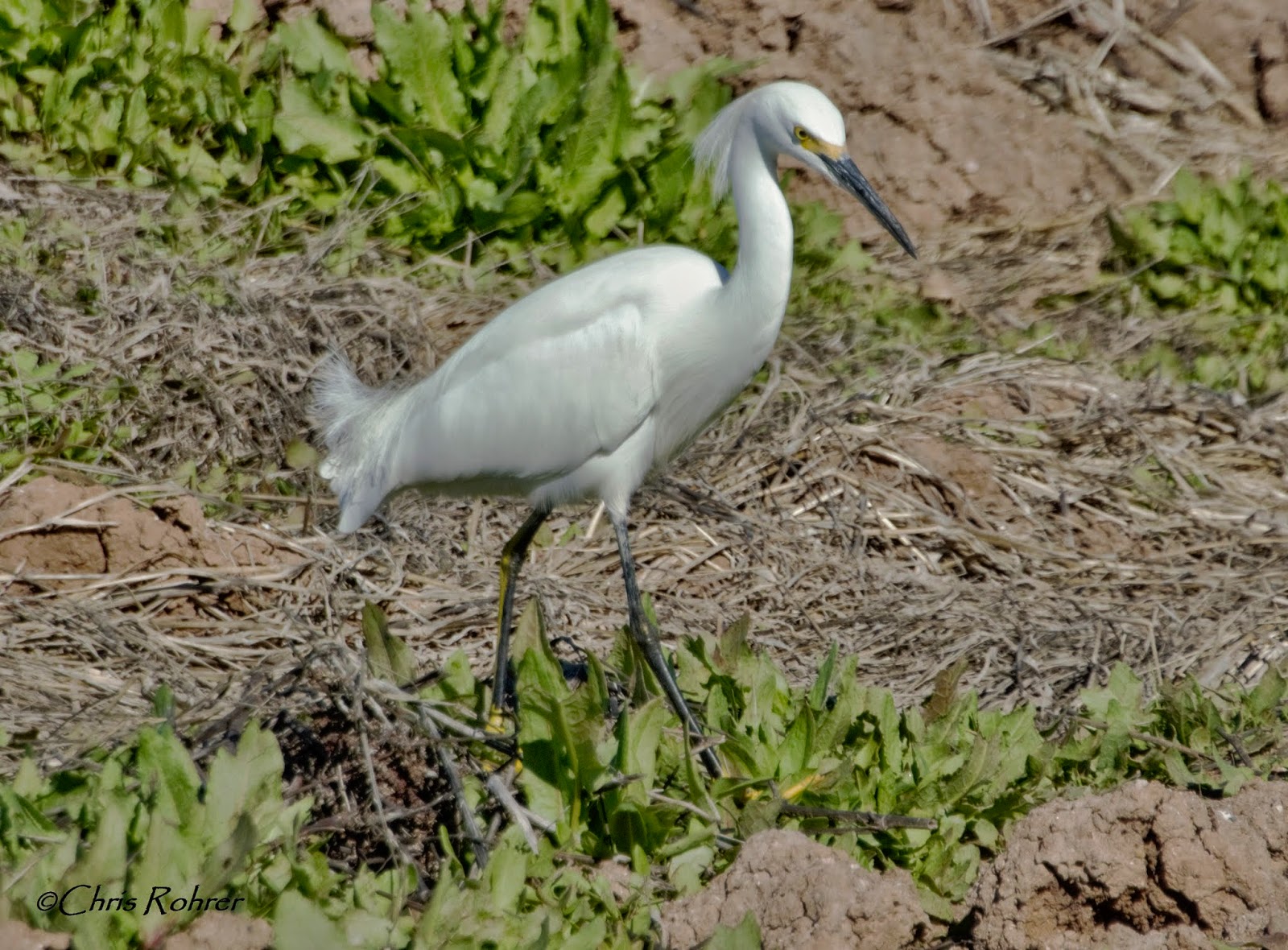
Snowy Egret
And while the lovebirds are not native to Arizona, they are welcomed by many of the locals for their color and personality. The "cute" factor wins people over right away. 


Note the yellow mutation of the Rosy-faced Lovebird to the right.  We found only one of these birds in our count. It's called a "Lutino".  Fascinating!
So take a look at the common birds found around the same areas as the Rosy-faced Lovebirds.  Several are exotics as well which include the Rock Pigeons, Eurasian-collared Doves and European Starlings.  One can see why the lovebirds stand out among the brown and black birds. 

Luna is wondering why there are holiday decorations to go with Valentine's dinner
And since we're speaking of love, blood, lovebirds, etc, I thought I'd include this pic of my version of Valentine's dinner.  I hate all Hallmark holidays but I'm still expected to celebrate them or get in big trouble.  So I made a holiday dinner in protest of these blasted human made events.  I had holiday music in the background with all the decorations to boot!  Dinner was delish and I made it through another one of these silly days.  Of course our cat Luna was a bit confused:)


Finally, I'd like to do a brief public service announcement.  While we were out on this day, I photographed 3 of the 4 things that kill birds out in the wild.  1.  Feral cats.  I love them.  But I love my birds as well.  They are the number one killer of all birds.  2. Sending balloons into the heavens.  The Almighty doesn't want them and will send them back down to us causing large amounts of trash around our cities. In some places, it's illegal to release balloons. 3. Power lines.  Lots of birds are electrified by touching two wires(think big birds with big wingspans!). There isn't much we can do about this one other than notify city officials if hawks, etc continue getting fried.  They can usually do some preventative work regarding this issue and just need to be notified. And 4.  Fishing line. Usually, if I can reach it and pull it off a tree branch, etc, I will.  Water birds can really get tangled up in that mess!  


Well that's my report for this week. Stay tuned for more as we journey with several of our favorite birder friends to new and old places alike.  Sometimes I feel like Mr. Rogers:)  I even wear the same dang vest!  Until next time friends!

Monday, December 15, 2014

The Tucson CBC-Winterhaven and the Rillito Wash

Each year, Tucson Audubon has their annual CBC(Christmas Bird Count). And each year, I participate.  However this year something changed.  I became a group leader for the first time.  And so our team had a mission to find common and rare birds in Area 23 or as we like to call it.....Winterhaven.
  
From my photo series called, "Holiday Rush" back in 2011.  The blur represents this crazy time of year and also how fast this CBC went this year!
Winterhaven is a wonderful urban forest full of old trees and landscape. It's also a place Tucsonans visit to get into their holiday spirit!


Some of the largest Aleppo Pines can be found in this neighborhood.  Nesting hawks, owls, and ravens use these trees to nest. 
To make the task less daunting, I was joined by friend Gordon Karre and Jan Wilson.  It was a crazy weekend full of scouting for the "big day". While none of us expected life birds, we did find lots of wonderful birds just a couple miles away from my house. 


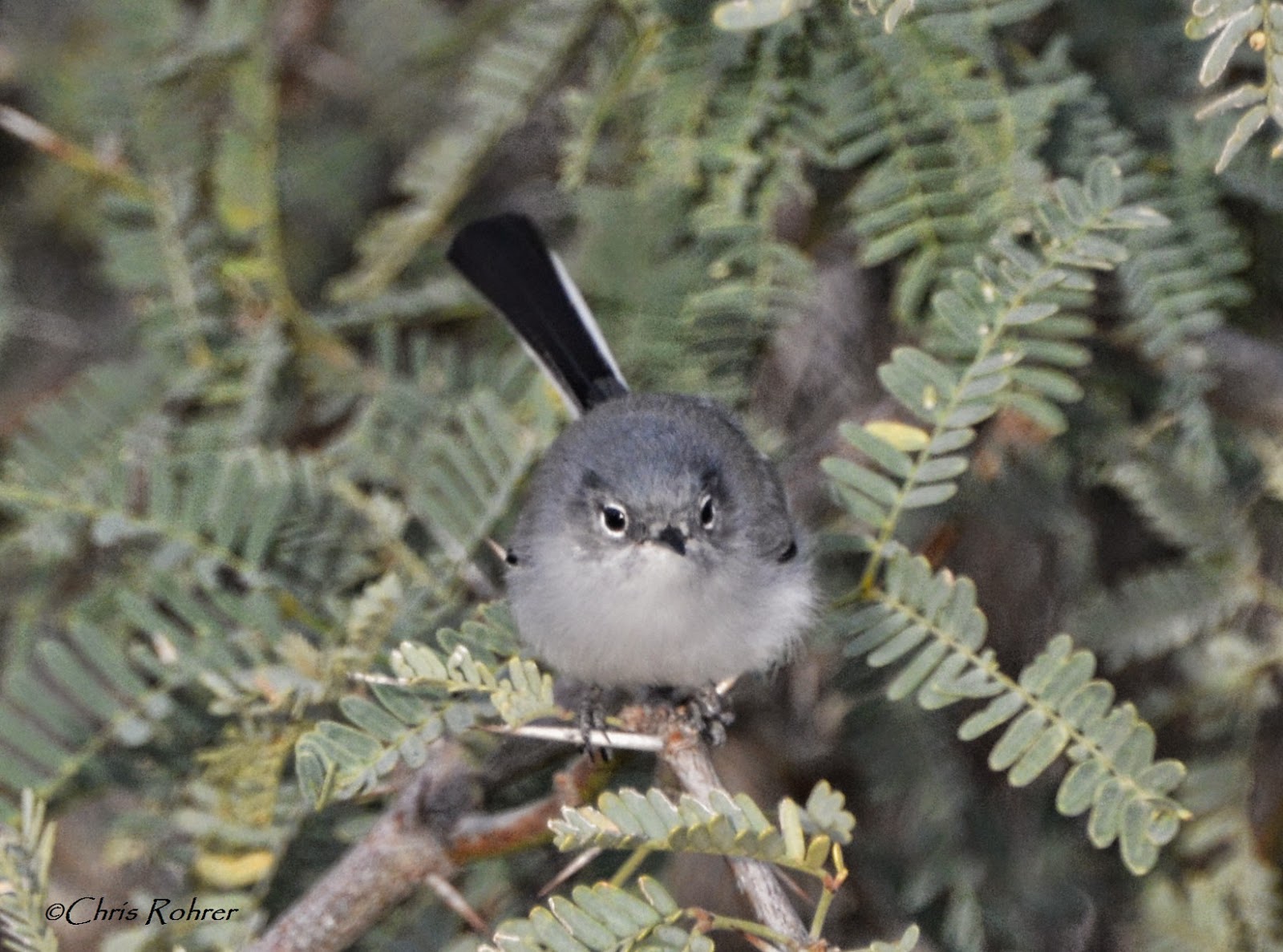
Black-tailed Gnatcatcher
On Friday, I went with Jan to scout several parks within our area.  Our mission was to cut some time on Sunday and find the reported Bronzed Cowbirds, a roving Cassin's Kingbird, several Great Horned Owls and a family of Harris's Hawks.  Together, with the help from the local neighborhood, we were able to pinpoint known locations of their infamous feathered and VOCAL residents. Some of the people actually replicated their calls!  Not bad at all! I asked them questions about what kinds of things they saw.  One lady described a group of hawks hanging out together in a group.  Then I asked her, "Were they brown?  Did they have yellow legs?" And she invited us to come into her backyard to have a look. Our hunch was correct.  Harris's Hawks.


Harris's Hawk
On Sunday, we were able to find all of them.  It was early to rise for the Great Horned Owl! And it was our first bird for the day as a team!  We also had a Red-breasted Nuthatch in the neighborhood on Friday.  But come Sunday, we weren't able to locate the bird again.  Instead, we found a White-breasted Nuthatch!


A Redhead!  And yet our Tucson CBC circle dipped on two of these birds!  Had I known, we could have poached another group's area to add them to our list!  These were seen on Saturday night!  But  midnight Sunday is when the count officially begins.  
Saturday, Gordon drove down from Phoenix. Here in Tucson it rained all morning! We tried to find the reported Baltimore Oriole and ended up looking at the fantastic waterfowl around the Sweetwater Wetlands and Reid Park.  After a cold and fun day out in the field, we had a nice dinner at a local Thai restaurant. 


Canvasbacks
Then Sunday came.  Being titled "Area Leader" is bit scary.  It's a big responsibility that required me to pull up the map and really focus on areas with the most birds that were inside our area. Time is a major constraint on these counts. We also worked on some hunches.  Some worked out; some didn't.   I know Area 23 well as I drive it everyday to work.  But it's still a bit overwhelming to lead and guide a team.  I didn't want to fail in the eyes of the Master Planner, Mr. Rich Hoyer.  For two years, he took the time and showed me how a birder must scout for birds in both known and unknown locations.  He KNOWS the routes and areas of his CBC circle well. Not all CBC count leaders are like this. Afterwards, we had a wonderful potluck. Rich made a delicious chili. Everyone eagerly listened to those rare bird reports from around town.  And there were quite a few! 


A Red-tailed Hawk watches us
As I sat with these birders, I thought about how amazing they were. I may not know many of them in person, but I read their reports daily.  There were so many stories, secret birding spots and bird behaviors shared during this dinner.  I went home wanting to know more.  Do more! As birders, we learn crazy things from each other.  We are our best teachers.  


Pied-billed Grebe
A personal goal for me on this count was to explore one of the last wild stands of cholla(pronounced ch-oh-ya) in the neighborhood.  Our Cactus Wren population within the city is disappearing.  Their populations are either declining or stable(depending on which end of the city you're on) due to habitat loss from housing developments.  Many homeowners don't want this plant around their property. 


Cactus Wren
I notice that wherever there isn't cholla cactus, Cactus Wrens are either not present or there are very few. I have them nesting at my work site in Oro Valley within a healthy preserved section of Sonoran desert.  There these birds nest every year in several chollas. Curve-billed Thrashers will also use this very important cactus for nesting. 


A Curve-billed Thrasher nests in a most protective Teddy Bear Cholla
Humans, however, hate this "jumping cactus" as it can be quite painful on the skin. It will hook onto anything that passes by and if that happens, you won't forget the sensation. That is how it spreads:) We had good news on our count that day as we found 3 Cactus Wrens!  That was my highlight from our trek around Area 23 for the day. 


My favorite pic from the day!  Gordon is TALL and so are these Cholla Cactus!  What a trooper! No Cactus Wrens were seen in this area.  There was some nesting evidence in a couple.  As Gordon went deeper into the patch, he didn't notice much in the way of old nest material but he did find plenty of Mourning Doves hiding!
Overall we found 43 species for the day which is higher than past CBC reports from our area.  We added 6 new species to the list! Love was in the air as we observed Red-tailed Hawks "in the mood" and a Costa's Hummingbird showing off for his lady friend. He danced high above us with his high pitched whir.  


Female Costa's Hummingbird
We discovered all birds on our lists from Friday and Sunday minus the Brewer's Blackbirds, Townsend's Warbler,  Rufous-winged Sparrows and Hutton's Vireo.  The top birds from our area that were "must finds" for the count were the American Pipits, Bronzed Cowbirds, and Vermilion Flycatchers. All achieved!


Bronzed Cowbird
Our first team bird wasn't the dreaded Rock Pigeon but the Great Horned Owl!  Our last bird for the day was a beautiful Red-naped Sapsucker. 


Eurasian-collared Dove
The most common birds were easily the Lesser Goldfinches(181 birds), House Finches(359 birds), and Mourning Doves(318). Overall we had a wonderful weekend outdoors!


Target birding is back on for the next two weeks and should be interesting.  How interesting? You'll have to stay tuned for more!  As one year of goals finishes up, a new one will begin and it will take me to far away places:) Opportunities, like this CBC, give me a better insight about what's going on locally with our birds.  When we take this sliver of data and add it to what's happening globally, all of us involved begin to see the bigger picture.  To get involved in the US with the Christmas Bird Count, contact your local Audubon and find out when they have their CBC.  They need volunteers who can hike or just sit in their house and count birds at their feeders. It's really a great experience!  More next week....