Showing posts with label Black-tailed Gnatcatcher. Show all posts

Monday, March 23, 2020

The Planet Covid 19

Painted Lady
During this first true week of the pandemic in Arizona, I have seen great acts of kindness balanced with great acts of rudeness.  I have seen things written and said that are hateful on both sides. A divided nation.  Angry millennials telling the boomers that they deserve what they get and that essentially this disease is the "boomer remover". Here's the thing. Whether I agree or not with this older generation, I still love many of them. My parents are boomers.  Some of my best friends are boomers.  If anything happened to them, I'd be sad.  If anything happened to anyone close to me, I'd be sad. We are a divided nation with divided generations and a virus that doesn't care who you are. It's a scary time.  I look back at my life and just scratch my head.  So much has happened, but never have I had this experience! Home is my headquarters. Kinda....:)

Anna's Hummingbird
I have drawn deeper into myself this past week calling upon nature to heal.  And so have many other people; sometimes dangerously too close to one another.  Everyone says get out in nature, but people think, at least here, that if they are in nature and in close proximity that they won't be affected. Wrong!  As a birder, I know secret spaces where I can have a whole canyon to myself or a patch of grassland free of humanity.  It's really not as easy as you think.  Now that children have no school, they are off the leashes and some parents are letting them scare off the wildlife!

Common Black Hawk
The Tubac Hawk Watch was called off several days ago because many birders were congregating there to watch the amazing hawk show.  I did well and socially distanced myself from the crowds.  But some birders were jokingly doing high fives with their elbows and then hugged.  It's very human and beautiful.  And we forget.  "Certainly, he or she doesn't have the Covid(Corvid to birders) 19 virus.", we think. And let's face it.  Much of the birding crowd is over 60.  One infected person and BOOM! Gone. Wiped out. I'd hate to see that happen.  The hawk watch was shutdown by the town of Tubac.  Now secretly,in fear of fines or arrest, we walk the trails and look up at the skies in solitude pretending we're not looking for hawks in the sky above Tubac:) Hide the binos!


I've been personally connecting with spaces.  And friends in town.  This past weekend, we hiked 2 miles into the quiet Willow Canyon of the super crazy and busy Mt. Lemmon.  The snow on the road kept vehicles from driving into the canyon and that was a clue for us to explore.  We had snow and a beautiful running stream without human people screaming and shouting around us.  Perfection.  

female Cassin's Finch
Along the riparian corridors, clouds pose as jellyfish in the sky. 


A Common Black Hawk flies above our heads and we smile.  Migration is inspiration.  


The moon is a wonder in the daylight. 


Spring flowers bloom in the thousands.  The Anna's Hummingbird comes to feed in his territory. 


I look across the pond of a local preserve and observe Great Egrets hunting for fish.  Desert Bluebells and California Poppies begin their dazzling shows here. 


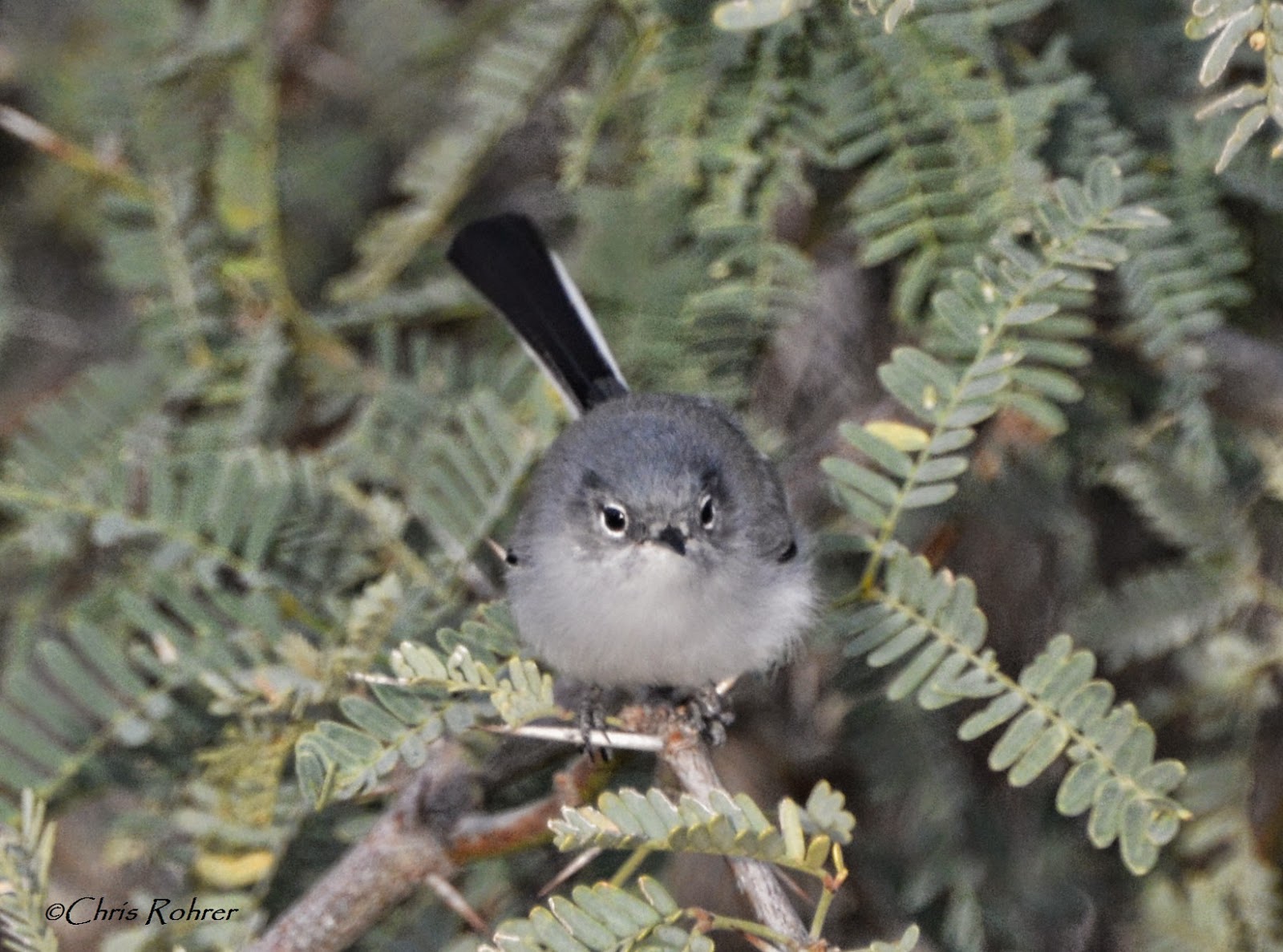
A Black-tailed Gnatcatcher dances around several wildflowers and gleans insects from the foliage. 


I go during the off times at a popular wetlands in Tucson and quietly observe everything around me.  The warblers are back!


Birds carry on as a serious pandemic takes hold in many countries. 

Common Gallinule
I scan the reeds and notice that one of the reeds is looking back at me. 

American Bittern
I drive out to a far away place for a rare bird.  I drive through miles and miles of wildflowers blanketing the Sonoran desert. It's the quiet that I need now. I need time to think. We are in the eye of a storm.  The crazy is about to begin and virus takes hold of the West.  Tonight, Pima County had its first Coronavirus death. 


I've seen people pay it forward.  We've witnessed someone giving the last loaf of bread to an elderly man who cried.  Someone at our produce market paid for 50 people to get food to their families. I almost had a tear in my eye until I saw an old granny vaping and blowing the vape in our directions.  Everyone around her was like, "What the hell lady?"  Social distancing was not happening.  


Northern Beardless Tyrannulet
And hey! I'm okay with ordering food every night to help support local restaurants.  That might be the worst silver lining ever:)  

Lucy's Warbler
Have hope.  Be safe.  Be smart.  And be kind to each other. Below is a video that made me laugh.  But warning....there is language. Until next time.....


Wednesday, May 10, 2017

Seek And You Shall Find


Brian searches for the distant Common Crane
Talk about a spontaneous and fun weekend!!  A Common Crane (rare to the US) was spotted at Mormon Lake near Flagstaff, AZ.  Every birder,both in and out of the state, came to view this rare Eurasian migrant.  A scope was needed to spot this bird.

A little help with a scope.
Now, I've seen this bird twice.  Once in Europe and the other time in Roswell, New Mexico.  But I needed it for a state bird.  Anytime a new bird arrives into Arizona (and I don't have it on my state list), I go chase it.
.

Common Crane
It's a pretty amazing crane as far as cranes go.  Once we spotted the bird, we had to make a decision.  Bird Flagstaff or bird Oak Creek Canyon. 

West Fork Campground at Oak Creek Canyon/Haddie, the dog, takes Magill for a walk
We made a great decision and decided to explore the incredibly beautiful Oak Creek Canyon near Sedona.  This place was FULL of our Western Warblers!


Red-winged Blackbird
Along the way we counted birds in the often chilly and shaded canyon.


In fact, this week has been an amazing one in that the weather has been COLD!  We had rain and overcast skies allowing us to enjoy our birding treks.  It has been unbearably hot this spring with one May day reaching 106 degrees!  Way too early for those temps. 

Jon heads near an area searching for rarities

During the week, I noticed something happening everywhere.  Warbler fallout.  It was a visible sign that a storm was soon arriving to our state. And it was moving from the Gulf of Mexico!  So we kept our eyes out for eastern rarities and migrants......

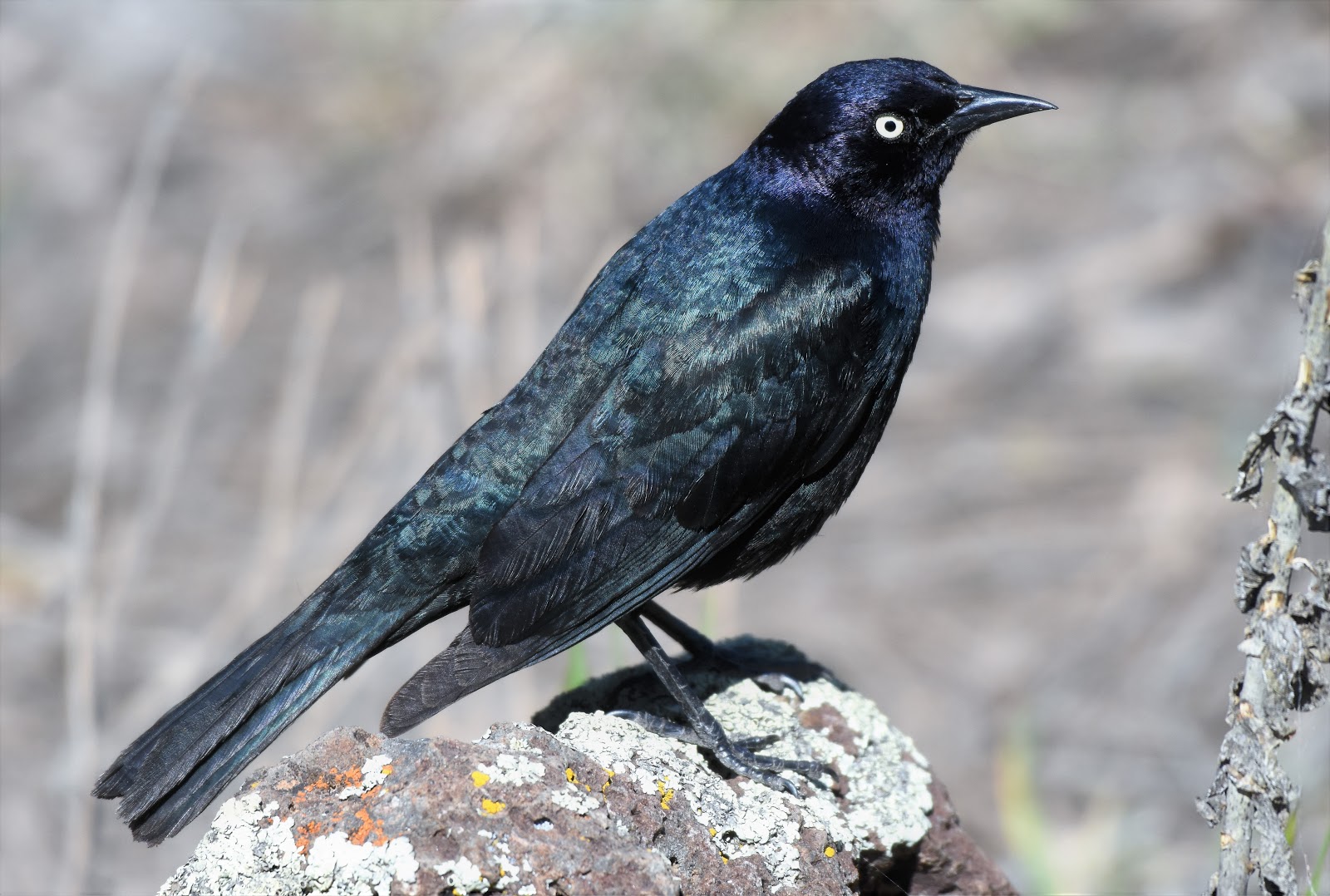
The brilliant colors of a Brewer's Blackbird in full sun
Back in the desert, little birds were beginning to leave their nests. 

Juvenile Black-tailed Gnatcatcher

It's easy to fall in love with the little fledglings as they learn how to become adult birds.  BUT, I have to be aware of the dangers around me.

Western Diamondback Rattlesnake
I nearly messed myself when I saw this rattlesnake.  I like reptiles but snakes make my skin crawl.  Why was this snake hiding?


It was eyeing up these young Round-tailed Ground Squirrels nearby.  Meanwhile, the warblers began to grab my attention.  They were EVERYWHERE!  Every bush and every tree were full of them.  Normally they are difficult to spot but not this week!

Wilson's Warbler
Then it happened.  The second state bird arrived the following day after our Common Crane spot.  It was the rare and beautiful Blackpoll Warbler. 

Blackpoll Warbler
I stood for a couple hours trying to get these pictures of this very rare migrant.  This male is heading up to Alaska to breed but for some reason, he chose Tucson's Sweetwater Wetlands for a stop.


He stayed for several days and made several birders very happy.


After observing this bird for quite awhile, I packed up my gear and felt really happy. In fact I glowed for the next several days afterwards.  It's almost impossible to get two new state birds in one weekend anymore.  So it was a very satisfying weekend:)


Life is amazing.  And it's only getting better.  Until next time.....


Saturday, March 19, 2016

Birding Ethics

The singing Black-tailed Gnatcatcher
How far would you go to get "that" shot?  Apparently for some, they'll do anything including endangering a bird's life to get that branch-free, close-up picture of their subject.  When birding in large groups (or around others), you can pick out the various degrees of birder or photographer.


The Gilded Flicker at sunset
As most of us already know, birds, in general, are tricky to capture on camera.  So finding them posing perfectly out in the open can be a wonderful opportunity. Take for example this Gilded Flicker.  At Saguaro National Park, it tends to be skittish.  When I do find the birds here, they cling closely to the Ocotillo like in the pic above.  Sometimes, they can be very accommodating like the one we found in Scottsdale below. The bird just flew in and sat on the wall staring back at us. 


Naturally we chase birds.  Sometimes playback is used a couple times.  Sometimes we pish and hope for the best. On this evening, I pished and had a curious Black-throated Sparrow come and visit me. 


Black-throated Sparrow
So here's where my story begins.  Another birder was searching for the very tricky Long-eared Owl in Arizona. To cut the time and make use of our bird schedule, we had to join this walk. I was with a lister(a person who tries to add as many species of birds as they can onto a list.  In this case, his Arizona list.) I knew of several Long-eared Owls that were being seen in a location that required a bird walk. The only drawback?  Crowds of birders! 

Female Northern Shoveler
PS.  Arizona is amazing.  If you've never been here, you've got to come and bird.  You're going to love it!  Anyhow, everyone came to the Audubon lead Arivaca-Cienaga Boardwalk on a Saturday morning to see the Long-eared Owl.  As I had anticipated, there were nearly 30 people from all over the country on this trek.  All hoping to find the owl(s).  An internal groan happened on both our parts as large groups are not our thing. But sometimes you have to do them.  However, I will say that the group was a great bunch. Sometimes they can be very talkative!  If you're talking, you're not listening or watching for the birds:)

Snowbirds enjoy the varied landscapes of Arizona
I came once before to find these owls. This time, I wanted to see if I had looked in the right area.  And I had! So that little information made me happy and confirmed my investigative powers are increasing! BUT these owls are super tricky to find because they camouflage so well into the hackberry trees/bushes along the trail.  Because we were on a tight schedule, we couldn't stay for the entire walk and had to leave early.  This is something I should have told our guide before we got on the trails.  

This is the owl that everyone got to see during our walk.  Lots of branches!  But they aren't always inside the branches. 
The word "owl" makes people go crazy.  You don't even have to be a birder to love them.  Anyhow, our guide was excellent and a very nice person.  I didn't know him nor the visiting out-of-state birders.  But we understood our guide when he told us that he didn't want to disturb the owls roosting.  We all agreed to the rules and got our quick glances and quickly moved on.  It's what I would have asked my group if I had been leading a tour.  It's what I always do when I have several visitors coming into town to find owls. 

Sometimes they perch at your campsite in the evening!
Once we saw the owl, we did some more birding with the group. However, we had to take off soon afterwards because there were several other birds we had to find for the day. Otherwise we wouldn't have been able to see everything before sundown.  While our guide was chatting with the group, we took off to stay on schedule.  I didn't want to interrupt the talk.  I had intended to email him that night and thank him for the wonderful job, etc.  

Peña Blanca Lake for the Rufous-capped Warbler

So we left to search for the Rufous-capped Warbler. Yet I felt an uneasiness in my stomach.  Not a good sign.  Then the unthinkable happened. I got word that rumors were spreading throughout the birding community that we had gone back to disturb the owls and get better photos.  My new lens has been getting a lot of attention which I hate.  They thought we were going to try for better photos.  And so did the guide!  If they knew me, they would have known better.  I am one of the most responsible birders out there. That night I sent emails out. More work for my carelessness! 


The next day I went out with my friend Cynthia to go birding. The ill rumors had still lingered and made me upset. Thankfully the guide wrote me back and we were able to clear up the misunderstandings.  So what did I learn? When in a group, I need tell the guide what our plan is before starting the trek.  From the guide's part, he apologized for assuming the worst. But honestly, I would have done the same thing. And thanks to my reputation, he discovered quickly that I was one of the "good" birders.  Your reputation is everything in the birding world.  The honor code is an unwritten book of rules that are known by all birders. Break a rule and you will quickly feel their wrath! Birders can be as ruthless as a Great Blue Heron filling up on a newly hatched nest of Red-winged Blackbirds!

And sometimes, when you least expect it, the bird will pose for you just like the Gilded Flicker did.  That's what's fun about birding.  Just be patient and it will happen. 
Like most things in life, it all comes down to communication.  Lesson learned.  I'm so used to being an independent birder that I forget how the whole group mentality works:)  And how about you?  Any similar stories or mishaps while on the birding trail with others? Until next time.....

Monday, December 15, 2014

The Tucson CBC-Winterhaven and the Rillito Wash

Each year, Tucson Audubon has their annual CBC(Christmas Bird Count). And each year, I participate.  However this year something changed.  I became a group leader for the first time.  And so our team had a mission to find common and rare birds in Area 23 or as we like to call it.....Winterhaven.
  
From my photo series called, "Holiday Rush" back in 2011.  The blur represents this crazy time of year and also how fast this CBC went this year!
Winterhaven is a wonderful urban forest full of old trees and landscape. It's also a place Tucsonans visit to get into their holiday spirit!


Some of the largest Aleppo Pines can be found in this neighborhood.  Nesting hawks, owls, and ravens use these trees to nest. 
To make the task less daunting, I was joined by friend Gordon Karre and Jan Wilson.  It was a crazy weekend full of scouting for the "big day". While none of us expected life birds, we did find lots of wonderful birds just a couple miles away from my house. 


Black-tailed Gnatcatcher
On Friday, I went with Jan to scout several parks within our area.  Our mission was to cut some time on Sunday and find the reported Bronzed Cowbirds, a roving Cassin's Kingbird, several Great Horned Owls and a family of Harris's Hawks.  Together, with the help from the local neighborhood, we were able to pinpoint known locations of their infamous feathered and VOCAL residents. Some of the people actually replicated their calls!  Not bad at all! I asked them questions about what kinds of things they saw.  One lady described a group of hawks hanging out together in a group.  Then I asked her, "Were they brown?  Did they have yellow legs?" And she invited us to come into her backyard to have a look. Our hunch was correct.  Harris's Hawks.


Harris's Hawk
On Sunday, we were able to find all of them.  It was early to rise for the Great Horned Owl! And it was our first bird for the day as a team!  We also had a Red-breasted Nuthatch in the neighborhood on Friday.  But come Sunday, we weren't able to locate the bird again.  Instead, we found a White-breasted Nuthatch!


A Redhead!  And yet our Tucson CBC circle dipped on two of these birds!  Had I known, we could have poached another group's area to add them to our list!  These were seen on Saturday night!  But  midnight Sunday is when the count officially begins.  
Saturday, Gordon drove down from Phoenix. Here in Tucson it rained all morning! We tried to find the reported Baltimore Oriole and ended up looking at the fantastic waterfowl around the Sweetwater Wetlands and Reid Park.  After a cold and fun day out in the field, we had a nice dinner at a local Thai restaurant. 


Canvasbacks
Then Sunday came.  Being titled "Area Leader" is bit scary.  It's a big responsibility that required me to pull up the map and really focus on areas with the most birds that were inside our area. Time is a major constraint on these counts. We also worked on some hunches.  Some worked out; some didn't.   I know Area 23 well as I drive it everyday to work.  But it's still a bit overwhelming to lead and guide a team.  I didn't want to fail in the eyes of the Master Planner, Mr. Rich Hoyer.  For two years, he took the time and showed me how a birder must scout for birds in both known and unknown locations.  He KNOWS the routes and areas of his CBC circle well. Not all CBC count leaders are like this. Afterwards, we had a wonderful potluck. Rich made a delicious chili. Everyone eagerly listened to those rare bird reports from around town.  And there were quite a few! 


A Red-tailed Hawk watches us
As I sat with these birders, I thought about how amazing they were. I may not know many of them in person, but I read their reports daily.  There were so many stories, secret birding spots and bird behaviors shared during this dinner.  I went home wanting to know more.  Do more! As birders, we learn crazy things from each other.  We are our best teachers.  


Pied-billed Grebe
A personal goal for me on this count was to explore one of the last wild stands of cholla(pronounced ch-oh-ya) in the neighborhood.  Our Cactus Wren population within the city is disappearing.  Their populations are either declining or stable(depending on which end of the city you're on) due to habitat loss from housing developments.  Many homeowners don't want this plant around their property. 


Cactus Wren
I notice that wherever there isn't cholla cactus, Cactus Wrens are either not present or there are very few. I have them nesting at my work site in Oro Valley within a healthy preserved section of Sonoran desert.  There these birds nest every year in several chollas. Curve-billed Thrashers will also use this very important cactus for nesting. 


A Curve-billed Thrasher nests in a most protective Teddy Bear Cholla
Humans, however, hate this "jumping cactus" as it can be quite painful on the skin. It will hook onto anything that passes by and if that happens, you won't forget the sensation. That is how it spreads:) We had good news on our count that day as we found 3 Cactus Wrens!  That was my highlight from our trek around Area 23 for the day. 


My favorite pic from the day!  Gordon is TALL and so are these Cholla Cactus!  What a trooper! No Cactus Wrens were seen in this area.  There was some nesting evidence in a couple.  As Gordon went deeper into the patch, he didn't notice much in the way of old nest material but he did find plenty of Mourning Doves hiding!
Overall we found 43 species for the day which is higher than past CBC reports from our area.  We added 6 new species to the list! Love was in the air as we observed Red-tailed Hawks "in the mood" and a Costa's Hummingbird showing off for his lady friend. He danced high above us with his high pitched whir.  


Female Costa's Hummingbird
We discovered all birds on our lists from Friday and Sunday minus the Brewer's Blackbirds, Townsend's Warbler,  Rufous-winged Sparrows and Hutton's Vireo.  The top birds from our area that were "must finds" for the count were the American Pipits, Bronzed Cowbirds, and Vermilion Flycatchers. All achieved!


Bronzed Cowbird
Our first team bird wasn't the dreaded Rock Pigeon but the Great Horned Owl!  Our last bird for the day was a beautiful Red-naped Sapsucker. 


Eurasian-collared Dove
The most common birds were easily the Lesser Goldfinches(181 birds), House Finches(359 birds), and Mourning Doves(318). Overall we had a wonderful weekend outdoors!


Target birding is back on for the next two weeks and should be interesting.  How interesting? You'll have to stay tuned for more!  As one year of goals finishes up, a new one will begin and it will take me to far away places:) Opportunities, like this CBC, give me a better insight about what's going on locally with our birds.  When we take this sliver of data and add it to what's happening globally, all of us involved begin to see the bigger picture.  To get involved in the US with the Christmas Bird Count, contact your local Audubon and find out when they have their CBC.  They need volunteers who can hike or just sit in their house and count birds at their feeders. It's really a great experience!  More next week....