Friday, February 12, 2016

Budgeting The Birds


Silently, I walk through the grasses. Thinking. And thinking.  I began this quest 5 years ago with a Manakin.  This challenge grew into something bigger than me and so began the expedition of the heart and mind.  A newbie.  Everything fresh.  Everything strange. 

Rock Wren
Trapped by my own faults, I am forced to take these personal local courses over and over again.  No real challenges other than the one at home.  Freeing myself of student loan debt.  Cursed.  Stupid.  Debt. I absolutely hate it. Education is important, but so is my lifetime sanity:)  I'm so close to having my total freedom back. I can't help but think of all the other "newer" students with this financial weight that will follow them for decades into the future. 

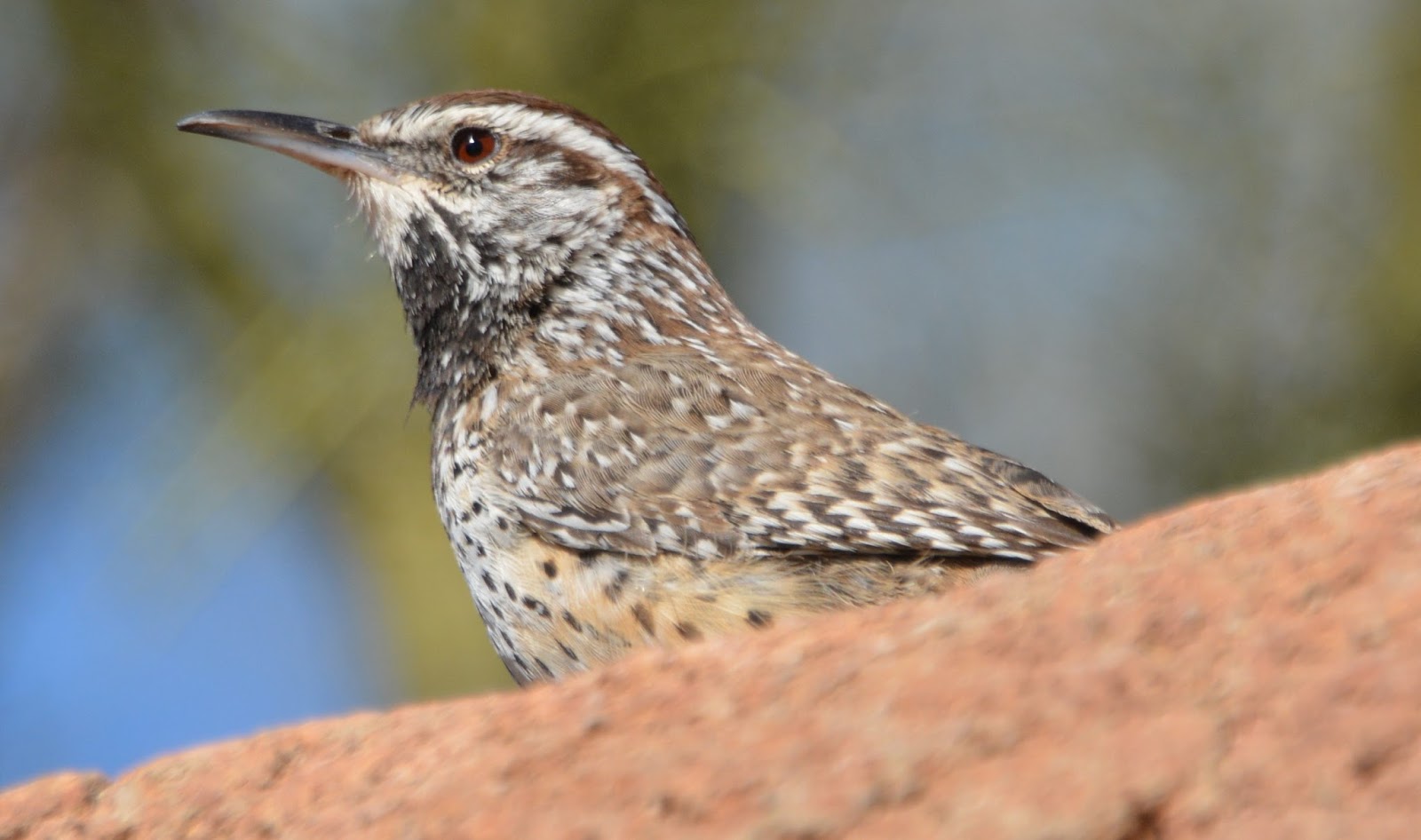
Cactus Wren
The Cactus Wren rattles away.  He is mischievous as he calls to his partner after finding a patch of food.  She responds and follows him into the prickly shrubs chasing off the House Sparrows.


I was doing my annual survey of the Cactus Wrens around their various locations. BUT, I wanted something juicy and challenging.  So I made some side treks to make it all happen.  They were million dollar birds for cheep:)

Brown birds.  Lots and lots of brown birds fascinate me.  A flock of Brewer's Blackbirds hang near a bush.  One flies into the shadows of a larger Ocotillo. 

Brewer's Sparrow
In a way, I'm no longer that kid who is asking for help anymore.  I'm now helping out others and it feels good. It feeds the teacher part inside of me.  A snowbird with binos asks me at the Desert Museum why our Cardinals are black.  My response, "Ahhh, how exciting!  You've found a Phainopepla guarding his patch of desert mistletoe!"  She's now discovered a new Sonoran desert bird and plant species.  


Phainopepla-male
We play of course.  Crowds are shy around the Desert Museum's new and awesome Vulture Culture. They have a Black and Turkey Vulture on display there. Micheal is a sport and has fun. Once adults see us goofing around and laughing, they do the same. It's funny how humans are pack animals.  What's socially acceptable?  And what's not?  When it comes to learning, I think we should all have fun. 


Micheal makes a convincing Turkey Vulture but strangely he doesn't like leftovers
As we have fun and enjoy the outdoors, I am careful not to let the birds take over unless they are doing something really cool:) But I continue my annual studies and record data for nesting Cactus Wrens, Barn Owls as well as keep tabs on the many wintering grassland species.  I keep my distances.  And I keep my reports secret. 


Everything I have done; I have done my myself. That doesn't mean I've done it alone, quite the contrary. There have been countless people who I would call "teachers". Without their guidance and training, I wouldn't be where I am now. I refer, of course, to my own planning and studies with others.  Currently, I am researching the Spotted Dove.  Recently through my work with California birders, I found out that there is a healthy population of Spotted Doves on Catalina Island.  Before they could only be found in a nasty neighborhood of LA which birders have said is NOT ideal for birding. So I like safe and scenic. It should be an easy find. And to be honest, it should be a wonderful vacation. So in a month, we leave for Avalon and I can't wait to continue my work on the Pacific Ocean.  


No educational institution taught me how to speak Spanish or be a teacher or be a birder. For the first two titles, they certainly charged money for it.  Lots and lots of money.  Degrees are no more than pieces of paper.  And in the end, it means absolutely nothing.  It's what you bring to the table.  For my students, I tell them to take control of their education.  A degree in Spanish means nothing if you don't speak Spanish.  LIVE in a Spanish speaking country.  Theories and books won't make you a teacher.  You are born one or not.  So volunteer and work with people for EXPERIENCE.  


First spot.
The same is true in the birding world. The true test of the Arizona birder's ID course falls upon the sparrows, flycatchers, longspurs and pipits. Birding can be as simple as a Cardinal or as difficult as a Sprague's Pipit.  Last year, I went with my friends to find a Sprague's Pipit.  We saw it, but someone from outside my group called out the ID before I could do the ID myself.  All I had to do was look at the bird and count it.  I wanted to EARN that bird.  


I wish this one has turned out better but I was excited seeing the bird. Next time I will be much more relaxed.
On a recent trek out to the Santa Cruz Flats, I helped another birder get his nemesis Sprague's Pipit.  I gave him the field marks and together we walked the path.  We counted many American Pipits and Mountain Plovers in the fields, but it was the solitary bird that held my interest. No bobbing.  Just mousing around the grasses.  Behavior. 


My first spot
Then a ray of light hit the pipit-looking bird and revealed bright pink legs. Field marks. We got our poor ID pictures for evidence, but it was an amazing experience to observe a bird without the fear of other birder parties flushing this secretive pipit into a further field. Our Sprague's Pipit casually walked from one field into the next, crossing the road with it's very large feet.

Brown birds are as cool as the ones with color. Tricky to separate from the numerous American Pipits.  BUT solitary from the flocks of AMPI, streaky back, pink legs, NO bobbing tail but it did bob the head back and forth; overall lighter in color with light streaking on the front.  It can be difficult.
 Distance was important.  We were close enough with our binos yet far enough away to not disturb the bird. And that's what I remembered from our first observation as it was an issue. At least for me. One group would get too close and flush the bird into another field much further away. While I may have had my lifer Sprague's Pipit last year, I felt for the first time that I EARNED my bird. It's a pretty special feeling.  But even better?  Helping someone find their nemesis bird while enjoying wonderful observations of a naturally very secretive bird in the field. 


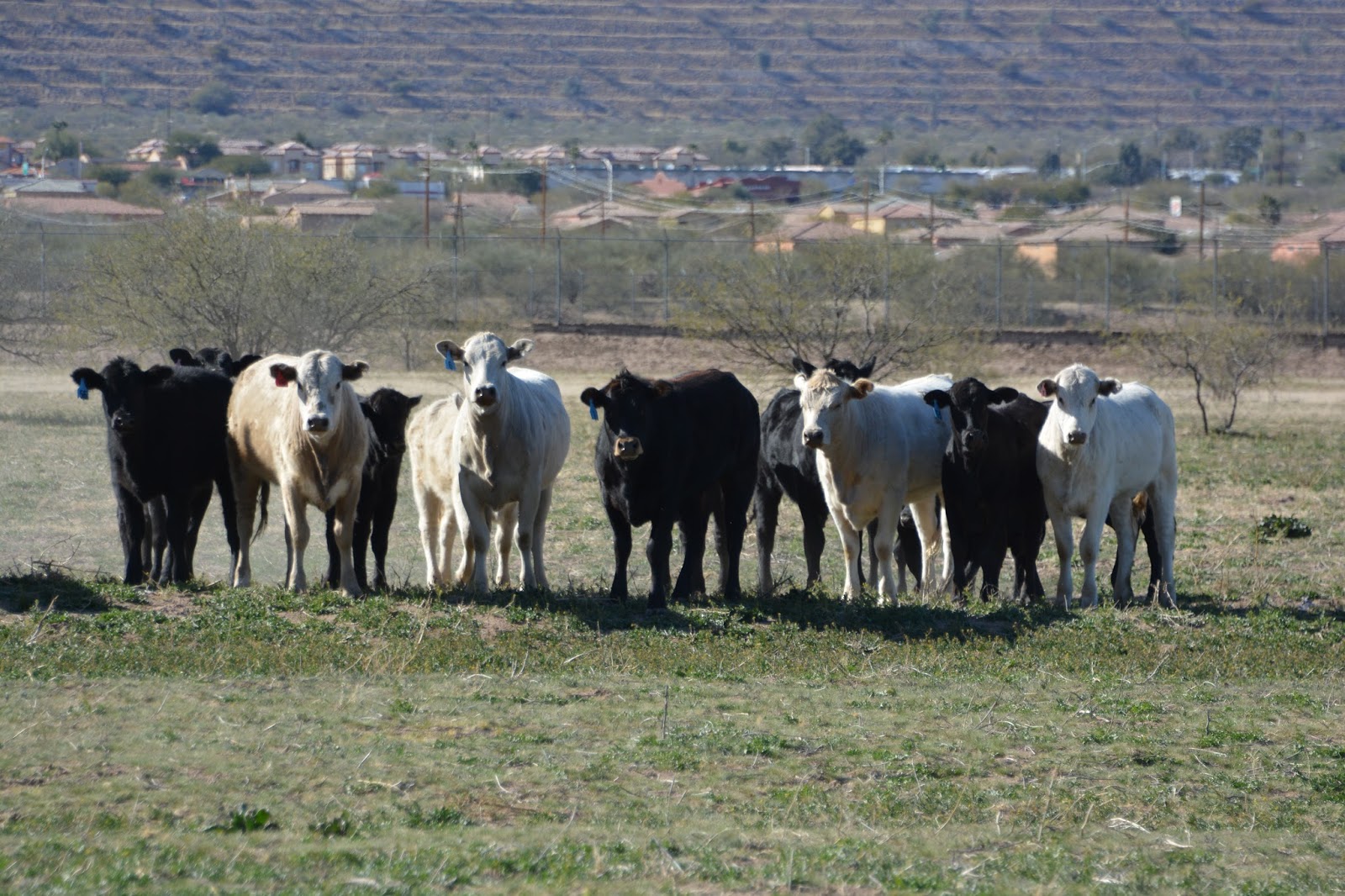
Cattle "helping us" find/flush our lonspurs:)
The same cannot be said about the McCown's Longspur.  Generally, longspurs are one of the most difficult birds to photograph. This was like a homework assignment I kept putting off. Grassland birds are my favorites, but they sure do require patience and focus. 


While it wasn't planned, I met up with another birder who had been there for an hour trying to locate the longspurs.  We dealt with extreme wind and dust.  Other birders were there and it was interesting to watch the various individuals.  Some wanted the "gimme" lifer but didn't help at all with the search.  Others simply gave up and left.  But if you give yourself up completely to the moment, anything is possible.  Forget about home, forget about work, forget about the sunset:)  Just be in the moment.  Become the flock. Forget the stinging dust. The frigid wind. And the glaring sun.  Just focus on the energy that is "the flock". My watering eyes did hurt after the observations (which was then followed by a headache), but it was worth the intense search.


McCown's Longspurs-overall a rather dull bird.  For Arizona birders, this is a Master's level bird.
Within a half hour, I was able to help my friend lock on to these very difficult birds.  They were mixed into a flock of several hundred Horned Larks and Lark Buntings.  And there were just two of them!  And they were small.  Brown birds at their very best!


Random Slider Turtle photo

While none of this is easy work; it has become a simpler task. Understanding a simple word like "warbler" or "longspur" will usually imply certain behaviors and often involve a headache later on:) After an hour of cracked dry lips, sore eyes and being all covered in dust, it was time to go home. The mission complete. It was exciting.  The way I imagine a final exam to be in the field studies of AZ Ornithology.  I heard one birder say, "It's what separates the boys from the men." And I'm guessing the girls from women? The birds from the birders?:) I'll just restate it in my own geeky way, "I passed this Jedi test."  


Renee, a creative and funny soul who loved Star Trek as much as I do.
I am constantly reminded that life is not a given.  It should not be taken for granted, ever.  This past week, I received my first check ever for guiding a bird tour and it was VERY nice.  But I also lost a friend.  She was someone who I loved visiting with every year at our Thanksgiving dinners. Renee Sampson, you are loved and will be missed. 


Chestnut-collared Longspurs in Willcox, AZ
I'll be back in the grasslands again thinking some more while helping Tucson Audubon save our declining populations of Chestnut-collared Longspurs.  Once, the McCown's Longspurs were commonly found in small numbers in Southern Arizona.  Today, they are extremely rare to find around their former habitats.  This could also happen to our Chestnut-collared Longspurs if we are not careful.  What's bigger than any of us?  Saving our planet. 


Meanwhile our Jaguar roams the Santa Rita mountain range. Our secret was released by National Geographic just a couple weeks ago.  Hopefully with our combined efforts from all the conservation groups, we will help bring once common wildlife back into our area.  The Jaguar is a wonderful example of what could be once again if we are not reckless.  


At the Buenos Aires Wildlife Refuge with Bruce Berman
As you can see, even though I have financial matters to consider now, Arizona is a GREAT place to be broke.  For a birder:) Until next time.....


Friday, February 5, 2016

The Twice-told Tale

Glassy reflections at the San Rafael Grasslands

"All this has happened before and it will happen again."  Each year I retrace my steps, but I am certainly coming to the end of it all.  There is only "out there" now, beyond Arizona. 


I've finished up most of my work in Arizona and there are just a few places I need to survey again for my final birds. The Black Rail, the American Three-toed Woodpecker and Dusky Grouse. I need a photo of the Flammulated Owl, but I can do that elsewhere.  Arizona, it has been fun, but it is time to focus on the world at large.  Now my work will take me into the various locales around the Americas. Or I will be helping out with various projects around the state.

American Kestrel
So when it came time to plan for the weekend, I could only think of the grasslands. They are my favorite places to bird. I asked my friend Marla if she wanted to go for a drive through an amazing area.  And she was up for it.  There was that same rare Yellow-throated Warbler hanging out in Patagonia Park again this year, but I had no desire to chase it. Those days are over. Instead, I helped guide some visitor's to where the bird may be hanging out.  If you want to read about it, you can click on last year's report.  I'm not telling the same story twice on this blog:)

The beautiful San Rafael Grasslands
I saw my Baird's Sparrow and White-tailed Kites, but I was more interested in letting Marla find them.  She had never seen these birds before and it was great showing her around the San Rafael Grasslands.  There is something fun about helping others explore new areas. I like taking pictures but lately, I've been into the binos a lot more. So in a moment of my yearly reflection, I thought about what I will plan for this upcoming year. No more chasing the same rare birds. No more of the "same" experiences.  It's time to focus on other things. 


When with non-birders, it's fun to make finding birds a game. And it was fun watching Marla stumble upon a rafter of turkeys. After I heard her gasp, I knew she spotted something nice. They were our first of the year Wild Turkeys!  After counting each and every one of them twice, we came to the conclusion that there were 28 of them!

Wild Turkeys in Patagonia
January has passed and I will disappear for awhile from the birding world in Arizona.  It's a break long overdue.  There is still one trip left in Yuma.  And one for Greer.  I think I feel this way EVERY winter before spring break.  It's hard to break routine:)  Even with fun hobbies!

Canyon Towhee in Patagonia
One last note. Before the weekend started, I went with my colleagues to prepare for the annual breeding event at our school. And yes I'm talking owls here:) My ebird records were showing that it was time for our Mama Owl to begin nesting. So we prepped her nest, Oro Valley style, and cleaned out the debris from last year for our very high maintenance Soccer Mom Owl:)  And we loved it!

Peter Fletcher climbs the ladder to clean out the debris with gloves.  We put in a new blanket so that Mom can stay cozy on her nest.
 By Monday, our Great Horned Owls were preparing to nest again and we were thrilled. This is one of the reasons why keeping data is awesome! It has happened before and it will hopefully happen again. And there is something very rejuvenating about it all.

Last years brood:)
 It's like seeing that first tulip appear out of the snow.  A sign that vacation is near:) 


In the meantime, I'll continue working in the bird world.  I'm thinking about doing another "Birds in Blooms" series while I'm waiting for the next big trek. I'll be out in the grasslands again doing more surveys for my own records and helping out Tucson Audubon with Longspur and Sparrow studies. My favorites!


Dark-eyed Junco(Pink-sided) 
I plan to finish off this last series of "grassland" blogs at the Buenos Aires Wildlife Refuge next week.  

Arizona Woodpecker

Here are my half hearted(or whole hearted) attempts at good photos of birds already seen.  Although, I still strive to get better photos of a Red-necked Grebe:)  The pic below represents a slice of the 179 species seen during the month of January. After seeing birds over and over again, I have learned to hone in on their behaviors and it is rewarding. My difficult objective was achieved, 7 new state birds and 4 new lifers(Yellow-billed Loon, McCown's Longspur, American Bittern and Barrow's Goldeneye!) The challenge has ended and now it's time for adventure! 


Saturday, January 30, 2016

Loon-y Tunes

Bill Williams National Wildlife Refuge

Sometimes.  Just sometimes this birding epic can be a little too much. On a gamble(or was it twitching?), we did something crazy. Four and half hours later, we found ourselves along the Colorado River and in the infamous Lake Havasu area. I had never been there before and it was the last area of Arizona that I needed to explore.  The purpose of our exhausting mission?  Loons.  Lots and lots of loons. And a certain wintering Goldeneye.


People will say that we are crazy, but I am on a quest to add state birds to the Arizona list this month.  We weren't just chasing a rare Yellow-billed Loon; we were chasing a large group of waterbirds that are normally rare for much of Arizona except for the Havasu area. They have been waiting for me to add them to my state list:) This is a very long trek for many Arizona birders. Therefore it's one of the least visited birding regions in the state. Well that is until the rarest loon in the world, the Yellow-billed Loon(Diver), decided to stop in Arizona. Their population is about 10000 worldwide and very little is known about this species of loon since they breed up in the icy regions of the far North. It is listed as an endangered bird due to habitat loss, oil spills and over fishing.

Hattie points us to our FOY American Robin! 
For this trek, 3 humans and a dog explored bird spaces along the beautiful Colorado River. The journey turned out to be very rewarding.  We didn't have just one loon; we had an epic 4 species of loon!!! I should have titled this post "Your One Stop Shopping Center" because we added Herring Gull, Red-necked Grebe, Yellow-billed, Red-necked, Pacific and Common Loons, and Barrow's Goldeneyes.  Two birds would be lifers.  And 4 birds would be added to my state list!  That is a VERY good day.

Ring-billed Gull
With my parks pass, we were able to get into Katherine's Landing for "free".  It costs 20 dollars for people without the pass!!!  As Tracy Morgan would say, "That's crazy!"  I became excited when I saw water.  And lots of it.  There was a network of piers in the area and it was COLD!  So we ventured onto moving piers.


Cold and windy, I make a fake smile.  I'm freezing!

We called out birds left and right. "Clark's Grebe! Wood Duck! Golden Eagles having sex..um...copulating!" But where was that Yellow-billed Loon?

Searching for that Yellow-billed Loon at Katherine Landing
As we scanned the waters, the wind kept the piers moving.  Normally I am one to stomach the bouncy waves but I think with me focusing on far away birds in a scope and a moving pier, I became a bit queasy.


Top from left to right: Yellow-billed Loon(wiki), Pacific Loon; Bottom left to right Red-throated Loon, Common Loon  
Loons are amazing.  They also make incredible vocalizations.  ID'ing a Loon in breeding plumage is easy.  It's when they are in their winter forms that can challenge even the best of birders.  Loons love deep waters and most often are seen from the distance if you are on land.  But apparently waving a white shirt in the air will attract these birds......hmmm.  Something to try next time.


Many times a scope is necessary and even then it can be difficult. Such was the case with the Yellow-billed Loon.  It hung out further away due to the human traffic.  Here is the image I was able to capture(below).  

When I visit Alaska and Canada, I hope to get better photos of this bird one day. The bill is large and upright making it stand out!

You can note the size differences.  In the photo, the YBLO hangs out with a Common Loon.  It's more upright and larger making the COLO look like it's "slouching" in the water.
 Thankfully, the other loons(in the montage above) were seen from vantage points where I could get nice photos. The Pacific Loon was sick and unfortunately didn't live long after that photo was taken. I was just a newbie, but after that sad incident, I programmed our Wildlife Rescue program into my phone. Today the bird's body can be found at the University of Arizona for study. The Red-throated Loon has a spotty back and is lighter gray overall in its winter plumage.  It was seen from a pier in California.  My Common Loon shot was taken in Mexico just feet from the shore! But of all the loons, the Yellow-billed is the rarest of the 5 loons in the world.  


 I think my love for loons began as a child on the lakes of Minnesota where we'd vacation often.  Their calls were the most haunting and beautiful sounds I have ever heard.  My number one favorite movie of all time is "On Golden Pond".  This movie heavily uses the Common Loon as a metaphor for life and relationships. And once a year, I revisit this incredible movie about this aging journey we all must make.


A rare Herring Gull-gulls are fun to ID! Really!!

 As we were getting ready to leave, we heard a loud blood curdling scream.  I thought, oh oh.  Magill has gone off the deep end!  As I spun around, I was happy to see that she hadn't fallen into the cold waters but was horrified to see that her million dollar scope was sinking into the dark waters!  She was able to recover the scope before it completely submerged into the depths of the unknown. It was like that first ding on your newly purchased car:(

Common Goldeneye
It was also time to claim the Barrow's Goldeneyes that are typically found in Northern Arizona this time of year.  What's interesting about these birds is that they look similar to the Common Goldeneyes except that they have a white mark on their face in the shape of a semicolon instead of a white dot.

Barrow's Goldeneye-drake
These birds can be tricky as they can blend into large rafts of Common Goldeneyes. And they often seem to hang out further away from the place you're standing:)  My first view with them was with Magill through her still wet scope.  Thankfully it all still worked.  Then I noticed there was a pair near one side of a stretch of land with water on both sides.  Since it was a life bird, I went down the walkway to get pics of the bathing birds.

Magill pointed out to me there differences between the female Common and Barrow's Goldeneyes.  I think I got this one right.  The bill on the female Barrow's Goldeneye is completely orange.

After this trek, it was time to call it quits.  There are no big years left.  There just is.  And that's a good place to be. It's time to educate younger birders and give back to a community who has given me so much.  As for the loons?  They're currently still hanging out:)  Good birding!


Sunday, January 24, 2016

White Winter Hymnal


The brisk cold winds of change came soon after my return to Arizona. One week after the warm border searches, it was time for some mountain fun. Winter had indeed arrived to Southern Arizona. 

the snowy Huachucas
With state birds in mind, I joined a walk I had been wanting to do for awhile in Sierra Vista. Last week it was the Streak-backed Oriole and today, I was hoping to find the secretive American Bittern at the Sierra Vista EOP(or Environmental Operations Park) It's a secured area with group lead access only on Sunday mornings. With the recent snowfall during the weekend, I couldn't resist the photography bit in both the Huachuca mountains and Cienagas Grasslands.  And this is where our story takes place today.

A Loggerhead Shrike at work.  It's Vole dinner
On our way through the gates, a participant in the group noticed a vole speared onto a branch.  It was evidence that the "Butcherbird" (aka Loggerhead Shrike) was nearby.  While the group examined the fresh kill, we tried locating the bird. No luck!  But as we left, we noticed that the vole was gone:)  

Loggerhead Shrike
Afterwards, I took a solitary walk on the snowy paths of Ramsey Canyon.  There, melting snow fell upon my head.  I was a tad wet when I left this winter wonderland.  BUT WOW!

My favorite tree in all of Arizona.  It's old and ancient.  Someday I'd like my ashes to be placed around this very large tree. I call it the Heart Tree.  It's at the center of Ramsey Canyon, one of my top ten favorite places in Arizona.
During my walk, I was surprised by how quiet the birds were.  I can only imagine how dangerous it might be as a small bird dodging the huge snow chunks falling from the trees. It was dangerous for people! I suppose it would be the equivalent to an aerial avalanche.  I made note and realized that most birds flew just below the snowline where they were active and feeding.


In the soft crunch of snow beneath my shoes, I watched a Coati run towards me on our now shared route.  We both stopped for a moment and watched each other before he turned off and headed towards the nearby abandoned cabin.


I very much like the cold.  I don't like the eternal gray skies that can sometimes come with the snow, but I do prefer the frosty temps over the hot sweltering ones of our summer months.


One path leads to another.  I stopped in the nearby grasslands and hiked some more.  Birds were present, but I was more interested in quiet reflection.  Things are changing.  I can sense it coming and I need to be ready for those changes.

Lesser Goldfinches mob the thistle feeder
"They" say change is good and inevitable. Sometimes it's about saying good-bye to the ritual and people involved around these loving spaces dedicated to birds and wildlife.  I sat at the now named Tucson Audubon's Paton Center for Hummingbirds alone.  Thankfully Tucson Audubon was able to purchase this home for current and future generations of birders.  It's a great spot for all kinds of birds and a traditional stop for many birders and tourists coming through the Patagonia area.  It's a piece of feathered folklore written in a sacred text for those who worship the bird.

The Violet-crowned Hummingbird-an established resident of Tucson Audubon's Paton's Center for Hummingbirds
Before Tucson took over, a guy by the name of Larry Morgan kept the feeders running for years after the homeowners, the Paton's, passed away.  You'd see him outside with his smiling face helping people spot their lifer Violet-crowned Hummingbird.  When Larry and his wife said they were leaving to begin a new chapter in their lives, I was both happy and sad. It wasn't quite the same without him there on this last visit.  It just proves once again how we all can make a difference for so many people. And how Larry has made a huge impact for thousands of birders across the world.  How can I write down this feeling in my Cheesehead lingo?  It's like having coffee cake with your friends on Saturday morning for many years and then.....no more Saturday morning get togethers.  You eat the coffee cake alone.  And it doesn't taste as good.  Anyhow, I'm going to miss Larry and my Patagonia routine.  He's one of the nicest people you'll ever meet! He's in Tucson now so hopefully we'll get to do some birding together now that he's closer:)


My reflections continued into the Ciénagas Grasslands near Empire Gulch where I walked alone against the biting wind. I strayed into the old abandoned buildings looking for owls and other goodies.  This is another top 10 favorite spot for me in Arizona.  There are 3 grassland sectors in this general region.....the San Rafael Grasslands, the Ciénagas Grasslands and Buenos Aires Grasslands.  ALL are spectacular!


The overall weekend was a lot of fun and full of quality alone time.  Every person has their favorite place to bird(or just visit!) While all birds are amazing, their locales are sometimes not:)  This weekend was about connecting with the places I love the most.


And as for my new state bird?  Yes, I achieved my goal.  I found that rare stinker of an American Bittern that has been hiding out for several months in Sierra Vista. The bird would have silently flown off had I not heard the rustle of reeds nearby. I was able to get everyone onto the bird before it disappeared into the far distance. I'd like to thank our group leader Bill Brown for the opportunity to bird this spot in depth.  He did an outstanding job with everyone involved. And it's always a plus working with people who are kind and friendly. Bill is as we say in Wisconsin "good people". Leading a bird tour isn't is as easy as it looks as I'd soon get to experience personally.  But that story is for next time. 

American Bittern in flight during our Sierra Vista EOP walk 
On a final note, one of the things I do with new birds is study them in various locations around the country.  The picture above is from the actual bird we saw.  It is countable. The one I studied in Utah, below, is not as it was in a large aviary.  I do hours of study on each new bird before trying to find them in the field.  And this is where I think aviaries are important as they can be a living classroom for birders and people interested in wildlife. I can read about birds and memorize their sounds, but understanding their movement and behaviors in a closed setting helps me "observe" better out in the field. 

American Bittern
From volunteer to participant to bird guide, my January continues in a most spectacular way. My quest within the state of Arizona for new state birds takes me north into unexplored territory. Stay tuned for more.....