Showing posts with label Sprague's Pipit. Show all posts

Friday, February 12, 2016

Budgeting The Birds


Silently, I walk through the grasses. Thinking. And thinking.  I began this quest 5 years ago with a Manakin.  This challenge grew into something bigger than me and so began the expedition of the heart and mind.  A newbie.  Everything fresh.  Everything strange. 

Rock Wren
Trapped by my own faults, I am forced to take these personal local courses over and over again.  No real challenges other than the one at home.  Freeing myself of student loan debt.  Cursed.  Stupid.  Debt. I absolutely hate it. Education is important, but so is my lifetime sanity:)  I'm so close to having my total freedom back. I can't help but think of all the other "newer" students with this financial weight that will follow them for decades into the future. 

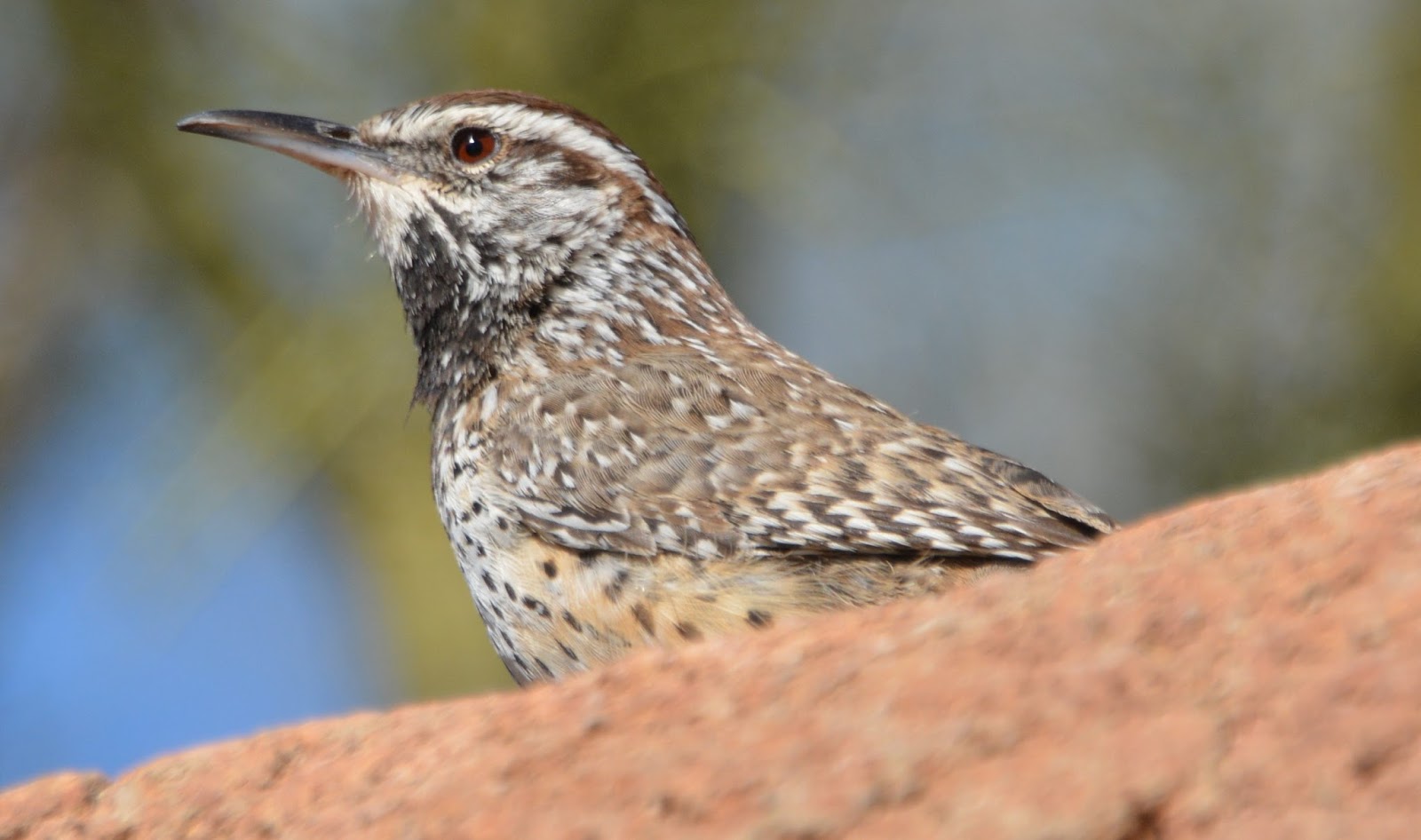
Cactus Wren
The Cactus Wren rattles away.  He is mischievous as he calls to his partner after finding a patch of food.  She responds and follows him into the prickly shrubs chasing off the House Sparrows.


I was doing my annual survey of the Cactus Wrens around their various locations. BUT, I wanted something juicy and challenging.  So I made some side treks to make it all happen.  They were million dollar birds for cheep:)

Brown birds.  Lots and lots of brown birds fascinate me.  A flock of Brewer's Blackbirds hang near a bush.  One flies into the shadows of a larger Ocotillo. 

Brewer's Sparrow
In a way, I'm no longer that kid who is asking for help anymore.  I'm now helping out others and it feels good. It feeds the teacher part inside of me.  A snowbird with binos asks me at the Desert Museum why our Cardinals are black.  My response, "Ahhh, how exciting!  You've found a Phainopepla guarding his patch of desert mistletoe!"  She's now discovered a new Sonoran desert bird and plant species.  


Phainopepla-male
We play of course.  Crowds are shy around the Desert Museum's new and awesome Vulture Culture. They have a Black and Turkey Vulture on display there. Micheal is a sport and has fun. Once adults see us goofing around and laughing, they do the same. It's funny how humans are pack animals.  What's socially acceptable?  And what's not?  When it comes to learning, I think we should all have fun. 


Micheal makes a convincing Turkey Vulture but strangely he doesn't like leftovers
As we have fun and enjoy the outdoors, I am careful not to let the birds take over unless they are doing something really cool:) But I continue my annual studies and record data for nesting Cactus Wrens, Barn Owls as well as keep tabs on the many wintering grassland species.  I keep my distances.  And I keep my reports secret. 


Everything I have done; I have done my myself. That doesn't mean I've done it alone, quite the contrary. There have been countless people who I would call "teachers". Without their guidance and training, I wouldn't be where I am now. I refer, of course, to my own planning and studies with others.  Currently, I am researching the Spotted Dove.  Recently through my work with California birders, I found out that there is a healthy population of Spotted Doves on Catalina Island.  Before they could only be found in a nasty neighborhood of LA which birders have said is NOT ideal for birding. So I like safe and scenic. It should be an easy find. And to be honest, it should be a wonderful vacation. So in a month, we leave for Avalon and I can't wait to continue my work on the Pacific Ocean.  


No educational institution taught me how to speak Spanish or be a teacher or be a birder. For the first two titles, they certainly charged money for it.  Lots and lots of money.  Degrees are no more than pieces of paper.  And in the end, it means absolutely nothing.  It's what you bring to the table.  For my students, I tell them to take control of their education.  A degree in Spanish means nothing if you don't speak Spanish.  LIVE in a Spanish speaking country.  Theories and books won't make you a teacher.  You are born one or not.  So volunteer and work with people for EXPERIENCE.  


First spot.
The same is true in the birding world. The true test of the Arizona birder's ID course falls upon the sparrows, flycatchers, longspurs and pipits. Birding can be as simple as a Cardinal or as difficult as a Sprague's Pipit.  Last year, I went with my friends to find a Sprague's Pipit.  We saw it, but someone from outside my group called out the ID before I could do the ID myself.  All I had to do was look at the bird and count it.  I wanted to EARN that bird.  


I wish this one has turned out better but I was excited seeing the bird. Next time I will be much more relaxed.
On a recent trek out to the Santa Cruz Flats, I helped another birder get his nemesis Sprague's Pipit.  I gave him the field marks and together we walked the path.  We counted many American Pipits and Mountain Plovers in the fields, but it was the solitary bird that held my interest. No bobbing.  Just mousing around the grasses.  Behavior. 


My first spot
Then a ray of light hit the pipit-looking bird and revealed bright pink legs. Field marks. We got our poor ID pictures for evidence, but it was an amazing experience to observe a bird without the fear of other birder parties flushing this secretive pipit into a further field. Our Sprague's Pipit casually walked from one field into the next, crossing the road with it's very large feet.

Brown birds are as cool as the ones with color. Tricky to separate from the numerous American Pipits.  BUT solitary from the flocks of AMPI, streaky back, pink legs, NO bobbing tail but it did bob the head back and forth; overall lighter in color with light streaking on the front.  It can be difficult.
 Distance was important.  We were close enough with our binos yet far enough away to not disturb the bird. And that's what I remembered from our first observation as it was an issue. At least for me. One group would get too close and flush the bird into another field much further away. While I may have had my lifer Sprague's Pipit last year, I felt for the first time that I EARNED my bird. It's a pretty special feeling.  But even better?  Helping someone find their nemesis bird while enjoying wonderful observations of a naturally very secretive bird in the field. 


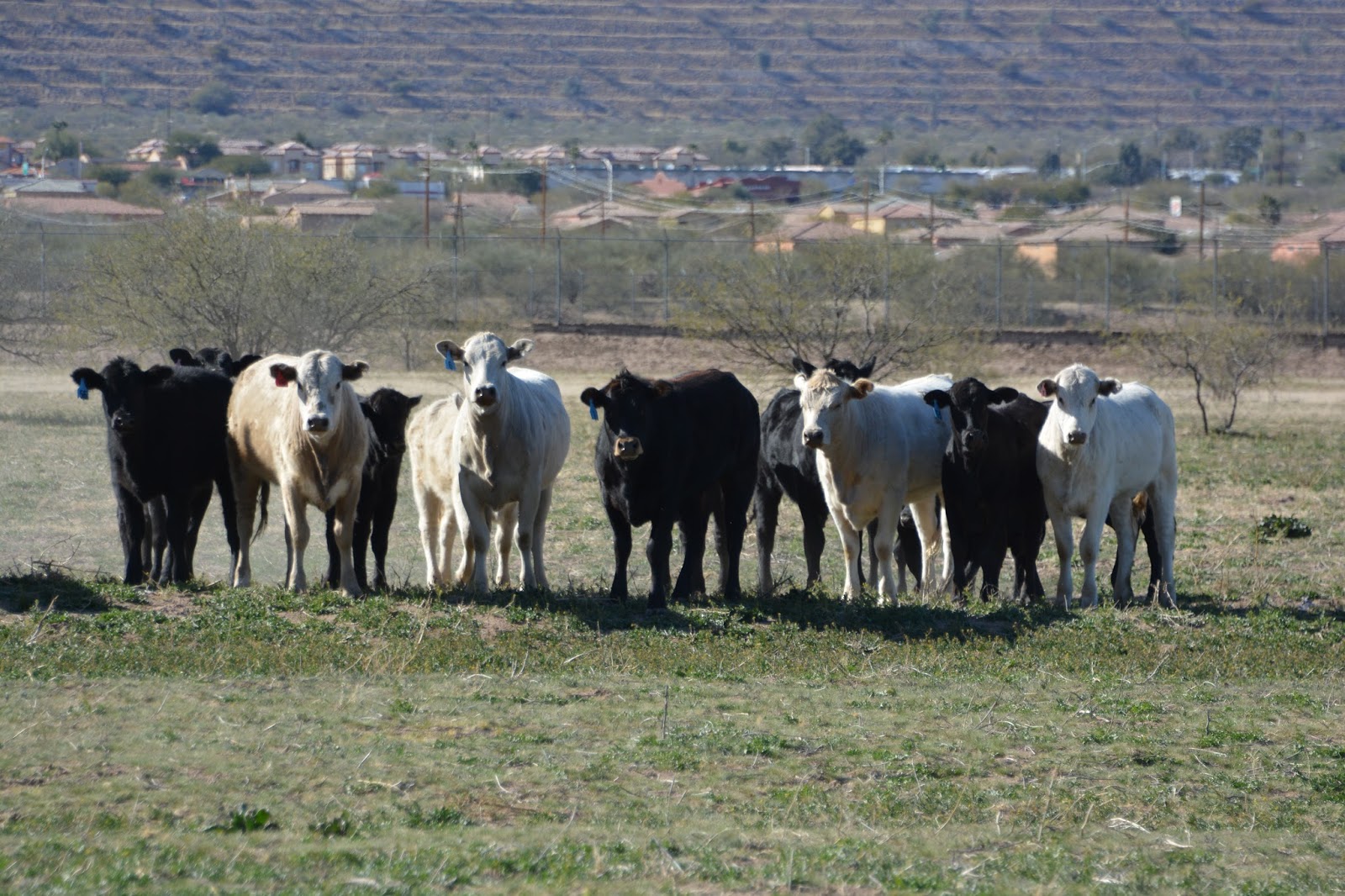
Cattle "helping us" find/flush our lonspurs:)
The same cannot be said about the McCown's Longspur.  Generally, longspurs are one of the most difficult birds to photograph. This was like a homework assignment I kept putting off. Grassland birds are my favorites, but they sure do require patience and focus. 


While it wasn't planned, I met up with another birder who had been there for an hour trying to locate the longspurs.  We dealt with extreme wind and dust.  Other birders were there and it was interesting to watch the various individuals.  Some wanted the "gimme" lifer but didn't help at all with the search.  Others simply gave up and left.  But if you give yourself up completely to the moment, anything is possible.  Forget about home, forget about work, forget about the sunset:)  Just be in the moment.  Become the flock. Forget the stinging dust. The frigid wind. And the glaring sun.  Just focus on the energy that is "the flock". My watering eyes did hurt after the observations (which was then followed by a headache), but it was worth the intense search.


McCown's Longspurs-overall a rather dull bird.  For Arizona birders, this is a Master's level bird.
Within a half hour, I was able to help my friend lock on to these very difficult birds.  They were mixed into a flock of several hundred Horned Larks and Lark Buntings.  And there were just two of them!  And they were small.  Brown birds at their very best!


Random Slider Turtle photo

While none of this is easy work; it has become a simpler task. Understanding a simple word like "warbler" or "longspur" will usually imply certain behaviors and often involve a headache later on:) After an hour of cracked dry lips, sore eyes and being all covered in dust, it was time to go home. The mission complete. It was exciting.  The way I imagine a final exam to be in the field studies of AZ Ornithology.  I heard one birder say, "It's what separates the boys from the men." And I'm guessing the girls from women? The birds from the birders?:) I'll just restate it in my own geeky way, "I passed this Jedi test."  


Renee, a creative and funny soul who loved Star Trek as much as I do.
I am constantly reminded that life is not a given.  It should not be taken for granted, ever.  This past week, I received my first check ever for guiding a bird tour and it was VERY nice.  But I also lost a friend.  She was someone who I loved visiting with every year at our Thanksgiving dinners. Renee Sampson, you are loved and will be missed. 


Chestnut-collared Longspurs in Willcox, AZ
I'll be back in the grasslands again thinking some more while helping Tucson Audubon save our declining populations of Chestnut-collared Longspurs.  Once, the McCown's Longspurs were commonly found in small numbers in Southern Arizona.  Today, they are extremely rare to find around their former habitats.  This could also happen to our Chestnut-collared Longspurs if we are not careful.  What's bigger than any of us?  Saving our planet. 


Meanwhile our Jaguar roams the Santa Rita mountain range. Our secret was released by National Geographic just a couple weeks ago.  Hopefully with our combined efforts from all the conservation groups, we will help bring once common wildlife back into our area.  The Jaguar is a wonderful example of what could be once again if we are not reckless.  


At the Buenos Aires Wildlife Refuge with Bruce Berman
As you can see, even though I have financial matters to consider now, Arizona is a GREAT place to be broke.  For a birder:) Until next time.....


Monday, February 9, 2015

Warbler Woes


This is my original work. These birds are not easy:) A few warblers have since been added to this chart.
This past weekend was truly a test of patience. Target birding. Not the kind of birding some people prefer. As several birders climb to the top of this imaginary pyramid; things become trickier. Trickier birds require trickier maneuvers. On this particular weekend, birders from all over the state(s) came together.  These finds were not only epic but state firsts for many people. 


Chestnut-sided Warbler. Photo courtesy of Gordon Karre!  Thank you for helping me tell this story. 
I began this weekend with the mind set, "Warblers or die."  So I chased 4 rare warblers that were reported in the state.  My first challenge was the Chestnut-sided Warbler near ASU in Tempe. The second and third warblers were the American Redstart and lifer, Black-throated Blue Warbler within the region known as the Santa Cruz Flats. Finally, I went after the Yellow-throated Warbler in Patagonia.  Each one presented different challenges.  


The Santa Cruz Flats and within this vast land, a few Sprague's Pipits hide. 
Lately, I have turned into a binocular-before-photographer type birder. The binos allow me to reach the bird quickly and observe behaviors that I normally wouldn't see with the camera. I arrived at the ASU campus and located the Chestnut-sided Warbler in a lone Cottonwood tree.  For a few moments I saw the bird sit still long enough for me to clearly ID.  When I reached for my camera to snap a shot, the warbler was gone.  To make matters worse, an ASU sports event let out, creating chaos around me.  At that point, I put my head down and walked away. Why do birds pick these loud and obnoxious locations? Did I find the bird?  Yes.  Did I get a photo? No.  This is where my bud Gordon Karre comes in to save the day!  He did get a shot of the bird earlier that day and was very kind to share his photo on Las Aventuras this week.


The watering hole on Sasco Rd.
But I knew I was facing an uphill battle for the next day.  There were two lifers involved here.  The Sprague's Pipit and the Black-throated Blue Warbler. Both on private property! I knew that getting pics would be difficult.  We assembled the most amazing team of birders around the state to find these winged gems.  Our day was a success and the odds played in our favor. All targets accomplished.  My lifer, the Sprague's Pipit, was seen in the collection of scopes.  As the bird lifted off from one field, I snapped a poor shot of it flying into another grassy patch. Then it was off to THE house.


I hope no one lives here. 
Birders flocked to this home and waited and waited to see the reported male American Redstart, Black-throated Blue Warbler and Summer Tanager flying around the Pomegranate Tree. Technically, we were stalking. For 93 minutes we stared at that blasted house in the shade swapping stories with one another.  We still aren't sure if there were people living there, but a sheriff did come to see what we were all doing.  We blamed it all on Magill. 


I sat staring at that pony or cow creature in the yard.  Definitely cute and out of place. In fact, it looked like Samwise Gamgee's pony Bill from Lord of the Rings.  I thought about how nice the shade was.  I thought about how much I liked the people around me and wished we could hang out more often.  I wondered if the machine under the pomegranate tree was a tractor or grill.  And I wondered if that damned warbler would show up.  And eventually it did.......

Black-throated Blue Warbler gets the tractor ready
But this time, I wouldn't let the warbler get away.  So I got rid of the binos and held my camera instead. That warbler was beautiful.  WOW!  We watched as it drove the tractor around the yard a couple times.  And then it was off for more target birding.  


Ferruginous Hawk
Then it was off to the small town of Patagonia for the Yellow-throated Warbler.  This wintering warbler is currently feeding on bugs found around the mistletoe at the Patagonia City Park. However, we sat in this park for 2 hours before it BRIEFLY showed up!  We were with two other birders.  This bird was not a lifer for me so I used my binos instead. 

Yellow-throated Warbler.  Photo taken in 2013 at Sweetwater Wetlands
My ears were sharp and I spotted the bird quickly.  Unfortunately, our new birder friends had their eyes on the doppelganger Yellow-rumped Warbler.  So they followed that bird with their bins instead of keeping their eyes on our target.  Madness ensued.  Russian tourists entered the picture and chased the Yellow-throated Warbler off as they ran pointing at the bird.  Another woman decided to follow us around and chat.  When we didn't answer her, she responded, "Oh this is serious business, isn't it?"  When you wait for a bird for more than two hours, yes, it is. The other birders never saw the Yellow-throated Warbler and I never got a shot of the bird feeding at the mistletoe.  Instead while we sat under the tree waiting for the warbler, we watched this guy bored out of our minds. People watching can also be fun.  Between the Russians, Japanese and elderly, it was a busy day at the park. 


That guy hanging out on the bench for as long as we waited for the warbler
Who was he? A local? An artist?  Then I started thinking to myself. Why can't my hair grow that long?  How did I get so stuffy in my life? Blah blah blah. After a long afternoon in the park, I thought about calling my mother to wish her a happy birthday, getting home to do the laundry and finalizing some summer plans with my other half.  Ahhhh!  The joys of rare warblers.  


 I'd like to thank all the wonderful people behind this post today.  I think without each other's support, we'd have given up empty handed.  It was a blast and it's fun playing detective with you all.  Thank you Linda, Magill(for organizing), Gordon, Nathan and Muriel.   You guys rock!  It's surprising but the life list is slowly growing.  10 more birds until I reach 600.  Who will the next life bird be?  Over the next several weeks, we'll meet up with friends Randy, Cindy and Pam. Stay tuned for more....