Showing posts with label Resplendent Quetzal. Show all posts

Saturday, July 15, 2017

Monteverde Cloud Forest


Here in the darkness, we'd search for Gordon's Resplendent Quetzal.  This is probably THE most difficult of birding conditions anywhere on the planet.  Not only was the forest dark, but we'd often be ambushed by clouds moving through the trees. 


For those of you wondering how we got from Arenal to Monteverde, well wonder no more.  This is where having a rental car would have been problematic for us since getting to Monteverde by vehicle would have added several hours to our day. A person can easily take a short cut across Lake Arenal(via the jeep-boat-jeep option) to the road that leads to Monteverde.  


Swallow-tailed Kite
Many of the dirt roads were washed out and bumpy and better left for the Tico drivers to handle. A couple hours later, we made it to the little town of Monteverde.  It was cool and cloudy.  

part of the Elephant beetle group that likes to eat bananas
This was one of my favorite locations on our trip because it allowed us to choose where we'd eat.  Monteverde has a lot of great eats.  Plus the town is super easy to navigate. 

A typical Costa Rican meal known as the Casona. 
We were here for one bird.  Although we'd find many other new birds, it was the Resplendent Quetzal that was a must see for Gordon and Micheal. For me, it was the Orange-bellied Trogons. 


The price into the Monteverde Cloud Forest Reserve was around 20 dollars.  Most of the tourists hired guides that stood near the entrance.  And to be honest, I highly recommend having a tour guide for this park.  The darkness and dense tropical vegetation make this a tricky place to bird. There's also a third obstacle, the clouds.  Dark and foggy conditions made finding birds very difficult. But I loved it!


Gray-headed Chachalacas were almost everywhere we went in Costa Rica.  It seemed that many of them were feeding young ones. 


Often birds would be heard calling in the forest, but when we got near the birds calling, they'd go silent OR a cloud would move into the area and mess with us.  At one point, I heard the Resplendent Quetzal call.  No.  That would be too easy.  Were they that close to the entrance of the park?


A pair of Yellowish Flycatchers danced around us as they foraged for food. 


I felt a chill as a cloud blew through the trees and fuzzed everything up around us.  

a family of Prong-billed Barbets preen one another
Micheal took out his phone and began recording bird calls.  Thanks to Gordon's help, we are now able to add audio to our ebird files. 


Sometimes we'd get a clear view of a bird.  But many times, they'd disappear into the darkness. 

White-throated Thrush
For example, it took me longer to get a good view of this bird below for proper ID.  It was a lifer but had I not been able to see it properly, I would have lost my chance to count the bird on my lifelist.  Often patience is required in these difficult habitat settings. 

Lineated Foliage-gleaner
I came to discover that many of the little birds flying through the branches were the Common Chlorospingus. 


Yes.  The name is up there with Euphonias and Chlorophonias.  These are often not words spoken in Arizona:) Probably never will be. But if it's one thing I've learned from birding, NEVER SAY NEVER. 


We continued on the dark trails.  It was really quite beautiful.  


Misty.  Cool.  Magical. 

Costa Rican Warbler
We actually did quite well birding on our own in the park, but where in the world was the Resplendent Quetzal?!  Supposedly, there were 4 of them. 

Slate-throated Redstart

As we exited the park, I became frustrated.  We had heard the birds call around the entrance.  I went up to the park ranger and we had a really nice discussion.  A friendly security guard to the park was also present and said, "Oh yes.  They are right here at the entrance, but now isn't a good time because they usually feed early morning and late afternoon. BUT I can show you where they like to eat.  As he pointed to the tree, we heard the adult male call.  Then we saw the female.  And then.....the juvenile male came and perched out in the open for Gordon and Micheal.  The security guard offered to snap pics of the bird with my camera.  I have seen the quetzal before in Guatemala and didn't mind him taking the camera to take pics. It was great watching him use the lens. Maybe they'd turn out but the chances were low. Still, he had fun trying to get the pics.  And he did get several shots of a blurry adult male Resplendent Quetzal. 

9-banded Armadillo family in Monteverde
I can't stress just how fantastic the service was at this park. The people were genuine and actually enjoyed having a conversation. This is where knowing a bit of Spanish is helpful. BUT, for the English speakers, there were plenty of bird guides who spoke English. I'd go back here again in a heart beat.  What a wonderful man for taking us to the spot and helping a bunch of strangers out! Mil gracias! There are 3 subspecies of Resplendent Quetzal and they may be split down the road. Apparently, each subspecies breeds in separate locations and we were told, differentiate in size. 


As we left the entrance to the park, or otherwise known as the exit, we got some lunch at the cafeteria, which by the way is excellent and cheap! But where was this hummingbird coffee shop that everyone had been talking about?  In our next post, we'll explore what many of you have been waiting for.....the hummingbirds.  Finally, our luck would begin to change.  On the next post, I'll have both of the checklists.  And I'll speak about the Selvatura Park that many people visit. Until next time......

Thursday, July 28, 2016

Life Is But A Dream


As the years move forward, one moment blurs into the next like a stream of consciousness forever flowing and changing the course of my life. 


Each day a gift.  Each day a promise.  


The fading sun kisses the world good-bye.  Momentary bliss. 


The soft petal of a flower.  


Daring to take a step forward into the unknown. 


All lasting impressions within my mind.  


So I live for today.  I live each moment.  And I remember.......
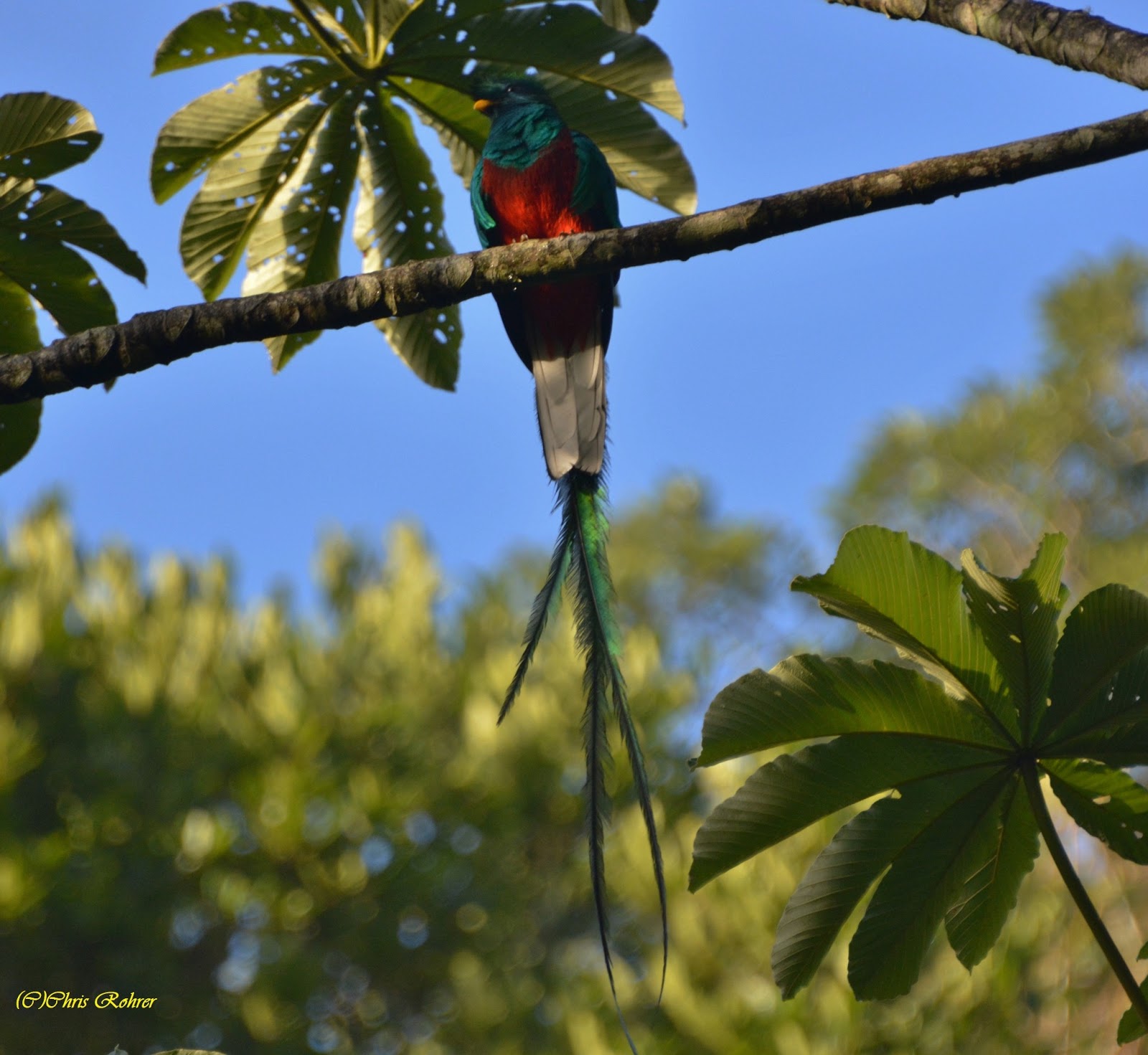

......all the good things that I see around me. 


Because at the end of it all, this is what I'll remember..... 

The dream of having lived my life and lived it well.


My photos today were modified by using an app called SuperPhoto.  

Friday, December 27, 2013

Winning the Oscar

The male Resplendent Quetzal
There is nothing more exciting than reviewing the highlights....and epic dips of the year.  Here are some memorable moments that I won't forget anytime soon. 

Elegant Trogon
Two of the epic discoveries came this year in the order of Trogons.  During my trip to Guatemala, I was finally able to observe the majestic Resplendent Quetzal in the wild and it was incredible!  Back home, Kathie and I  discovered a nesting pair of Elegant Trogons in Madera Canyon.

Lynda reviews video of not only 1 Resplendent Quetzal but 6!!! hiding in an avocado trees!!!
These experiences can be compared to what I imagine it would be like to win an Oscar in the birding world.  The experience of finding a rare bird on your own is incredibly special.  But it's even better when you can share the triumph and excitement with friends.


 So after the Resplendent Quetzal finds, I thought the highlights would end for the year, but it turns out that there were several more in store!  So as the Resplendent Quetzal flies off, we head over to Tikal National Park where another secret award would be handed out......


While we were at Tikal National Park, I noticed a Falcon flying around the pyramids going after Oropendula nests hanging from the tree.  At first I thought it was a Bat Falcon until a Park Ranger noticed me watching the bird.  He came over and told me that I was witnessing a very special event.

Juvenile Orange-breasted Falcon
He then told me the story of the Orange-breasted Falcons and how rare they were in the wild. A pair decided to nest on the pyramids in the park and over time have created several offspring. They were loud and active as they flew from the pyramids into the trees.  We had really nice observations of these birds in action.  But it wasn't until after several months of personal research work on the confirmation of this bird(above) that I could truly appreciate the experience. They are similar in appearance to the Bat Falcons.  This falcon is labeled as Near Threatened due to the loss of habitat which is thick tropical rain forest.  As more forest is cut down, these birds face an uncertain future. There are only 30 breeding pairs around Belize and Tikal National Park.  In all parts of the tropics, the birds are in serious trouble. It is now labeled as possibly extinct in Costa Rica. When I hear stories like these, I am saddened, but it doesn't mean the end to these birds if we get our act together.  Here's the opposite side to the near extinction story and the last Christmas miracle of the year......the California Condor.


As a young American child growing up in the 80's, the outlook for many of our falcons, eagles and condors wasn't good. Most of these birds almost went extinct from a compound known as DDT back in the early to mid-20th century. A US wide ban today has seen the successful return of the majestic Bald Eagles and Peregrine Falcons. However, insecticides are still controversial as different insect eating birds around farm habitat, along with our bee populations, etc face serious declining populations. Poisoned bugs=poisoned birds.  But it was the California Condor that almost disappeared forever.


In the 80's, only 22 birds were left in the wild!  As a boy growing up, I was heart broken that we were losing wildlife every year around the world to this thing called extinction. How could we allow our wildlife to vanish???!!! Wasn't it important? Then I grew up and learned about the power and greed of the human race and it all made sense.  It didn't matter what religion, political party or nationality we were because we were all the same. The California Condor has been labeled a success story today as their numbers have increased (over 400 birds).  Over half of that number(237) are out in the wild around Arizona, California, and Utah.  Several nests this year have had success in the wild and that is cause for hope.  However, if these birds were not closely monitored, they would go extinct because of power lines and those hunters who continue to use lead bullets. This issue is still a major cause of death.  In our state, we "encourage" hunters to use copper bullets instead of using the lead ones. Lead bullets spread apart inside an elk or deer carcass.  When the carcass is left behind, the Condors descend and feast on the lead saturated remains. Most hunters are good about using the copper bullets but several continue using the lead bullets because they are cheaper.  One would think that it should be mandatory to use copper bullets.

Micheal sees the great shadow of the Condor fly over our heads and reenacts that very special moment

All I can tell you is that when we saw several Condors near the Vermilion Cliffs, people clapped and were extremely excited to see these birds in the wild!  It's funny how such an ugly bird(by human standards) can bring tears of joy to onlookers.  It was a very special day because we also got to hang out with our friend Ranger Gaelyn.  Epic landscape.  Epic bird.  And Epic fun!  And finally....

a very handsome drake- the Hooded Merganser
For every success, there will also be failure:)  But this was a failure I enjoyed very much.  A super rare bird, the first ever!, came to the United States....specifically to the incredible Bosque Del Apache in New Mexico.  I "twitched" for the first time in my life and dropped everything I was doing to go find the Rufous-necked Wood-Rail.  Well it just so happened that I wasn't meant to see that bird, but I learned a lot about the people standing on the bridge waiting for this bird to appear. Plus I added two new life birds to my list.....the Least Bittern and my first documented Ring-necked Pheasant!  It was the most impulsive thing I've done this year and it was fun.  What will 2014 bring?  Who knows? As most of my Arizona birding has completed, I will begin the larger scale treks. My specific focus next year in Arizona is targeting extremely secretive birds like the Montezuma Quail, Black-capped Gnatcatcher and Chestnut-collared Longspurs. I took several off my ebird lists this year because I wasn't satisfied with the observations.  I've realized that this is not a game but a personal challenge for myself. The difficult-to-see birds were meant to have special days or weekends dedicated for study. I hope you'll join me as we explore new territory finding our planet's birds(specifically the US this year)......and mammals.....and whatever else comes our way:)  Happy New Year!

A MINK!!!  along the Lakeshore in Manitowoc, Wisconsin.  


Thursday, August 22, 2013

Into the Mists

About an hours trek south of Coban, we found the wonderful Biotopo Del Quetzal.  It's a reserve that has its roots connected to Mario Dary Rivera.  It was established in 1977 to protect Guatemala's quickly vanishing cloud forests.  He was murdered for his efforts and by his death, kept the logging companies out.  Today several of these reserves are run by a local university attracting birders from all around the world.  It's a wonderful park full of fantastic surprises.....and home to the rare Resplendent Quetzal.
My first trek to Guatemala back in 2006 didn't allow for a stay in Coban.  We had seen the city, but skipped it for the trip to Semuc Champey. I had wanted to visit the Biotopo Quetzal but I have to admit, I didn't like the area too much.  Many travelers will skip this spot and head straight to the much more popular Semuc.  As a birder, this was no longer an option.  The Resplendent Quetzal was found in this area and we had to stop. In fact, the Quetzal can be found in Coban, Semuc Champey, etc, but they are much more reliably seen near the Biotopo del Quetzal.

Rufous-collared Sparrow
Coban is still developing its tourism sensibilities and can be seen by some as "rough" compared to the much more accommodating services provided in Antigua or nearby Flores.  Many times birders are told that it's much easier to spot the Resplendent Quetzal in Costa Rica or Panama, but I was in Guatemala and wanted to try my hand again at this bird.

Fern Frond
The Biotopo is truly an exciting place full of botanical finds.  The paths are clear and steep but many times, we took it slow and stopped often to look at all the incredible vegetation found in the area.

Yellow and Red Thorn Spider
My friend asked me to go forward.  I quickly realized why.....spider webs!:)

Sneaky sneaky.  We had been the first ones to arrive at the reserve and I cleared the paths for all those who would hike later:)

Heliconia
It's also amazing how fast most people will walk up the trails.  We took our good natured time.  There was so much to see including a lovely waterfall and beautiful overlook!
Overall, the birds were very difficult to spot in this reserve.  There were a lot of birds here that were calling but overall, it was super difficult to find them.  I've heard and read several reports similar to this from other birders.  But it doesn't make the trek any less beautiful.  We still made unexpected discoveries....
A strange thing happened.  I believe that the bird I present today is probably our strangest find on this entire trip.  Not much information can be found on Unicolored Jays except that they live in the cloud forests.  And it was only by accident that we actually got a picture of this bird. A Montezuma Oropendula was moving around and caught my eye.  This is probably the most basic Jay I have seen. Apparently there are about 5 subspecies of this Jay resembling our Pinyon Jay in Northern Arizona. I enjoy reading about the birds discovered, but this one continues to make me raise an eyebrow! Fascinating!

Unicolored Jay

Of course, we spotted the bird below at Ranchitos Del Quetzal next door to the park.  While the birds actually live in the Biotopo del Quetzal, they are super difficult to find inside the canopy of the trees. Open from 6 AM to 4 PM, the Biotopo del Quetzal does not disappoint.  60 Q(around 8 US dollars) is the entrance fee. 
The Resplendent Quetzal
We had a successful day finding the target birds and the trip to Coban was well worth the stop.  We stayed at Hostal Luna and enjoyed our visit there.  The owner knows quite a bit about birds and has a list of them hanging on the wall.  There is a fantastic restaurant right across the street from the place.  And there are many more places to bird around the area.  We just hit the target spots as we were only there for a brief two nights. The journey to and from the Biotopo del Quetzal was an exhausting one.  There's nothing like finishing up a long hike and getting stuck on a crowded tiny bus back to Coban.  It's difficult to stay patient when I see a girl almost strangle a poor dog in a box(that has also gone to the bathroom) while trying to stand holding onto the bars with my neck crooked at an unnatural 90 degree angle because there were no seats available, and still keep an eye on my camera while sweating up a storm. Yeah it's a run on sentence.  What are you going to do about it?:)  That's exactly how we both felt.  When we arrived back at our hostel, we crashed onto our beds and took a nap! What we do to see these rare birds!!!  They certainly make for great stories, but at this point, I began to miss birding back home.  It seemed so much easier.  Our trip would only become much more difficult in the days that followed. 
But when it's all said and done, the bad things seem to be forgotten with the positive standing out.

And as you can see, we had some fun photo shoots to let the eyes relax a bit before searching for more birds. That's also a part of what birding is all about....enjoying the moment. Stay tuned for more.....