Showing posts with label Eared Grebe. Show all posts

Wednesday, May 6, 2020

Wrenegades 2020 Birdathon

Eared Grebe

Dear friends of Las Aventuras, 

I'm sorry for the delay in blog posts. I have been working on documentation for two separate writes for this week and next. It has been a lot of fun and it has definitely taken my mind off of our current situation. This past weekend we did some important fundraising for Tucson Audubon. I'd like to thank all the people who donated to our team, the Wrenegades.  We've raised some good money to protect Southeastern Arizona's birds, habitat and wildlife!

American Avocets

Obviously, this year we had to do things differently.  The team had to break up and work within our circles of family and friends being socially distant and responsible. In this post, you'll see how we accomplished our goals separately and yet together using technology to communicate.  


I was responsible for the shorebirds migrating through the state right now. I went with my friend Celeste and her furry pooch, Cheroot. Together we saw some amazing birds.  You'll see some of our finds in today's posts. Much of our energy was spent around water areas like Lake Cochise in Willcox and the riparian area near the San Pedro House.  It was a gorgeous day!


In Arizona, especially southeastern Arizona, there is a lot of habitat to cover.  While I took the Cochise county sector, Captain Jennie(MacFarland) Wren covered the Santa Cruz county area with Richard Fray and together they found such amazing birds like the Thick-billed Kingbird along the DeAnza trail.  


Her area is great for vultures, like the Black Vulture, and other hawks. There are also great sparrows like the Rufous-winged Sparrow just waiting to be found. And they did!

American Avocet

Throughout the day, we kept in contact with Jennie and reported our finds.  She kept together the checklist as we all accomplished our goals.  Jennie and Richard birded from home.  It also helps to live in Rio Rico where the wildlife is outstanding.  It's near a lot of great birding hotspots along the I 19 corridor.  


Meanwhile, Wrenegade's team member Sara Derouen Pike, took to the local state parks and city parks with her family to find such treasures like the Northern Beardless Tyrannulet.  Sometimes we get so busy that we forget the "basics".  You know......Rock Pigeons, European Starlings and House Sparrows.  And in our case for that day, we didn't have a Black-tailed Gnatcatcher on our list!  Sara saved the day and found us one!  


So many birds and just not enough time in ONE day to find them all!  Arizona birding is amazing. 


White-faced Ibis

Sometimes I will find random birds that I wasn't expecting to get on my list like the nomadic American White Pelican.  What a treat!  These are inland pelicans but not always guaranteed on our counts. 

American White Pelican

Often times, a lot of our amazing shorebird species are overlooked.  Some of them are too confusing I hear people say, but if you get a close up look, they are quite beautiful.  


Like sparrows, the sandpiper group can be difficult for beginning birders.  They can even be difficult for expert birders if they are in the wrong light!  Thankfully, this Western Sandpiper posed nicely for the camera where I could observe that nice rufousy cap with black legs. There are some rufous patches on the back that also help with this ID.  

Western Sandpiper
Western Sandpiper

I failed to find any Baird's Sandpipers, but we did find quite a few Least, Spotted and Western Sandpipers.  
 

It may shock some people to hear that we even have Willets pass through Tucson.  Where's the water?  Again we don't have many watering holes, but where there is water, there can be waterbirds!  It's important to check them daily as birds come and go.  And during our birdathon, we checked Willcox Lake several times to pick up new birds during each visit.  

Western Willet

Meanwhile, our very own Matt Griffiths took social distancing and birding to the next level.  This guy BIKED from Tucson up into canyons of Mt. Lemmon!  He was the last to report from our group because he was out of wifi range.  My hat goes off to Matt.  I'd be dead trying to do that route. The ride up Catalina highway is a steep, hot and dangerous one. There can be so much traffic as well. Years ago I used to bike marathons.  Today, not so much.  He'd blow it off as nothing, but what he did was an amazing feat of birding.  Meanwhile, Celeste, Cheroot and myself sat in the shade and ate lunch with a nice cold coke.  That's my kind of birding:)  


I like the walks, but it's over one hundred degrees now here in Tucson.  You bird in the morning or in the evening.  And if you have a strong desire to bird the whole day, you go up into the higher elevations or bird from the a/c of your car. 


Willets


I had to take off my birder's cap for you all so that you can see this crazy covid do!  We wore our masks when people got too close.  We still have lots of cases here and so social distancing and masks are necessary.  Thankfully Arizona has a lot of wonderful wide open spaces to meander!


After all was said and done, our team managed to find 165 different bird species for the day.  Each one of us will tell you that we had several stand out birds from our journeys. I always love those conversations.  It's exciting to hear who found what and where. 

Solitary Sandpiper
Solitary Sandpiper

What we do is important.  Our team has raised, so far, 4300 dollars.  We're not done yet.  Tucson Audubon is one of the most active organizations here in Tucson and in the country. The organization is very involved with the Tucson and Southeastern Arizona communities. There is so much going on at all times.  Even if you can't financially help, we still offer so many other ways you can participate with our local birds.  All you have to do is check out the Tucson Audubon website.  


Wilson's Phalarope
Wilson's Phalarope

If you'd like to donate, click here

Long-billed Dowitcher
As always, thank you for following Las Aventuras.  Next week, we go on a chase and take an adventure up into the White Mountains as I learn to maneuver around birds and people.  We do some more social distancing in cooler weather!  Until next time.......

Saturday, November 11, 2017

Las Aventuras: Arizona Grebes and Loons


One of my all time favorite movies, On Golden Pond, uses the Common Loon as a back piece to the beauty and sadness of growing old together
It's time again to cover Arizona's birding world.  This time we'll focus on the grebes and loons in this state.  While it seems unlikely that this state could even have loons here, we have to remember that these birds do migrate south into the Sea of Cortez and Pacific Ocean. Often times these birds are found in deep bodies of water. Pacific storms are also responsible for their appearances in the state. Without further ado, here are the grebes and loons that can found this time of year in our state. 


Pied-billed Grebe are common and widespread in Arizona all year round.  They even make some fun sounds.
Beginning with the grebes. The first and most common of grebes found in Arizona is the Pied-billed Grebe.  They can be seen all year round in our natural or artificial watering holes in the state. This is one bird you don't really need to chase.  


Note the darker overall tones of the Eared Grebe, which is the default grebe for the state during our winter months and migration
So let's get to the other grebes that birders in this state like to chase.  Two similar looking grebes, the Eared and Horned Grebes can be found in many areas around the state during the winter months.  The Eared Grebe is the default grebe of the state.  BUT there are a few Horned Grebes swimming around the deeper lakes and ponds.  Learn their winter plumage to help ID these often tricky birds.  They have beautiful summer plumage but when we see them here, they usually look like these pics above and below. 


Note the overall whiter tones of the Horned Grebe.  Rare but a regular rarity during our winter months.
Another similar looking grebe species, the Western and Clark's Grebes, are also found in this state.  The Western, again, is usually the default grebe for Southern Arizona BUT if you carefully look through each and every one of those Western Grebes, you might find a Clark's Grebe in the mix:)  


Western Grebes are the default for the state.  But don't assume that they are all Western Grebes
During the winter months, Clark's Grebes usually migrate to deeper waters in concentrated numbers around the Phoenix area and up around the Lake Havasu border. Western Grebes have a weak bill with black below the eye.  Clark's Grebes have a bold bright yellow bill with their dark plumage ABOVE the eye.  They too can be difficult to ID. They even hybridize!  There is still a lingering question in the birder's world.  Are these two species really just one species?


Bright strong yellow bill and black above the eye with lighter plumage make this a good ID for the Clark's Grebe
All of these grebes can be seen in the state every year.  There is a little driving involved but overall, they are not difficult to find.  HOWEVER, the gems of all grebe gems, if such things existed, would be the Red-necked Grebe and Least Grebe.  The Least Grebe is the crowning jewel of Arizona birding.  Red-necked Grebes are common birds for the ABA listers but the Least Grebe is the one that can only be seen just slightly north of the US border. 


Rare and accidental now in the state of Arizona, the Least Grebe. THE grebe high on many birder's lists. 
Several years ago, Least Grebes were common and often found breeding in a place called Peña Blanca Lake.  They are a smaller grebe and can be predated on by bigger fish.  The fisher people of the area, and the state, decided to add Bass to the lake.  By doing so, these fish ate all the little grebes up and today, this bird is very difficult to find.  It is now uncommon to see one.  If they are spotted somewhere, it's often in a remote and far away grassland watering hole.  The grebe usually doesn't stay long and flies off.  If you do spot a Least Grebe, you are fortunate!


Common Loon
Now.  Let's talk about one of my favorite group of birds, the Loons!  "Look Norman, the loons!  The loons!!!"  Growing up in the Midwest, I remember the haunting sounds of the Common Loon on our lakes right at sunset.  It was chilling and quite beautiful.  The first time I heard that there was a Common Loon in Tucson, I nearly messed myself!  Well come to find out, during the months of November, December and January, loons can often be seen in various parts of the state.  Some stay all winter long!  Most require a scope.  There are 5 loon species and 4 of them have been seen in this state.  Let's take a look. 


Unfortunately, this Pacific Loon didn't live long.  It was caught up in storm and was forced to land in this artificial lake in Tucson.  It starved to death.  Today its' body can be seen at the UA's bird collection for record keeping. 
The Common Loon is common.  The second most common?  The Pacific Loon!  So keep your eyes open for this random visitor, especially after a good winter storm! 


Last year, I saw my first Yellow-billed Loon and Red-throated Loon.  These two birds are super rare to the state.  They are really good birds.  If you are a state lister and there's a report on one of these birds, go:)  As far as I know, there hasn't been a confirmed report of an Arctic Loon in Arizona.  But I'm sure one of these days, one will show up:)


Katherine's Landing is a real birder's treat near the border of Nevada and Arizona.  The water is deep and good for Red-necked Grebes and exotic loons:)
I have always enjoyed our searches for these birds because they usually involve water and cold windy days.  These birds aren't usually associated with Arizona but they do occur during migration.  As mentioned before, some even winter briefly in our state.  Until next time.......


Bill Williams National Wildlife Refuge near Lake Havasu is a great spot for Clark's Grebes and Barrow's Goldeneyes during the winter months. 

Wednesday, January 15, 2014

A Bigger January

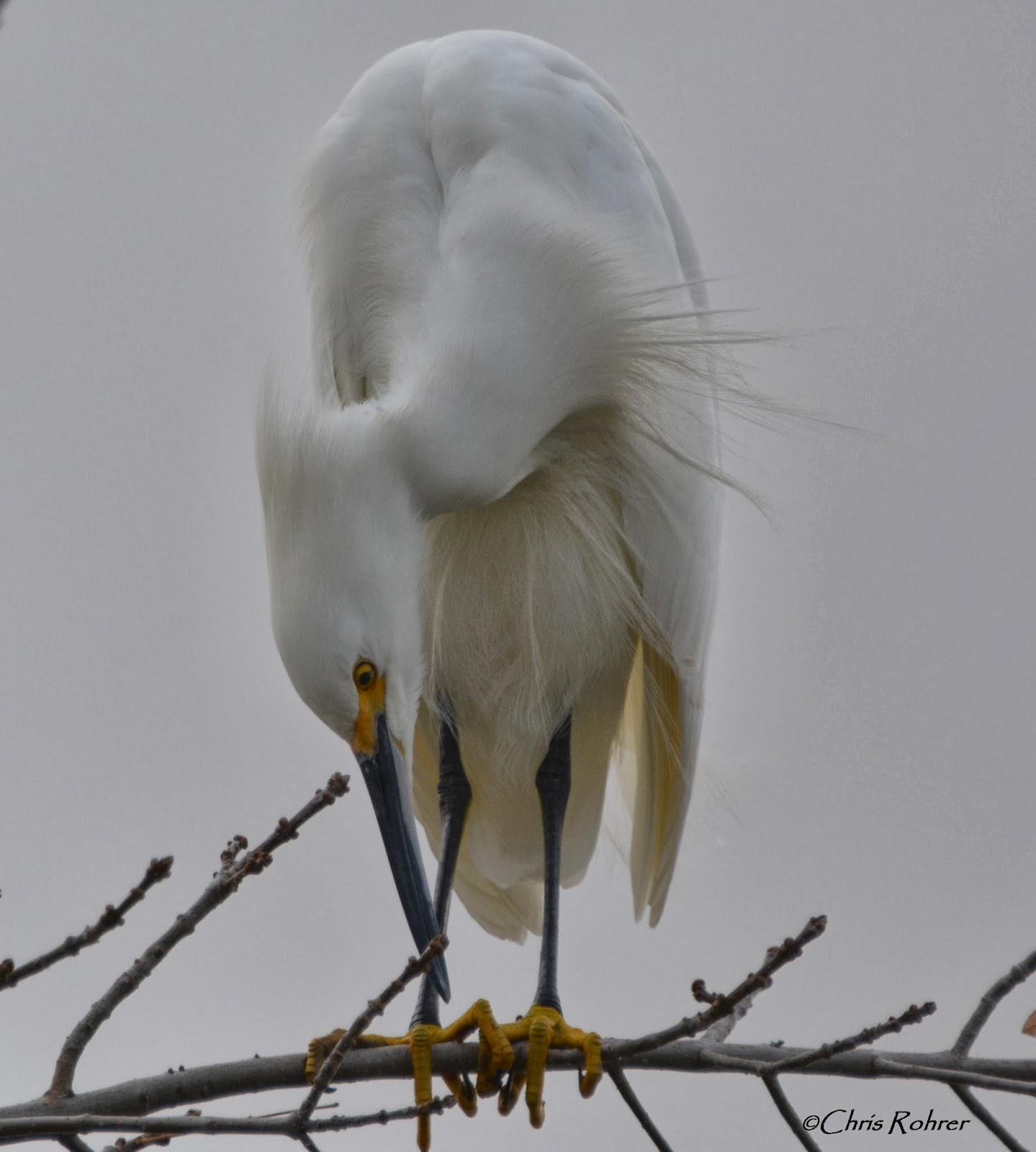
Snowy Egret

It has been an amazing January so far.  And the month isn't even over yet!  If it's one thing I learned about last year's BIG JANUARY, it's not about how many birds you find as it is more about locating the rare birds first. And then finding the easier ones along the way. With that strategy in mind, I've really been able to rake in the birds this month.  So here are some of my birder tips for the Big January Challenge.......

Eared Grebe
Study where each of the birds hang out.  It took me a year(and I'm still learning about new locations!) to figure out where everything is!

Female Costa's Hummingbird
Take a trip somewhere fun on January 1st to jump start your Big January. It doesn't have to be far, but preferably a place with a different habitat full of different birds that you won't find in your own area. We chose the ocean and found lots of great water birds that of course, are rare to our desert.
 
Marbled Godwit
Familiarize yourself with human behaviors.  People can be difficult to work around....especially the ones with dogs.......and truly the ones that refuse to keep their pets on a leash!!!  Once people enter the picture on the trails or beaches, the birds disappear.  So understanding human routine is very important.  Plus birds are the most active during those early hours of sunrise. If you are chasing a rare to find bird, head directly to the area where it is seen and DO NOT STOP to count the other birds.  That can come later. More than likely the bird will be gone if you make too many stops. 

Fox Sparrow
As a global community, we have forgotten about working together.  Many things are done online or with computers which of course takes the human equation out of the picture.  I have found in my own profession that much of the work is now mandated without discussion.  Collaboration is just a word.  But in the real world it is still very much alive. Teaming up with other birders has allowed us to find greater amounts of birds and share in that celebration. And it is a celebration.  The greatest gift for a birder is a life bird. Plus we're really easy to shop for....anything with a bird on it:)


Recently, I teamed up with Gordon's Birding Adventures, Kathie Brown from Kathie's Birds and Melody Kehl(a bird guide who knows her stuff!) and Audubon. And there are more dates with other birders coming up.  We can accomplish the impossible with an extra set of eyes or ears. Together we all enjoy the benefits and beauty of this passion we call birding. 

Allen's Hummingbird
I will follow up with totals and other incredible birds on part 2 of this "Bigger" January in a few weeks.  But for now I'll leave with some special moments while on the trails.

Whimbrel

Willets

Townsend's Warbler

Mexican Spotted Owl

Rosy-faced Lovebird

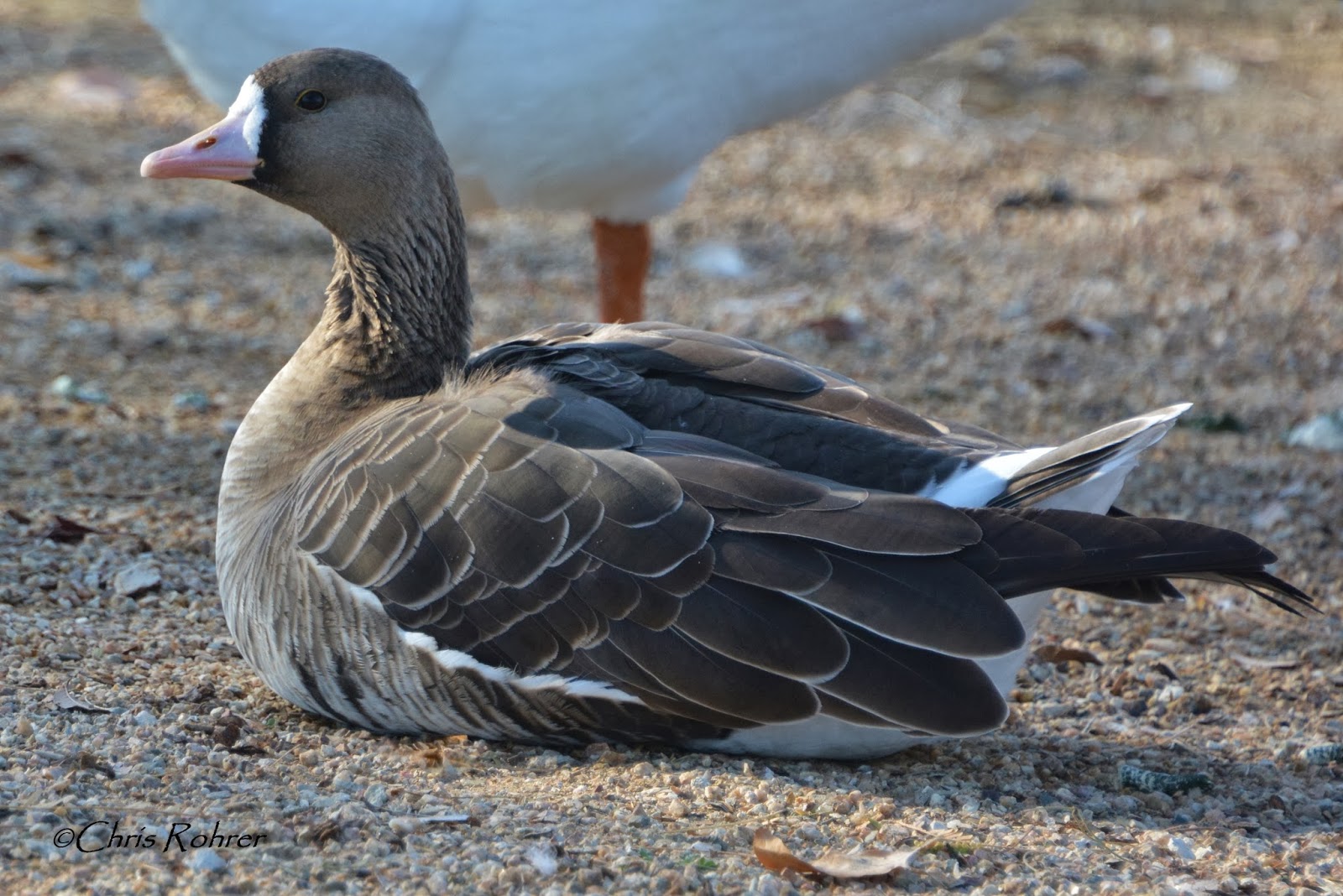
Greater White-fronted Goose
Harris's Sparrow(juvenile)

Western Screech-Owl


Rufous-capped Warbler
Elegant Trogon
And that's why this January has been a much bigger January:)  Stay tuned for more......

Monday, April 29, 2013

The Salton Sea

      Today marks the end of the Salton Sea adventures.  I think the pic above captures the image of humanity and birds living together.  Is it as beautiful as the Egret suggests?  Probably not.  But I think what I loved most about the whole experience was that it was different from other birding adventures I've recently taken. Some places recharge the birding battery and this was one of them.  
Lesser Nighthawk
We never know who to expect at each of these places.  I prayed to the bird gods and they answered by sending me a Lesser Nighthawk perched!  Never in my life had I expected such a clear and wonderful shot of this bird during daytime hours.  And the trickiest part?  Spotting the bird on the branch.  Look at how camouflage plays an important role.
American Kestrel
An American Kestrel flies from the phone lines as we walk back to our cars at the Sonny Bono center.
American Avocet
We find all kinds of sea birds feeding from the water along the shore.  I have to watch my salt intake, but apparently, they do not:)
Eared Grebe
Eared Grebes numbered in the hundreds here on this day.  I finally got to see one in full regalia!!!!  Exciting!
California Gull
California Gulls, Long-billed Dowitchers.......easy views with great observation time for each of these birds.
Long-billed Dowitcher
Terns were such a nice change of scenery for me.  I love my desert/mountain birds, but it's nice to switch it up every now and again.
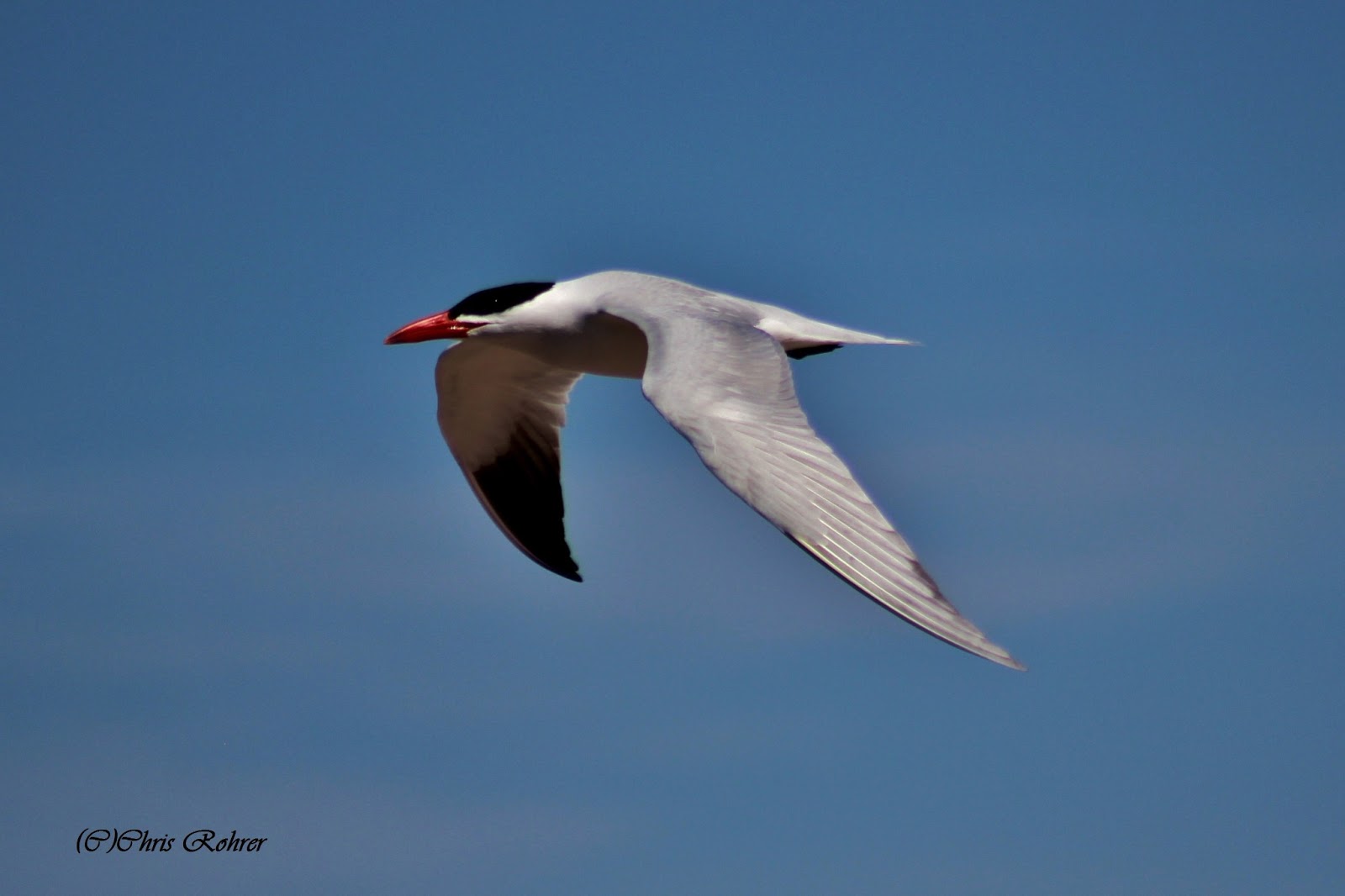
Caspian Terns
Willets stood calmly along the water edge.
Willet
The whole experience is something I'd recommend for the adventurous birder not minding a little dirt with some fish bones in their shoes.
There is a documentary out there called "Bombay Beach" that addressed many of our questions while we birded there like......"Who lives here?"  We were interested in discovering what it's like living along the Salton Sea as the movie follows 3 individuals and their lives.  It is on our Netflix account and we were fascinated by it all. All I will say is that California is a diverse state that offers MANY varieties of landscape.
Caspian Tern
Apparently there is a horror flick out there with Val Kilmer called, "The Salton Sea."  We did not watch that one:)

Long-billed Curlew

The best part about exploring is understanding the culture and people surrounding the birds.  I walked into a nearby gas station for some drinks.  The lady behind the counter asked if she could help me.  It took me a second to respond because the people were so strange and interesting.  One man purchased, in Spanish, two gallons of milk with a pack of Marlboros. The Saltonian clerk responded flawlessly with a tad bit of a gringo accent in Spanish.  NOW that made me absolutely happy! Spanish teacher moment:)  But I kept my secret powers hidden and didn't let on that I could understand a single word.  The woman then turned to me and said that I looked lost.  She followed up with, "What brings you out here?" 
"Birds",  I responded.
"Are you one of them orni...ornitheologists?"
Not quite but I said, "Yes." without a blink.  I wasn't lying because I do believe in the power of birds and how they will change a person's life. Instead of a church, synagogue, temple or mosque, I worship the Audubon Society.  A secret society of bird nerds dedicated to saving our birds.
Her tone changed to a formal register and told me, "God bless you." I didn't know how to respond to that but the Cheesehead in me responded with, "Thank you.  Enjoy your day."  I'm not into the religious stuff at all but I understood her intent.
Her positive thoughts were lovely and she sent me with a smile as I left the building into the wave of heat.   I'm just hoping that that guy doesn't smoke while drinking his whole milk. That's not healthy. 
More from Las Aventuras soon.