Showing posts with label American Avocet. Show all posts

Friday, September 7, 2018

The Highs and Lows

The carpeted green valley below Kitt Peak
Lately, I've been focused on the job that pays for my health insurance.  The start of the new year for every teacher is a tricky one.  If you set the tone right during the first several weeks, the rest of the year is perfection when it comes to classroom management.  On top of the main job, I've also been working on our house project that includes lots and lots of planning.  And on the weekends, I eagerly escape to go birding with friends. 

a Canyon Wren plays hide and go seek with us
Gordon came down for the weekend and we decided to do fun birding in cooler settings.  Kitt Peak was new for Gordon and it was just a nice get away from the heat.  For the first time in a LONG time, we should have brought our sweatshirts!  It was cold!  What a wonderful thing!

Yarrow's Spiny Lizard
 In fact, this is the end of summer for us.  It's the height of insects and migrating birds and bats.  September is so GREEN and buggy!  This is the best time of year for butterflies.  The trails are full of them!

a stock photo from several years ago on Kitt Peak.  This is the area we covered birding
We headed south of Tucson towards Sells on the Indian Reservation.  There's a peak that has telescopes on it.  And that's where we birded the morning finding lots of fun birds.  

Mexican Jay
We found Mexican Jays collecting acorns from an oak tree. 

juvenile Mexican Jay
 Spotted Towees appeared to be marking territories for yet another nest.  


Spotted Towhee
Meanwhile butterflies stole the show. 

Bordered Patch Butterfly
Down below in the valley, the wildflower show was incredible.  The rains have been good to Southern Arizona and the oranges, blues, purples, reds, yellows and pinks are confirmation of a happy desert. 

Arizona Poppy
One area was thick with wildflowers.  A beautiful carpet made by nature. 

Trailing Windmills
 There was no shortage of bugs. I try to escape the chiggers and mosquitoes, but they somehow find me. 


Plains Lubber Grasshopper
 The heat finally ends our Saturday of birding fun.  Sunday comes and we were looking forward to exploring Reddington Pass.  This was another new area for Gordon, but as we exited our place, we hit a wall of heat and changed the plans. 


American Snout
We wanted an easy place to bird, get water, have a nice lunch and see fun things.  The Arizona-Sonoran Desert Museum was the perfect fit.  While it's technically a "museum", it's much more than a building full of crap.  Here you can explore the wild spaces and see lots of real and wild critters that hang inside and outside of cages.  It's a great place to look for desert birds like the Cactus Wren or Gilded Flicker. 

Gordon and Micheal scour the Desert Museum property for butterflies, lizards, birds and other odd insects
Another unique species that lives on the grounds is an iguana that has survived decades on the property.  

San Esteban Island x Sonoran Spiny-tailed Iguana
Meanwhile we checked out the other critters hanging out around the riparian/desert corridor of the museum grounds.

male Bighorn Sheep struts his stuff

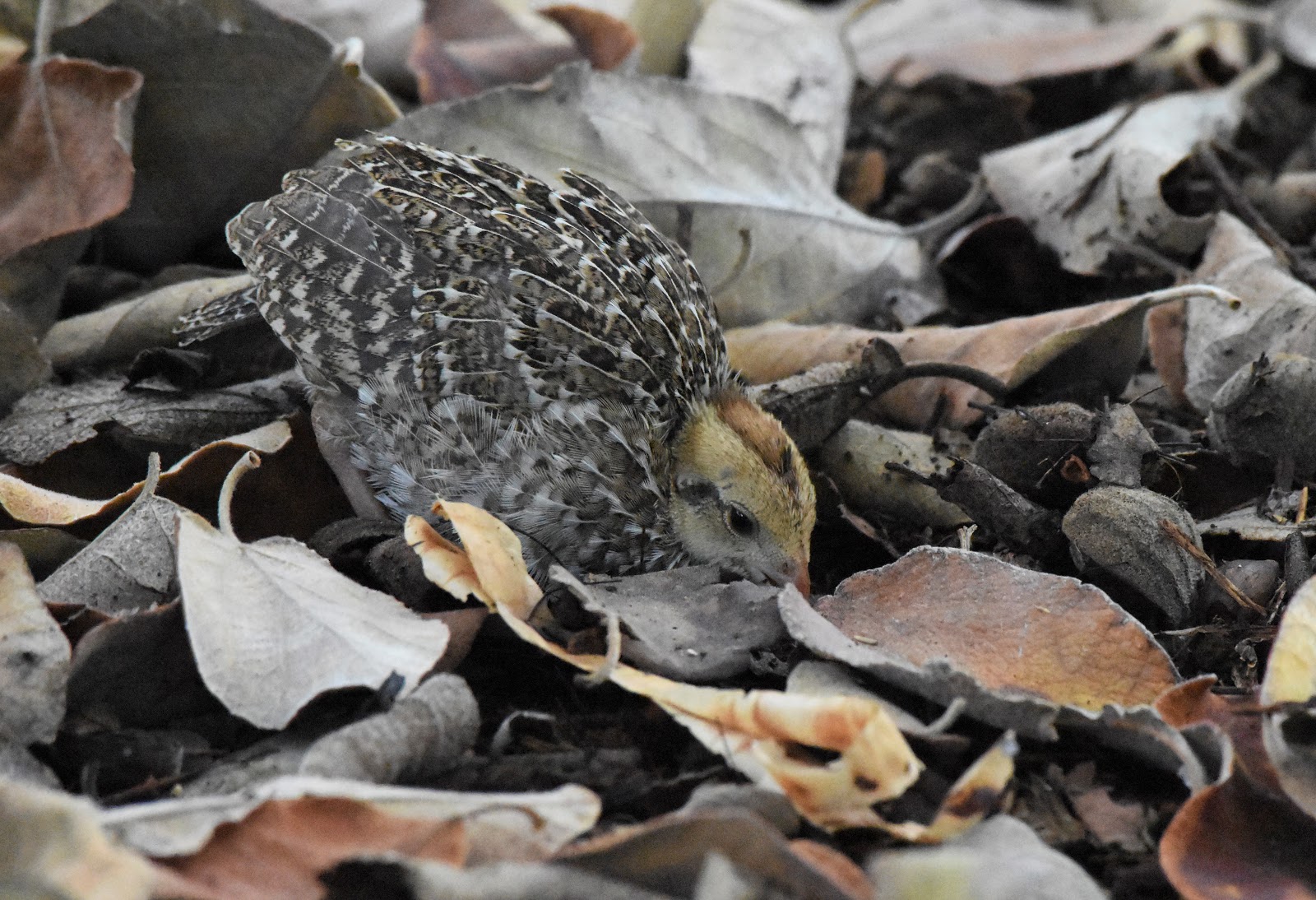
Eventually we made it to the aviary.  This year, I have spoken with many people about this subspecies of Northern Bobwhite below. The Masked Bobwhite is VERY rare and can only be found at the very close border of Mexico and Arizona on a few ranch lands.


the extinct-in-the-wild subspecies of Northern Bobwhite(Masked Quail)
They are breeding these birds to release in the wild, but even when we go to study them in the cages, they can be difficult to see!  So it was a real treat to find that this pair had mated....and had a chick!


I know it's a caged bird, but it's so rare in the wild that practically no one has seen these birds at all beyond a stuffed model on display for what used to live in the grasslands. To see them like this close up was spectacular. Over the years, I've seen only one in the aviary and she was always hiding.  Not on this day!


And that chick was adorable. 


After work, I'm exhausted.  The heat drains the life out of me. The mornings are lovely and it's really the only time to do any birding.  You get a 4 hour window and that's it.

Olive-sided Flycatcher
A lovely win for the week was an Olive-sided Flycatcher hanging out at my local patch that I monitor weekly.  And a very human downer happened when I misidentified a juvenile Black-crowned Night-Heron for a super rare Yellow-crowned Night-Heron.  To be fair to myself, many others thought it was a juvi Yellow-crowned Night-Heron as well.

American Avocet
I got two minutes to look at the bird from a distance, snapped my shots and then had to wait until I got home to look at them.  Magill got home before I did and looked at the pics up close and said, "Nope.  This is a juvenile Black-crowned."  Our hearts sunk.  The ID is a tricky one, but next time I'll be looking at that bill better. 


Birding in Dateland and surrounding areas for shorebirds
The juvenile Yellow-crowned Night-Heron has an all dark conical bill where the juvenile Black-crowned Night-Heron can have some yellow in the bill. Oh well.  You win most and lose a few every once and awhile.

Black-crowned Night-Heron
We randomly explore the state and search for something fun to show up. I wouldn't do it alone as it's more fun birding with friends during this nasty and beautiful time of year. We motivate each other to bird during these trying times. Migration is upon us and every day, there is something just waiting to be found.  Will you find it?  Until next time.

Wednesday, October 28, 2015

Antelope Island

Bison at Antelope Island State Park
We wandered further North into the state of Utah searching for the Chukar. This bird originally hails from Pakistan but was introduced into the US as a game bird.  The bird prefers rocky and arid landscape which was exactly the reason why we had to go to Utah.


Helping us find this bird was none other than Mia McPherson.  She is one of the best wildlife photographers out there.  And it turns out that she's also a wonderful person to get to know!  Our main target was the exploration of Antelope Island State Park near Salt Lake City.  It's located within the glassy waters of the Great Salt Lake.


Thousands of American Avocets hang out near the causeway
As we scanned the causeway onto the island, we saw thousands of birds covering the patchy stretches of water around the Great Salt Lake. Today that "lake" is disappearing due to drought conditions and water usage. Waterless piers that once held skimmers are now void of any traffic.  Hopefully, Utah will benefit from the wet El NiƱo winter pattern that has begun to take hold for many of the Western states.  

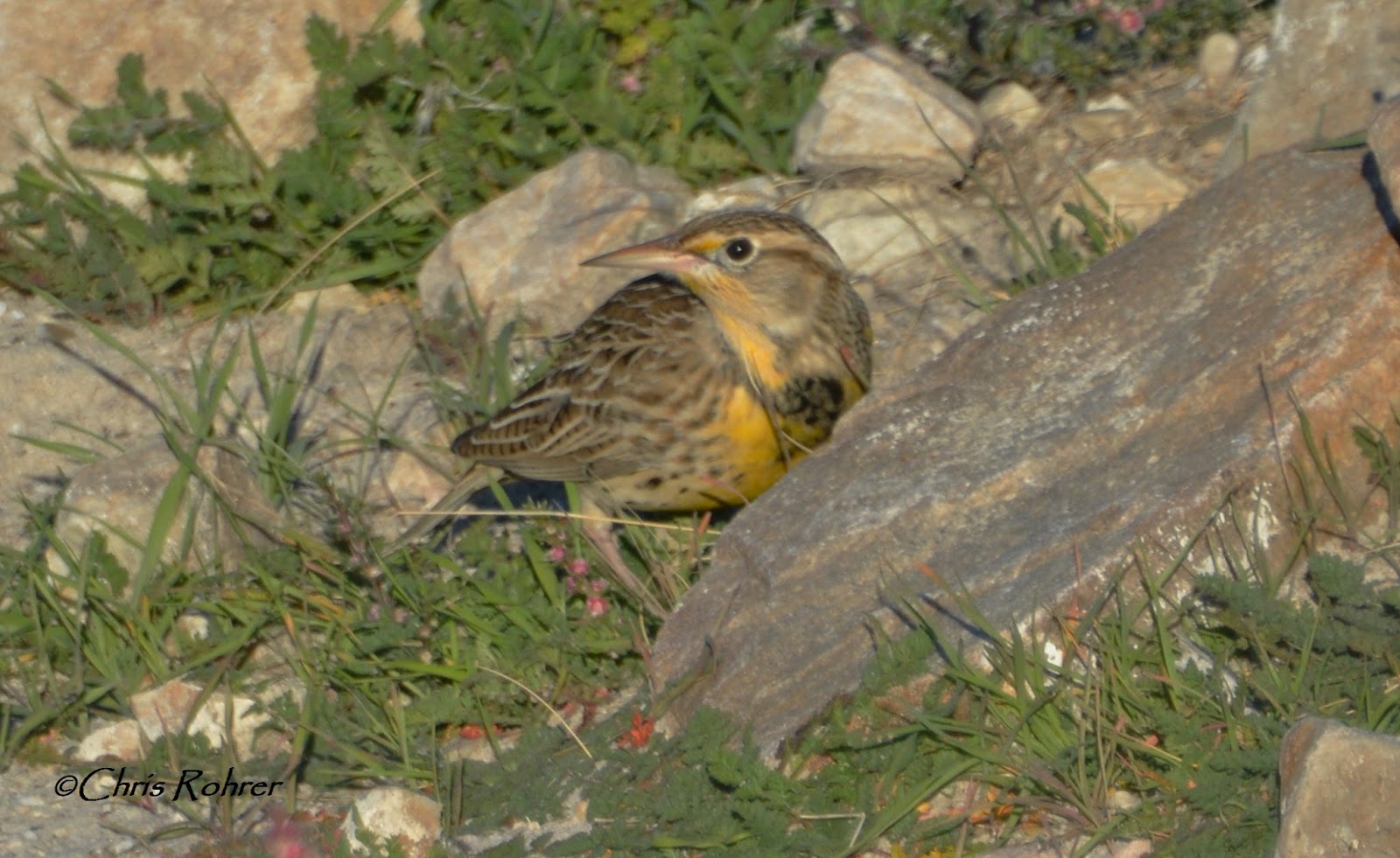
Western Meadowlark near the empty piers
And yet, there are still areas that have larger patches of water. It's strangely a beautiful sight to see.  There were so many water birds around this island that I forgot we were exploring a drier area of the US. 

Phalaropes fly over our heads from out of nowhere!
Once on the island, I kept my eyes and ears open for the Chukar.


Several moments later, I heard "different" birds making an unusual chatty sound nearby the visitor center.  My eyes focused on the various rock outcroppings and boulders in the area.  And then......


......it happened!  I saw Chukars sitting on top of rocks.  And not just one or two but MANY!  I quietly walked down the path and turned the corner of a large boulder.  As I did, a pair of Chukars faced me only several feet away.  And in that moment of quiet, we watched each other carefully.

Chukar
Antelope Island is truly a magical space that doesn't feel anything at all like Utah.  Or maybe it does feel like Utah? I don't know.  I haven't visited enough of Utah to make a judgement, but I can tell you that I loved it. I highly recommend this state park for a visit. There were RV's parked in their camping areas and I was a bit envious that people were able to spend several nights on this island.

Sage Thrasher
The golden light of the Utah sun made for wonderful photo opportunities. A pair of Sage Thrashers popped up on greasewood for some lovely views.

Horned Lark
While Mia navigated around the island, we were always careful to keep an eye open for the many bison walking around the roads and paths.


We stopped along the way investigating unusual habitat on the island.  At this particular stop(below), Mia showed us an older Black-billed Magpie nest.  This dome creation is a piece of art!


At one point, I had my window open and almost fell asleep.  I was SO relaxed. The urban sprawl of Salt Lake City stopped at the the entrance to the causeway.  And the island was a sanctuary of peaceful thoughts.


The golden browns of the landscape can make bird spotting a challenge.  Take for example this Wilson's Snipe below.  Mia spotted the bird along a riparian area and it took me several minutes to find her snipe!!!  It was only a couple feet away from my face!  Camouflage!

Wilson's Snipe
Our adventures in Utah would continue one more day.


I'd like to thank Mia for her friendship and also for her time showing us around the natural spaces of Salt Lake City.  I will never forget this trip out to Antelope Island. 


On our final voyage into Utah, there was one other bird I so badly needed to find.  Stay tuned for more......


Saturday, May 2, 2015

Veni, Vidi, Vici

The power and beauty of nature! at Empire Gulch
This weekend was a whirlwind as the Wrenegades united once again for a good cause to find as many birds as we could around Southern Arizona. It was a successful trek into mountain, riparian, desert and grassland habitats.  Along the way, we avoided heat stroke, falling asleep at the wheel and a rabid skunk attack!

Northern Pygmy Owl
 Overall, our team discovered 163 birds which beat our record from last year. There were a lot of great birds that unfortunately were too far for my camera to pick up. Or it was too dark!  Among my favorites were an Olive-sided Flycatcher, Flammulated and Barn Owls, and Buff-breasted Flycatcher.

Two-tailed Swallowtail
 Timing is everything on these trips and it's tricky business doing three things at once. However, I need to train and practice for this upcoming Mexico trip! Finding the birds.  Entering the data.  And photo documentation.  By the end of our Audubon Birdathon, we were exhausted. I fell asleep but woke up later with a splitting headache!  I've never experienced that kind of pain before and I think it was related to an overworked eye.  It's intense non-stop birding that really doesn't allow for a break.  So when I got home, I took a shower and fell asleep. 

Wrenegade strategist and data analyst Tim leads the team over a stream to potential birds while Wrenegade surveyor Sara carefully scans the surrounding area with her excellent spotting. 
 But our treks were successful and very rewarding. Anytime you work with a group, you always pick up something new that you didn't know before. Take for example, these Black-tailed prairie dogs(below).  They are a threatened species that have been reintroduced back into the CiĆ©nagas Grasslands near Sonoita after being wiped out since the early 1900's.  These mammals have been doing very well and seem to be reestablishing their population once again. In the past, ranchers poisoned these "pests" off their lands. This is a keystone species for the grasslands in that other species benefit by their presence.  Without them, other species begin to decline.  Since their introduction, Burrowing Owls have returned thanks to the abandoned Prairie dog burrows. 


In other news, I have been following my heart on several other birding treks.  We were going to hike up a mountain a week ago but it had rained that day.  Working on a hunch, we headed down to Cochise Lake and scored big!  Not only was it freezing cold(very unusual this time of year) but the storm pushed a thousand+ shorebirds our way!  Hot birds for this frigid day included my first state Sanderling, a Greater White-fronted Goose, Bonaparte's Gull, Forster's Tern, and my favorite, the Franklin's Gull(below).  


Large numbers of Lesser Yellowlegs(below), Long-billed Dowitchers and Wilson's Phalaropes were also present. White-faced Ibis and Marbled Godwits dotted the lake shore as well.  It was an amazing day out. Plus shorebirds are a fun challenge. Sometimes you gamble and win!  This day was definitely one of those times:)

Lesser Yellowlegs
It's now May and my current list for North American birds is at 303 species for the year. Last year I finished the year with 476 birds(including Mexico).  This year I hope to beat that number with 500. The Life bird chase has slowed down dramatically now until I am free from work for the summer.  This year has been quite unique for me. The "Americano" chapter of my birding life feels different.  For one thing, it lacks the crazy adrenaline chases of last year's "Across America".  It's much more relaxed, but I find myself pulled in deeper to the birds that I know. For many I smile, but for others I worry. 

American Avocet
For example, the Barn Owl below.  I have been documenting a lot of dead Barn Owls this year along our highways.  This particular LIVING owl is also nearby the interstate and I worry for its safety.  They are low flyers and are often hit by motor vehicles. Their numbers seem to be in decline in many areas.  When I see an owl, I get excited, but I never want to disturb them.  I quickly snap their picture from a distance and leave.  Sacred birds, they are.  I wish this one well!  


I leave you with a collage of the owls I've seen this year.  I've heard several others and will hopefully get some photo documentation on them. The Flammulated Owl still evades my camera. Although it had no problem flying over my head early Friday morning! Next week, we slow down and enjoy an event known as "The Big Sit".  If you'd like to donate to the Tucson Audubon, click here. A login is not required after you go to the donate button. Remember, we are the Wrenegades and our fearless leader is Jenny Wren:) A Birdathon Big Day is an important way to share the excitement of being outdoors and watching birds while raising funds to support the programs that make this region a better place for us all to live(or visit!) and enjoy. Since 1987, Birdathon has garnered support for birds and bird-friendly habitats, and for Tucson Audubon's work to conserve these unique natural resources and to educate our community on their importance.  Until next week friends....


Top left-Long-eared owl, Top right- Barn Owl, Bottom Left-Spotted Owl. Middle Right-Great Horned Owl  Bottom Right-Northern Pygmy Owl