Showing posts with label American Snout. Show all posts

Friday, September 7, 2018

The Highs and Lows

The carpeted green valley below Kitt Peak
Lately, I've been focused on the job that pays for my health insurance.  The start of the new year for every teacher is a tricky one.  If you set the tone right during the first several weeks, the rest of the year is perfection when it comes to classroom management.  On top of the main job, I've also been working on our house project that includes lots and lots of planning.  And on the weekends, I eagerly escape to go birding with friends. 

a Canyon Wren plays hide and go seek with us
Gordon came down for the weekend and we decided to do fun birding in cooler settings.  Kitt Peak was new for Gordon and it was just a nice get away from the heat.  For the first time in a LONG time, we should have brought our sweatshirts!  It was cold!  What a wonderful thing!

Yarrow's Spiny Lizard
 In fact, this is the end of summer for us.  It's the height of insects and migrating birds and bats.  September is so GREEN and buggy!  This is the best time of year for butterflies.  The trails are full of them!

a stock photo from several years ago on Kitt Peak.  This is the area we covered birding
We headed south of Tucson towards Sells on the Indian Reservation.  There's a peak that has telescopes on it.  And that's where we birded the morning finding lots of fun birds.  

Mexican Jay
We found Mexican Jays collecting acorns from an oak tree. 

juvenile Mexican Jay
 Spotted Towees appeared to be marking territories for yet another nest.  


Spotted Towhee
Meanwhile butterflies stole the show. 

Bordered Patch Butterfly
Down below in the valley, the wildflower show was incredible.  The rains have been good to Southern Arizona and the oranges, blues, purples, reds, yellows and pinks are confirmation of a happy desert. 

Arizona Poppy
One area was thick with wildflowers.  A beautiful carpet made by nature. 

Trailing Windmills
 There was no shortage of bugs. I try to escape the chiggers and mosquitoes, but they somehow find me. 


Plains Lubber Grasshopper
 The heat finally ends our Saturday of birding fun.  Sunday comes and we were looking forward to exploring Reddington Pass.  This was another new area for Gordon, but as we exited our place, we hit a wall of heat and changed the plans. 


American Snout
We wanted an easy place to bird, get water, have a nice lunch and see fun things.  The Arizona-Sonoran Desert Museum was the perfect fit.  While it's technically a "museum", it's much more than a building full of crap.  Here you can explore the wild spaces and see lots of real and wild critters that hang inside and outside of cages.  It's a great place to look for desert birds like the Cactus Wren or Gilded Flicker. 

Gordon and Micheal scour the Desert Museum property for butterflies, lizards, birds and other odd insects
Another unique species that lives on the grounds is an iguana that has survived decades on the property.  

San Esteban Island x Sonoran Spiny-tailed Iguana
Meanwhile we checked out the other critters hanging out around the riparian/desert corridor of the museum grounds.

male Bighorn Sheep struts his stuff

Eventually we made it to the aviary.  This year, I have spoken with many people about this subspecies of Northern Bobwhite below. The Masked Bobwhite is VERY rare and can only be found at the very close border of Mexico and Arizona on a few ranch lands.


the extinct-in-the-wild subspecies of Northern Bobwhite(Masked Quail)
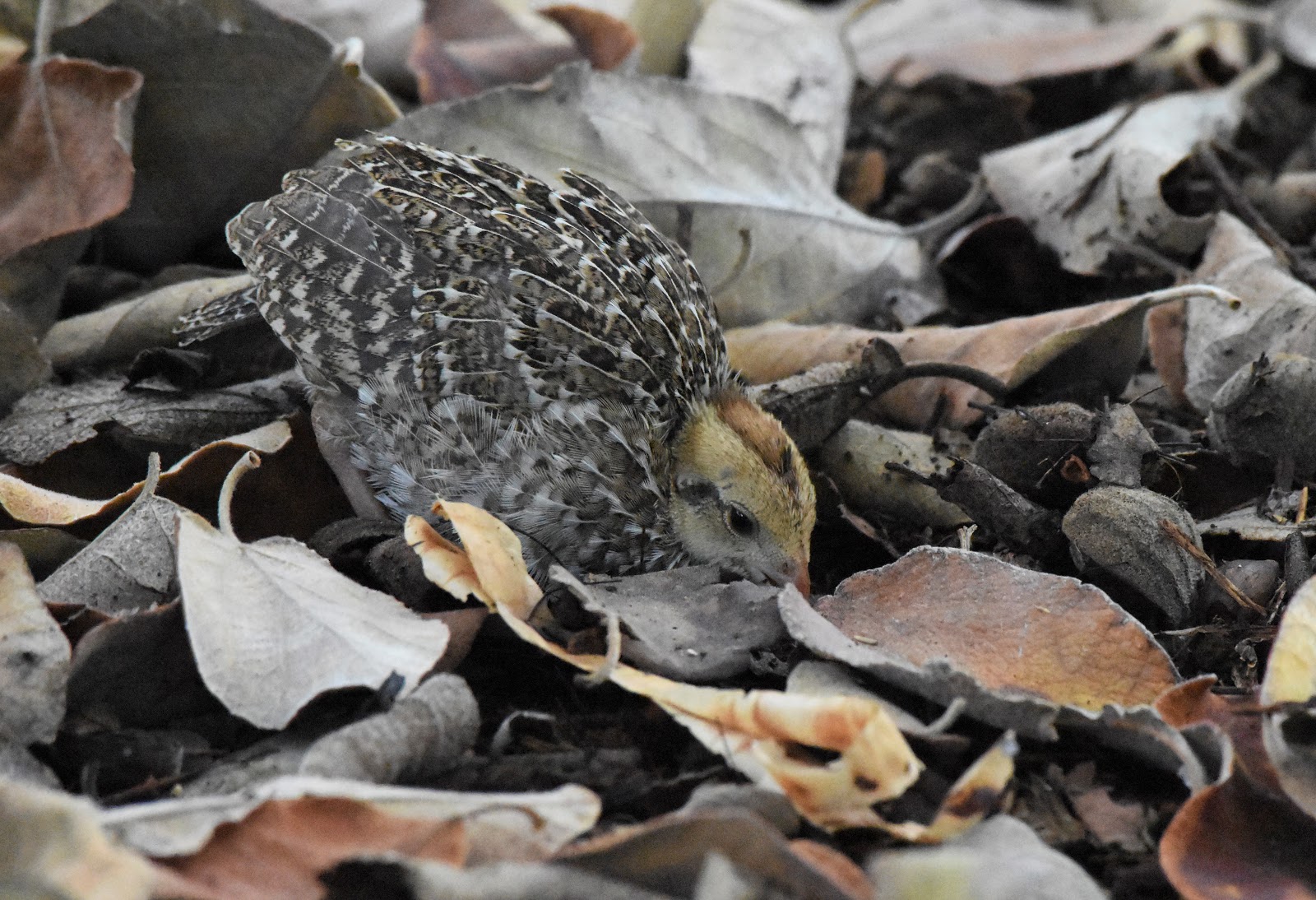
They are breeding these birds to release in the wild, but even when we go to study them in the cages, they can be difficult to see!  So it was a real treat to find that this pair had mated....and had a chick!


I know it's a caged bird, but it's so rare in the wild that practically no one has seen these birds at all beyond a stuffed model on display for what used to live in the grasslands. To see them like this close up was spectacular. Over the years, I've seen only one in the aviary and she was always hiding.  Not on this day!


And that chick was adorable. 


After work, I'm exhausted.  The heat drains the life out of me. The mornings are lovely and it's really the only time to do any birding.  You get a 4 hour window and that's it.

Olive-sided Flycatcher
A lovely win for the week was an Olive-sided Flycatcher hanging out at my local patch that I monitor weekly.  And a very human downer happened when I misidentified a juvenile Black-crowned Night-Heron for a super rare Yellow-crowned Night-Heron.  To be fair to myself, many others thought it was a juvi Yellow-crowned Night-Heron as well.

American Avocet
I got two minutes to look at the bird from a distance, snapped my shots and then had to wait until I got home to look at them.  Magill got home before I did and looked at the pics up close and said, "Nope.  This is a juvenile Black-crowned."  Our hearts sunk.  The ID is a tricky one, but next time I'll be looking at that bill better. 


Birding in Dateland and surrounding areas for shorebirds
The juvenile Yellow-crowned Night-Heron has an all dark conical bill where the juvenile Black-crowned Night-Heron can have some yellow in the bill. Oh well.  You win most and lose a few every once and awhile.

Black-crowned Night-Heron
We randomly explore the state and search for something fun to show up. I wouldn't do it alone as it's more fun birding with friends during this nasty and beautiful time of year. We motivate each other to bird during these trying times. Migration is upon us and every day, there is something just waiting to be found.  Will you find it?  Until next time.

Tuesday, June 6, 2017

Shadowhunters

Babs enjoys a nice scope view of the Rose-throated Becards with a kind birder.
 I have been wanting to write a little bit about birding Arizona during our intensely hot summer months. Specifically, the month of June. When guests come to visit, I have very little energy to go with them during a whole day and find birds.  Our temps average around 104-115 degrees during the month of June.  And while those temps are dangerous, there are things you can do to avoid dying on the trails. 

Varied Buntings breed in Arizona during the summer months
 It is NO secret that Arizona birding is one of the best places in the world to go and find unique and beautiful species of bird.  But the same can be said of our herpes, bugs and mammals.  Our summer months offer excellent opportunities to find rare and unique southwestern flora and fauna.   


With that being said, I often lack the energy to wake up and explore.  Why?  Well, sunrise here begins around 4:30 AM.  And the birds begin their song at that time.  So what can a birder do to make their visit to Southern Arizona more comfortable?


Bring a friend/s.  They help motivate.  For myself, I groan at the 4:30 AM wake up call but I am always excited about the incredible discoveries we made afterwards in the field.  Also, if there is an injury on one of our rugged trails, you'll have someone who can get help.  I cannot tell you how many times people will get heatstroke or nearly pass out after their first day out.  They overextend their birding excitement and wear out quickly.  This brings me to......

Canyon Tree Frog
 Water.  You MUST bring water with you at all times.  If your car breaks down, have water with you.  Put a water pack on your back and drink drink drink!  You'll prevent the severe headaches at night by staying hydrated.  And speaking of evening.....

Coue's Whitetail Deer
 It's one of the best times to go birding for rare and exciting nightjars, mammals, owls and more!  Again bring a buddy because there are many wild elements here in the desert.....like snakes.  Snakes love to hunt at night.  So do most of our critters.  

Lophocampa mixta, Tiger Moth.  Thanks Margarethe for the ID
As mentioned before, go early in the morning.  Best time to bird is anywhere from 4:30 AM until 10 or 11 AM.  Stay in the shade as often as you can.  Go to higher elevations or shady canyons to make your birding experience much more enjoyable. 


American Snout
Try to stay in a local area and bird so that you don't waste that valuable birding time in the car. For example, you could stay in Sierra Vista and then bird the many canyons and riparian hotspots around the city. As the day gets hotter, the bird activity dies down. Most birders at this point take a nap or get lunch. 


BUT if you are in your car, you can also bird.  How?  Well check this out.  Birding from your vehicle is a real thing.  My Wisconsin peeps often bird during the cold winter months from their warm vehicles.  It's no different here.  Places like Saguaro National Park(East Rincon Unit) offer a 9 mile loop where you can drive and park at your leisure for birds and critters.  For lunch, you can stop at the Javelina Picnic area under the shaded ramadas.  Birds, like the Canyon Towhee, Gilded Flicker or Black-throated Sparrows, will casually hang out and watch you relax and chow down.  


Western Screech Owl
So what is my technique?  Well I love the cold temps of our winter months here so I really utilize my time wisely outdoors.  When summer comes, I call up friends to go out for some early morning  birding.  If I don't, I sleep in and waste away inside my house. 

Blue Grosbeak
I tend to go later in the afternoon, around 5 or 6 PM when the intensity of the sun is less.  Temps are still hot but a breeze usually starts up and makes it a bit tolerable. 


Scaled Quail
 I also tend to hit the higher elevations and canyons for shade. And in the desert, I park and scan from my car.  

Gambel's Quail
 This past week was a fun one.  I went one evening to Madera Canyon and watched birds at the feeders.  There were a lot of great birds but the one everyone was thrilled to see at the feeders was the Varied Bunting.  They can be tricky to capture on camera because of the lighting conditions. Their colors are so wild that the camera often has issues sorting them out. 


Gila Woodpecker
And this past and current week should be titled the week of the "BLUE GROSBEAK".  They were most numerous around the San Pedro Riparian area.  We could not get over the dozens of blue dots flying around the feeders. 


Blue Grosbeak
We also stopped at Ramsey Canyon on an overcast day and did a survey in the humid, yet wonderful, shade of that canyon.  

Giant Mesquite Bug
An early morning trek with Babs lead us to a happy observation.  Rose-throated Becards are breeding in AZ again.  We suspect they were there last year but no one saw them. An old nest hangs nearby their current one suggesting that they were most likely present last year. While that trail has been there for some time, it wasn't as fixed up as it is now. While we were on the trail, there were some workers cleaning up the area for better access. It has been a good year for this species in AZ after not having many reports of them over the past several years.  

Nesting Rose-throated Becards-finally!

June is also the best month to escape the heat and take a holiday/vacation.  Many Arizonans head to San Diego or Rocky Point, Mexico during this time to enjoy the ocean and cool temps. If I take a vacation in June, I always make sure I'm home for July because the monsoon show is spectacular. Below I have several reports from our treks around Southern Arizona this past week.  Until next time...... 

For the Rose-throated Becards, click here.

For the Flame-colored Tanager and Ramsey Canyon, click here.  

For the Rufous-capped Warblers in Florida Canyon, click here.  This is the trail you need to explore early and with a friend.  It can be moderate to difficult due to the trail above the dam area.  The trail is steep with loose rock in some areas.  A walking stick is advised as is a water pack.  So why go?  It's one of the birdiest. Just be careful around the dam area.  

For the easy Varied Bunting add at the Santa Rita Lodge, click here

For the Blue Grosbeak excitement, click here

Monday, October 1, 2012

Looking Back-Butterflies and Moths


Skipper at Madera Canyon
At the Tucson Botanical Gardens, we begin our Butterfly Magic.  It's a sign that fall has begun here.  But let's not be so quick to say goodbye to our butterflies out in the wild.  Mother Nature's show has been an exciting one this year.  Here's a look back at some of the butterflies and moths I was able to get over this past summer. 
Spring Azure Butterfly in Madera Canyon

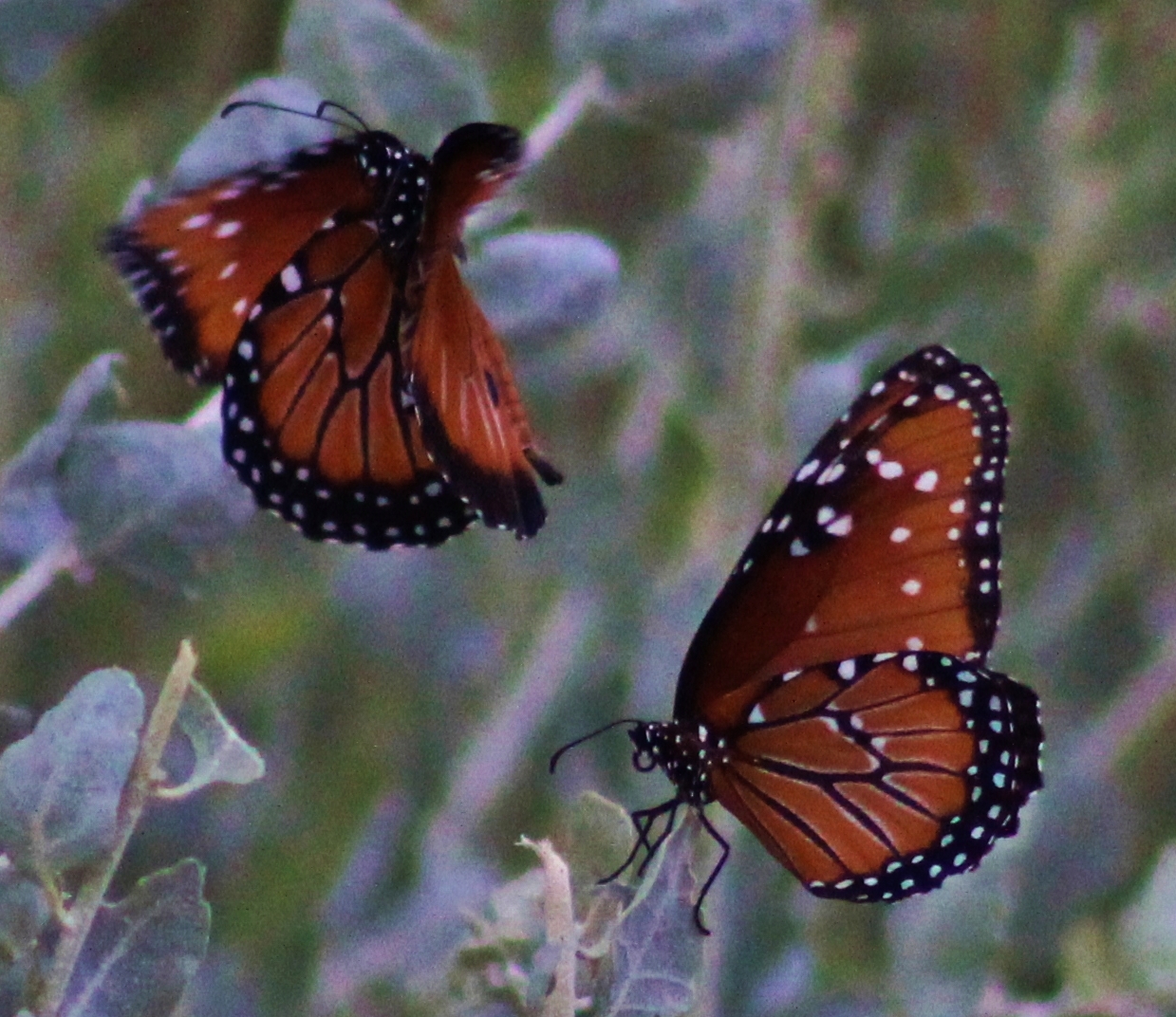
Queen Butterfly mating at Sweetwater Wetlands in Tucson, AZ

Painted Lady in the Sonoran Desert at Wassom Peak

Mourning Cloak at Patagonia Lake, AZ

Marine Blue taken at my window here at El Presidio


Pipevine Swallowtail-Ramsey Canyon

Black Swallowtail-the pyramid of the Moon of Teotihuacan in Mexico City(wasn't this summer but it was still a cool shot)

Comma Butterfly, Governor Dodge State Park in Dodgeville, WI


Giant Swallowtail(above and below) in Tucson at our El Presidio Gardens


Arizona Sister-Ramsey Canyon

Common Buckeye, Governor Dodge State Park, Dodgeville WI

American Snout Butterfly-Woodland Dunes Wetlands, Two Rivers, WI

Question Mark Butterfly-Green Bay WI

Tiger Swallowtail Two Rivers, WI on the Lake Michigan Beach

Queen Butterfly in Miller Canyon

Black Witch Moth-Biosphere 2 in Oracle

Gulf Fritillary Tucson Botanical Gardens around their pots
Checkered White Butterfly-Santa Cruz Wash, Tucson
Cloudless Sulphur Butterfly-Ash Canyon
Variegated Fritillary-Patagonia/Arivaca Trail
Zela Metalmark-Ramsey Canyon
Checkerspot-Miller Canyon

Tiger Moth-Montosa Canyon
Sara's Orange Tip-Redington Pass

Funeral Dusky Butterfly-Miller Canyon
Dicogaster Coronada
Spring Azure Butterfly-Ramsey Canyon
Apatelodes pudefacta
Mexican Fritillary-Arivaca-Patagonia Trail

Two Tail Swallowtail-Montosa Canyon


The Tucson Botanical Gardens opens up their Tropical Butterfly Display today! On October 8th, I'll be working in the greenhouse during the afternoon from noon until 3:30. Maybe I'll see you there?  But if you can't make it, take a look around you.  How many butterflies and moths do you see fluttering about?