A first time photo of a Ross's Goose at Las Aventuras. While I've seen this bird many times, I haven't been within photo range. Note smaller bill sans the "smile" of the similar looking Snow Goose
Days free are spent on the road before the sun rises. It's really one of the truly peaceful times before dawn breaks. No waiting, chasing, or wondering if that rare bird will show up. It's just getting there while listening to the radio with my hot cup of coffee. As the sun begins to rise, a man with his crazy obsession for birds begins yet another quest. How will this day shape up?
A ray of light shines hope on our search for the Brown Thrasher
Once I arrive, I scan the dark path ahead. It's enveloped by fog. Rabbits and mice scamper across the trails. No humans anywhere to be seen except near the entrance where old men have decided to meet for coffee. Warm mist rises from the waters. It's here I stand in the chilly air watching geese bathe. My first target bird(the Ross's Goose) is revealed. I snap my pics behind a bush as I watch this beautiful bird preen its feathers. Early morning is a precious and finite time period with birds. One can't spend too much time on one bird without risking the dreaded dip on other target birds! Birds will "park" themselves in one spot overnight before taking off the next day. I had to move quickly and find the elusive Brown Thrasher. Like most thrashers, they are much more visible and vocal during the earlier hours of day.
Gila Woodpecker
I stand with another birder as we wait.....and wait.....and wait for this bird. It's almost a requirement for this particular bird. Finally, the bird makes a brief appearance several times and then disappears for good. While not the best views I've had of a Brown Thrasher, I decide to move on. I am able to add it onto my Arizona list.
The San Pedro River flows!
Another trail. Another bird. This time, I went looking for a feral Ring-necked Pheasant. Birders suspect that someone released this bird within the city of Gilbert. For several weeks, this bird has done well in this human created riparian area. This is definitely not a common bird around Arizona except maybe along the agricultural fields of the Yuma/California border.
Anna's Hummingbird
Blackbirds have put on some amazing shows this past week. They always flock in great numbers. Sometimes a Cooper's Hawk chases them. Other times it's the Northern Harrier.
Mixed flock of Red-winged and Yellow-headed Blackbirds
Hundreds of years ago, people wrote about millions of birds clouding the skies for days! never allowing the sun a chance to shine on the people below. Can you imagine?
Yellow-headed Blackbirds at sunset
In Tucson, Yellow-headed Blackbirds will flock in the thousands. And there's nothing quite like getting caught up in the middle of their microburst.
Meanwhile, the photographer has to put his camera down for the moment or he fears the risk of losing that brief sighting of a rare bird. It can be a bit frustrating at times, but he knows that not every bird will pose nicely.
House Sparrow
Understanding the meaning behind "competitive" birding has been quite the learning experience. It's a huge commitment of time. Artist and photographer have to sometimes take a back seat. Home improvements are put on hold (some of the cleaning may not always get done). Money goes towards gas and travel instead of clothes and other fancy things. Evenings are spent planning. Mornings are early to rise.
Northern Flicker
But when December 31st arrives, this birder will wake up on January 1st a normal man again. Or so he says....:)
Neotropic Cormorant
So I chase the silly birds, the real birds(the ABA kinds) and everything else in between. If it has wings, it's game. And between breaks, I stop and take it all in. What an incredible journey!
Domestic variety of Muscovy Duck
So as the month of December continues and the birding gets extremely competitive, I remember several things to keep my sanity. It's all about the friendships, birds and experiences gained.
Huachuca Canyon
At one point this weekend, we couldn't bird anymore. The rain began to fall and I stood there smiling. Perfection. As the darkness takes over, I prepare to rise again. Each day with a new challenge. Each day a reminder that life is truly wonderful.
I've been into doing video clips while on my trips. Here's the latest creative endeavor from my phone. Music from the Mockingjay. The song is called, "The Hanging Tree." Until next time.....
Oh there's nothing like waiting until the last minute for those special items......
The stress. The mad rush to get those last minute birds before that big day arrives.
Juvenile Crested Caracara
To find them, you have to get a little down and dirty.
Red-breasted Sapsucker-snapped this past week in Madera Canyon
I can't order these specialties online nor do I seem to find them anywhere on the racks. "Limited edition!" I'd say.
A favorite! The Arizona Woodpecker.
But I got up early before everyone else did! Not fair. Who cut the line?
Sexy sexy Lark Bunting
Did I go to the wrong place? But the advertisement said......
A common color for birds out in the Flats is yellow. Western Meadowlarks(above), Savannah Sparrows, Horned Larks, etc are just some examples. All were in great numbers on this trek.
.....there'd be one available down this way! I even had the right GPS coordinates!
American Pipit
Well I guess I'll do the best I can. That's really all I can do to get ready for the big day.
Last week after school I went to capture a shot of the geese near my school. Snow Goose(left) with Greater white-fronted Goose
Thankfully we all teamed up and switched to Plan B. It's always good to have a Plan B even if you didn't know you had a Plan B. Luckily we found some Mountain Plovers together.
Mountain Plover! We counted 6 of them. A much needed "new" bird for the year. Nothing like waiting until the last minute:)
Better to team up and share the experience!
December 31st is approaching quickly. Just how many more birds can I find before the year is over? This has been an amazing experience. Part of me just wants to bird like a normal person again. The other part wants to keep going. And the other part worries that I might be obsessed with birds:) A special thank you to Magill Weber for driving and suggesting a trip out to the Santa Cruz Flats. Laurence Butler also joined in on the fun and together we conquered the Flats. (Or so we thought. A group of wise ancient birders covered the same area and found a rare gem to AZ known as a Black-throated Blue Warbler!) I swore I wouldn't go out there again unless I had to! I even tried to get my Mountain Plovers in Colorado but that plan didn't work out. So back to the dirty Flats it was. Even if you bird from the car, you will get dirty! But I will say that the Flats have one of the best raptor shows in Arizona during the winter. Just be prepared to take a shower when you get home:) More next week.....
Right now, the watering holes around Arizona are hot with migrating waterfowl from the north. Birders are rushing to these areas to pick up a rare bird or two for their checklists.
Thousand of tiny bugs catch the last light of the day.
Over the past week, I've left work and headed straight away to our local parks and watering holes to see if I can catch a gull, duck or rare goose.
Ducks and more ducks! Ring-necked Duck, American Coots, American Wigeons and Domestic Ducks are just some of the characters who show up for their picture.
The light diminishes quickly now. By the time I arrive to my destinations, I have about one hour to bird before it's completely dark.
Coachline Pit Ebird Hotspot
In many ways, birding around water areas is very relaxing. I grab my binoculars and just scan the waters. Birds float past, fly overhead or just simply appear out of nowhere from beneath the water's surface when I stand in one spot.
Western Grebe
Recently, Arizona has seen a great number of rare birds zip through the area.
Clark's Grebe-my first decent photo documentation of this tricky bird. Note orange colored bill and dark above the eye. The above pic shows how similar the Clark's and Western Grebes are. In Pima County, a Clark's Grebe is a rare gem. This bird was seen at Sahuarita Community Lake
There have been amazing birds like the very rare American Tree Sparrow, White-winged Scoter, Purple Finch, Bonaparte's Gull, etc......
When the report of a Surf Scoter surfaced, I drove 2 hours to go find it! And so I sifted through every American Coot floating around the boat launch until I caught sight of my target bird.
Say's Phoebe
With the cool temps and even cooler breezes off Saguaro Lake, I sat on a rock and watched my lifebird float past me nearby the shore. There she was. Something special. A gem.
Saguaro Lake
Scoters tend to stay in the deeper waters. Most people count them with their scopes from shore. When I heard that this bird was hanging out near the shore, it was a no brainer. The Scoter at this moment trumped everything else being seen in the state.
Redhead
I watched this bird chase coots and dive into the water. She was magnificent and made Year Bird 456. Next time you are at a park, check to see if a swan, duck, grebe, coot, scoter, heron, gull or sandpiper has stopped by. You never know who is going to show up:)
Female Surf Scoter
While on my road trips this week, I've been listening to Rose Ave's new album. I can't stop humming the tune to this song!
I left my good camera behind for a nice walk, but thankfully I had my cell to capture this wonderful moment. It reminds me of UP!
Locked inside of urban sprawl, green spaces provide places for birds to live, nest, or rest (during migration). They are "islands" surrounded by an ocean of concrete buildings and roads. Is it possible for both humans and birds to coexist together in a shared space? As I am discovering, it is a very complicated story for each bird species.
It seemed that the entire coastline was "owned" and for much of it, our ocean views were blocked. Many homes had lots of non-native plants around their very green gardens. Currently, much of California is in a severe drought right now. It was very obvious who had money and who didn't as the landscapes either reflected green or dusty brown.
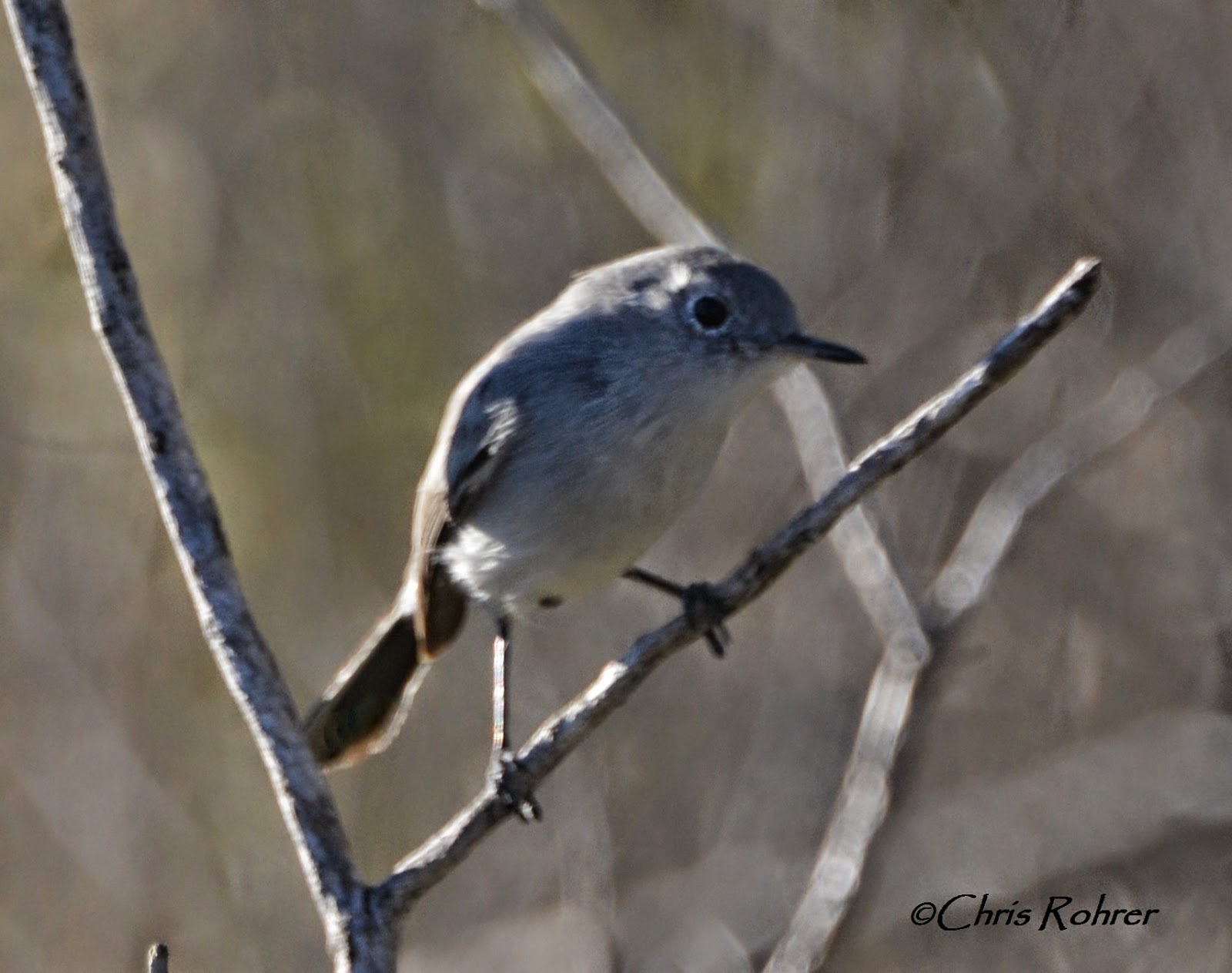
One of our target birds was the California Gnatcatcher. It took us a couple hours to locate several of these birds around a protected estuary. This species is very endangered in Southern California due to habitat loss. It prefers the coastal scrub along the ocean that humans also enjoy. I discovered that a lot of people in the general public were very angry at this little gnatcatcher. The CAGN was referred to as "That bird." Apparently, "that stupid bird" was blocking progress! For the first time in my birding travels, I heard anger from the opposition. Those who were not angry were apathetic. Real estate was MORE important. Never have I encountered this attitude while on my treks for endangered birds.
Hermit Thrush
As I stood in the "wild" space being passed by joggers on their cell phones, bikers, and cars, I strained my ears to listen for the catlike call. I was beginning to see why this bird was in trouble. All around me, there were people and buildings along the border of the estuary. Airplanes and helicopters flew overhead. Boats passed through the waterway. I was beginning to have my doubts.
Downy Woodpecker
It made me miss my open Southern Arizona landscape. How do birds do it? How do they survive within this massive human sprawl? Turns out that some like it while others, like the CA Gnatcatcher, could unfortunately disappear from the area in the near future.
Western Grebes
After really studying the Orange County landscape well, I discovered that there wasn't really much space at all provided for these birds. Hence the declining numbers! Much like the Florida Scrub-Jay, its habitat is in decline. These birds are now locked into areas, or fragmented, from other California Gnatcatchers. How will they maintain genetic diversity within their populations?
Savannah Sparrow(Belding's Subspecies)
It's amazing to me that so many people are apathetic about saving an endangered species. If this type of thinking was left unchecked, we'd be in a really bad place today. Some say it has already happened. On a global level (and locally), we are losing little battles here and there. At the end, all of these little losses will add up into something very sad and big. But who cares about a little gray songbird that looks like all the other gray birds out there? I do. And so do a lot of other people.
Whimbrel
Now don't get me wrong, we had a blast. I always enjoy the new challenges that come with the new territory. So it was easy finding lots of new birds all cramped into these "green" spaces around Southern California. The secret to birding around Cali is finding a central place inside the city and plan trips to nearby hotspots. Don't plan anything too far or you'll be on the road ALL DAY! I learned that lesson well when I lived in the Bay Area many moons ago.
Acorn Woodpecker
There are so many wonderful California birds. They have their own gnatcatcher, towhee, thrasher, gull and quail! The Nuttall's Woodpecker featured below is also a California favorite....and a first for me!
Nuttall's Woodpecker-female
In all of this, I am somehow losing my mind as I try to process what is happening around me. There's no such thing as "It's just birding." anymore. It's an obsession. And to be honest, it scares me a little. There are times I could just scream. A new bathroom renovation or a trip somewhere exciting? I get antsy. I pace. I need to explore and learn more stuff now. There are times I get so tired that I don't want to do anything. But then someone will report something special and I'm back on the road! The fact is I feel good when I go out and do this.
During our weekend trek, we stopped to check out the Tijuana estuary and walked 8 miles without even realizing it! Micheal keeps track of our hiking. Along the way, we meet weird people that tell us to follow them and see this "eagle" on a telephone pole. Turns out the "eagle" is really a hawk. Another tells me about how her son would go out and shoot birds on the estuary and then tell her kid, "Hey son that's illegal. You're not supposed to do that." From her "shared" stories on the trail, I don't think he ever listened to her. Then she told me to take a pic of a Great Egret that was too far away. When is she going to turn off the trail??!!! Our nature trail connected with the local neighborhood for a time. Thankfully nature took over and we left the homes far behind. And the strange locals.
California Towhee
Officially we hear things are "protected" and yet, many times, there isn't anyone out "there" patrolling for poaching, shooting, etc. In many places, I see park officials stuck in information booths collecting entrance fees. I know they want to be out there working in the field. So many of my friends in the business have told me about the endless paperwork that comes with the job. And let's not mention all the time that goes into applying for grants to help cover the costs needed due to federal cuts, etc. We spend billions on war and killing and yet we don't have enough money to properly maintain and staff these wild areas. Birders see it all.
Oak Titmouse
Imagine an oak tree without its tree sprite, the Oak Titmouse, jumping around the branches. Or the empty holes in trees once used by the common Acorn Woodpecker. I couldn't imagine the landscape without these birds. Each species contributes something important to our environment. What will the fate of the California Gnatcatcher be? Do we really care enough to protect it? The real estate world is eyeing up their habitat for development and have not let this bird alone. They are pushing to have it taken off the endangered list this year. Could they eventually win this seemingly uphill battle?
Over the past weekend, I felt a strong urge to go to California. So we got into our car and drove. I had mapped out this trip a couple months in advance. The purpose? To find the wild and feral populations of exotic birds that have spread throughout the Southern California region. While we were there, we would also study the rare California Gnatcatchers that lived in the preserve by our nearby hotel.
Before I begin with this incredible bird list, I'd like to clarify a birding rule of mine. In the United States, we have a very important organization known as the ABA or the American Birding Association. While I do not always follow their rules, I do understand them. They are the organization that tells birders which birds "count" and which ones "don't". Over the years, invasive non-native species(to the US) like the House Sparrow, Monk Parakeet, Rock Pigeon, European Starling, Eurasion collared dove, Muscovy Duck, Rosy-faced Lovebird and many others have been added onto the lists and now "count" for birders. But ONLY if you go to the areas where they "count". For example, you can only count a Rosy-faced Lovebird in Maricopa County, Arizona. There are strict birders who only bird according to the ABA list. Anything off that list is not worthy of their effort nor time. And while that's certainly one way of looking at the birding world, it isn't necessarily mine.
My criteria for "counting" a bird is a bit different. If the bird is not an escapee and has proven to breed and thrive in numbers, I will count it. Surprisingly, all of the birds featured today are countable in several areas around the US while others may join the list soon. As a side note, ABA allows for the Spotted Dove to still be counted around the Los Angeles area while it appears that much of their population has almost disappeared! I found one recent report around the LA area. So what happens when these feral birds have a fallout? Do they also fall off the ABA list?
Red-lored Parrot
Anyhow, let's get started. I was absolutely excited to find wild parrots flying free around the Orange County and the San Diego area.
Let's begin with the Lilac-crowned Parrot below.
Lilac-crowned Parrot
This was a parrot at the top of my list. It's disappearing from the wild in its native home of Mexico due to poaching and habitat loss. Surprisingly, this bird has been around for quite some time in Southern California where it has sustained a slowly growing population. The flocks are large and loud! Often they will be mixed in with their closely related cousins, the Red-crowned Parrots. Oh yes....another one of those almost cryptic species!
Red-crowned Parrot
The Red-crowned Parrot is now the only ABA countable parrot in California. It can also be counted in Texas. Their numbers have grown substantially over the past years in California, Texas and Florida. Again this parrot is also from the Mexican region where it is also listed as endangered. However this parrot is not doing well. Its numbers have severely decreased in many parts along the Atlantic slope of Mexico. Will these parrots eventually only survive in the US? Only time and conservation efforts will tell.
Northern Red Bishop
Let's head over to Africa. One bird that is being considered as an addition to the ABA list is the Northern Red Bishop. In the Orange County area, these finch-like birds are common around parks and stream areas. They are actually considered weavers and prefer grassy areas near water sources. There are now feral populations in Southern California, Texas, Puerto Rico and several other Caribbean islands. This is a stunner for sure!
Scaly-breasted Munia
Now this bird was JUST added to the ABA list. This spice finch(formerly known as the Nutmeg Mannikin) now goes by the name Scaly-breasted munia. Often they are heard quickly flying over your head but on a very special day, we noticed sparkles of raspberry purple coming from the reeds along an estuary. When I got the binos on the bird, I was able to count 4 of them! This is a stunning bird from India and Sri Lanka. Its numbers have taken off and now these birds can commonly be seen at almost any locale you visit!
Egyptian Goose
Two birds considered for the ABA list were a bit surprising for me. In Florida, the Egyptian Goose can be counted. In California, more research needs to be done on this bird but they seem to be expanding their range. Soon this bird may be "countable" on that precious ABA list. We were lucky to spot two that flew into the woods and ponds we were scouting.
Indian Peafowl....for now
Now this bird I've always wondered about. I saw reports of these birds known as Indian Peafowl. What in the world were they?!! Turns out that the Indian Peafowl also goes by the general public name of Peacock! Except that Peacock refers to the male of the Peafowl! Yes, these birds may also be added soon to the ABA list in California as they are breeding and expanding their range in wild areas. However, the Indian title may be dropped and Common added instead.
Pin-tailed whydah
Finally, I had to end on one of my favorites.....the Pin-tailed whydah. If I didn't have my ears, I wouldn't have been able to locate these tiny birds. In fact, they acted like little mice crawling through the grass. This is a bird from Africa but now has established itself in places like Southern California and Puerto Rico. During breeding season, the male develops a long tail that will make your jaw drop. A field mark to help ID these little birds in their non-breeding plumage is that red bill.
Birds are amazing creatures and I hope you enjoyed this inner city world travel. Southern California is a strange place to bird. It's saturated with buildings and people but if you look hard in between the cracks, you'll discover some hidden gems.
I'll have more next week for you all on the native Californian species that we observed around Orange County and San Diego. Until next time......
For more about other amazing birds from around the world, check out Wild Bird Wednesday!


 Posts
Posts