Showing posts with label Ruddy Turnstone. Show all posts

Friday, October 30, 2020

Blue Waves


Today we close out our 3rd and final trek to Ventura, California.  The whole purpose of our trek was to escape the Arizona heat, enjoy the ocean and learn about the Yellow-billed Magpie.  This was a bird I remembered back in the 90's when I lived in the south bay of the San Francisco area. Now as a birder, it was time to go back and have some wine with a friend and rediscover this magpie I first discovered in my backyard when I lived in San Jose. 


And while we had the magpie on our lists, we couldn't stay too far from the ocean.  For an Arizonan, the closest place to find a Yellow-billed Magpie is in the Ventura area.  This is the southern most range for this species.  About 60 miles east of Ventura in the wine country of Los Olivos at the famous Zaca Station Road, we had a lovely time birding along this beautiful road of oak scrub and vineyards. We stopped at one of the places to do some wine tasting.   


The weather was perfect and the wine was great.  And oh yeah, the magpies were a blast!  They reminded me of the Common Mynas that dominate the Hawaiian landscape.  
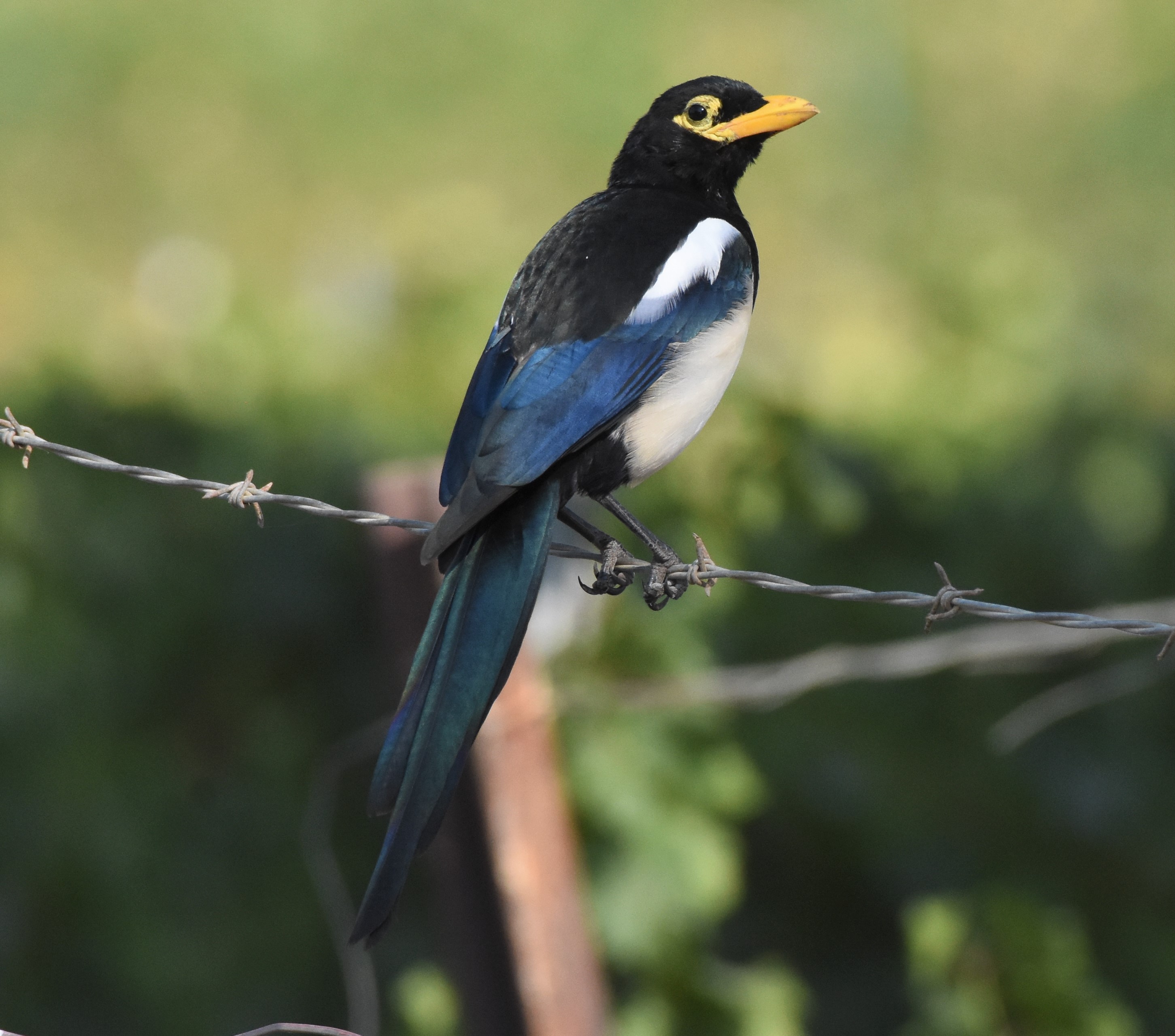

After we had a lovely time in wine country with great views of the magpie, we headed back to the ocean to enjoy the cooler temps and of course, the beach. 
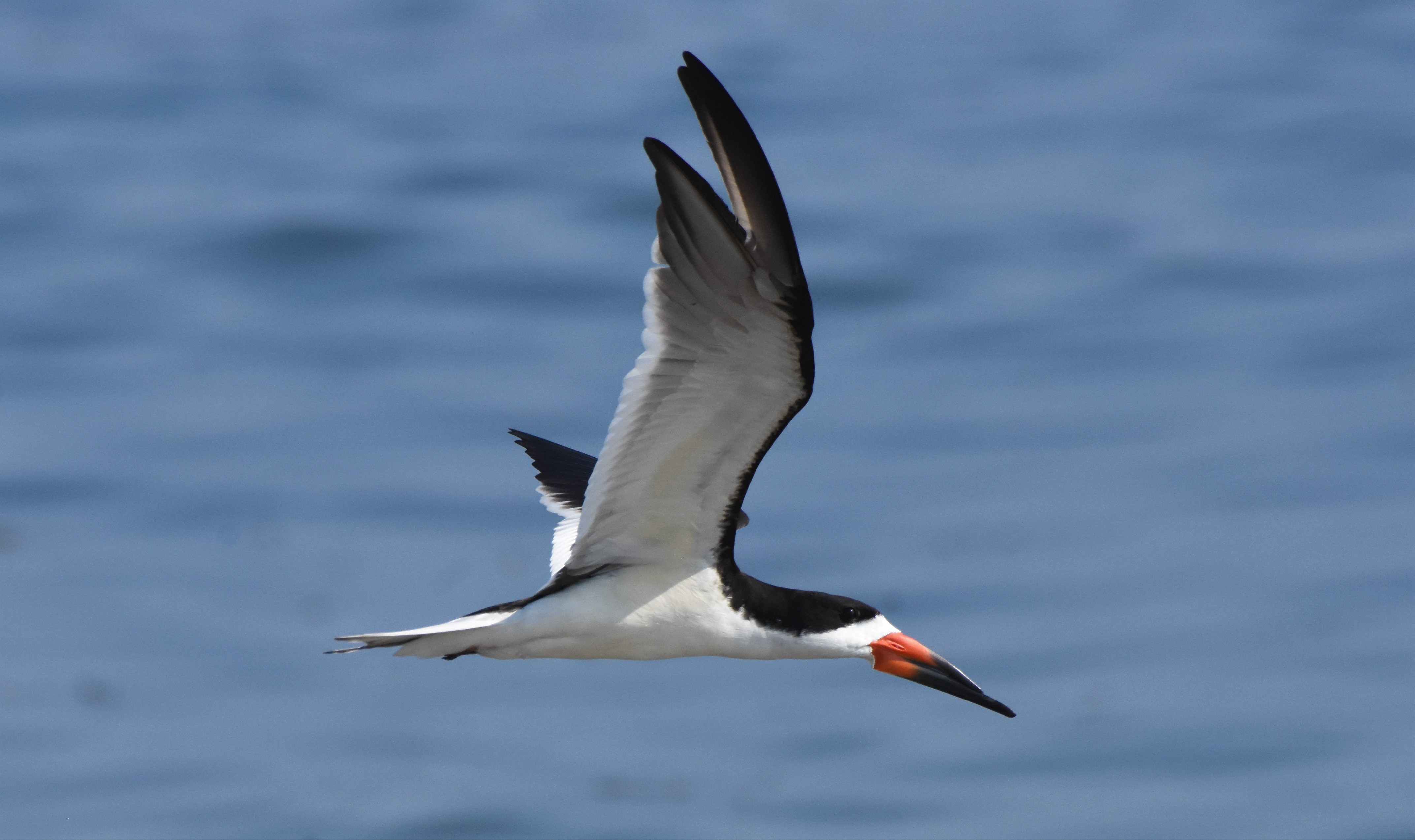

What a thrill!  Our return trek took us to Santa Barbara.  And it was the last part of our fun California adventures in Ventura. 


Turnstone numbers were great and wonderful views of these 2 species were fantastic!


During our treks to various beach spots, we noticed more Black Turnstones than Ruddy Turnstones.  All the turnstones were mixed in together running around "rock piers" and the sandy beaches not caring that people, pets and kids were also sharing the beach. 


Our missions to the beaches, island and vineyards were a success. 


Any time I bird California, I break down the treks to certain areas.  San Diego and Imperial Beach are wonderful for lots of great birds while Orange County is great for the exotic parrots and a trek out to Catalina Island for the Spotted Doves.  LA is another trip with a trek to the LA Gardens and surrounding areas. Spotted Doves, in smaller numbers, can also be found there, but they are much more enjoyable to find on Catalina Island.  Plus you get a pelagic with that boat trek out of Dana Point, also a great spot to bird. Then there is the Ventura area that we just covered. And all along the coast, there are other great places with specialty birds during certain times of years like in Monterrey.  California is HUGE and it's always fun birding this state.  If you plan well, you won't find yourself on the road all the time and instead, you'll spend most of your time enjoying some quality birding.  


That's how I have dealt with California over the years.  Living in the Bay Area in the 90's, I discovered it was frustrating to try and do too much over a larger area because the traffic killed a lot of precious day outings.  So my attitude is to divide and conquer.  Take it all in over mini vacations over time.  That way you get to enjoy California for everything it offers. So like our trek out to the vineyard, one needs to let that wine breathe. California is wonderful when you slowly enjoy the moments.  Don't rush through it. 


We did try for an unexpected rarity in Santa Barbara, the Curlew Sandpiper.  We had a lot of great birds along the beach, but we often had a lot of distractions.  We didn't find the Sandpiper due to runners flushing the peeps but we did see so many wonderful ocean birds. Plus the beaches there were really really nice. 


The drive was fun as it usually is from Phoenix to Ventura.  It's like a racetrack and always seems to fly by quickly. We wanted to stay a little longer.  The cool ocean temps were so nice.  We're back in Tucson now but I see blue waves happening again very soon.  


The year 2020 has been an incredible year here in Arizona.  The devastations that have happened around us environmentally have driven birds into our state from other places.  That report will be coming.  I also hit another landmark for Arizona.  While it hasn't been the year of the lifer, it has been a solid year of birding in Arizona and specifically for Pima County.  Until next time.....

Thursday, August 24, 2017

Treasure Hunts


The month of August is a busy one.  I've returned back to work, continue to monitor key bird areas around Tucson and lead several trips.  August is also known as an excellent month for shorebird research.  And it's also challenging due to their hidden and remote locations. 


Currently in my yard, I am monitoring a Broad-billed Hummingbird nest. On the 14th of this month, I found the nest with two eggs.  


Now I have two baby hummingbirds growing up right before my very eyes.  The mother decided to put this nest right next to my car.  So now I have to be super careful getting out!


Okay.  Currently, their bills are poking out of the nest and it's a bit of a poop fest. I know it's a full time job Mom but couldn't you clean up around the edges?:) To help Mom out, I filled up the feeders.  She now begins to catch insects and drink nectar to make a slurry for the babies. Think of it as a bug protein shake. And there are plenty of mosquitoes in my garden right now.....so have at it:)


August also brings with it bugs and heat.  However, shorebird migration is rather exciting.  Encouraged by a report from friends, I went with Micheal and Magill to find a rare Ruddy Turnstone.  It was nasty work.  I have a strong stomach but on this day, I almost lost it.  

White-faced Ibis
It was 108 degrees and we were at a cattle slop pond, not the most scenic of places to bird. The flies were terrible.  And the smell.....well that was its own special reward.  At one point, I almost threw up.  I looked over at Magill and asked her what that god awful smell was.  She pointed to the pile of dead cows and I almost tossed my cookies. We were downwind from the ground up piles of rotting flesh.


I laughed because Micheal had just gotten out of work and there he was in his bright pink scrubs in the middle of Mad Max land.  However, I needed company.  I can't drive these longer distances anymore without falling asleep at the wheel. It's hot and it's boooooring!

An excellent state bird for Arizona, the Ruddy Turnstone
State birds are difficult now and they require some team work if only for shared misery and encouragement.  Micheal enjoys birding when we are in beautiful places.  He also likes cool looking birds.  This one didn't do it for him, but it was an important state bird.  


A couple weeks later, I get a text from Magill about a Red Knot.  This is ANOTHER state bird that can be tricky to spot.  It's also a very rare migrant.  But the catch?  It was found at yet another sewage treatment facility up in the Phoenix area.  

Stilt Sandpiper
 During this time of year at the Glendale Recharge Ponds, it's hot and muggy.  At one point, Micheal almost passed out from the heat.  He did get to see the bird but once again, he wasn't thrilled. When these birds are in their breeding plumage, they are quite beautiful.  


A fantastic state bird for Arizona, the Red Knot
Once again we celebrated another new state bird for Arizona.  This month alone has landed me THREE very tricky birds for the state.  I missed the Fulvous Whistling-Ducks and Reddish Egret due to the time factor. There just wasn't enough time with my busy schedule. 


While work has taken up a good chunk of that precious time, I have found a little break time to monitor our nesting Purple Martins at my job site. They are gone now. But each year I get a couple weeks with them before their large group migrates away. 

I'd like to also stress the importance of vegetation.  If that saguaro wasn't there, there would be no Purple Martin activity ever. Sadly, this saguaro has seen the pristine desert around it disappear over the last 16 years.  Today, a huge solar panel stands next to the last of its remaining brethren. They are also now surrounded by a developing housing project.  Yes, I worry about this saguaro and I will be sad if anything ever happens to the 4 that still remain.  But this one saguaro has been home to 5 different nesting bird species AND provides food during our hot spring month of May for our desert birds!

a male Purple Martin flies about their Saguaro
Between the bugs and the heat, I'm ready for this month to be over.  If you like birding and don't care about chasing state birds, there are many great alternatives for cooler birding on the higher elevations. 


I just came back from Mexico and will be writing that blog post in a few days.  I'm taking the weekend off to catch up with all of you and have a nice cup of coffee in my pajamas. 


So for now, I hope you avoid(or not), nasty piles of ground up dead cattle.  If you are in Arizona, this is where you'll find the rare treasure birds right now.  These excellent birds are found around these poop filled watering holes.  While it's not as scenic as say the Grand Canyon, it's where state chasing birders go this month.  Until next time.....

Wednesday, April 6, 2016

Overpopulated


After our trek to the botanical gardens, we went for lunch and then breathed deeply.  Our next life bird, the Black Turnstone, was going to be a challenge.  It wasn't finding the bird that was the challenge as it was more about finding the patience to get to the area! 

Surbird(left) and Ruddy Turnstone(right)

I have never been in a more crowded space than Los Angeles.  Well one could argue that Mexico City as well as many other urban spaces are just as bad. I don't know.  LA traffic is the worst. To get to our location, Marina Del Rey, we had only to go 14 miles.  It was the longest 14 miles I have ever driven.  Everywhere we turned there were people.  Every inch.  Every space.  Full of people. 

Spotted Sandpiper
Micheal said that this would be a bad place to escape from the zombie apocalypse. I agree.  He bases our birding locale safety on Walking Dead standards. It took us TWO hours to drive fourteen miles.  Our birding destination, however, was pretty amazing.  But the trek getting there was not. 

The WHOLE walkway was like this the ENTIRE time. 
Once we found a parking spot, we mentally unwound and stretched out. That in itself was a miracle!  Why??  Well, everywhere we turned there were bikers, skaters, walkers, runners, fisher folk, and drivers! Some listened to 80's boardwalk music! We ran into one birding couple from Vermont who declared there were no birds in the area, but they were stuck in a bad spot afraid they'd be hit by oncoming traffic. And I don't blame them. There was very little room to bird.  One wrong turn and we would have smacked into someone.  So the challenge was to tune out all the noise pollution and watch out for the traffic. As for the Vermont couple? They gave up and left.

Caspian Tern
Okay, enough complaining:) You've been warned.  Just know that birding this spot along the Ballona Wetlands area is one of LA's best birding hotspots.  

 I had a lot of special challenges for this trek.  One was capturing cormorants in their breeding plumage.  Cormorants can be tricky, but they are really beautiful birds when breeding season arrives. 


There were birds everywhere and it was difficult to focus.  The weather was gorgeous and there certainly was a lot happening around us.  Normally when people see the common Double-crested Cormorant above, they just think, "Meh."  But I dare you to look at them in their breeding plumage.....


Double-crested Cormorant
They have orange faces with "ears" and some even come with whiskers!

Brandt's Cormorant
The blues of the Brandt's Cormorant mesermize. Their sapphire eyes and chin are gorgeous. 

Pelagic Cormorants

And then there's the deep purples of the Pelagic.  Their breeding color preference?  Red. It was a real treat to see these birds up close and personal.  Stunning birds!


Of course, SoCal winter birding would be incomplete without the sighting of a beautiful Surf Scoter. 


Surf Scoter
Eventually we found a quiet causeway and walked out towards the ocean.  There, on the rocks, we found our lifer Black Turnstones.  I couldn't believe our fortune!  

Black Turnstone
We enjoyed our views of the birds and then slowly walked back to our car at sunset.  Instead of watching birds, we sat and watched the people.  Many wore headphones and seemed to need their space.  


Personal space.  There is nothing quite like it, especially when there is constant noise all around you. We left Los Angeles for the last time.  I will never be coming back here again.  We have two more return treks left for Southern California(outside the LA area) before we start heading up into the Pacific Coastal regions. Here is my ebird report from the Ballona Wetlands area


Our journey required us to visit one last space.  And it was absolutely gorgeous and far away from the urban sprawl.  Next week we explore the beautiful Santa Catalina Island for another exotic bird, the Spotted Dove.  For you ABA listers out there, this one is countable.  So stay tuned for more....

Monday, April 7, 2014

Captiva Island


During this journey, we escaped into the mesmerizing turquoise waters of the warm gulf. I had read about this place in so many birder books and it exceeded my expectations. Captiva Island is one of the most desired locations for tourists.  We went on a weekday and left early before everyone woke up in Florida to find a parking spot.  And thanks to great planning on our parts, we had a fantastic trip into the unknown.  


Brown Pelican
My quest on this adventure was to search for the Northern Gannet, Magnificent Frigatebird and Swallowtail Kite. I had a schedule to keep, but I also wanted to do it in a fun way so that my friend Sydney could join along in the birding experience.  


A great place to start your day for breakfast or afternoon lunch

We grabbed breakfast and I ran to the beaches before the thousands of people arrived to chase all the birds away.  A sip of coffee and a quick run to the beach turned out to be a great idea as I was able to find several birds up close.


But we were heading away from Captiva Island to Cayo Costa State Park where we would be secluded and not have to deal with the tourist crowd.  So we brought our cooler of veggies and water along with beach chairs and umbrellas.....


Cayo Costa State Park

And from there I explored the beaches alone away from noisy crowds.  Sydney enjoyed the sun and water while I tracked Ruddy Turnstones. I was able to observe them close from the water while they foraged around vegetation left on the beach.  Several hung out on piers and others were strolling around on the beaches. 

Ruddy Turnstones
I had never seen Sanderlings before but I knew these birds right away when I saw them run on the beach.  They were tiny and spastic little birds.  


Sanderling

It was also here that I found my first US Anhinga!  I had only seen them in the dark rainy forests of Panama a couple years ago. When I saw this bird again, I smiled.  This bird moves like a snake through water or a needle pulling thread.  Cue Sound of Music:)

Anhinga
Laughing Gulls lived up to their names as they made their "laughing" type calls on the beach.  But this time, I was REALLY able to observe them up close.  The last time I had seen that bird was in Guatemala.  And before that it was in the middle of the desert!  Both of those sightings were far far away.  It was here in Florida I could watch them up close as they walked around me. 


Laughing Gull
Of course, any desert rat goes through "green shock" outside of our rocky canyons and cactus covered landscapes of browns and yellows. 


It wasn't my Shire(Wisconsin) nor was it the mystical Central America.  But it was tropical with too many birds all around me. I was in my own country birding and it felt safe. Granted, we had to seriously navigate around the Spring breakers and the Northerners who have had to endure a most painful winter. So in a sense, I'm glad I live in Arizona because I didn't feel the need to tan or soak in the sun all day on the beach......


We sat on the boat to and from Cayo Costa.  I remember wishing that time didn't exist.  Being with my friend and being in Florida around so many new birds made me wish I had a month to spend there. But life does not wait nor does it care what you do with it. So we made the most of it.  


Watching a Double-crested Cormorant tackle a large fish and then swallow it whole was fascinating.  


Double-crested Cormorant gets his meal
The Atlantic Bottlenose Dolphins were life mammals for me.  I did take pics but a fin doesn't make an exciting pic:)


But a Horseshoe crab does!  I'm glad I was paying attention to the beach.  I'd hate to step on that one!


Horseshoe Crab
And along the way on my private little walk in paradise, I found the Swallowtail Kites and Magnificent Frigatebirds. 


Swallowtail Kite
As with everything in this life, it all flew by so quickly.  I met an older birder who recently told me while sitting at a hummingbird feeder that he needed to pay more attention to the history and stories of the places he visits.  I knew what he meant.  I could be in Russia, Thailand, Peru, or any place looking at a new and amazing bird..... and not really notice all the other little things around me. I do try.   


Magnificent Frigatebird

So no Northern Gannets.  They will have to wait until next time.  We had a wonderful day at Captiva and Cayo Costa State Park.  Stay tuned for more!  Next week we'll discover a religious sect ruled by women and Gopher Turtles......
For more on our world's birds check out Wild Bird Wednesday!