Showing posts with label Plumbeous Vireo. Show all posts

Tuesday, February 5, 2019

Storm Systems


It has been one gray sky after another in Southern Arizona for the past 2 weeks.  And I love it.


The cool to cold air has been refreshing.  The walks are wonderful.


Birding has slowed down a bit which means I can just enjoy finding new year birds around Southern Arizona.


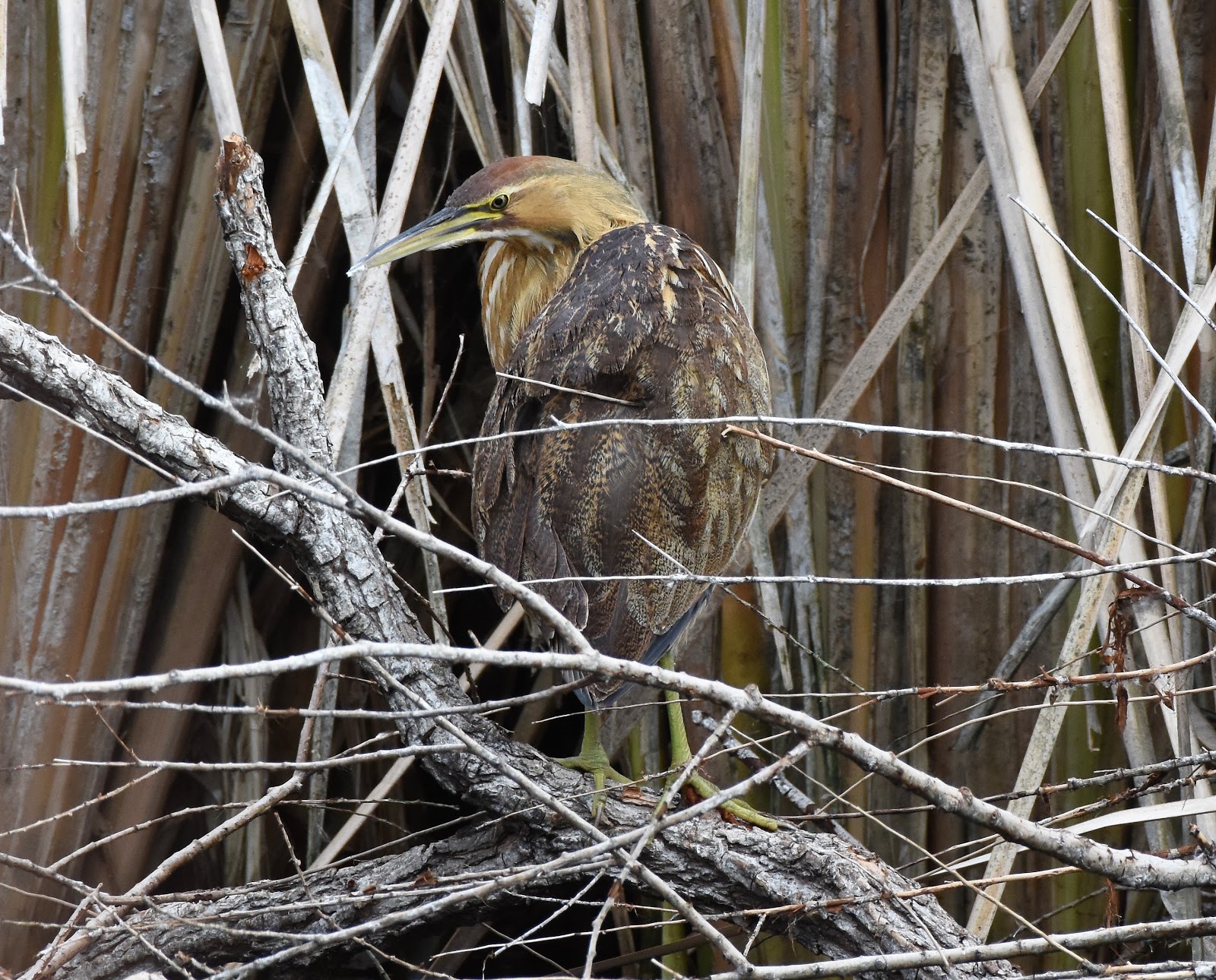
Our local, and rare-for-Tucson, wintering American Bittern has been VERY accommodating for pictures.  This has been the best view I've ever had of this species.

I've become enamored with "Stumpy" over the past visits at Sweetwater
I've been back at Sweetwater Wetlands and realized that I've missed the place.  Winter birders are back in great numbers and I feel safer parking my new vehicle in the parking lot.

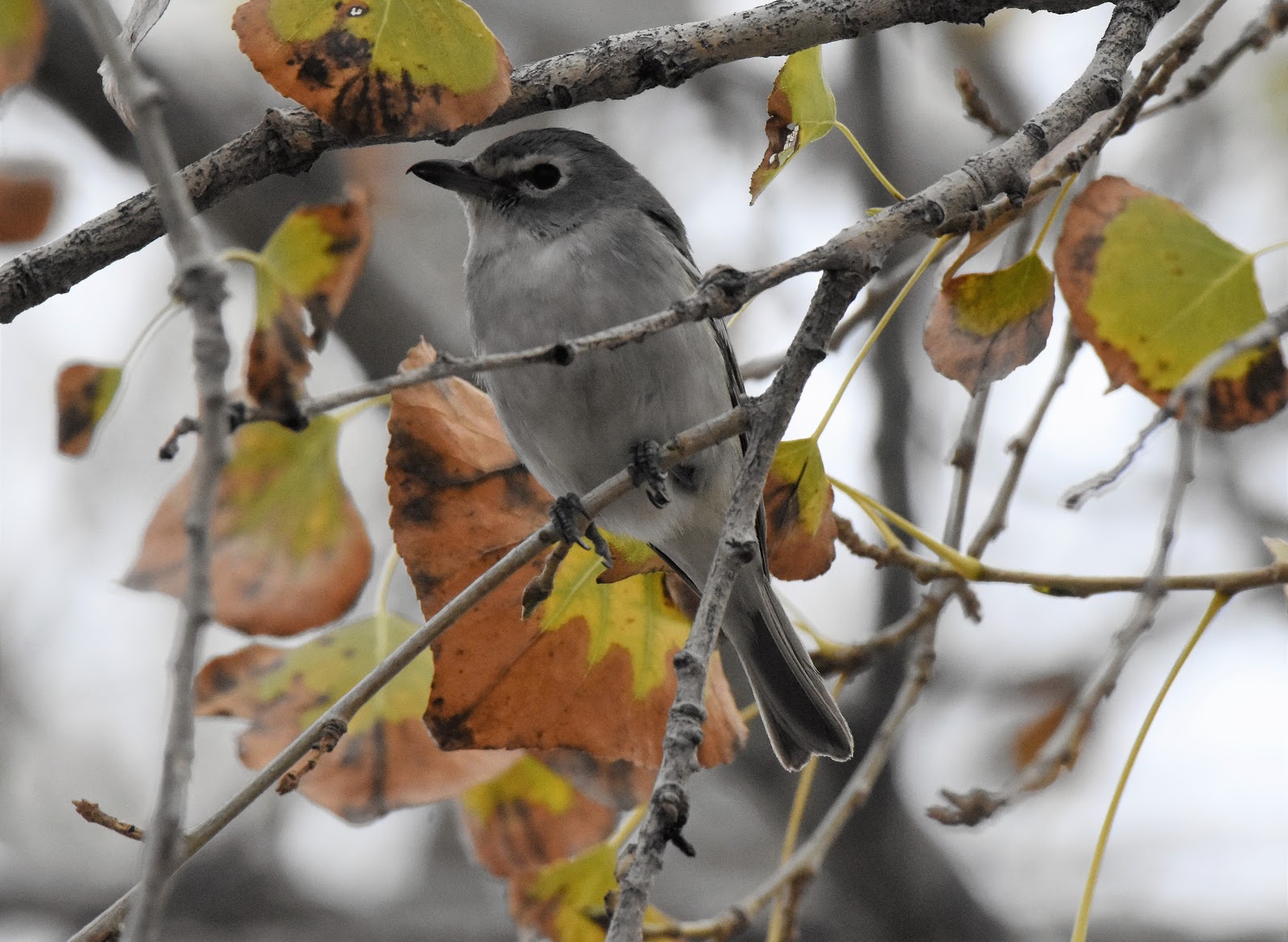
A sneaky Plumbeous Vireo
My umbrella is always with me now.  So if it rains, I'm prepared.  There's nothing wrong about birding in the rain.  Sometimes it's the most beautiful thing in the world.

a curious Horned Lark
I ventured out to the grasslands on another trek and just enjoyed counting sparrows along the road. 


I broke my rule a little.  After we did our count in Pima county, I figured why not head to my favorite little town of Patagonia for a bit.

thirsty American Robins
While the skies were still gray in Patagonia, it didn't rain at all.  The birds were super active and we had a quite a show.  I almost fell asleep on the bench.

a rare White-throated Sparrow at Paton's Hummingbird House
Here's why I almost fell asleep.  I actually had tried getting up to Mt. Lemmon for a bird count but the rain and snow drove me out!  It was a white out on top.  The weather was actually good until I got to the top and then all hell broke loose!

Mt. Lemmon has crazy weather!
So plan B was to go to the grasslands.  At this point, I knew Micheal was up.  And the best way to motivate him was to tell him that I'd take him out to lunch.  Then we birded the grasslands and he wasn't having any of it.


Micheal doesn't like sparrows.  BOO!
So I conceded and took him to Patagonia where we could sit on the bench and watch birds.

a sexy red Fox Sparrow at Paton's!
More rain and snow are in the forecast and I'm in love.  Bring it on!


And here's one more shot of the American Bittern. Such a crazy looking bird. 


Finally, I'm excited to share with you all that the Great Horned Owls love our new nest that we've created for them!  Photographer, Jill Watkins, took these amazing shots of the owls as they prepare to nest. 


It's a relief and it's exciting.  A definite sign that spring is just around the corner.  Until next time....

Monday, June 6, 2016

A Birder's Pilgrimage


I'm going to tell you a story about a little gray flycatcher that made history.  


The journey was rough, but it was an important one for many birders.  For some time, birders across the US have been waiting for the arrival(or discovery) of the Pine Flycatcher in the United States. 


 This bird looks like every other empid and so it took time for the confirmation to happen.  The Pine Flycatcher lives in the montane forests of Mexico and Central America.  When Dave Stejskal and his wife went camping in a remote part of Arizona's Santa Rita mountains, they discovered a different sounding flycatcher in this little shaded oasis. 


Dave spent a couple days with the experts and went over the calls making sure it was really truly the first ever US record of a Pine Flycatcher. 


The Range map for this bird
When the news came across the internet, birders were a buzz.  For me, I was thrown off.  A Pine Flycatcher?  I pride myself in knowing most of my Mexican birds but somehow this one slipped past my radar! A birder we've met on Las Aventuras, Bruce Berman, asked me "the" question. "Chris, you've birded in Mexico quite a bit.  Had you ever heard about this bird?"  I know it sounds strange, but I hadn't!  Bruce felt relieved that he wasn't the only one who was shocked by a new bird.  It's like saying there are actually unicorns in this world. So like I do with all my new birds, I studied this particular flycatcher and the call!

After the relentless heat, this shaded oasis with a breeze made me want to hang out the entire day! But I knew the heat would continue to rise and we  had to get out of there before it would become intolerable.  Heat stroke is real. 
At first, I didn't know if I would be able to make the trek alone because the conditions were too rough, but near the 11 PM hour that night I received a text from a birder by the name of Jeremy Medina.  And the next thing I knew, we were on the road bright and early 4 hours later!  During the night, I tossed and turned.  Was this a safe decision?  The roads were rough and in remote areas. What if we didn't have cell service?  Water?  Etc etc.  But in the morning, we played it safe and drove carefully on the road. We brought extra water just in case we got stranded.  At one point, we parked and hiked the remainder of the rough road into the wooded glen.  The message here?  Team work.  When we work together, we can achieve anything. 

The 10 foot water tank told us that we had reached our marker.
We were greeted by a male Elegant Trogon calling along the creek. 


A small group of birders met together in almost a religious style ceremony. It struck me that we all made this sacred pilgrimage for a historic bird. There is something very special about the treks we do.  And it cannot be put into words. We watched this amazing flycatcher hop and spin around the trees as if it were a Ruby-crowned Kinglet. 


It was a wonderful group of people who were all very respectful of the bird's space.  Together we observed it collect nesting material. 

A Gila Woodpecker tells everyone to keep it down out there!  The babies were trying to sleep!
Other birds wondered what all the commotion was about:)


There were other gray birds there like the very vocal Plumbeous Vireo below. 


We collected data on the bird and made careful observations for ebird and the ABA Bird Record's Committee.  I need to get an app to record audio.  Instead I've been using my video part on the camera.  I felt like a real tool asking everyone to stay still and quiet while I took a 20 second snippet of the bird calling.  It was important because these birds can only be ID'd by their calls sometimes.  However, I can say that the behavior on this flycatcher was rather distinct from the other similar looking flycatchers that I have observed.  If approved, this flycatcher will be an exciting addition for those who list with ABA as it will become "legit". For me, it was an amazing life bird. 

Pine Flycatcher
What an exhausting and wonderful day out in the field discovering a new bird for the United States! It has been projected that with Global Warming, the state of Arizona will see more Mexican vagrants enter into our state over the next several years.  We are seeing once rare birds like Rufous-capped Warblers, Black-capped Gnatcatchers and Elegant Trogons expand their range northward.  It was just a matter of time before the Pine and Tufted Flycatchers made their way into Arizona. Blue Mockingbirds and Aztec Thrushes have also been reported.  Yes, things are going to get interesting.  Birders have seen this global warming  trend happen for some time now with our bird populations. 


The Flycatcher group is not an easy one, but with practice and study, they are a snap to ID.  For beginning birders, I recommend meeting up with an experienced birder and learn how to distinguish the various behaviors by observation since most of these empids look similar. For example, Gray Flycatcher pumps the tail downward.  The Dusky Flycatcher pumps the tail up.  The Hammond's Flycatcher has ADD as it constantly flicks and ticks:) 


And yes, the life bird list keeps slowly inching up. The Pine Flycatcher makes life bird 716.  Will I make it to 800 by the end of the year?  Who knows?  But I will tell you that the work behind each bird has increased.  Every new addition has a cost both personal and financial. I'm just glad most of us have spouses who understand our addiction to this lifetime of ours.  The desert is getting too hot and that means it's time to cool down elsewhere.  Las Aventuras: Home continues.


Wednesday, April 15, 2015

Seeds of Promise

Northern Beardless Tyrannulet
Reconnecting with birds already seen 10 times over, he patiently waits. Birds are amazing and he spies them easily now knowing exactly where they can all be seen. At least in Arizona. 


However, this explorer is at times impatient.  He knows he cannot sit at home and wait.  He must continue observing the same birds over and over again until they are ingrained into his mind.  This makes him a better birder.  A stronger birder. 


He observes with friends to keep it fresh. For some, it's their first time seeing many of these amazing creatures.  And it feels good. The educator within him comes out and it feels natural.   


He abides his time waiting for the seeds of promise.  Each night is a study session.  Tropical birds, habitats and places unknown.  These things swirl about in his dreams.  Something new.  Something exciting. 


Eastern Meadowlark(Lillian's Subspecies)
A life's journey is ahead.  Each year, he focuses on areas around Central America, Mexico and of course, the rest of North America. 

Plumbeous Vireo
Ticking and listing away, he discovers that there are many difficult challenges ahead.

Barn Swallow
Quite honestly, it's not about the tick or the check for him.  All birds are amazing.  Even the everyday kinds. But challenges are fun and he's all about pushing the envelope.  After birding the same areas over and over again, the birder is ready for a delicious challenge.

Marla imagining life at Empire Ranch
For now, this birder must strengthen his skills if he's going to succeed. When the time comes to discover a new species, he must be prepared! It's like practicing for a marathon or preparing for a food competition.  Soon his skills will be tested.  {end of narrative}


Texan Crescent (Anathassa texana)
Always strange to write in the 3rd person voice but I was feeling creative.  Lately, I have been anxious about a great many things.  One of those things happens to be a major trip that is scheduled for this summer.  I'm going to be surrounded by a wonderful team of birders. I am excited about the trek with my birding bud, but I am working on getting my reflexes ready with the camera. I also know this is going to be mentally exhausting. Rain forest birds are fast and usually in the shadows before one can get a shot of them.  Not good for photography! This is an opportunity to work with an amazing crew and possibly add on 200 new life birds!  So what's the concern? Excellent birders=quick spotting and onto the next bird.  I'm a "stop-and-watch-the-bird-for-awhile" kinda guy.  So I don't know what to expect. I can keep up with the group but I've never done this before.  On my treks, I usually stay one week in one area to study the habitat and surrounding areas both day and night.  My results are usually top notch.  This time around it's a different habitat for each day!! Now that's exciting but also overwhelming. In some cases from those evening studies, it's a one shot thing which doesn't leave much room for screwing up:) For now, I'm practicing practicing practicing for the weeks ahead!

Sonoita Creek
Today's post features photos from the Empire Ranch in the Cienagas Grasslands near Sonoita and the Patagonia-Sonoita Creek Preserve in Patagonia, Arizona. A special thank you goes out to Doug Taron(entomology) and Karina Hilliard(herpes)for the butterfly and last post's lizard ID. Also featured in this week's post is my partner-in-crime from work.


We had a fun day observing Gray Hawks in flight. Lots of gray birds in this post:) Until next time.....

Sunday, February 24, 2013

A True Spectacle

Plumbeous Vireo
Vireo.  A simple and yet complicated bird.  One that masks itself within other small birds like gnatcatchers, warblers, and kinglets.  It makes the game of birding a tricky one.  But the one thing that gives these birds away are the "spectacles" that they wear around their eyes.
And yet, they aren't the easiest to spot.  Lately my eyes catch slower and random movements.....and within those observations, I discover my vireos. They usually tend to be doing their own thing.  And that's when I find myself understanding the word "observation" better.  The more we observe behaviors; the better we become at counting birds. And I find myself beginning to look for those different movements.
Cassin's Vireo
Many times, it's just one hop, skip or flutter to the branch that makes me say, "Wait a minute, that movement is distinct from________________(fill in the blank with gnatcatcher, a warbler, flycatcher, etc)"
And I wasn't quite sure I'd be able to tell the difference between a Plumbeous or Cassin's Vireo.  The Hutton's Vireo can cause beginners to scratch their heads as they try and figure out if the Hutton's is a Ruby-crowned Kinglet or Hammond's Flycatcher. Of course, this is simple stuff to the expert eye but not for beginners who don't know what to look for!  And if you're looking at the appearances, it can be as confusing as a Sparrow.  However those days are over:)  I'm getting cocky now but when I'm in Guatemala this summer, I'll be starting all over again as a newbie:) Oh I can see the ID headaches already.....:) And I won't even talk about sparrows:) Child's play to some while for others(like me), hours sitting behind a book and screen looking for those"field marks!"
However, after many observation hours, these 3 become very distinct. Sound. Movement.  And of course the body/head shapes.  The Hutton's was my first greatest confusion from the vireo family.  But then I met my Plumbeous last year.  Was it really gray?  Or was it a Cassin's green?  After seeing both, I can now say, these two aren't difficult at all.
They are sweet acting little birds that for me are often found jumping quietly on a branch. A Kinglet will rattle away.  A Warbler "CHIP!".  But a Vireo?  Perhaps a quiet tweet.  But their gentle and slower movements cause me to pause and evaluate.
In Tucson, we have 3 vireos on our lists. Of course, there are many more vireos out there, but these are the 3 to look for here in the Old Pueblo.  If you put your spectacles on, you might actually be looking at a vireo:)  I wear my glasses at night.  Maybe that's why it's taken me so long to find them all:) Well not all....there are more many more of these birds in other parts not found here.  Until next time.....
Hutton's Vireo