Black canker. Evil black stems. It was a dark time, but as promised, here is my follow up on the C. C. Rose Garden. They've all come back and with better blooms and healthier looking leaves.....here are some pics to show that not all is lost when you cut your roses back. Be patient as it takes awhile...about a month or so to get blooms again......but they look great. They are just beginning to bloom in December even after our severe frost we had last week. Roses can be pretty sturdy/hardy plants. Just look at what they are doing after all hope was lost:)
A tradition in the garden during this time of year....candles in a bag along walkways. They light the paths of visitors and onlookers all night long. A tradition that dates way back from hispanic culture and one that the Old Pueblo celebrates......... and maybe you can use these holiday ideas in your own garden. Just make sure it's a calm windless night:)
This week, a cold front, moved through Tucson killing everything in her path. It hadn't been that cold since 2007. We had two nights that stayed at 24 degrees for more than 6 hours and that here equals the kiss of death. Here is some of the damage that our two frosty nights have caused with several of the plants in the Presidio Gardens.
I didn't cover anything because I believe that if it can withstand the colder nights, it will be able to endure other extremes. I did bring in a succulent plant however because it was a gift from my mother. Other than that, all other plants had to stand on their own and it wasn't at all disappointing to see what died and what continues to live.
Frosty nights are a rare treat here in the desert southwest, but it's on nights like these when you need to remember your 4 P's.....Protect your people, pets, plants, and pipes. Stay tuned for my post/video on "Luminaria Nights".
Enjoyment comes from figuring out solutions for irritating situations that happen in our gardens. I have had a lot of frustration over the past couple months with a neighbor's dog that keeps urinating on the grounds. It wouldn't be so bad if there wasn't that musky dog pee smell. After some research, here is what I have found that works which will naturally keep dogs and feral cats from using your grounds as a bathroom. There are many other ways to combat these issues, but here are the cheap or near free solutions that have worked for me. This is only when communication isn't working. I tried speaking to this owner several times, but he didn't care....this led me to my investigations. I can now leave my screen door open and let the fresh air in again:)
Cayenne Pepper and Coffee Grounds make a potent deterrent against unwanted animal waste in your garden
For feral cats. When I first moved to the gardens, feral cats owned the area by using every dead planter and sandy areas for their kitty litter use (and to raise more feral cats). To deal with this issue, it is quite simple. Bark mulch is a deterrent as they don't like bumpy ground to walk on nor do they like coffee grounds for the smell. Let me stress the miracle of coffee grounds.....coffee grounds! Okay I've stressed the importance of this very free deterrent. Where can you get coffee grounds in mass? Easy....many local and international coffee chains offer "Grounds for the Garden". If they aren't out for you to grab in large bags inside of bins, ask for them and most of the time, they will gladly give them away. Well most places are wonderful this way because it's one less thing they have to clean up at the end of the day. Simply sprinkle the grounds in the areas that you don't want the cats to use and you'll see a change happen rather quickly. Well it worked for me.....no more feral cats on our grounds anymore...they moved to the neighbor's areas:)
How can something so cute, be deadly?
For dogs. If you are a dog person, you should always pick up after your dog during walks. Somehow I think most people that post on this already do so....but it's the ones who don't care(even after speaking with them!) and allow the dogs to use the bathroom anywhere that drive me crazy. It's simple for the dog owners as they let the dog use the bathroom and walk away. For me, it's like they are giving me the middle finger when they disrespect homeowners in this manner. But there is a solution.....without using weapons or screaming at the irresponsible dog owner....:) Examine the subject.....a dog. What does a dog do? Sniff. And what deters that? Cayenne pepper. And it works.....but just to be sure, I added coffee grounds:) However the orange powder, sent a message to the dog owner not to use my area for urinating....plus many times, they don't know what the orange color is and just to be cautious, they pull their dog away from the area thinking it could be poison. Sad that people resort to this as I don't approve of these methods, but the use of fear here is important when dealing with a dog owner. Some things are mental mind games while others will make the dog sneeze and not want to use the area. Try them out and see if they work. They did for me. Some of you may object to this and I understand as I live with 5 cats....2 were feral from my yard as I addressed the feral cat issue awhile back....but there is nothing worse than putting your hands into poop while digging or trying to plant something into the ground....plus you can get sick from it as some cats or dogs carry parasites/bacteria that will send you to the hospital and/or give you a lifelong skin disease. These are some things that I use in my own gardens to prevent animals from using our grounds as a "dumping" ground. Until next time, Happy Gardening!
A random road trip 45 minutes south of Tucson led us to the magical park of Madera Canyon. Christmas music playing in the background during a cloudy and cold day made this Sunday feel like the holiday season. Here are some pics to show off our "fall color" during the holiday season:)
I love this park for the branch structure. It's a truly unique place to find some really different kinds of trees.
Several bed and breakfast are located along the road.
There are several months out of the year that I like to call perfection....November, April, and half of May in Tucson. It's not too hot nor too cold.....it's perfection. The plants seem to glow from not having to stress from the heat or worry about the frosty nights. Here are some images from around town that caught my attention.
Tucson Botanical Garden
Can you see how the plants kind of "glow"? It's hard to get a pic from this, but the leaves look brighter as the sun hits them which creates a brilliant green effect all around you.
Bug pictures are difficult to shoot....it's amazing how hard it is to get a good shot of a "slow" bee. They never want to stay in one spot for too long:) Have a great weekend!
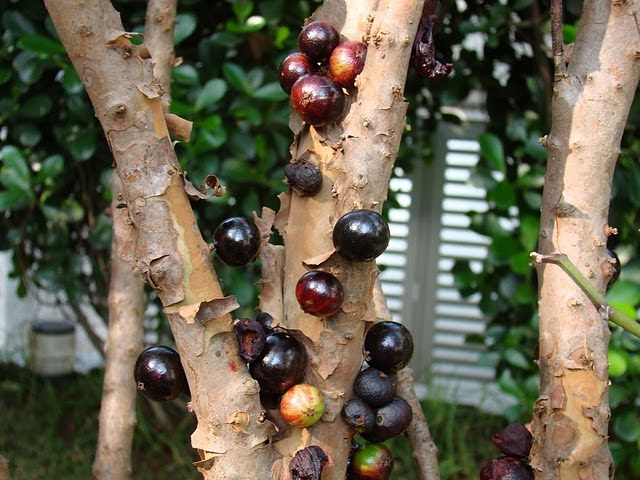
Today while at work, a friend sent me an email about an unusual plant. I have never heard of this plant ever and none of these pics are my own nor is the information. It is a plant oddity and I thought I'd share this little surprise with all of you. Perhaps you have heard of this plant? It's called the jabuticaba. And it's real. I thought at first that the email was a hoax, but after some research, I discovered it does indeed exist. Here is what I've found.....it has nothing to do with Tucson or my garden or my adventures and themes or really anything that is found in the gardens.....just a curiosity that made me think. It seems this week has been full of exotic fruit reporting:) Kumquat, persimmons, and now this......however I have NO experience with this plant whatsoever but it does state that it will grow in zone 9b and it has been known to be sold at Lowe's.....hmmmmm......where could I put such a plant?:)
The email went like this.....
"No, this is not a belated April Fool’s prank. They look as if they may have been pinned there by an overenthusiastic gardener to impress the neighbors, but the fruit of the Jabuticaba really does grow off the trunk of the tree. "
"Otherwise known as the Brazilian Grape Tree, this plant is native to South America, notably Paraguay , Argentina and (obviously from its name) mostly from Brazil . The fruit, a succulent looking purple color, can be plucked and eaten straight from the tree."
"It is also a popular ingredient in jellies and is also juiced to make a refreshing summer drink. What is more, it can be fermented and made into wine and strong liquor. After three days off the tree the fermentation will begin, so sometimes, there is no choice; honestly"
"If you want one of these in your garden, then you have to be patient The tree takes an age to grow, but once it reaches maturity it is worth it. However, it has proven to be very adaptable and, although it prefers moist and slightly acid soils, it will even grow well in an alkaline type soil. "
"The flowers themselves appear on the tree at most twice a year – naturally. They look like some strange alien creature that has deposited itself on the trunk and branches. The habit of flowers doing this makes them cauliflorous. Instead of growing new shoots, these plants flower direct from the woody trunk or stem."
"You might ask why it is this way. The simple answer is that it has evolved in this manner so that animals that cannot climb very high can reach it, eat it and then expel the seeds away from the parent tree to further propagate the species."
"If the tree is well irrigated then it will flower and fruit all the year round. The fruit itself is about four centimeters in diameter and has up to four large seeds. As well as being used as food, the skins can be dried out and used to treat asthma and diarrhea. If your tonsils are swollen you can also use it to try and alleviate the inflammation. It is also hoped that the tree will be useful in the fight against cancer, as several anti-cancer compounds have been found in the fruit." End of email message from unknown person. All I can say is that it has been on my mind for the past couple of days.......and I'm wondering, where could I put it in my garden?:)
When do they fruit? So many questions on this alien and mysterious plant.
Today marks the end of the persimmon mystery. If you've been following this blog, I've written 2 parts previous to this one. I suppose it's kinda like a consumer's report of the persimmon tree. It has been quite the surprise in the garden as it makes an attractive compact tree. I've never tried the fruit...I'll do that on the video....my facial reactions are a lot more descriptive than I'm sure my writing would be. The plant over the course of the year has produced beautiful white flowers and a tomato like fruit that has turned, only recently, orange. It has also added a beautiful fall element in the garden as the leaves turn a yellow/fire red color before they drop from the tree.
The experiment from the garden!
The adventure began back in January when I saw these plants in the nursery. They were not cheap at all. I found two varieties....the Fuyu and the Hachiya. It was a puzzle to me as I had never heard of this fruit before. I purchased the fuyu variety as an experiment and as I write this, I am becoming excited about trying this fruit tonight! I tasted a fruit in the Amazon several years ago that looked like a tomato but it was sweet and juicy.....they told me it wasn't a tomato....and so I wonder is this what I ate? Have I tried this before? This year I found the fruit at Trader Joe's and the reason why I don't think we've heard about this fruit as much is because its' shelf life is quite short. I was standing in line and I asked a customer with the persimmon in her hand if it was worth the 59 cents to purchase. She got excited and told me that she adores the persimmon and that I should try it. I asked her what it tasted like and she wouldn't tell me, but smiled and told me, "I'll let you figure that out yourself." Okay...I hope it's not nasty and it better not taste like chicken!!! Without ever having had the fruit, I would say the tree itself is really a neat thing to have in the garden. In a current book that I am reading, they mention that persimmon is served with poultry.....what an appropriate time to have not only a persimmon ready itself to be eaten but also in time for the Thanksgiving holiday. I have put a recipe on this post for your enjoyment from friends who have highly recommended this wonderful fruit. Recipe below.....
On a personal side note, this is my first VLOG. It's bizarre and I hate watching myself on video, but I thought it would be fun to do. My facial expressions are a trait of my family.....and we can never lie because the face gives us away first. I also thought I'd share a picture of fall in the garden....besides the persimmons changing color so is the crepe myrtle. Happy Gardening!!
As of late, it has been extremely difficult to keep up with my posts. Yesterday, I officially became a docent and I didn't realize how cool it would feel after getting a name badge and certificate. It's just paper, but it was so much fun learning about things I like to do. I was forced to take courses my whole life in crap I didn't care about so education for me, even though I am a teacher, was not fun nor has it ever been....however, I enjoyed my Spanish coursework when I was allowed to focus on it. This was a different experience and one that I want to continue in a Master Gardening program. Anyhow, I am working on the final part of the persimmons mystery which will be a vlog, the descanso roses after my hard cut, diagram drawings on using the bubble technique, plant identifications, and some historical information on ethnobotany here in the desert southwest. There is a lot of info that is just sitting here waiting for me to decipher and dissect. However there just isn't any time to write!! Today I am going to write about an easier topic.....kumquat varieties here in Tucson. Kumquat are one of my most favorite fruits and it makes me so happy that we can grow these wonderful small tree/bushes here in the desert. Here's the skinny on how to grow this wonderful citrus.
Fukushu Kumquat
In Phoenix, these plants do well as long as they are protected from direct direct sun....meaning they get afternoon shade. In Tucson, the sun is fine, but the frosty nights we have in the winter are deadly. I have two varieties growing on the property.....fukushu and nagami. Most locals recommend putting them in pots as I have done so as well. They make an attractive small tree in pots. I have planted one in the ground just to see what it will do....so far it looks great and there has been growth on it. The best part about shopping for kumquats is sampling the fruit on the trees. One of them accidentally exploded on my shirt and I was given away as being that "guy" eating his way through the nursery. Hey, I had to make sure I got the best ones!! They can be expensive. I'll go into the differences in just a moment.
The Fukushu Kumquat. It performs well in all citrus regions. It is extremely cold hardy(that's one reason I purchased this variety) and perfect for areas too cold for most citrus. It is the first kumquat variety to ripen and bears an abundance of fruit mid-November through March. The small round fruit is larger than other kumquat varieties and has a thin soft rind that is sweet and edible to eat. Kumquats are great because you can just pop the whole thing in your mouth. This variety has a rounded-leaf shape and a vigorous compact growth habit. It's listed as an ornamental plant for the landscape and recommended for container gardening. The fruit is recommended for eating straight off the tree and/or used for sauces, candies, and marmalades. The fruit is delicious and that's all I am going to say.
The Fukushu Kumquat
The Nagami Kumquat. The Nagami Kumquat is oval in shape, 3/4" to 1" in diameter and between 1" to 2"long. The tartness of the fruit makes them great for use in cooking and/or for marmalades and jellies.
The tree is shrub like and is similar to an orange tree in appearance. It is a prolific bearer and very decorative because of the dark green leaves and brilliant orange fruit. The fruit lasts for several months on the tree in warm winter climates.
The Nagami Kumquat
The trees do very well when planted in the yard or in larger pots. They can withstand temperatures as low as 28 degrees and require about the same care as other citrus. The kumquat tree is highly resistant and possibly immune to citrus canker. Until next time, happy gardening and Thanksgiving!! Kumquat is a wonderful addition to container gardening!


 Posts

 Before nightfall


 Datura
 It will all come back...

 How can something so cute, be deadly?


 A video on why we create gardens.......
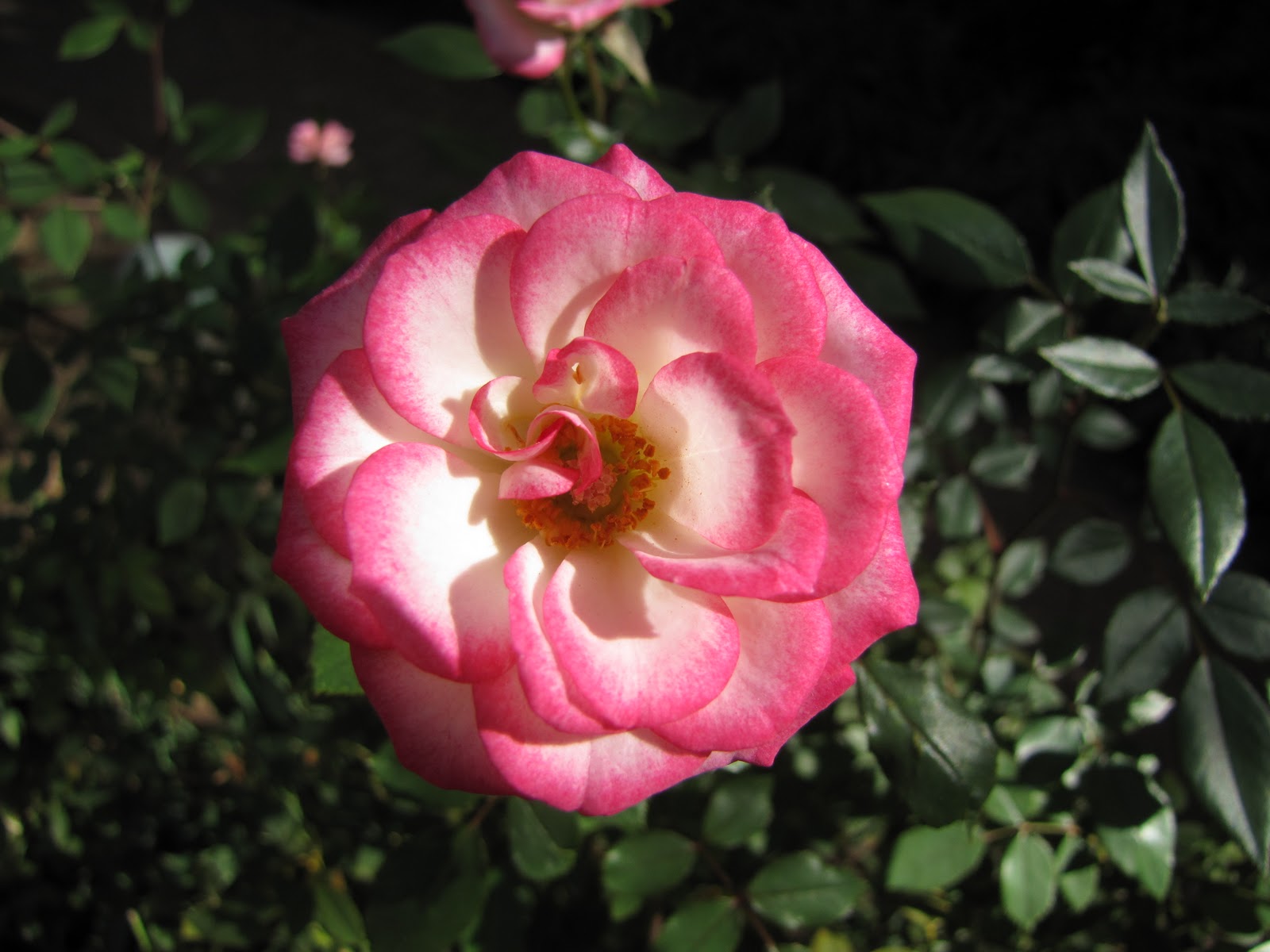 Roses bloom before the cold evenings hit.




 The experiment from the garden!

 Fukushu Kumquat

 The Fukushu Kumquat
 The Nagami Kumquat

