Tuesday, May 7, 2019

The Hides


European Peacock Butterfly
One of the wonderful things about birding Wales and Great Britain as a whole was how easily accessible it was to go and find birds around their public "hides". 


Great Tit
There were many wonderful and comfortable places to sit and watch birds while having a nice chat with a new birder friend. The people were super friendly and helped us find birds like the Eurasian Spoonbill, which is a wild looking bird! Reminded me of Big Bird from Sesame Street)


Birding on a whole was fun and relaxing thanks in part to the "hides" that are strategically placed all over Great Britain around great bird habitat.

Everything is labeled in English and Welsh(but only in Wales)
We'd just walk to the hide and peek out the windows.  Generally, there were bird feeders and lots of bird action going on!
 
The Wren
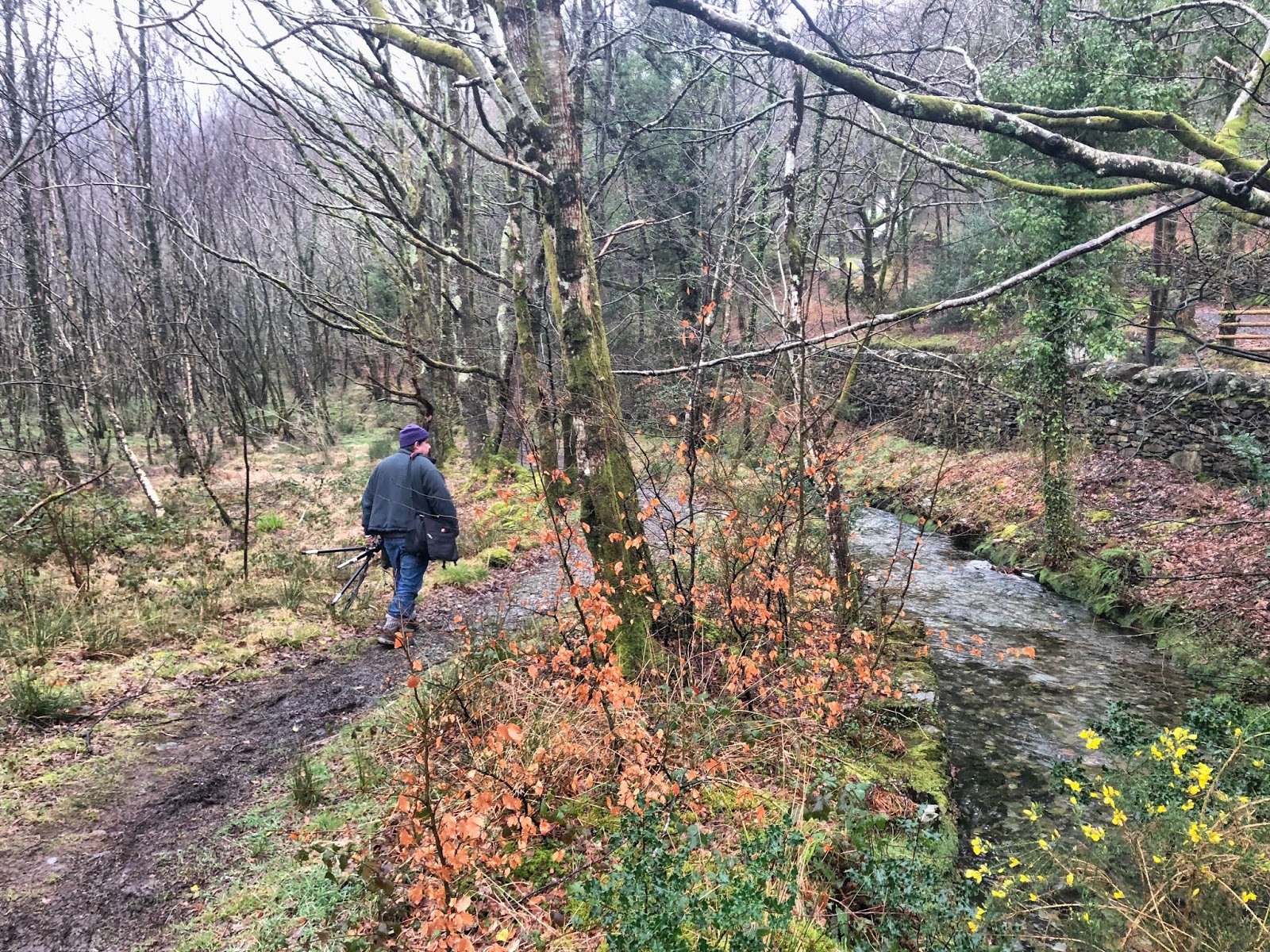
In between the treks to the various hides, we'd stop and do some sightseeing. 


I wanted to do a blog post first on the "hides" and then examine in the next post the differences between guiding in Arizona versus Wales for birds not found around the hides. It was really interesting to watch Steve find some tricky birds in wetland habitat. 

Coal Tit
I had fallen in love with the heavy overcast gray skies of Wales.  In many ways, it reminded me of winter in Wisconsin or the misty winters of Portland, Oregon.  It's not great for photography, but it was beautiful. 


It's funny.  Every feeder station had the regular crowd while some stations had some hard-to-come-by-birds like the Bullfinch.  

European Goldfinch
We'd visit friend's feeders as well as the public feeders.


Yellowhammer
It was fun watching birders gather in these hides and have a nice informal meeting on what they were observing.

Yellowhammer
Some blinds were downright dark and creepy.  One time we found a young birder in a dark building with only one window open.  It made me laugh.  Working with teenagers, I know exactly how those blinds/hides would be used in the US!  Not pretty. But in Wales, they were used for birding.  Very proper!


A flock of this or that would show up and it was all rather exciting.

Lesser Redpoll
There were all kinds of goodies showing up at the feeders which included my favorite bird from this post, the Reed Bunting!

Reed Bunting
Many of the hides were connected near the shoreline of a river or larger body of water. Here we had water birds AND the smaller feeder birds.


We did a lot of translation from Welsh to English on this trip.  Fascinating stuff!
Our first hide in Wales was at the Pennington Flash. It was overwhelming because almost all the birds in and around the hide were new for us.  There were a couple of species that we only saw there so I did my best to capture them all on camera while making mental notes on their calls and behaviors.

European Greenfinch
The Common Chaffinch is a beautiful bird and is indeed VERY common, but most birders will just call this species, the Chaffinch.

Common Chaffinch

Of course, not all birds were easy to find.  There's always that group of birds that requires the "know how" and Steve knew exactly where to find them. 

I always save our feeders/hides for our lunch breaks because of the hikes we have to do here in Arizona.  I loved the hides and enjoyed the social aspect that came with them. 

Long-tailed Tit
Another favorite species of mine was the Long-tailed Tit.  They reminded me of furry Ewoks.


Stock Dove
Here in the states, birders can find hides like those that are found in Britain.  However, some states do it better than others.  In Arizona, we just have feeder stations that aren't really hides.  I mean these hides had a shelf to rest your camera or put down your drink!


I dipped on two species of tits, the Marsh and Willow, but I'll find them down the road.  I really had a blast in Wales.  So if you go and visit, make sure you check out their hides! 

Tufted Duck
Next week we explore the unique guiding differences between Arizona and Wales. It was fun watching Steve search for certain birds around the various habitats of Wales. Until next time......

Thursday, May 2, 2019

Let's Go Fly A Kite!


A no word blog post today.  Just enjoy the show:)


Eurasian Siskin


The Rook

Common Buzzard


Red Kite


The Red Kite had suffered huge population declines in many countries but today their numbers are increasing around the UK thanks to places like Gigrin Farm where they feed the amazing Red Kites. In some countries, like Spain, their numbers are declining. And in Morocco, they are in danger of extinction. However in Wales, Red Kites are doing quite well and their population numbers are increasing again. Until next time.......

Wednesday, April 24, 2019

Death Sentence

The beautiful Northern Fulmar
Flying high alongside the steep and ragged slopes of Wales, the Northern Fulmars watched us inch closer to the edges of the sea cliffs. 


Steve stopped to smell the coconut tinged air of the invasive gorse.


As we got closer to the edge, I began to get sick.  Steve slowly walked the narrow trail along the steep cliffs to find our target birds.  I saw the narrow path before me.  One side was a free fall to my death into the ocean while the other was a fall that was sure to break every bone in my body.  So I began the climb back up the hill. Then Steve saw me returning uphill in a nervous panic. 

Steve walks the narrow path.  One slip and it's under the sea!
He came back up to get me.  He had no problem climbing the narrow deadly stretch.  The grasses were wet and slippery.  The slope on the hill didn't have a barrier to prevent me from falling into the ocean, but I believed in Steve.  He took my heavy camera and told me to focus on his footsteps.  I cracked jokes to make myself laugh.  I think I even threatened Steve at some point during our descent. For that I apologize:)  Nicely dressed Brits were sipping their tea or coffee on the bottom of the cliffs looking up at us and wondering if we were going to fall off the cliff.  


We had taken the trickier trail to the top.  I am thankful to Steve for his encouragement because what I saw was immensely beautiful.  There we stood at the edge of the cliffs.  Some people have even jumped off the edge because they had this free last thought to fly. Thankfully, I did not. I never realized that there were people out there who randomly jumped off of high cliffs to feel the thrills of free falling before their death.  All I know is that I wanted to throw up.  I can do pelagics and a million other things, but my kryptonite is height. 


Like.....how in the hell did this sheep get there?!? There along the edge of the gray overcast world, we spied the Northern Fulmars preparing for the breeding season. It was spectacular.  


These birds weren't even a lifebird!  BUT I wanted to know more about them because I have never seen their breeding habitat.  I've only seen the Pacific subspecies in flight along the California coast. 

the Northern Fulmars of Southern California
Not all of our treks through the hillsides that day were frightening.  Most were quite lovely. 


Near a pasture and farm, we spied several wonderful birds along the stone walls. 

Northern Wheatear
It was exciting to get observations of the Northern Wheatears and Linnets.  Unfortunately, we didn't see a male Linnet in his breeding plumage, but they were still quite lovely.


Eurasian Linnet
As we went up the trail more, we spied the Von Trapp Family disappearing over the hillside. And probably into the ocean.


It was another beautiful day out in Wales.


This will be an adventure I won't forget anytime soon and I thank Steve for pushing me to do my best and move beyond my fears because it was worth it.  Until next time......